
Fussy Launches Campaign to Reduce Bathroom Plastic Waste
Sky Media funds Fussy’s first television campaign on refillable deodorant
Fussy, a UK refillable deodorant brand, has launched its first television advertising campaign. The ad will run across Sky channels from July 1, 2026. Sky Media funded the campaign through a £200,000 advertising grant from the Sky Zero Footprint Fund.
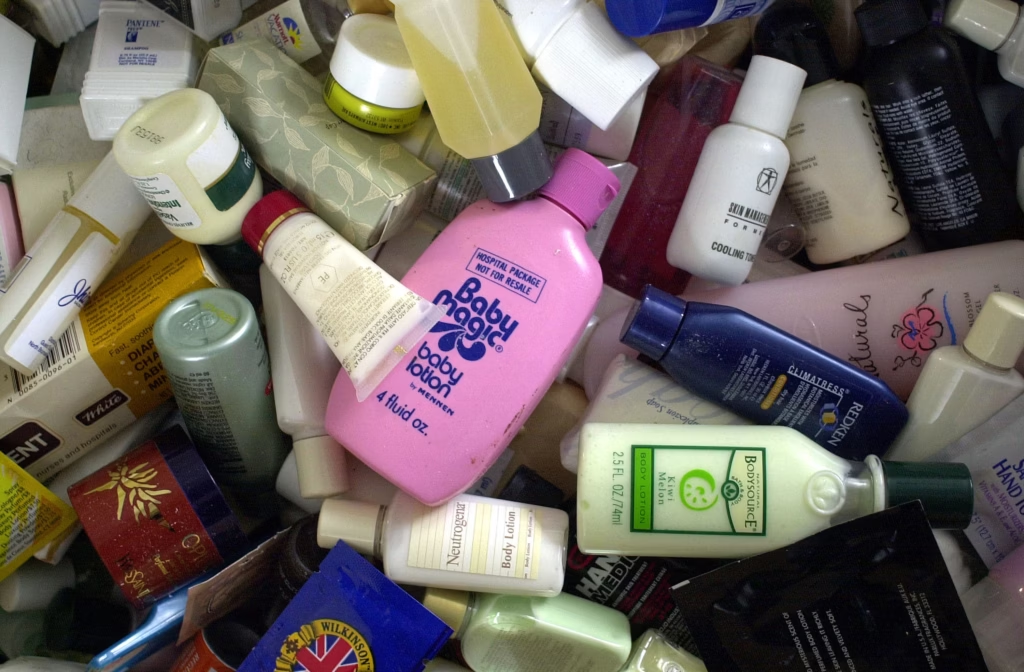
The campaign addresses plastic waste from single-use deodorant tubes. It aims to change consumer behaviour by promoting refillable alternatives. Deborah Meaden, the Dragons’ Den investor, fronts the advertisement.
Sky awarded the grant to Fussy as a Disruptor category winner. The Sky Zero Footprint Fund distributed £2 million across six organisations. Other recipients included Tony’s Chocolonely, GoodGym, WRAP, GuppyFriend, and Pärla.
How the advertising grant works for small brands
The Sky Zero Footprint Fund targets organisations working on environmental challenges. Fussy competed in the Disruptor category, which supports challenger brands with sustainability missions. The £200,000 grant covers airtime costs across Sky’s channel network.
Matt Kennedy, Fussy’s chief executive, said the funding enables the brand to reach a national audience. Previously, television advertising remained beyond the company’s marketing budget. The grant removes this barrier for brands with environmental credentials.
Sky Media provides production support alongside the airtime grant. This includes technical guidance on broadcast standards and scheduling. Consequently, smaller brands can compete with established personal care companies for viewer attention.
The fund launched in 2025 as a revamped version of Sky’s earlier sustainability initiatives. It focuses on organisations that might not otherwise afford television advertising. Therefore, the scheme helps environmental messages reach mainstream audiences.
What the campaign says about bathroom waste
The advertisement uses the phrase “tosser” to describe people who throw away single-use deodorant tubes. This colloquial term adds humour to the environmental message. Deborah Meaden states that billions of single-use plastic deodorants are discarded each year.
The creative agency 10 Days developed the campaign. This agency previously created Fussy’s “Believe the Fuss” campaign in 2024. That earlier work included a vinyl record made from discarded plastic deodorant bottles.
Fussy’s approach targets a specific waste stream that often escapes attention. Bathroom plastic includes toothpaste tubes, shampoo bottles, and shower gel containers. However, deodorant tubes present a particular problem because users discard them frequently.
The brand offers refillable cases with replaceable deodorant inserts. Each case can be used repeatedly, which reduces plastic waste. The formula includes probiotics that break down sweat-causing bacteria.
Fiona Ball, Sky Group’s director of sustainability, described the campaign as tackling a challenge that hides in plain sight. She noted that comedy helps people rethink familiar habits. This strategy avoids moralising while still encouraging behaviour change.
Industry context for refillable personal care products
Refillable products have gained ground in the personal care sector over recent years. Several factors drive this trend. Firstly, consumer awareness of plastic pollution has increased substantially. Secondly, retailers now stock more refillable options than they did five years ago.
Traditional deodorant brands primarily sell products in single-use plastic packaging. Each tube typically lasts four to eight weeks, depending on usage. After that period, consumers throw away the entire container. This creates a continuous waste stream.
Bathroom waste represents a significant portion of household plastic. Many people overlook this category when considering their environmental impact. Items like deodorant, toothpaste, and cotton buds add up quickly across millions of households.
Some major personal care manufacturers have introduced refillable options recently. Nevertheless, these products still occupy a small market share. Price sensitivity and convenience concerns affect adoption rates. Single-use deodorants remain cheaper and more widely available in most retail outlets.
Challenger brands like Fussy face marketing challenges when competing against established names. Television advertising typically requires budgets that small companies cannot afford. Grants like the Sky Zero Footprint Fund help level this playing field.
The Sky Media grant enables Fussy to reach viewers who might never encounter the brand online. Television still delivers mass reach despite the growth of digital channels. For a challenger brand, this exposure proves valuable for building recognition.
What the campaign means for UK businesses
This campaign demonstrates how funding schemes can help small businesses with sustainability missions. Many companies develop environmental solutions but lack resources to promote them widely. Consequently, good ideas struggle to reach the people who might use them.
The Sky Zero Footprint Fund shows how media companies can support environmental objectives. By providing airtime rather than cash, Sky ensures the funding directly serves its intended purpose. This approach differs from traditional grants where recipients have spending discretion.
For businesses in the personal care sector, Fussy’s campaign may influence market expectations. If consumers respond positively to refillable deodorant, other brands might expand their own sustainable product lines. Alternatively, if the campaign fails to shift behaviour, it may discourage similar investments.
The use of humour in environmental marketing represents a strategic choice. Previous campaigns often emphasised guilt or fear about environmental damage. Research suggests that positive or humorous approaches may prove more effective for behaviour change. However, the approach carries risks if audiences perceive it as trivialising serious issues.
Retailers watching this campaign will assess consumer demand for refillable products. Strong sales could lead to expanded shelf space for similar items. Conversely, weak performance might reinforce views that refillables remain a niche market.
Supply chain implications also matter. If refillable deodorants gain significant market share, it will affect packaging suppliers and waste management systems. Manufacturers would need fewer plastic tubes but more durable cases. Waste collections would see reduced volumes of bathroom plastic.
Competition rules and advertising standards considerations
Television advertisements in the UK must comply with standards set by the Advertising Standards Authority and Clearcast. These bodies review content before broadcast. They assess whether claims are truthful, decent, and not misleading.
Environmental claims face particular scrutiny under CAP Code rules. Advertisers must substantiate statements about sustainability benefits. For example, claims about plastic reduction require evidence showing meaningful environmental improvement.
The term “tosser” in Fussy’s campaign may attract attention from standards bodies. While used humorously, broadcast regulators consider whether language might offend audiences. Clearcast approved the advertisement, indicating it met broadcast standards for the scheduled airtime.
Comparative advertising rules apply when brands criticise competitors indirectly. Fussy’s campaign targets single-use deodorants generally rather than specific brands. This approach typically satisfies regulations if the comparison is fair and verifiable.
Grant funding disclosure requirements vary by media outlet. Sky Media publicly announced the grant amount and recipients. This transparency helps viewers understand the commercial context. It also demonstrates accountability for public-interest funding decisions.
Five key facts about the Fussy campaign
- Fussy received £200,000 in advertising airtime through the Sky Zero Footprint Fund as a Disruptor category winner.
- The television campaign launched on July 1, 2026, across Sky’s channel network with additional social media and outdoor advertising.
- Deborah Meaden from Dragons’ Den delivers the advertisement’s core message about single-use plastic deodorant waste.
- The creative agency 10 Days produced the campaign, building on their earlier work for Fussy including the “Believe the Fuss” campaign in 2024.
- Six organisations shared the £2 million Sky Zero Footprint Fund, including Tony’s Chocolonely, GoodGym, WRAP, GuppyFriend, and Pärla alongside Fussy.
Why small brands need alternatives to traditional advertising
Television advertising costs typically exclude small businesses from this channel. A four-week campaign on national television can cost hundreds of thousands of pounds. Production expenses add further costs before any airtime is purchased.
Digital marketing offers lower entry costs but faces different challenges. Social media algorithms favour paid promotion, which also requires ongoing investment. Search advertising becomes expensive in competitive categories like personal care products.
Sustainability-focused brands face a particular tension. Their environmental mission often resonates with consumers who actively seek alternatives to mainstream products. However, reaching these consumers at scale proves difficult without substantial marketing budgets.
Grant schemes like Sky’s fund address this barrier directly. They enable brands with strong sustainability credentials to access mass-market channels. This creates opportunities for public awareness that would otherwise require venture capital or debt financing.
The Disruptor category specifically targets challenger brands rather than established organisations. This design choice recognises that newer companies face different constraints than large corporations. It also ensures funding supports genuine market disruption rather than subsidising existing players.
For other small businesses with environmental products, this model offers a potential pathway. Similar schemes may emerge from other media companies or retailers. Therefore, businesses should monitor opportunities that align with their sustainability objectives.
The approach also benefits media companies like Sky by demonstrating corporate responsibility. By supporting environmental causes through their core business rather than separate charity donations, they integrate sustainability into their operations. This alignment strengthens both their brand reputation and their actual environmental impact.
Questions businesses should consider about refillable products
Companies developing refillable alternatives face several strategic decisions. First, they must determine whether their product category suits refillable designs. Deodorant works well because the container and applicator can be separated from the product formula. Other categories present more technical challenges.
Pricing strategy matters significantly for refillable products. The initial case typically costs more than a single-use product. However, refills should cost less to demonstrate ongoing savings. Businesses must balance manufacturing costs against consumer price expectations.
Distribution channels affect refillable product success. Online sales suit this model because companies can ship refills directly to customers. However, retail shelf space remains important for visibility and impulse purchases. Therefore, businesses need strategies for both channels.
Consumer behaviour research helps identify barriers to adoption. Some people resist refillables due to perceived inconvenience. Others worry about hygiene or product quality. Understanding these concerns enables businesses to address them through product design and marketing.
Environmental claims require robust evidence. Businesses should conduct lifecycle assessments comparing their refillable products against single-use alternatives. This data supports marketing claims and satisfies regulatory requirements. It also helps identify genuine environmental benefits versus marginal improvements.
Partnerships can accelerate market development. Fussy’s relationship with Sky Media through the Zero Footprint Fund exemplifies this approach. Other partnership opportunities might include retailers, environmental organisations, or complementary brands.
Where to find information on sustainable product development
The UK government provides guidance on environmental claims through the Competition and Markets Authority. Their Green Claims Code helps businesses make accurate sustainability statements. This resource proves particularly valuable for companies new to environmental marketing.
WRAP, one of the Sky Zero Footprint Fund recipients, offers resources on circular economy principles. Their guidance covers product design, business models, and consumer engagement. These materials help businesses understand how refillable products fit into broader sustainability strategies.
The Advertising Standards Authority publishes rulings on environmental advertising claims. Reviewing these decisions helps businesses understand what regulators consider acceptable. This knowledge reduces the risk of complaints or required modifications to marketing materials.
Trade associations like the British Beauty Council provide sector-specific guidance. They address regulatory requirements, market trends, and best practices for personal care products. Membership often includes access to research and networking opportunities.
For businesses considering applications to sustainability funds, Sky Media’s website details the Zero Footprint Fund criteria and process. Understanding successful applications like Fussy’s helps organisations develop competitive proposals. Other media companies and retailers may operate similar schemes worth investigating.
Contact Us
We are here to support your net-zero journey, whatever your stage
Our team offers practical guidance and tailored solutions to help your business thrive sustainably.

