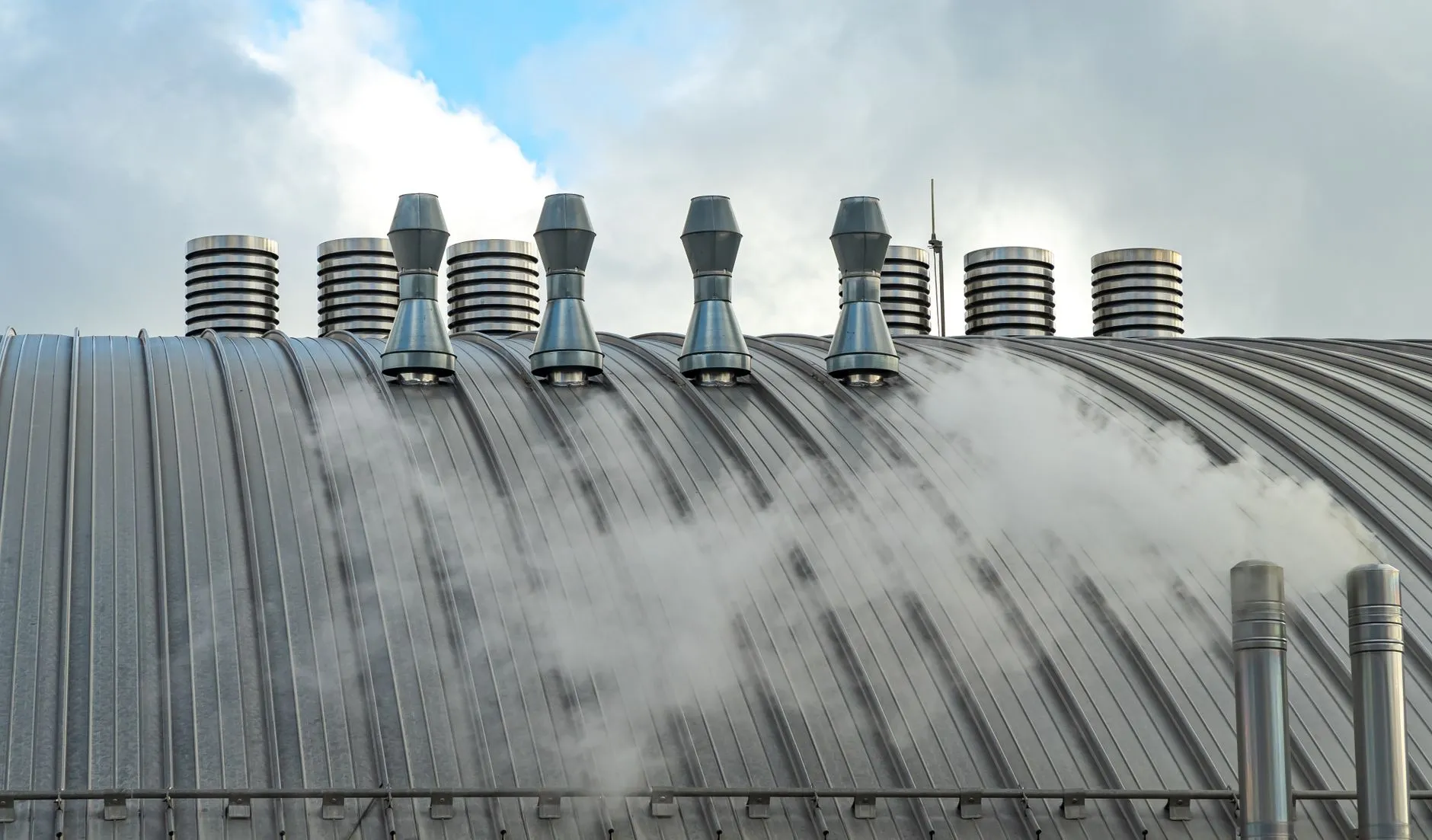
Canada explores carbon credit exports, a potential win for SMEs
<p>Canada is building the legal framework to let its carbon removal projects sell credits into international markets. The change would allow direct air capture facilities and other removal projects to issue verified credits that foreign buyers can use to meet their own climate targets. For businesses watching the carbon market, this matters because it could open a new category of internationally tradable assets and change the way removal credits are priced and accounted for.</p><p>The shift hinges on Article 6 of the Paris Agreement, which sets out the rules for cross-border transfer of emissions reductions and removals. Without a national framework to govern those transfers, Canadian removal credits remain locked inside domestic accounting systems. Once the framework is in place, verified removals could be exported to buyers in aviation, finance, and manufacturing who need compliance-grade offsets.</p><p>Deep Sky, a Montreal-based developer building direct air capture infrastructure in Alberta, has emerged as a test case. The company has already delivered verified removal credits to Microsoft and Royal Bank of Canada. Now it stands to benefit if Ottawa finalises the export rules before mandatory airline offsetting begins in January 2027.</p><h2>Ottawa confirms work on cross-border carbon credit transfers</h2><p>On 24 September 2026, Environment and Climate Change Canada confirmed it is exploring rules to trade Internationally Transferred Mitigation Outcomes. ITMOs are the Article 6 mechanism that allows countries to exchange verified emissions reductions and removals across borders. The announcement signals that Canada is preparing to participate in the global carbon market on the supply side, not just as a buyer of credits.</p><p>The immediate goal is to give Canadian carbon removal companies access to international buyers. According to Reuters, the policy is intended to attract investment in new technologies and deepen commercial links with the European Union and Asia. For developers, that access depends on a credible accounting framework that prevents double counting and ensures each tonne of carbon removed is claimed only once.</p><p>Deep Sky has been working with the federal government for over a year to advance the framework. Mathieu Bouchard, the company's government affairs specialist, told iPolitics that Deep Sky had been pressing Ottawa to move forward. The company's Alberta megafacility is estimated to cost US$328 million in its first phase. Deep Sky has been seeking up to US$200 million in project equity, construction debt, and strategic investment to support the build.</p><p>In June 2026, Deep Sky became the first North American company to deliver verified carbon removal credits from direct air capture technology. Those credits were provided to Microsoft and Royal Bank of Canada. The delivery demonstrated that Canadian removal projects can meet the verification standards required by corporate buyers. However, those transactions took place within North American markets. The Article 6 framework would extend the same credits to foreign compliance buyers.</p><h2>Aviation offsetting creates near-term demand for removal credits</h2><p>The nearest commercial opportunity is CORSIA, the Carbon Offsetting and Reduction Scheme for International Aviation. CORSIA is administered by the International Civil Aviation Organization, which is based in Montreal. The mandatory phase begins in January 2027 and will require airlines on certain international routes to use sustainable aviation fuel or offset emissions growth with carbon credits.</p><p>CORSIA has strict eligibility rules. Each credit must be counted only once, and the host country must authorise the transfer before it can be recognised internationally. That makes Ottawa's Article 6 work a prerequisite for export-ready carbon removal credits. Without federal authorisation, Canadian credits cannot be used in CORSIA or other international compliance schemes.</p><p>For airlines, CORSIA represents a significant new cost. Carriers will need to secure large volumes of verified credits to cover emissions growth on covered routes. Consequently, demand for high-quality removal credits is expected to rise sharply in 2027. Canadian developers with verified projects could capture a share of that demand if the federal framework is finalised in time.</p><p>Environment Minister Julie Dabrusin described the initiative as an effort to turn Canada's natural resources and climate innovations into investments, quality employment, and fresh export possibilities. The language reflects a broader federal ambition to position carbon removal as a new export category alongside traditional commodities.</p><h2>Federal support already includes tax credits and offset protocols</h2><p>Canada already supports carbon capture through its carbon management strategy. The strategy includes a refundable investment tax credit for carbon capture, utilisation, and storage projects. Natural Resources Canada has also been developing an offset protocol for direct air carbon dioxide capture and sequestration. The protocol is intended to establish baseline requirements for measuring, reporting, and verifying removals from direct air capture facilities.</p><p>The federal offset system is separate from the Article 6 export framework. Offsets issued under the domestic system can be used by Canadian companies to meet compliance obligations under the national carbon pricing regime. However, they cannot be sold internationally unless Ottawa authorises the transfer and adjusts its own national accounting to reflect the export.</p><p>That adjustment is the core policy challenge. Credits sold abroad cannot also be claimed by Canada toward its own emissions targets. Therefore, the federal government must decide how much of its removal capacity it is willing to allocate to foreign buyers and how much it will reserve for domestic decarbonisation. The trade-off is explicit: every tonne exported is a tonne that cannot be counted toward Canada's Paris Agreement commitments.</p><p>Natural Resources Canada has stated that support for an international carbon market and trading system is important for carbon removal supply and demand. The statement suggests that Ottawa views export access as essential to building the commercial case for large-scale removal projects. Without international buyers, Canadian developers would depend entirely on domestic demand, which remains limited outside the aviation and financial services sectors.</p><h2>Double counting safeguards are critical for market credibility</h2><p>The Article 6 framework must include robust safeguards to prevent double counting. Double counting occurs when the same emissions reduction or removal is claimed by more than one party. In the context of ITMOs, it could happen if Canada counts an exported credit toward its own national targets while the buyer also claims it. Such overlap would undermine the integrity of both the international carbon market and national climate accounting.</p><p>To avoid this, Canada will need to establish a corresponding adjustment mechanism. This means that when a removal credit is exported, Canada must add an equivalent amount to its own national emissions inventory. The corresponding adjustment ensures that the environmental benefit is transferred to the buyer, not claimed twice. The Paris Agreement rulebook requires corresponding adjustments for all ITMO transfers, and any Canadian framework will need to comply.</p><p>Verification standards will also matter. Buyers in CORSIA and other compliance markets require credits that meet strict additionality, permanence, and measurement criteria. Additionality means the removal would not have occurred without the credit revenue. Permanence means the carbon stays out of the atmosphere for a defined period, often 100 years or more. Measurement means the removal can be quantified with high accuracy and independently verified.</p><p>Deep Sky's verified credits from June 2026 met these standards for corporate buyers in North America. Nevertheless, international markets may impose additional requirements or require certification from specific registries. Canada's framework will need to accommodate those variations while maintaining a common baseline for domestic projects.</p><h2>What UK businesses should understand about carbon removal exports</h2><ul><li>Canada is developing an Article 6 framework to allow carbon removal projects to sell verified credits into international markets, including CORSIA.</li><li>The mandatory phase of CORSIA begins in January 2027 and will require airlines on certain international routes to offset emissions growth with verified carbon credits.</li><li>Deep Sky became the first North American company to deliver verified direct air capture removal credits in June 2026, with credits provided to Microsoft and Royal Bank of Canada.</li><li>The first phase of Deep Sky's Alberta megafacility is estimated to cost US$328 million, with the company seeking up to US$200 million in project equity and debt.</li><li>Canada's federal carbon management strategy includes a refundable investment tax credit for carbon capture projects and an offset protocol for direct air capture under development.</li><li>Credits sold internationally cannot be claimed by Canada toward its own emissions targets, requiring a corresponding adjustment in national accounting.</li><li>Verification standards for international markets require demonstrated additionality, permanence, and accurate measurement of carbon removals.</li></ul><h2>Export rules will shape project economics and offtake agreements</h2><p>Access to international markets could change the economics of carbon removal projects significantly. Developers often struggle to secure long-term offtake agreements because domestic buyers are limited and prices remain volatile. If Canadian projects can sell into global compliance markets, they gain access to a larger pool of buyers with statutory obligations to purchase credits. That demand stability makes it easier to secure project finance and justify capital expenditure.</p><p>For businesses considering carbon removal purchases, the policy shift creates a new category of supplier. Canadian projects may offer a combination of regulatory certainty, geographic proximity for North American buyers, and alignment with international verification standards. However, buyers will need to assess whether the Canadian framework provides the same level of assurance as established registries in Europe or California.</p><p>Supply chain implications are also worth noting. Companies that rely on carbon credits to meet net zero targets or tender requirements will face a more diverse market. Canadian removal credits could compete with nature-based solutions from other jurisdictions or industrial carbon capture projects in the United States. Pricing, verification quality, and permanence guarantees will determine which credits gain market share.</p><p>There is also a timing question. If Ottawa completes the framework before January 2027, Canadian developers will be positioned to supply CORSIA from the start of the mandatory phase. If the framework is delayed, buyers may turn to credits from jurisdictions that already have Article 6 agreements in place. That could limit Canada's early market share and reduce the commercial advantage for projects like Deep Sky's Alberta facility.</p><p>For businesses with supply chain decarbonisation commitments, particularly those in sectors covered by CORSIA or other compliance schemes, the availability of Canadian removal credits could provide a new compliance option. Airlines, logistics providers, and multinational corporations with net zero pledges may find that verified removals from direct air capture offer a credible supplement to emissions reductions. Our <a href="https://sbs.eco/net-zero-program/">net-zero program for carbon reporting compliance</a> can help businesses assess which credits align with their reporting obligations and procurement standards.</p><h2>Policy trade-offs between export ambition and domestic targets</h2><p>The decision to allow credit exports involves a clear policy trade-off. Every tonne of carbon removed and sold internationally is a tonne that Canada cannot count toward its own Paris Agreement commitments. This trade-off is not unique to Canada. Any country participating in Article 6 must choose how to allocate its mitigation resources between domestic use and international sale.</p><p>For Canada, the choice is complicated by the scale of its remaining emissions reductions. The country has committed to reducing emissions by 40 to 45 per cent below 2005 levels by 2030. Achieving that target will require significant deployment of both emissions reductions and carbon removals. If large volumes of removal credits are exported, Canada may need to purchase ITMOs from other countries or increase its domestic abatement efforts to compensate.</p><p>There is also a reputational dimension. Climate advocates have raised concerns that exporting carbon removals could undermine Canada's credibility as a climate leader. If the country is seen as prioritising revenue over domestic decarbonisation, it may face criticism at international climate negotiations. Ottawa will need to balance these concerns with the economic benefits of a new export sector.</p><p>Businesses watching this space should consider how the framework might affect the price and availability of Canadian removal credits. If export volumes are capped or subject to government approval on a case-by-case basis, supply could be constrained. Conversely, if the framework allows unrestricted exports, Canadian projects may prioritise international buyers who can pay higher prices. Either outcome would affect the domestic carbon market and the cost of compliance for Canadian businesses.</p><p>For UK businesses with operations or supply chains in Canada, the framework could create both opportunities and obligations. Companies that source goods or services from Canadian suppliers may be asked to support carbon removal purchases as part of supplier sustainability requirements. Understanding how Canadian removal credits are verified and accounted for will be important for due diligence and reporting. Our <a href="https://sbs.eco/compliance/">ESG compliance and carbon reporting services</a> support businesses that need to navigate cross-border carbon accounting and verify the integrity of offset purchases.</p><h2>Where to find further information on Article 6 and carbon markets</h2><p>Businesses that need to understand the evolving carbon market rules should monitor guidance from national regulators and international bodies. The UK government's position on Article 6 and international carbon markets is set out by the Department for Energy Security and Net Zero. Official guidance on cross-border carbon credit transfers and corresponding adjustments can be found on <a href="https://www.gov.uk/government/organisations/department-for-energy-security-and-net-zero">the department's website</a>.</p><p>The International Civil Aviation Organization provides detailed information on CORSIA eligibility criteria and approved credit types. Airlines and suppliers to the aviation sector can access technical guidance and updates on the mandatory phase timeline at <a href="https://www.icao.int/environmental-protection/CORSIA/Pages/default.aspx">the ICAO CORSIA portal</a>.</p><p>Natural Resources Canada publishes updates on the federal carbon management strategy, including the carbon capture investment tax credit and offset protocols under development. Businesses operating in Canada or considering investment in Canadian carbon projects can find policy updates and technical resources at <a href="https://natural-resources.canada.ca/climate-change/canadas-green-future/carbon-management-strategy/24760">Natural Resources Canada</a>.</p><p>For broader context on carbon markets and the Paris Agreement rulebook, the United Nations Framework Convention on Climate Change maintains a comprehensive library of guidance documents and country submissions related to Article 6. This includes reporting templates, corresponding adjustment methodologies, and updates on bilateral agreements between countries. Access these resources at <a href="https://unfccc.int/process-and-meetings/the-paris-agreement/article-6-of-the-paris-agreement">the UNFCCC Article 6 portal</a>.</p>