
The Church of England's Green Goals Face High Costs
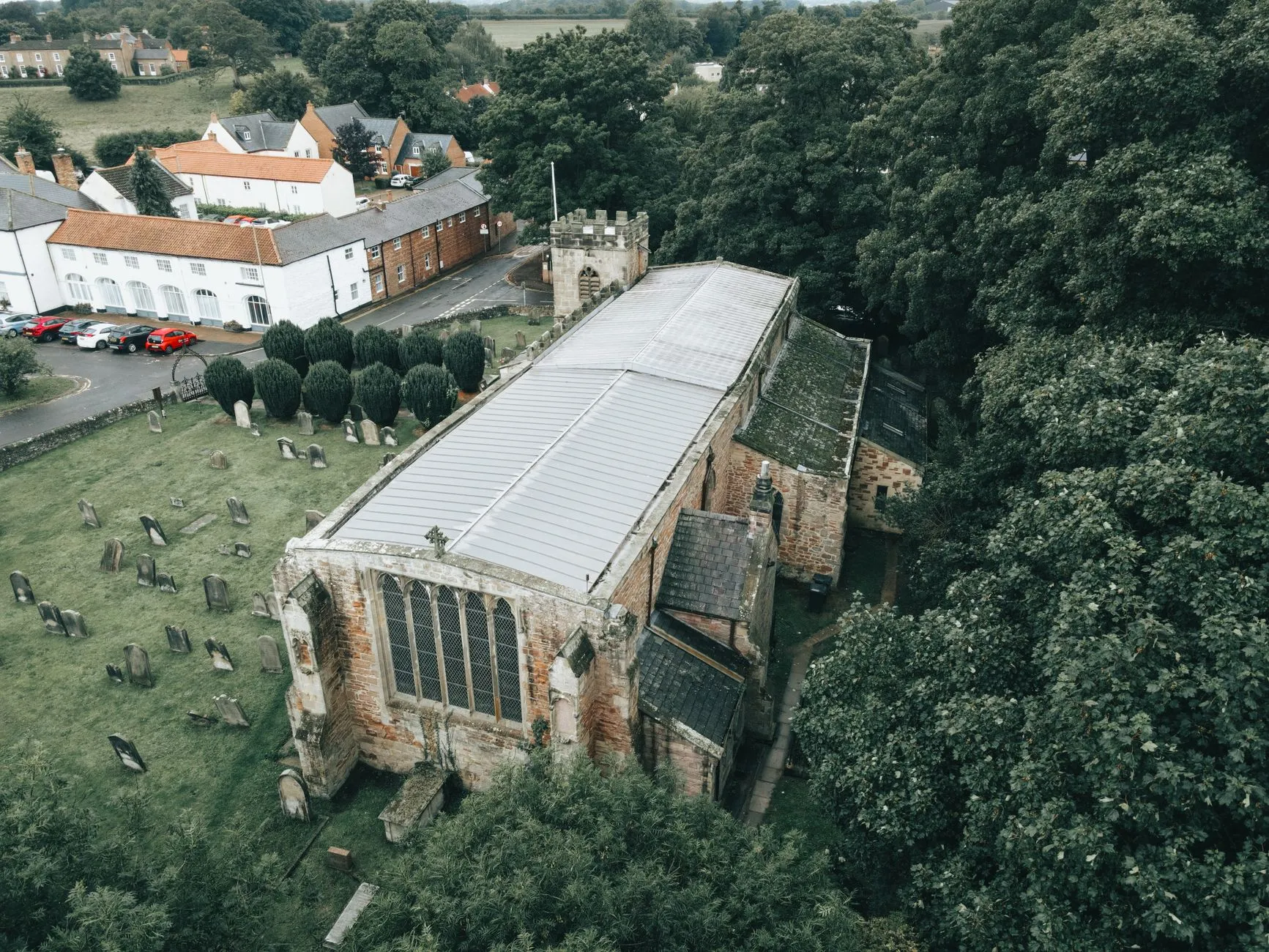
Church of England carbon cuts reveal cost pressures on small congregations
A small rural church with just 20 worshippers reportedly faces a £400,000 bill to meet the Church of England's net zero target. The case highlights a widening gap between national climate commitments and the financial reality confronting thousands of individual parishes. Consequently, the Church's 2030 net zero deadline now looks increasingly difficult to achieve.
The Church of England committed to reach net zero carbon emissions by 2030. However, progress depends on retrofitting more than 16,000 churches, many of them listed buildings with limited scope for standard energy efficiency measures. For small congregations with modest reserves, the cost of compliance can exceed what local fundraising can realistically deliver.
This matters beyond the Church itself. It illustrates a broader challenge facing heritage buildings across the UK: how to reconcile climate policy with the practical and financial constraints of adapting old structures. Moreover, it raises questions about equity when national targets place disproportionate costs on the smallest and least-resourced institutions.
Emissions have fallen but remain substantial across the estate
Official carbon reporting shows that Church of England buildings produced around 137,000 tonnes of CO2e in 2020. Churches alone accounted for approximately 118,000 tonnes of that total. By 2021, emissions from church buildings had dropped to roughly 110,000 tonnes of CO2e.
The reduction demonstrates that progress is possible. Nevertheless, the scale of the challenge remains large. The Church operates one of the largest building estates in the country, and many structures date back centuries. Therefore, standard retrofit approaches often prove impractical or prohibitively expensive.
Interestingly, around 7% of churches have already achieved net zero status. This is largely because they are medieval buildings with inherently low operational emissions. However, bringing those churches up to modern environmental standards can still require significant capital investment in heating systems, insulation, and renewable energy installations.
The Church's net zero framework requires emissions from buildings and travel to fall below 10% of baseline levels. The remainder must be offset through verified carbon reduction schemes. This approach reflects the difficulty of eliminating emissions entirely from historic buildings while still maintaining their use and preservation.
Central funding exists but may not cover total need
The Church Commissioners have allocated substantial funds to support the transition. This includes £30 million for the period 2023 to 2025, and £190 million across a nine-year programme running from 2023 to 2031. The funding supports energy audits, LED lighting upgrades, heating improvements, and renewable energy tariffs.
Despite this investment, the scale of need likely exceeds available central support. Thousands of churches require individual assessments and tailored solutions. Furthermore, listed building status often restricts the types of modifications that can be made without special permissions and additional costs.
Small rural parishes face particular pressure. Unlike urban churches with larger congregations and more diverse income streams, rural churches often struggle to meet routine maintenance costs. Adding six-figure retrofit bills creates a financial burden that many cannot shoulder without significant external help.
The mismatch between ambition and capacity becomes stark when you consider individual cases. A church with 20 regular worshippers may generate annual income of only a few thousand pounds from collections and fundraising. Consequently, a £400,000 retrofit cost represents decades of income, making the investment essentially impossible without grants or major donations.
Heritage constraints complicate standard retrofit approaches
Many Church of England buildings are listed structures, meaning any modifications require careful assessment and often special permissions. This adds both time and cost to retrofit projects. As a result, solutions that work well for modern buildings frequently prove unsuitable or require expensive adaptation.
For example, external wall insulation can alter the appearance of historic buildings and may not be permitted. Similarly, replacing single-glazed windows with modern double glazing can affect the character of a listed structure. Therefore, parishes must often choose between less effective but permissible measures and more expensive bespoke solutions.
Heating systems present another challenge. Traditional church heating often relies on gas or oil boilers that heat large, poorly insulated spaces. Switching to heat pumps or other low-carbon alternatives can require significant electrical upgrades and may not provide adequate warmth in buildings designed for intermittent use. Meanwhile, the cost of such systems can easily reach six figures for a single building.
Renewable energy installations face similar obstacles. Solar panels on historic roofs may not be permitted, or may require planning processes that add months to project timelines. Ground-source heat pumps need space and geological suitability that not all sites possess. Each technical solution must be assessed individually, adding complexity and professional fees to every project.
Net zero by 2030 now looks increasingly unlikely
In July 2024, Church Times reported that the Church of England's net zero target would not be met on schedule. Current projections suggest a reduction of around 29% by 2030 from 2023 levels, rather than the near-total elimination required by the net zero commitment.
This reassessment reflects growing realism about what can be achieved within the timeframe. Emissions are falling, but the pace of reduction has not matched the ambition of the original target. Consequently, the Church may need to extend its deadline or revise its approach to make the goal achievable.
The financial barrier is only part of the problem. Capacity constraints also matter. There are not enough specialist contractors to retrofit thousands of listed buildings simultaneously. Planning and permission processes take time. Local decision-making in parishes can be slow, especially when volunteers rather than professional staff manage building projects.
Moreover, the equity issue persists. Wealthier urban parishes with larger congregations can often fund retrofits through local fundraising or access to philanthropic networks. Small rural churches lack those advantages. Therefore, without significantly increased central funding or a redistribution mechanism, progress will remain uneven across the estate.
What this reveals about decarbonising heritage buildings
- Church of England buildings produced approximately 137,000 tonnes of CO2e in 2020, with churches alone responsible for about 118,000 tonnes.
- Emissions from church buildings fell to around 110,000 tonnes of CO2e by 2021, showing progress but also the scale of remaining work.
- The Church has committed £190 million over nine years from 2023 to support energy efficiency and retrofit projects.
- Roughly 7% of churches have already reached net zero, largely because they are medieval buildings with low operational emissions.
- Current projections suggest the Church will achieve only a 29% reduction by 2030, falling well short of its net zero target.
- Listed building status restricts retrofit options and increases costs, making standard energy efficiency measures impractical for many churches.
- Small rural parishes face particular financial pressure, with retrofit costs often exceeding what limited congregations can realistically fund.
Consider retrofit costs early in planning processes
For businesses managing heritage buildings or listed properties, the Church of England's experience offers important lessons. Retrofit costs can easily exceed initial estimates, particularly when planning restrictions and structural constraints limit available options. Therefore, early engagement with conservation officers and specialist contractors helps identify realistic budgets and timelines.
Carbon reduction targets should align with financial capacity. Setting ambitious deadlines without adequate funding mechanisms can create impossible demands on individual sites or departments. Similarly, decentralised estates need central coordination and support to avoid leaving smaller or less-resourced sites unable to comply with organisation-wide commitments.
At SBS, we support businesses with carbon reporting and net zero planning that accounts for building-specific constraints. This includes assessing listed buildings, identifying practical retrofit measures, and developing phased approaches that match available budgets. Understanding what is achievable within regulatory and financial limits prevents setting targets that cannot realistically be met.
Grants and funding schemes can make a significant difference, but they require time to identify and apply for. Consequently, businesses should factor application timescales into project planning. In addition, some measures deliver quick wins at lower cost, such as LED lighting or improved heating controls, while structural changes like insulation or renewable energy require larger investments and longer payback periods.
Training and capacity building also matter. Our SBS Academy offers practical guidance on energy efficiency and carbon reduction for organisations managing diverse building portfolios. This helps teams understand which measures are most cost-effective and how to prioritise investments when budgets are limited.
Where to find further information and guidance
The Church of England publishes detailed guidance on its net zero programme, including practical resources for parishes undertaking energy efficiency projects. You can access this through the Church of England's environment and climate change pages.
For businesses managing listed buildings, Historic England provides technical advice on energy efficiency and historic buildings. This includes case studies and guidance on balancing conservation requirements with carbon reduction.
The Department for Energy Security and Net Zero sets out the wider policy context for decarbonising buildings in the UK. Their Heat and Buildings Strategy outlines government support schemes and regulatory frameworks that may affect retrofit planning.
Understanding how carbon reporting requirements apply to your organisation can help prioritise retrofit investments. Our compliance support services explain which buildings and emissions sources you need to measure, and how to align retrofit projects with reporting obligations.