
Climate Trends Report Highlights Urgency of Energy Transition
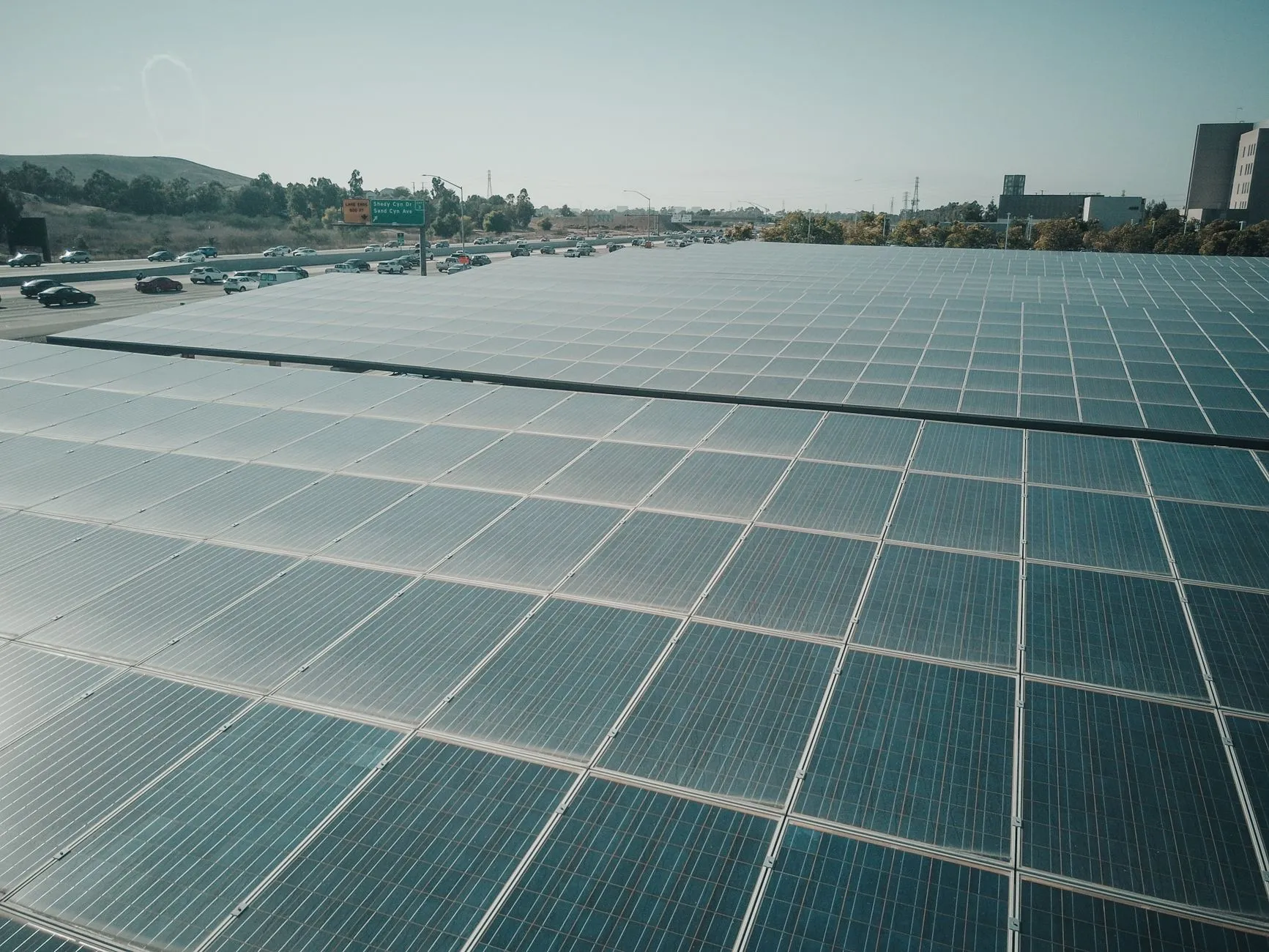
The global transition to clean energy has reached a new milestone. For the first time, the challenge is no longer proving that renewable power works. Instead, the hard problems now centre on grids, storage, finance, and whether political support can last. That shift marks a fundamental change in how businesses and governments need to think about decarbonisation.
Generation Investment Management released its latest Sustainability Trends Report in September 2026. The document argues that climate action is moving forward despite geopolitical upheaval and policy reversals. However, it also warns that the pace remains too slow to meet global temperature targets. The report covers five themes: power, transport, buildings and industry, land and food, and finance. Each section highlights progress alongside stubborn gaps.
Clean energy investment hit a record $2.2 trillion in 2025. That figure is roughly double the amount directed toward fossil fuels in the same year. Solar generation grew by 30% year on year. Battery storage capacity expanded by more than 40%. Clean power supplied all of last year's increase in global electricity demand. These numbers signal that renewables have moved from the margins to the mainstream.
Yet the International Energy Agency estimates that annual clean energy investment needs to reach $4.5 trillion by the early 2030s to stay on a 1.5°C pathway. Current spending sits at roughly half that level. Consequently, the transition is advancing but still undershooting the scale required for climate stability. The gap between what is happening and what is needed defines the central tension in the report.
Infrastructure constraints now limit clean energy deployment
The report makes clear that generation costs are no longer the main barrier. Wind and solar are now the cheapest forms of new electricity in most markets. Therefore, the bottleneck has shifted. The primary challenge today involves transporting, storing, and distributing renewable electricity at scale. Grid capacity, permitting delays, and energy storage all constrain how quickly clean power can be integrated.
This reframing matters for UK businesses. Many firms have set net zero commitments and are trying to decarbonise operations. However, progress often stalls not because renewable energy is unavailable, but because the infrastructure to deliver it is missing. Long connection queues for new renewable projects are common. Grid reinforcement can take years. Storage solutions remain expensive or limited in availability.
For manufacturers, the issue is acute. Electrifying industrial processes requires reliable access to large volumes of clean electricity. If the grid cannot deliver that power when needed, businesses face a choice between delaying decarbonisation or investing in costly on-site generation and storage. Both options carry financial and operational risks.
Similarly, transport businesses looking to electrify fleets need confidence that charging infrastructure will keep pace with vehicle rollout. The report's focus on infrastructure highlights that the energy transition is now as much about physical systems and planning as it is about technology. Businesses cannot assume that clean power will automatically be available just because it is cost-competitive.
Grid operators, regulators, and developers must now move faster. Planning reforms, faster permitting, and greater investment in transmission and distribution networks are all essential. Without them, the economic advantage of renewables cannot translate into emissions reductions at the speed required.
Record investment flows signal mainstream adoption
The $2.2 trillion invested in clean energy during 2025 represents a significant milestone. It shows that capital is flowing toward renewables at a scale once reserved for fossil fuels. In fact, fossil fuel investment was roughly half that total in the same year. This shift reflects changing risk assessments among investors, banks, and asset managers.
Clean energy is no longer a speculative bet. It is now a core part of the global energy system. Pension funds, insurers, and institutional investors are allocating capital to renewables, storage, and grid infrastructure. The financial case is increasingly clear: renewables offer stable returns, lower long-term risk, and better alignment with climate regulations.
However, the report also notes that even record investment levels fall short. The gap between current spending and what is needed to meet 1.5°C is substantial. Bridging that gap will require more than incremental growth. It demands structural changes in how capital is mobilised, particularly in emerging markets where much of the future energy demand will arise.
UK businesses considering their own capital allocation should take note. The clean energy transition is attracting serious money. Companies that position themselves as suppliers, partners, or adopters in this shift stand to benefit. Conversely, firms that delay risk being left behind as supply chains, procurement standards, and customer expectations all move toward decarbonisation.
Access to finance is also becoming easier for businesses pursuing net zero. Green bonds, sustainability-linked loans, and transition finance products are more widely available. Lenders increasingly view climate risk as financial risk. Consequently, businesses with credible decarbonisation plans may find better terms than those without.
Policy uncertainty remains a drag on progress
The report does not shy away from politics. Al Gore, who chairs Generation Investment Management, has been outspoken about the impact of policy reversals. In remarks associated with the firm's 2025 report, he called the U.S. position on sustainable investment "not only wrong, it is irresponsible." The 2026 edition reinforces that view, warning that policy backsliding can slow progress even if it cannot fully reverse the transition.
For businesses, this creates uncertainty. Long-term investment decisions depend on stable policy frameworks. Carbon pricing, renewable subsidies, planning rules, and emissions standards all influence whether clean energy projects proceed. When governments change direction, projects stall, and capital flows elsewhere.
The UK has seen this dynamic play out. Changes to renewable support schemes, delays in grid connections, and shifts in planning policy have all created headaches for businesses. While the overall direction of travel remains toward net zero, the path is uneven. That makes planning harder and increases risk.
Nevertheless, the report's central argument is that the transition will continue regardless of individual political decisions. The economics now favour renewables. Corporate commitments, investor pressure, and technological momentum all push in the same direction. Policy can accelerate or slow that shift, but it cannot stop it entirely.
For businesses, this means managing policy risk while continuing to plan for a decarbonised future. Waiting for perfect policy clarity is not an option. Instead, firms need to build flexibility into their strategies, hedge against regulatory changes, and stay engaged with policymakers to shape better frameworks.
Solar and battery growth outpace expectations
The 30% year-on-year growth in solar generation during 2025 is striking. Solar is now the fastest-growing source of electricity globally. Costs have fallen so far that new solar is cheaper than running existing coal plants in many regions. This has driven rapid deployment across Europe, Asia, and parts of Africa.
Battery storage has grown even faster, expanding by more than 40% in 2025. Storage is critical because it allows renewable energy to be used when the sun is not shining or the wind is not blowing. Without storage, the intermittency of renewables becomes a constraint. With it, clean power can provide reliable, dispatchable electricity.
UK businesses should understand what this means. Solar and batteries are no longer experimental. They are proven, scalable, and increasingly affordable. Firms with large energy bills can install on-site solar and storage to cut costs and reduce grid dependence. Those in the supply chain for solar panels, inverters, or battery systems have clear growth opportunities.
Moreover, the rapid expansion of storage changes the economics of demand-side flexibility. Businesses that can shift energy use to match renewable generation can benefit from lower prices and better grid stability. Time-of-use tariffs, demand response schemes, and battery arbitrage all become more attractive as storage scales up.
The report's data also suggests that the grid is starting to adapt. Clean power met all of last year's increase in global electricity demand. That is a first. It shows that renewables are not just nibbling at the edges but are now the primary source of new supply. For UK businesses, it signals that clean electricity will become more abundant, more reliable, and eventually cheaper.
What UK businesses need to focus on now
- Clean energy investment reached $2.2 trillion in 2025, double the amount spent on fossil fuels.
- Solar generation grew by 30% year on year, while battery storage capacity expanded by more than 40%.
- Clean power supplied all of last year's increase in global electricity demand.
- Current investment levels remain roughly half the $4.5 trillion per year needed to meet a 1.5°C pathway by the early 2030s.
- Infrastructure constraints, including grid capacity and storage, are now the main barriers to faster deployment.
- Policy uncertainty continues to create risks, but the underlying economics favour continued clean energy growth.
Practical steps for businesses navigating the transition
Understanding that the transition is real and accelerating is only the first step. Businesses need to act on that knowledge. For many UK firms, the immediate priority is assessing energy exposure. How much do you spend on electricity and gas? Where does that energy come from? What would switching to renewables cost, and what would it save?
These questions matter because energy costs are climbing, grids are under strain, and regulatory pressure is increasing. Firms that take control of their energy supply now will be better positioned than those that wait. On-site solar, battery storage, and power purchase agreements all offer ways to lock in lower costs and reduce carbon footprints.
Another priority is understanding supply chain emissions. Scope 3 reporting is becoming standard, and major customers are asking suppliers to demonstrate decarbonisation. Businesses that can show credible progress will win contracts. Those that cannot may lose them. Our net zero program supports carbon reporting compliance and helps firms meet procurement standards.
Skills also matter. The transition creates demand for new capabilities: energy management, carbon accounting, renewable procurement, and sustainability strategy. Investing in training ensures your team can navigate these changes. SBS Academy offers training on Scope 3 emissions and other critical topics.
Finally, businesses should engage with policymakers. The report highlights that infrastructure and finance are now the binding constraints. Firms that work with regulators, grid operators, and industry bodies can help shape better solutions. Collective action is often more effective than going it alone.
The report from Generation Investment Management shows that the clean energy transition is no longer a future scenario. It is happening now, at record scale. However, the pace is not yet fast enough. Businesses that understand the infrastructure bottlenecks, capital flows, and policy risks will be better prepared to navigate what comes next.
Where to find more information and guidance
The International Energy Agency publishes detailed analysis on clean energy investment and the pathways to net zero. Their World Energy Outlook offers authoritative data on what is needed to meet climate targets. The UK government's Department for Energy Security and Net Zero also provides guidance on energy policy and support schemes for businesses.
For firms looking to understand grid connection processes and timelines, the Energy Networks Association offers resources on network capacity and infrastructure planning. Businesses considering renewable energy procurement can find frameworks and advice through the Renewable Energy Guarantees of Origin scheme, administered by Ofgem.
Generation Investment Management's full Sustainability Trends Report provides deeper insight into each of the five themes covered. While the report is aimed at investors, it contains useful data and analysis for any business trying to understand where the transition is heading. Staying informed about these trends is not optional. The energy system is changing fast, and businesses need to keep up.