
EPA sued over carbon pollution standards repeal
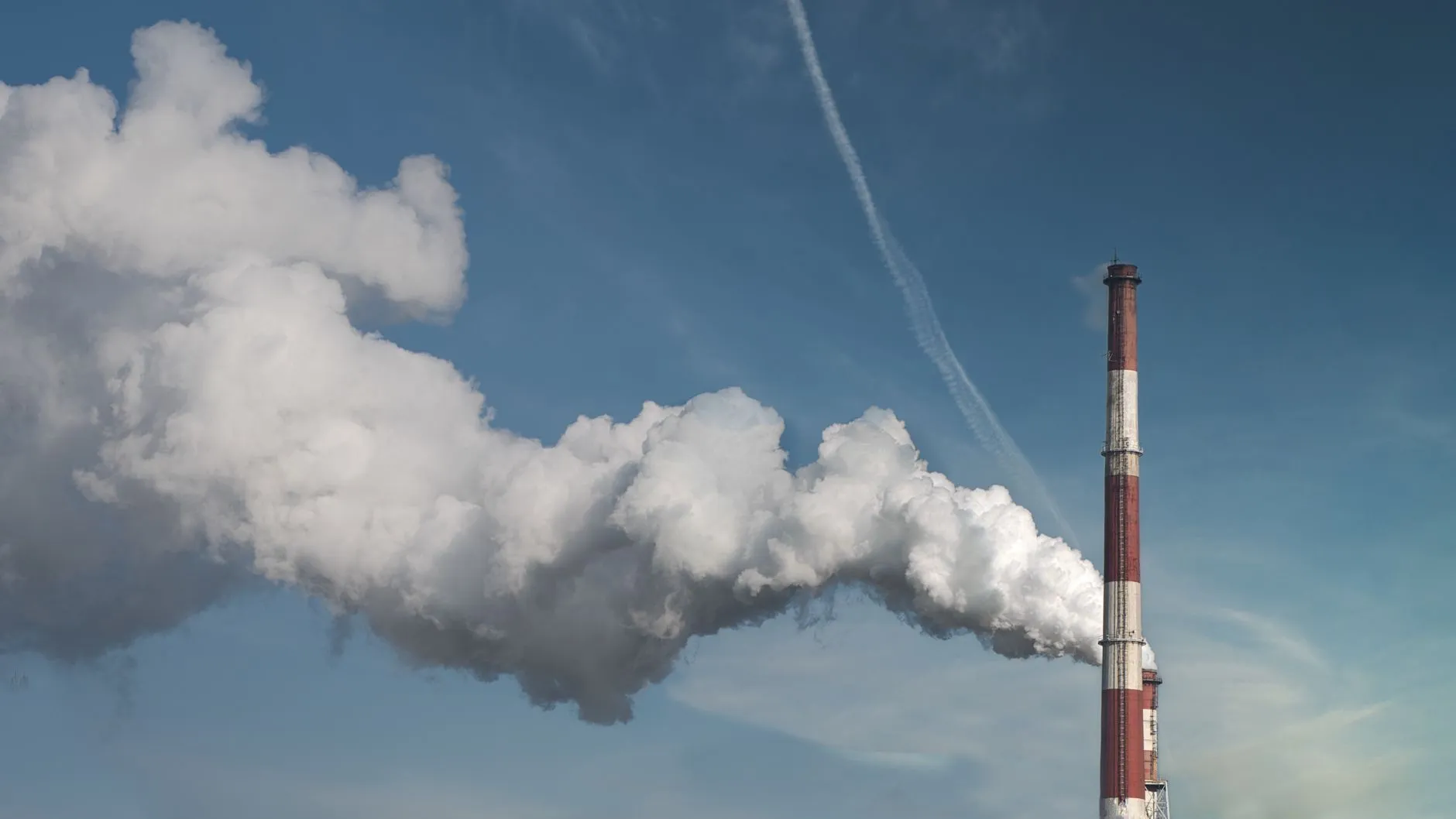
Power plant emissions standards in the United States have been thrown into legal dispute after environmental groups challenged sweeping regulatory changes. The case has no direct legal effect in the UK. However, it offers a preview of the regulatory uncertainty that can emerge when climate policy shifts abruptly. For UK businesses with US operations, American customers, or transatlantic supply chains, the outcome may influence carbon accounting assumptions, contract terms, and long-term climate commitments.
The lawsuit was filed on 17 September 2026 in the US Court of Appeals for the DC Circuit. Six organisations brought the challenge. They include the Natural Resources Defense Council, the American Lung Association, and the Environmental Defense Fund. Their target is a regulatory rollback finalised three days earlier by the US Environmental Protection Agency.
That rollback dismantled most of the carbon dioxide emission limits introduced in 2024 for coal and gas-fired power stations. The 2024 rules had required existing coal plants and new gas plants to capture 90% of their carbon emissions over time. Administrator Lee Zeldin announced the repeal on 14 September 2026. He stated that the agency lacked authority under the Clean Air Act to regulate greenhouse gases from power plants for climate purposes.
Carbon standards repealed and legal challenge launched
The Biden administration published the original power plant standards in 2024. Those rules set carbon pollution limits for fossil fuel-fired generating units. Large coal facilities and new natural gas plants faced stringent reduction requirements. The standards were designed to drive down emissions progressively. They represented one of the most significant federal interventions in power sector decarbonisation.
Three years later, the EPA reversed course. Most of the 2024 requirements were formally repealed. The agency also proposed eliminating the remaining provisions. Under the revised framework, new coal plants revert to older 2015 standards. New gas facilities remain subject to the 2015 baseline plus some efficiency measures adopted in 2024. Existing coal and gas plants no longer face the 90% carbon capture obligation.
The EPA justified the rollback on cost and reliability grounds. Officials estimated the repeal would save $310 billion in compliance costs. They argued the move would reduce regulatory burden and support grid stability. Nevertheless, the agency provided no replacement standards. It also made clear that future regulation of power plant greenhouse gases for climate mitigation would not proceed under current legal interpretation.
Environmental and public health groups responded within days. Their legal challenge argues the EPA cannot lawfully repeal emission standards without substituting equivalent or better protections. They contend the rollback abandons the agency's statutory duty to regulate pollutants that endanger public health and welfare. The lawsuit seeks to overturn the repeal and reinstate the 2024 carbon limits.
Estimated emissions impact and compliance savings
The repealed standards were projected to prevent 1.38 billion metric tons of carbon dioxide emissions through 2047. That figure is equivalent to removing 328 million petrol cars from the road for one year. The American Public Health Association estimated the 2024 rules would deliver net climate and health benefits totalling $370 billion. Those benefits were expected to exceed industry compliance costs by a substantial margin.
The EPA disputes this assessment. Its $310 billion cost-saving estimate reflects avoided capital expenditure on carbon capture technology, monitoring systems, and operational changes. The agency did not publish a corresponding estimate of forgone climate and health benefits. Consequently, there is no official EPA analysis comparing the net welfare impact of repeal against retention of the standards.
For electricity generators, the rollback removes a major source of capital planning uncertainty. Coal plant operators no longer face mandatory retirement or expensive retrofitting. Gas plant developers can proceed without designing for 90% carbon capture. However, the legal challenge introduces a new layer of risk. If the courts overturn the repeal, utilities may face reinstated compliance deadlines with little lead time.
This dynamic mirrors regulatory uncertainty UK businesses have navigated in other contexts. When standards are repealed and then challenged, investment decisions become harder to lock in. Companies must weigh the risk of designing to a standard that may return against the cost of ignoring it and facing retrofits later.
Why UK businesses should monitor this case
Although the lawsuit concerns US domestic law, it has relevance for UK companies in several situations. First, UK firms with American subsidiaries or joint ventures may need to reassess emissions forecasts and capital budgets. If the rollback stands, US power sector emissions will remain higher than previously expected. If the courts reinstate the standards, compliance timelines will compress.
Second, businesses that report Scope 3 emissions must account for the carbon intensity of purchased electricity. UK companies buying power in the US, or sourcing goods manufactured there, should review the emissions factors they apply. A sustained increase in coal and gas generation without carbon capture will raise the grid intensity in affected regions. That changes the carbon footprint of everything produced using that electricity.
Third, multinational corporations with science-based targets may find their US operations complicating group-wide decarbonisation. Many net zero programmes assume a degree of regulatory support in key markets. When that support is withdrawn, companies must decide whether to maintain internal standards or relax their targets. Either choice has implications for credibility, investor relations, and tender eligibility in the UK and EU.
Fourth, UK businesses that export to the US may face customer pressure. American buyers committed to their own carbon reduction goals will scrutinise supplier emissions more closely if domestic regulation weakens. Conversely, if US competitors face lower regulatory costs, UK exporters may encounter price competition from carbon-intensive rivals. Understanding the regulatory baseline helps UK firms anticipate these dynamics and adjust commercial strategy accordingly.
Finally, the case illustrates how quickly environmental policy can shift when political administrations change. UK companies operating internationally cannot assume regulatory continuity. Long-term contracts, joint ventures, and capital projects all carry policy risk. Building flexibility into commercial arrangements and maintaining scenario planning for different regulatory outcomes becomes more important as climate policy remains contested in major economies.
Legal arguments and administrative precedent
The plaintiffs argue the Clean Air Act requires the EPA to regulate pollutants that endanger public health and welfare. Carbon dioxide has been classified as such a pollutant since the Supreme Court's 2007 decision in Massachusetts v EPA. Therefore, the agency cannot simply abandon regulation without demonstrating that emissions no longer pose a danger or that an alternative approach provides equivalent protection.
They also contend the EPA failed to justify the repeal with adequate evidence. Administrative law requires agencies to provide reasoned explanations when reversing established policy. The challengers say the agency relied on cost estimates without properly weighing health and climate benefits. They further argue the EPA ignored its own scientific findings about the risks of uncontrolled greenhouse gas emissions from power plants.
The EPA's defence rests on a different reading of the Clean Air Act. Officials assert the statute does not grant authority to impose technology-forcing standards like 90% carbon capture. They point to the Supreme Court's 2022 decision in West Virginia v EPA, which limited the agency's ability to regulate greenhouse gases through generation-shifting measures. Administrator Zeldin has stated publicly that climate regulation of power plants exceeds the EPA's statutory remit under current judicial interpretation.
This argument sets up a fundamental clash over regulatory authority. If the court accepts the EPA's position, future administrations may struggle to impose stringent carbon limits on power generation without new legislation from Congress. If the court sides with the challengers, the agency will be required either to reinstate the 2024 standards or adopt replacement rules of comparable stringency. The outcome will establish important precedent for environmental rulemaking under conditions of political transition.
Power sector decarbonisation across different jurisdictions
The UK has taken a different regulatory path. Contracts for Difference support renewable generation. Carbon pricing through the UK Emissions Trading Scheme applies to power producers. The Energy Act 2023 introduced measures to accelerate grid decarbonisation and phase out unabated coal generation. These mechanisms operate independently of US policy. However, they exist within a global energy market where investor confidence, technology costs, and political momentum all cross borders.
When a major economy reverses course on power sector emissions, it can influence market expectations elsewhere. Equipment manufacturers may shift focus. Investors may reassess the durability of climate regulation. Technology developers may prioritise jurisdictions with stable policy frameworks. UK businesses benefit from understanding these broader market signals, even when the regulatory change occurs overseas.
Moreover, carbon reporting and ESG compliance increasingly require companies to address policy risk as part of climate disclosure. The Task Force on Climate-related Financial Disclosures asks businesses to describe how regulatory changes might affect their strategy. A rollback of US power plant standards is precisely the kind of development that should feature in transition risk analysis for companies with American exposure.
Key facts for business planning
- The lawsuit was filed on 17 September 2026 in the US Court of Appeals for the DC Circuit by six environmental and public health organisations.
- The EPA finalised repeal of most 2024 power plant carbon standards on 14 September 2026 and proposed eliminating the remainder.
- The repealed standards required existing coal plants and new gas plants to capture 90% of carbon dioxide emissions over time.
- The rollback is estimated by the EPA to save $310 billion in compliance costs, while public health groups estimate forgone benefits at $370 billion.
- The 2024 standards were projected to prevent 1.38 billion metric tons of carbon emissions through 2047, equivalent to removing 328 million cars for one year.
- The legal challenge argues the EPA cannot repeal emission standards without replacing them and has abandoned its statutory duty to regulate greenhouse gases.
- UK businesses with US operations, American supply chains, or transatlantic customers should review emissions forecasts and contract assumptions in light of potential regulatory instability.
What businesses with US exposure should consider
Companies should begin by reviewing their Scope 3 emissions calculations. If you purchase electricity in the US or source manufactured goods from American suppliers, check the grid emission factors you apply. The rollback may increase the carbon intensity of regional grids over time. Consequently, your reported emissions could rise even if your own operations remain unchanged. Early identification allows you to adjust targets, communicate transparently with investors, and explore alternative sourcing if necessary.
Next, consider the implications for long-term contracts and joint ventures. If you have committed to delivering low-carbon products or services in the US market, assess whether the regulatory rollback affects your ability to meet those commitments. Contracts that reference compliance with federal emission standards may need renegotiation. Joint ventures with American partners may require updated governance provisions to address divergent regulatory expectations between the UK and US.
Businesses that report under the Task Force on Climate-related Financial Disclosures should document the rollback as a transition risk event. Describe the potential impact on your US operations, supply chain emissions, and group-wide decarbonisation pathway. Explain the steps you are taking to monitor the litigation and adjust your strategy if the courts reinstate the standards. This demonstrates rigorous climate governance and helps investors understand your exposure.
For companies pursuing science-based targets or net zero certification, the case highlights the importance of internal standards that exceed regulatory minima. Relying solely on government mandates introduces vulnerability when those mandates weaken. Setting your own emission reduction criteria, backed by operational changes and capital investment, provides greater resilience against policy volatility. It also maintains credibility with customers, investors, and procurement teams in jurisdictions with stronger climate ambition.
Finally, monitor the court proceedings and any subsequent regulatory developments. The DC Circuit will likely hear oral arguments in 2027. A ruling could follow within months or take longer if the case raises complex legal questions. Meanwhile, the EPA may issue further guidance or propose alternative rules. Staying informed allows you to adjust plans proactively rather than reacting to sudden changes.
Where to find authoritative information
The US Environmental Protection Agency publishes all final rules, proposed regulations, and supporting documentation on its website. You can track the status of the power plant standards and read the agency's justification for the rollback in the Federal Register entries.
Court filings and decisions in the case are available through the US Court of Appeals for the DC Circuit. The docket will include the complaint, EPA's response, and any amicus briefs filed by industry groups or additional advocacy organisations. This provides the most direct insight into the legal arguments on both sides.
For broader context on US climate policy and power sector regulation, the US Department of Energy offers data on electricity generation, emissions trends, and grid reliability. This information helps UK businesses understand the operational realities behind the regulatory debate.
UK companies reporting under domestic climate disclosure requirements can consult UK government guidance on climate change agreements and the latest updates from the Department for Energy Security and Net Zero. These resources clarify how UK regulatory expectations differ from those in the US and what standards apply to businesses operating in both jurisdictions.