
EU Deforestation Law Impacts Ghana's Cocoa Farmers
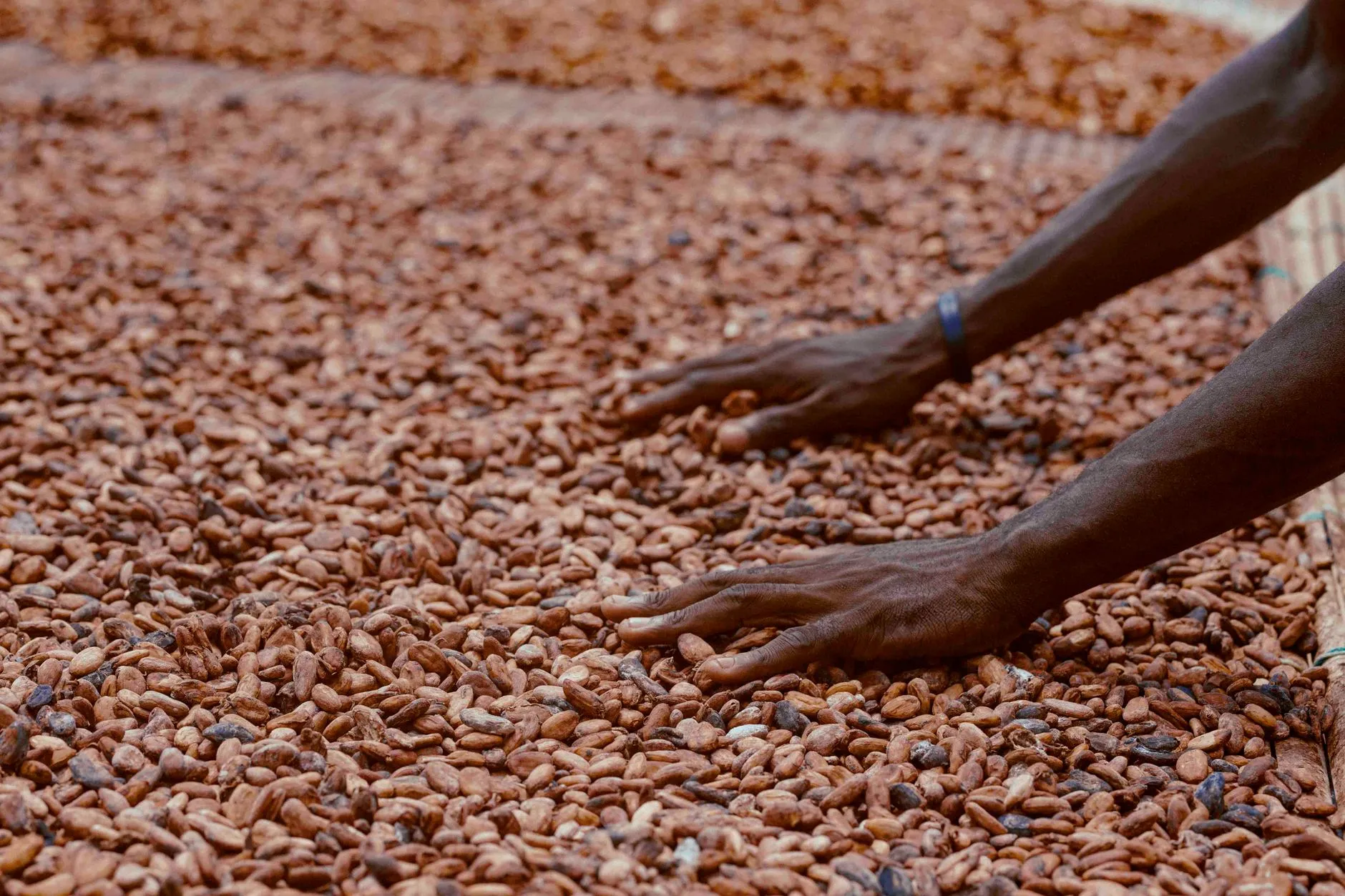
Ghana's cocoa sector faces EU traceability rules while mining escapes regulation
Ghana produces some of the world's finest cocoa. However, farmers now face a challenge that has nothing to do with the quality of their beans. From December 2026, companies selling cocoa into the European Union must prove each shipment comes from land that was not deforested after 31 December 2020. The requirement is part of the EU Deforestation Regulation, known as EUDR.
The regulation covers seven commodities including cocoa, coffee, soy, and palm oil. It requires geolocation data for every plot where crops are grown. Companies must also demonstrate compliance with local laws in the country of production. For Ghana, this creates a regulatory problem. Cocoa farmers are being asked to prove their land use is legal and forest-friendly. Meanwhile, illegal gold mining continues to destroy thousands of hectares of forest without facing equivalent scrutiny from EU buyers.
This gap has created frustration among cocoa producers and sustainability experts in Ghana. Ahiakpa, a Ghanaian cocoa and sustainability advocate, put it plainly: "Cocoa is being monitored for deforestation. Gold, which is contributing heavily to that same deforestation, is not facing similar checks." The result is a traceability regime that may improve supply chain transparency without addressing the underlying causes of forest loss in cocoa-growing regions.
EUDR compliance deadlines and what they require
The European Commission has set clear deadlines for compliance. Large companies must meet EUDR requirements by 30 December 2026. Small and micro businesses have until 30 June 2027. These dates follow a delay announced in 2024, which gave firms more time to prepare their due diligence systems.
Under the regulation, traders and manufacturers must collect geolocation coordinates for every plot of land where cocoa is grown. They must also provide a due diligence statement demonstrating that the cocoa was legally produced and did not come from recently deforested land. The cut-off date is 31 December 2020. Any cocoa grown on land cleared after that date cannot enter the EU market.
For Ghana, which exports a significant share of its cocoa to Europe, these rules carry commercial weight. The EU remains a crucial market for Ghanaian beans. Losing access would have serious economic consequences for farmers, cooperatives, and the national cocoa board. Consequently, Ghana launched a pilot traceability programme in 2024 to map farms and collect the necessary geolocation data.
Nevertheless, implementation is proving difficult. Many Ghanaian cocoa farmers are smallholders who work plots of a few hectares or less. They often lack formal land titles, digital records, or reliable internet access. Collecting GPS coordinates from tens of thousands of remote farms requires infrastructure, training, and funding that is not yet fully in place. Furthermore, farmers who produce both compliant and non-compliant cocoa may need to keep harvests separate. This adds logistical complexity and cost for drying, fermentation, and transport.
Illegal gold mining is Ghana's largest deforestation threat
While the cocoa sector prepares for EU scrutiny, illegal gold mining continues to devastate forests across Ghana. The practice is known locally as galamsey. It involves unlicensed prospecting, often using heavy machinery and mercury-based processing. The environmental damage is severe and visible.
Ghana's Forestry Commission reported that illegal mining has destroyed approximately 4,726 hectares of land across seven regions. The mining has affected 34 of the country's 288 forest reserves. Other estimates put the figure higher, with some sources citing 5,252 hectares or 45 affected reserves. The variation reflects differences in reporting periods and data collection methods. However, all estimates agree on the trend. Illegal mining is a major and growing source of forest loss in Ghana.
The mining also causes broader environmental harm. Rivers and groundwater supplies become polluted with mercury and sediment. Agricultural land is degraded by soil removal and toxic runoff. In some areas, entire communities have lost access to clean water. The damage is not confined to forest reserves. Illegal mining has also spread into cocoa-growing areas, creating direct competition for land between farmers and prospectors.
This competition is part of what makes the EUDR's focus on cocoa controversial in Ghana. Cocoa expansion is not the primary driver of deforestation in many affected regions. Instead, miners clear forest to access gold-bearing soil. Cocoa farmers are then required to provide geolocation proof that their plots are deforestation-free, even when the forest loss around them is caused by an industry that faces no equivalent EU regulation.
Smallholder farmers bear the compliance burden
The cost of EUDR compliance will fall disproportionately on Ghana's smallholder farmers. These producers typically farm between one and three hectares. They often rely on cooperative structures to aggregate their beans and access international buyers. Many do not have GPS devices, smartphones, or the technical skills to record coordinates themselves.
Traceability systems require investment in training, equipment, and data management. In practice, this means cooperatives or purchasing companies must provide support. Some larger buyers have begun funding GPS mapping and digital record-keeping. However, coverage is patchy. Farmers in remote areas may wait months for support visits. Those who farm both EUDR-compliant and non-compliant plots face a further challenge. They must keep their harvests separate to avoid cross-contamination. This requires duplicate infrastructure for drying and storage.
The added costs come at a time when cocoa prices have been volatile and many farmers already struggle to earn a living wage. Consequently, some producers worry that compliance demands will push the smallest farmers out of export markets altogether. If traceability requirements become too expensive or complex, these farmers may sell their beans domestically or switch to other crops. For Ghana, this could mean losing production capacity and export revenue.
There is also a practical question about land tenure. Many cocoa plots are farmed under customary rights rather than formal legal title. The EUDR requires proof that production complies with local laws. However, Ghana's land registration system is incomplete. Clarifying ownership and legal status for thousands of smallholder plots will take time and resources. Without this clarity, some farmers may find it difficult to prove compliance, regardless of whether their land use is sustainable.
What UK businesses need to understand about EUDR and Ghana
- The EU Deforestation Regulation applies from 30 December 2026 for large firms and 30 June 2027 for small and micro businesses, covering cocoa sold into the EU market.
- Ghana launched a pilot traceability programme in 2024 to map cocoa farms and collect geolocation data, but many smallholder farmers lack the resources and infrastructure to comply without external support.
- Illegal gold mining, known as galamsey, has destroyed approximately 4,726 hectares of land across seven regions and affected at least 34 of Ghana's 288 forest reserves, according to the Forestry Commission.
- Cocoa is subject to strict deforestation monitoring under EUDR, while gold mining, a larger driver of forest loss in many areas, faces no equivalent regulation from EU buyers.
- Smallholder farmers may incur significant costs for GPS mapping, record-keeping, and harvest segregation, raising concerns about market access and economic viability for the smallest producers.
- Ghana is exploring premium pricing for EUDR-compliant cocoa to preserve EU market access and capture additional value for farmers who meet traceability requirements.
Supply chain risks for UK importers and manufacturers
UK businesses that import cocoa from Ghana need to understand the practical implications of EUDR, even though the UK is no longer part of the EU. Many UK companies source cocoa that is processed or sold onward into European markets. Therefore, compliance with EUDR will affect procurement decisions, supplier relationships, and due diligence processes for UK firms with EU exposure.
Traceability is the central challenge. Importers must be able to demonstrate, with geolocation evidence, that their cocoa was not grown on recently deforested land. This requires data from farm level, not just from exporters or cooperatives. For businesses that buy through intermediaries, this means asking suppliers to provide GPS coordinates and compliance statements for every batch. Not all suppliers will have this information ready by the 2026 deadline.
Companies should also consider reputational risk. If a UK business sells cocoa products into the EU and cannot prove compliance, it may face penalties, shipment delays, or exclusion from the market. Furthermore, consumers and civil society groups are increasingly attentive to deforestation claims. A failure to meet EUDR standards could damage brand reputation, even for sales outside the EU.
The gap between cocoa regulation and mining adds complexity. UK businesses cannot control illegal mining in Ghana. However, they may face questions about why their supply chains are being scrutinised for deforestation while gold supply chains are not. This creates a communications challenge. Companies need to explain their due diligence efforts clearly and acknowledge the limits of their influence over broader land-use policy in Ghana.
There is also an opportunity. Ghana is working to build compliant supply chains and is exploring premium pricing for certified cocoa. UK businesses that invest in traceability, support smallholder farmers, and build long-term relationships with cooperatives may benefit from more secure sourcing and better product differentiation. Sustainable procurement support can help businesses assess supplier readiness and develop due diligence systems that meet EUDR requirements without creating unnecessary cost or complexity.
Policy implications and the limits of commodity-specific regulation
The Ghanaian case highlights a structural weakness in the EUDR. The regulation targets specific commodities but does not address all drivers of deforestation in a given country. In Ghana, cocoa farmers are being asked to prove compliance in a landscape where mining, not agriculture, is often the main cause of forest loss. This creates an asymmetry that undermines the regulation's effectiveness.
FERN, a European environmental organisation, has argued that the EUDR's commodity-specific approach is a serious shortcoming. Regulating cocoa without regulating gold means the law may improve supply chain transparency without reducing overall deforestation. For Ghana, this is not just a technical issue. It affects the fairness of the regulatory burden. Cocoa farmers are being held accountable for forest loss they did not cause.
Ghana's government has signalled interest in addressing illegal mining. However, enforcement is difficult. Galamsey operations are often small-scale, mobile, and politically sensitive. They provide income for communities with few alternatives. Cracking down on illegal mining requires sustained political will, adequate funding for enforcement, and viable economic alternatives for those involved. Progress has been slow.
Nevertheless, Ghana is adapting. The pilot traceability programme shows that the government recognises the importance of EU market access. There are also reports that Ghana is exploring higher prices for EUDR-compliant cocoa. If successful, this could create a financial incentive for farmers to invest in compliance and maintain their position in European supply chains. ESG compliance support can help businesses navigate these changes and ensure their procurement strategies align with emerging standards.
Broader implications for UK businesses sourcing from high-risk regions
The Ghana case is not unique. Similar tensions are emerging in other commodity-producing countries where deforestation has multiple causes. Indonesia faces pressure over palm oil and timber, while Brazil confronts scrutiny of soy and beef. In each case, the EUDR creates compliance obligations for one sector while other drivers of forest loss continue unchecked.
For UK businesses, this means due diligence cannot rely solely on commodity certification. Companies need to understand the broader land-use context in sourcing regions. This requires asking questions about mining, infrastructure development, and governance. It also requires engaging with suppliers, civil society, and local authorities to understand how deforestation risks are being managed on the ground.
Smaller businesses may find this difficult. Building country-level expertise and conducting site visits is expensive and time-consuming. However, there are practical steps companies can take. Working with established cooperatives, using independent verification schemes, and sharing data with other buyers can reduce individual costs. Industry groups and trade associations can also play a role by providing shared intelligence and best-practice guidance.
The EUDR also underscores the importance of transparency. Companies that can demonstrate robust due diligence will be better positioned to manage regulatory risk, respond to stakeholder questions, and maintain market access. Those that cannot may face penalties, reputational damage, or loss of business. Carbon reporting compliance and supply chain transparency are increasingly linked, as regulators and investors look for evidence that businesses understand and manage their environmental impacts.
Where to find authoritative guidance on EUDR and cocoa traceability
The European Commission publishes detailed guidance on the EU Deforestation Regulation, including implementation timelines, due diligence requirements, and country risk assessments. Businesses can access this information on the European Commission's environment pages.
The UK government provides trade and export guidance for businesses affected by EU regulations. The Department for Business and Trade maintains resources on gov.uk that cover export compliance and market access issues. Businesses should check these regularly for updates on EUDR implementation and its impact on UK-EU trade.
For country-specific information on Ghana's cocoa sector and traceability initiatives, the Ghana Cocoa Board is the primary authority. Meanwhile, organisations such as FERN and IEMA provide analysis and commentary on deforestation regulation and its social and environmental impacts. Reuters and BBC News have also reported extensively on illegal mining in Ghana, providing useful context for understanding the challenges facing cocoa farmers.