
EU electricity sector emphasises need for stronger Emissions Trading System
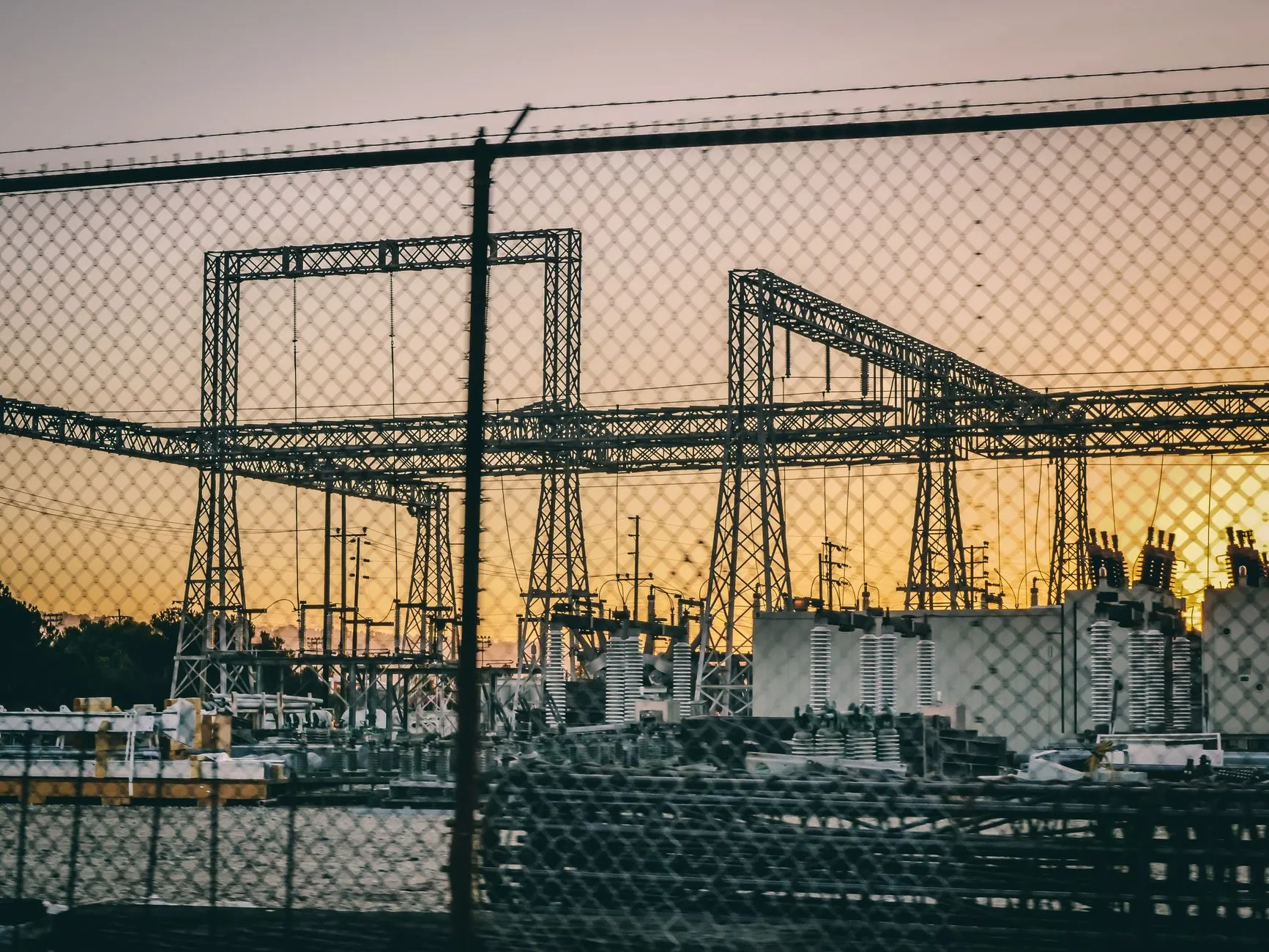
Europe's electricity sector is pushing back against any weakening of the EU's carbon pricing system. As lawmakers in Brussels begin reviewing proposals to reform the Emissions Trading System, power generators and grid operators are calling for stronger carbon pricing, not softer rules. Their argument is straightforward: a credible carbon price is what drives investment in clean electricity, and clean electricity is what makes decarbonisation affordable for industry.
This puts the power sector at odds with some member states and industrial groups worried about electricity costs and competitiveness. The European Commission published its ETS review in July 2026 after the Council asked for changes to reduce price volatility and ease the impact on electricity bills. What began as a technical update has become a test of whether the EU can maintain carbon pricing as the cornerstone of climate policy while managing political pressure on energy costs.
For UK businesses tracking European policy, the debate has practical relevance. Many UK manufacturers and exporters compete directly with EU counterparts, and any shift in carbon pricing on the continent affects relative costs, trade terms, and the pace at which industrial customers in both markets switch to electricity. Moreover, the UK's own Emissions Trading Scheme operates on similar principles, and EU reforms often shape expectations here.
How the Emissions Trading System shapes electricity costs
The EU ETS covers electricity and heat generation, manufacturing, aviation, and maritime transport across the European Economic Area. It works by capping total emissions and requiring installations to surrender allowances for every tonne of carbon they emit. The cap falls each year, and companies must either cut emissions or buy allowances from others who have surplus. The market price reflects the cost of the marginal tonne abated.
Electricity generators are the largest participants in the system. According to Commission analysis, power and heat generation accounted for 49% of all ETS emissions in 2023. Consequently, carbon costs feed directly into wholesale electricity prices. Gas-fired generation sets the marginal price much of the time, and carbon is a large component of its running cost. This pass-through effect means ETS prices show up quickly in power markets.
That creates a tension. A rising carbon price incentivises renewable generation and electrification. However, it also increases electricity bills in the short term, particularly for industrial users. Commission research published alongside the July review estimated that indirect carbon costs represented between 8% and 11% of the retail electricity price paid by large industrial consumers across the EU in 2025.
For policymakers, the challenge is timing. Electrification delivers climate benefits over time as the grid gets cleaner. Nevertheless, high electricity prices today can discourage manufacturers from switching away from gas, slowing the transition. The Commission has framed this as a need to level the playing field between electricity and fossil fuels, so that carbon costs don't inadvertently penalise the cleaner choice.
What the Commission has put on the table
The July 2026 proposal keeps the ETS as a market mechanism but slows the rate at which the emissions cap tightens after 2030. Under the plan, the Linear Reduction Factor would be set at 3.7% per year for 2031 to 2035, then drop to 1.7% for 2036 to 2040. That compares with steeper trajectories discussed before the review.
Free allocation of allowances, which currently shields some industries from the full carbon cost, would continue beyond 2030. The Commission wants to tie this support more closely to decarbonisation investment within Europe. In other words, companies that invest in low-carbon production would retain more free allowances than those that don't.
The proposal is explicitly positioned within a broader competitiveness package. Alongside the ETS changes, the Commission is promoting measures to narrow the cost gap between electricity and gas. These include support for heat pumps, electric vehicles, and industrial electrification projects. The logic is that cleaner electricity only drives the transition if it is also more affordable than the fossil alternative.
The European Council had requested this review by July 2026 at the latest, with a mandate to reduce carbon price volatility and mitigate impacts on electricity costs. What the Council did not ask for was a fundamental redesign. The brief was to preserve the ETS while smoothing its operation.
Why electricity suppliers are resisting a softer approach
Eurelectric, the association representing Europe's electricity industry, has called for the ETS to be strengthened rather than diluted. In public submissions as negotiations opened in the European Parliament, the sector argued for what it termed a predictable, meaningful, and sustainable carbon price. The emphasis is on all three words.
Predictability matters because power companies make investment decisions over decades. A generator deciding whether to build offshore wind or grid-scale storage needs to forecast electricity prices years ahead. Carbon pricing is a major input to that forecast. If the ETS is weakened or becomes subject to frequent political intervention, it loses credibility as an investment signal.
A meaningful price is one high enough to make low-carbon generation competitive without subsidy. If the carbon price is too low, gas generation remains cheap and renewables need ongoing support. Conversely, a robust carbon price makes clean electricity the economically rational choice, pulling private capital into the transition without continuous state aid.
Sustainability, in this context, refers to political durability. The electricity sector's concern is that a watered-down ETS might be easier to pass today but harder to defend tomorrow. If carbon pricing is seen as ineffective or unfair, public and political support will erode. A stronger system, the argument goes, is more likely to survive because it delivers visible results.
This stance reflects a commercial reality. Power companies have invested heavily in renewables on the assumption that carbon pricing would keep tightening. Weakening the ETS now would reduce the return on those investments and slow the pipeline of future projects. For an industry that has bet on decarbonisation, a strong carbon price is not an environmental preference but a financial necessity.
Industrial electrification and the hidden cost of carbon
One complication in the debate is the way carbon costs affect electricity relative to gas. Electricity carries an indirect carbon cost because most of it is still generated using fossil fuels part of the time. Gas used directly in a factory boiler also has a carbon cost, but the comparison is not symmetric.
When a manufacturer burns gas on site, it pays for ETS allowances based on its own emissions. When it buys electricity from the grid, it pays a price that includes the carbon cost of the marginal generator, usually a gas plant. In both cases, carbon pricing applies. However, the electricity route can look more expensive in the short term, even if it will be cleaner in the long term as renewables expand.
This is what the Commission means when it talks about levelling the playing field. If carbon pricing inadvertently makes electricity look less attractive than gas, it slows industrial electrification. The solution is not to scrap the ETS, but to reduce the carbon intensity of electricity faster and to ensure that gas pays its full climate cost.
The Commission's assessment notes that electrification combined with a cleaner power supply delivers climate benefits. The implication is that policy should support both halves of that equation: tighter carbon pricing to penalise gas, and faster grid decarbonisation to lower the carbon cost embedded in electricity. Doing one without the other leaves industry in a difficult position.
The political economy of carbon pricing in 2026
What makes this review politically sensitive is that it touches on electricity bills, industrial competitiveness, and climate credibility all at once. Member states are under pressure to keep energy affordable. Industries warn that high electricity costs push production outside Europe. Climate groups argue that weakening the ETS would undermine the EU's 2040 and 2050 targets.
The Commission is trying to navigate all three concerns. Its framing treats the ETS not only as a climate instrument but as part of Europe's economic resilience strategy. The message is that a strong carbon price supports competitiveness in the long run by driving innovation, reducing energy imports, and positioning European industry for a low-carbon global economy.
That argument is harder to make when electricity bills are high and households are feeling the pinch. Political support for carbon pricing depends on the public seeing tangible benefits, such as lower energy costs over time, new jobs in clean industries, and protection from volatile fossil fuel markets. If those benefits don't materialise, or if they accrue too slowly, the political coalition behind the ETS could fracture.
The electricity sector's call for a stronger ETS is therefore as much about political sustainability as environmental ambition. A system that delivers clear results is easier to defend than one that imposes costs without visible progress. For power companies, the risk is not that carbon pricing becomes too strict, but that it becomes too weak to drive change and too unpopular to survive.
What UK businesses should watch
Several aspects of the EU debate have direct relevance for UK companies. First, any change to EU carbon pricing affects the competitive position of British exporters and manufacturers. If the EU weakens its ETS, European producers face lower carbon costs. If it strengthens the system, UK firms with comparable carbon pricing may gain relative advantage.
Second, the UK ETS operates under similar rules and is partially linked to policy developments in Europe. Although the UK system is now independent, regulatory expectations and market behaviour often move in parallel. EU reforms set a benchmark for what investors and supply chain managers expect from carbon pricing.
Third, electrification trends in Europe shape demand for UK products and services. If EU industry accelerates electrification, demand for low-carbon materials, components, and electricity-intensive processes will rise. UK suppliers positioned to meet that demand stand to benefit. Conversely, if electrification stalls, the market for those goods and services grows more slowly.
Finally, the question of how to price carbon without discouraging electrification is not unique to the EU. The UK faces the same trade-off. European experiments with free allocation, contracts for difference, and electricity market reform offer lessons for UK policymakers and businesses planning long-term investments.
Core facts about the ETS review
- The European Commission published its ETS review on 17 July 2026, following a mandate from the Council to address carbon price volatility and electricity cost impacts.
- Electricity and heat generation accounted for 49% of all emissions covered by the ETS in 2023, making the power sector the largest participant in the system.
- Proposed post-2030 emissions reduction rates are 3.7% annually for 2031 to 2035, then 1.7% for 2036 to 2040, representing a slower tightening than some earlier scenarios.
- Indirect carbon costs embedded in electricity prices represented between 8% and 11% of retail electricity bills for large industrial consumers across the EU in 2025, according to Commission estimates.
- Free allocation of allowances will continue beyond 2030 under the proposal, with closer linkage to decarbonisation investment in Europe.
- The ETS covers electricity, heat, manufacturing, aviation, and maritime transport across the European Economic Area.
- Eurelectric and other power sector bodies are calling for a predictable, meaningful, and sustainable carbon price rather than a scaled-back system.
Strategic considerations for smaller firms
For UK SMEs, the EU ETS review might seem remote. However, carbon pricing influences costs across supply chains. If you supply into Europe or compete with European firms, changes to their carbon costs affect your relative position. Equally, if you buy electricity-intensive products or materials, EU carbon policy shapes the prices you pay.
Businesses in manufacturing, logistics, construction, and food production should consider how electrification trends affect input costs and customer expectations. As carbon pricing tightens, buyers increasingly favour suppliers with lower embedded emissions. That creates both risk and opportunity. Companies that decarbonise early can win contracts and secure better terms. Those that delay may find themselves priced out or required to retrofit at higher cost.
It is also worth tracking how the EU structures support for industrial electrification. The Commission's emphasis on narrowing the price gap between electricity and gas suggests that incentives, grants, or regulatory relief may follow. Similar support mechanisms are emerging in the UK, and understanding the European approach helps businesses anticipate what might be available domestically.
Carbon reporting and disclosure requirements are tightening in parallel with pricing reforms. Even if your business is not directly covered by the UK ETS, customers and lenders increasingly expect carbon data. Getting ahead of that expectation makes compliance easier and opens doors to net zero program support that can reduce both emissions and costs.
For firms tendering for public sector contracts, carbon credentials already matter under frameworks like PPN 06/21. As policy develops, procurement criteria will likely become stricter. Understanding how EU carbon policy shapes industrial decarbonisation helps you anticipate where UK standards are heading and prepare accordingly.
Where to find authoritative detail
The European Commission's full ETS review proposal and supporting analysis are published on the EU climate action pages. These documents include technical annexes, impact assessments, and stakeholder consultation summaries.
For ongoing coverage of EU energy and climate policy, the Euractiv ETS section provides detailed reporting and analysis. The International Energy Agency's European Union country report offers context on electricity markets and decarbonisation pathways.
In the UK, the UK Emissions Trading Scheme pages on gov.uk set out current rules, compliance deadlines, and policy updates. For practical guidance on carbon reporting and compliance, our compliance support service explains what businesses need to do and when.
Businesses looking to understand how carbon pricing affects procurement and supply chain expectations can access training through the SBS Academy, which covers Scope 3 emissions, supplier engagement, and tender preparation.