
Extreme heatwaves prompt calls for UK transport decarbonisation
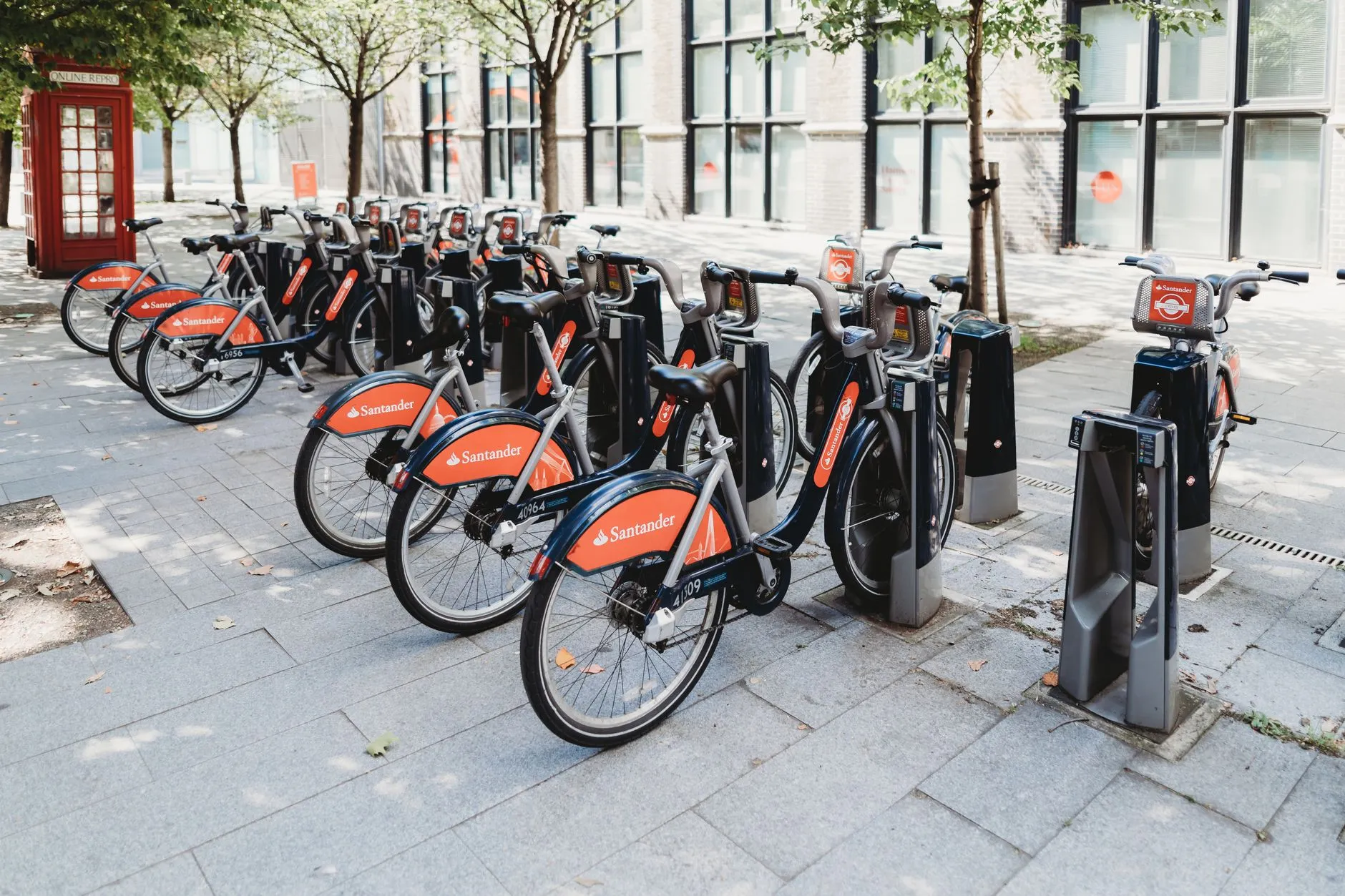
Coalition of 54 organisations demands stronger transport decarbonisation action
A coalition of 54 civil society organisations has called on the UK government to accelerate transport decarbonisation following this summer's heatwaves and wildfires. The Campaign for Better Transport leads the group. They argue that extreme weather events have exposed the climate risks of car-dependent travel and demonstrated the need for urgent modal shift.
The intervention pushes for rapid expansion of walking, cycling, public transport and shared mobility. Consequently, it marks a shift in how transport reform is being framed. Campaigners now present sustainable transport as both a climate solution and a public safety measure.
Domestic transport accounted for almost a third of UK net greenhouse gas emissions last year, according to The Guardian. Moreover, emissions from the sector rose 2% year on year. This makes transport one of the country's largest emissions sources and a critical focus for net-zero delivery.
How the campaign builds on existing government policy
The coalition's demands build on the government's existing transport decarbonisation framework. This was first set out in 2021 in Decarbonising Transport: A Better, Greener Britain. The plan identified the need to cut emissions from road transport, support active travel, and increase public transport use.
Those policies sit within the UK's broader net-zero commitment. However, campaigners argue that delivery has not matched ambition. The government published what it described as the world's first comprehensive transport decarbonisation plan in July 2021. That plan set out a pathway to net-zero transport by 2050.
Key commitments in the 2021 plan included a 2035 phase-out date for new petrol and diesel cars and vans. A wider phase-out of new non-zero-emission road vehicles was set for 2040. Nevertheless, the plan also confirmed that modal shift to public and active transport would be central to achieving transport decarbonisation.
The government's framework recognised that technology alone would not be sufficient. Therefore, it emphasised the importance of reducing overall car use and increasing the proportion of journeys made by sustainable modes. This approach aligns with the coalition's current demands.
Why campaigners say summer heatwaves have changed the urgency
The coalition argues that this summer's repeated heatwaves make the case for transport reform more urgent. Transport is not just a major source of emissions. It is also a sector where heat and infrastructure stress can quickly affect safety, accessibility and reliability.
Extreme temperatures can buckle rail tracks, soften road surfaces, and make active travel dangerous during peak heat. In addition, car dependence increases exposure to heat for drivers and passengers. Air conditioning in vehicles adds to energy demand and emissions.
Campaign for Better Transport chief executive Ben Plowden said the coalition wanted to create conditions for "a higher proportion of the trip" to be made by sustainable modes rather than private cars. This statement emphasises gradual behaviour change rather than immediate elimination of car use.
The group's argument is that modal shift is one of the fastest ways to reduce transport emissions. Furthermore, it can improve resilience, health and access simultaneously. These co-benefits become more valuable as climate impacts intensify.
Heatwaves and wildfires represent what campaigners describe as "just a taste of things to come if we do not act urgently." Consequently, they are framing transport decarbonisation as both a mitigation and adaptation priority. This dual framing connects climate action with immediate public safety concerns.
What the coalition wants government to deliver
The statement backed by the 54 organisations calls for policies that increase the share of journeys made by public transport, shared transport, walking, wheeling and cycling. It also includes targets to move more freight by rail. These measures align with the government's stated objectives but push for faster implementation.
Specifically, the coalition wants investment in bus services, cycling infrastructure, pedestrian facilities and rail freight capacity. Therefore, their focus is on providing practical alternatives to car use rather than simply restricting vehicle access.
Investment in public transport has been a contentious issue. Many bus services outside London have faced cuts in recent years. Meanwhile, cycling infrastructure remains patchy across most UK regions. Rail freight capacity is constrained by passenger service priorities on shared tracks.
The coalition argues that creating genuinely attractive alternatives requires sustained funding. In addition, it needs supportive land-use planning that prioritises proximity and accessibility. Without these conditions, modal shift targets remain theoretical.
Commercial and compliance implications for UK businesses
For UK businesses, particularly SMEs, this renewed pressure on transport decarbonisation has several practical implications. Companies that rely on road freight may face increasing policy pressure to shift cargo to rail. This could affect logistics planning and supplier relationships.
Businesses tendering for public sector contracts should expect transport and travel policies to feature more prominently in procurement criteria. Many public bodies already assess supplier carbon footprints. Therefore, companies with clear sustainable transport plans may gain competitive advantage.
Organisations with significant employee travel or commuting footprints may need to develop travel plans. In addition, they may need to support active travel through facilities like bike storage and changing rooms. Some local authorities already require travel plans as part of planning applications.
Fleet operators should monitor policy developments closely. The 2035 phase-out of new petrol and diesel vehicles affects purchase and leasing decisions now. Consequently, businesses need to plan fleet transitions several years ahead to manage costs and operational continuity.
Companies in the transport sector, including hauliers, taxi operators and delivery services, face direct operational impacts. Furthermore, they may need to adapt business models as policy incentives shift toward shared and public transport modes. Early preparation can reduce disruption and identify new opportunities.
Key facts about the transport decarbonisation campaign
- The intervention was signed by 54 civil society organisations led by the Campaign for Better Transport.
- Domestic transport produced almost a third of UK net greenhouse gas emissions last year.
- Transport-sector emissions increased by 2% over the previous year, according to The Guardian.
- The UK transport decarbonisation plan, published in 2021, set out a pathway to net-zero transport by 2050.
- The government's 2021 plan confirmed a 2035 phase-out date for new petrol and diesel cars and vans.
- A wider phase-out of new non-zero-emission road vehicles is intended by 2040.
- Modal shift to public and active transport is identified as central to achieving transport decarbonisation.
How this connects climate mitigation with business resilience
This campaign matters because it connects two policy areas that are increasingly inseparable: climate mitigation and climate resilience. Campaigners are arguing that transport reform should no longer be framed only as an emissions issue. Instead, it should be treated as a public safety and infrastructure issue as rising temperatures make car dependence more costly and less resilient.
The renewed pressure also highlights a gap between long-term government targets and near-term delivery. The UK already has high-level decarbonisation commitments. However, campaigners and transport groups continue to press for stronger investment in buses, cycling, walking and rail freight. Their goal is to turn targets into measurable behaviour change.
For businesses, this represents both a challenge and an opportunity. Companies that anticipate policy direction can adapt supply chains, premises location and workforce planning. Moreover, they can engage employees in sustainable travel options before regulation forces change.
The shift in framing from abstract net-zero planning to urgent adaptation and mode change affects business risk assessment. Transport disruption from extreme weather is becoming more frequent. Therefore, businesses with diversified transport options and flexible working arrangements may prove more resilient.
Organisations should consider how transport policy changes might affect their operations over the next three to five years. In addition, they should assess whether their current business model depends on assumptions about car access and road capacity that may not hold. Early scenario planning can reveal vulnerabilities and inform strategic decisions.
We support businesses in developing carbon reporting and net-zero transition plans that address transport emissions alongside energy and supply chain impacts. Furthermore, our compliance support helps organisations navigate evolving sustainability requirements in procurement and reporting.
What businesses should consider in response
Businesses should review their transport-related emissions as part of carbon footprint assessments. Many organisations focus on energy and waste but overlook employee commuting, business travel and logistics emissions. Consequently, they miss opportunities for significant reductions.
Developing a sustainable travel plan can demonstrate commitment to decarbonisation. It can also improve employee wellbeing and reduce costs. Options include promoting public transport use, supporting cycle commuting, facilitating car sharing, and enabling remote work where practical.
Companies with vehicle fleets should assess transition pathways to zero-emission vehicles. This involves evaluating total cost of ownership, charging infrastructure requirements, operational range needs and driver training. Therefore, fleet transition planning should begin well before the 2035 deadline.
Organisations tendering for public sector contracts should ensure they can respond to transport-related sustainability requirements. The government's Procurement Policy Note 06/21 on carbon reduction plans already covers transport emissions. As a result, suppliers need credible data and reduction commitments.
Businesses in transport-intensive sectors should monitor policy developments and engage with industry bodies. Early awareness of regulatory direction allows time to adapt operations, invest in new capabilities and identify competitive advantages. Furthermore, it enables constructive engagement with policymakers during consultation periods.
Where to find authoritative guidance and policy updates
The Department for Transport's transport decarbonisation plan provides the government's official framework and commitments. This document sets out the pathway to net-zero transport by 2050 and includes detail on modal shift, technology transitions and policy measures.
The government's summary of the transport decarbonisation greenprint offers an accessible overview of key policies and timelines. In addition, it explains how different transport modes contribute to overall decarbonisation.
The House of Commons Library briefing on the transport decarbonisation plan provides independent analysis and context. This resource is useful for understanding policy background and parliamentary scrutiny.
For businesses developing carbon reduction plans, the Procurement Policy Note 06/21 sets out requirements for suppliers to central government and many public bodies. Therefore, it is essential reading for organisations tendering for public sector work.