
Heathrow Expansion Faces Roadblock from Climate Committee
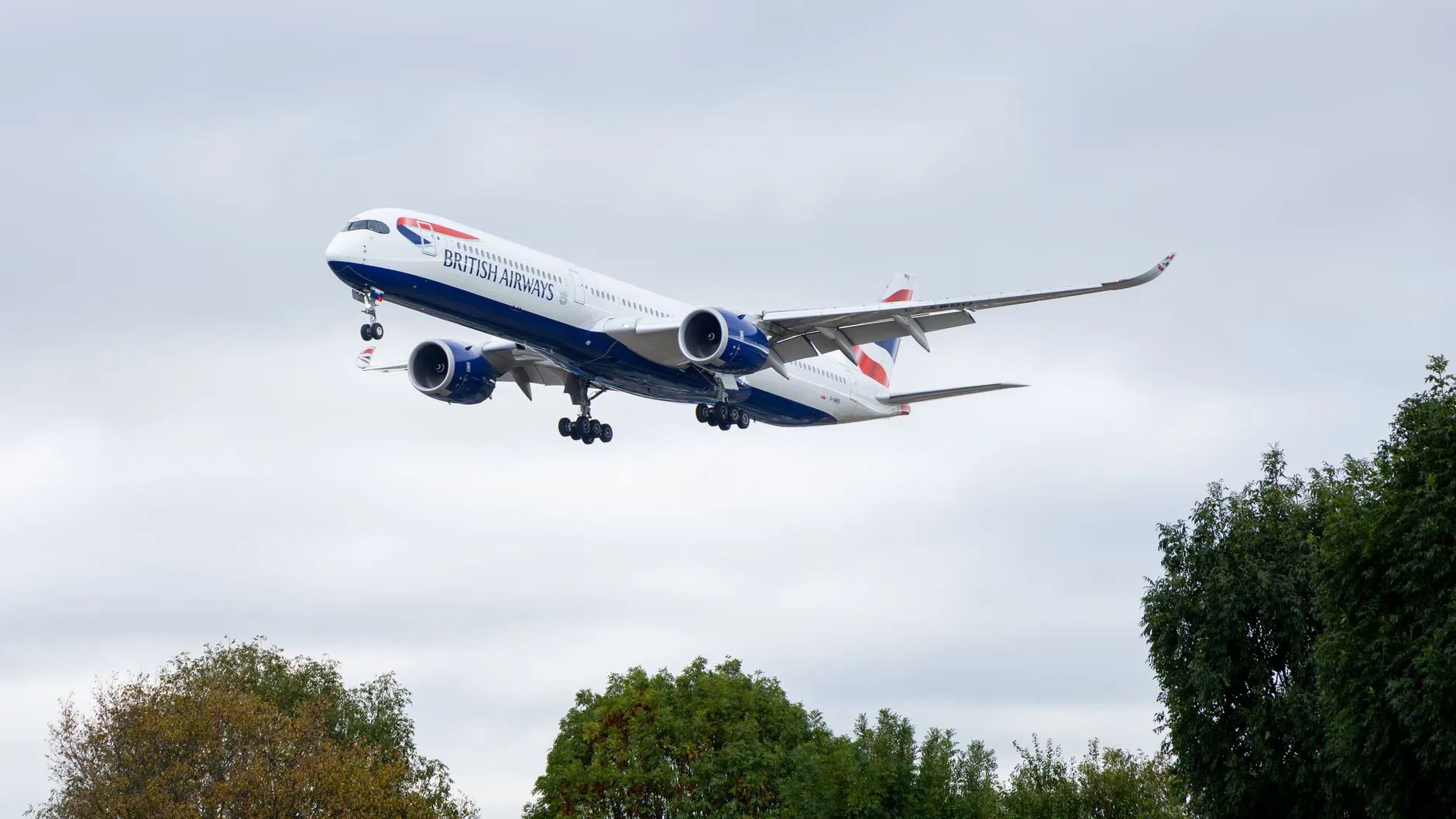
The government's appetite for airport expansion now faces a sharper test. The Climate Change Committee has told ministers that a third runway at Heathrow cannot proceed under existing climate policy. The project would be compatible with the UK's net zero target only if new laws force the aviation sector to eliminate its emissions entirely by 2050.
This advice arrives as political interest in Heathrow expansion returns. Consequently, it clarifies the terms of what has long been an unresolved standoff. Airport growth is no longer just a planning question. It is now explicitly tied to the enforceability of aviation decarbonisation policy.
For businesses watching infrastructure and climate policy converge, the implications are tangible. Aviation is one of the few sectors where emissions have risen since 1990, even as the wider economy has cut carbon by roughly half. The committee's position makes clear that further expansion cannot happen without sector-wide regulatory change.
Aviation emissions have grown while the economy has decarbonised
The Climate Change Committee is the UK's statutory climate adviser. Its role is to assess whether government policy aligns with legally binding carbon budgets. In this case, the committee examined whether Heathrow expansion could fit within the UK's carbon pathway under current rules.
The answer is no. Aviation emissions have more than doubled since 1990. Meanwhile, emissions across the rest of the economy have fallen by approximately half. That divergence matters because aviation remains one of the hardest sectors to decarbonise, and existing policy does not require emissions to fall at the pace needed.
Heathrow is responsible for around half of the UK's aviation emissions. The committee estimates that full expansion would account for 6.9% of remaining UK carbon emissions in 2050. Therefore, the project would place significant additional strain on national carbon budgets unless accompanied by enforceable measures to reduce aviation's overall impact.
One analysis cited in recent coverage suggests expansion would add around 2.4 million tonnes of carbon dioxide in 2050. That figure would rise to 4.5 million tonnes once expansion is complete in 2054. Importantly, these numbers assume no major tightening of aviation policy between now and then.
Expansion depends on new rules requiring full sector decarbonisation
The committee did not rule out Heathrow expansion permanently. However, it made compatibility conditional. Expansion could proceed only if the government introduces binding legislation requiring the aviation industry to reach zero emissions by 2050, either directly through cleaner fuels and efficiency or indirectly through engineered carbon removals.
Nigel Topping, the committee's chair, told journalists that Heathrow expansion is not currently compatible with the UK's net zero target. He also said the government should legislate so the aviation industry fully addresses its emissions by mid-century, either by cutting them at source or by purchasing engineered carbon removals.
The committee's preferred framework is a "polluter pays" model. Under this approach, airlines would bear the cost of emissions cuts, sustainable aviation fuel production, and engineered removal technologies. In the committee's net zero pathway for aviation, engineered removals account for 36% of the emissions reduction in 2050. Lower demand growth contributes 24%, efficiency improvements deliver 20%, and sustainable aviation fuel provides the remaining 20%.
This distribution reflects the technical reality. Aviation cannot eliminate all emissions through fuel switching alone. Some reliance on carbon removal is likely necessary. Nevertheless, the committee emphasises that this must be backed by enforceable policy, not industry promises.
Carbon budgets tighten as expansion debate returns to the political agenda
The timing of the committee's advice is notable. The government has shown renewed interest in airport expansion as part of its economic growth agenda. A third runway at Heathrow has re-entered political discussion, despite years of delay and legal challenge.
This creates a direct tension. On one hand, airport expansion is framed as a driver of jobs, connectivity, and inward investment. On the other, the UK's carbon budgets require steep emissions cuts across every sector over the next 25 years. Aviation's rising trajectory runs against that trend.
The committee's analysis also highlights a gap in current policy. Even without Heathrow expansion, existing measures would not reduce aviation emissions at all by 2050. That suggests the sector is not yet on a credible decarbonisation path, regardless of infrastructure decisions.
The government is expected to publish a revised aviation strategy in 2027. The committee says a credible and robust net zero policy framework for aviation would need to be in place before expansion could be aligned with climate targets. Until then, the project sits outside the boundaries of what current law permits.
Planning decisions now hinge on binding climate policy, not just economic case
For UK businesses, particularly those involved in construction, aviation, freight, or international supply chains, this development shifts the ground. Major infrastructure projects are no longer assessed solely on economic or planning criteria. Climate compatibility is becoming a determining factor, especially where statutory advisers issue clear warnings.
The committee's position also raises judicial review risk. If the government approves expansion without tightening aviation rules, legal challenges are likely. Courts have already shown willingness to scrutinise infrastructure decisions against climate commitments. Therefore, the committee's advice strengthens the evidential basis for any future challenge.
There are commercial consequences too. If expansion proceeds under a strengthened policy framework, airlines operating from Heathrow would face higher costs. Sustainable aviation fuel is significantly more expensive than conventional kerosene. Engineered carbon removals are also costly and, at present, available only at small scale.
Those costs would likely pass to consumers through ticket prices or to businesses through freight charges. However, the scale of that impact depends on how policy is designed. A sector-wide obligation spreads the burden across all carriers. A project-specific levy tied to Heathrow expansion could concentrate it more narrowly.
Moreover, businesses relying on air freight or international travel for operations should consider how aviation policy changes might affect future costs. The committee's advice suggests that any pathway to net zero will involve higher costs for flying, whether through fuel mandates, carbon pricing, or removal purchases. Planning for that now makes sense, particularly for firms with significant travel or logistics budgets.
What UK businesses should understand about this development
- The Climate Change Committee says Heathrow expansion is incompatible with net zero under current policy, but could proceed if new laws require the aviation sector to reach zero emissions by 2050.
- Heathrow accounts for roughly half of UK aviation emissions, and full expansion would represent 6.9% of remaining UK carbon emissions in 2050.
- Aviation emissions have more than doubled since 1990, while economy-wide emissions have fallen by approximately half over the same period.
- The committee's preferred approach is a polluter pays framework, with airlines funding sustainable fuel, efficiency improvements, and engineered carbon removals.
- A revised government aviation strategy is expected in 2027, and the committee says a credible net zero framework must be in place before expansion can align with climate targets.
- Current policy would not reduce aviation emissions at all by 2050, even without Heathrow expansion, indicating a wider gap in sector decarbonisation measures.
Emissions reduction across supply chains becomes harder to defer
This advice matters beyond Heathrow itself. It signals a broader tightening of expectations around high-emission sectors. For years, aviation has been treated as a difficult case, with decarbonisation timelines pushed further out than for sectors like power or buildings. That tolerance is narrowing.
Businesses in aviation-adjacent sectors should take note. Suppliers to airlines, airport operators, and freight carriers are likely to face growing pressure to measure and reduce emissions. Our net zero program for carbon reporting compliance helps organisations prepare for these requirements, particularly where supply chain emissions fall under Scope 3 reporting obligations.
Similarly, firms tendering for public contracts with travel or logistics components may find climate criteria weighted more heavily. PPN 06/21 already requires carbon reduction plans for central government contracts above £5 million. As aviation policy tightens, those plans will need to address air travel emissions more rigorously.
The committee's emphasis on engineered carbon removals also has implications. These technologies include direct air capture and bioenergy with carbon capture and storage. Both are expensive and unproven at scale. If aviation policy mandates their use, businesses involved in their development or deployment could see demand rise sharply. Conversely, reliance on technologies that do not yet exist at commercial scale introduces delivery risk.
For businesses with sustainability targets tied to net zero, the advice underscores the importance of addressing aviation emissions now. Waiting for policy clarity may feel prudent, but the direction of travel is clear. Costs will rise, and the burden will fall on those who fly or ship goods by air. Early action to reduce reliance on aviation, switch to lower-emission alternatives where possible, or budget for higher costs gives a head start.
Planning for policy change before it becomes mandatory
The committee's advice creates a planning window. If you operate in sectors affected by aviation emissions, now is the time to model the impact of tighter rules. What would a mandate for sustainable aviation fuel do to your freight costs? How would a carbon price on flights affect business travel budgets? Could some journeys be replaced with rail or virtual meetings without harming performance?
These are not theoretical questions. The committee's position suggests that enforceable aviation decarbonisation policy is coming, whether or not Heathrow expansion proceeds. Businesses that begin adapting now will be better positioned when those rules take effect.
There is also an opportunity to influence policy development. The revised aviation strategy expected in 2027 will shape how decarbonisation obligations are distributed. Industry input during consultation can help ensure that rules are workable and do not create unintended distortions. However, that influence depends on credible engagement, backed by data and clear commitments.
For smaller firms, the challenge is often resource. Carbon accounting and scenario planning require time and expertise that may not be available in-house. SBS Academy training on Scope 3 emissions provides practical skills for measuring and managing indirect emissions, including those from business travel and logistics.
Ultimately, the committee's advice reflects a wider shift. Climate policy is no longer confined to environmental regulation. It now intersects with infrastructure, planning, procurement, and corporate strategy. Businesses that treat it as a compliance issue risk missing the strategic dimension. Those that integrate it into decision-making early will be better prepared for the changes ahead.
Where to find further detail and official guidance
The Climate Change Committee publishes its advice and analysis on its website. The full report on Heathrow expansion and aviation decarbonisation is available at the Climate Change Committee's homepage, where you can also find progress reports on the UK's carbon budgets and sectoral pathways.
The Department for Energy Security and Net Zero holds policy responsibility for the UK's net zero target. Its publications on aviation policy and carbon budgets are available at gov.uk. This is where the revised aviation strategy will be published when it arrives in 2027.
For businesses navigating carbon reporting and reduction planning, the government's guidance on PPN 06/21 and net zero commitments is published by the Cabinet Office. You can find that at gov.uk procurement policy notes.
Finally, SBS compliance support for carbon reporting and ESG requirements is designed for UK SMEs facing tightening environmental obligations, including those related to Scope 3 emissions and supply chain decarbonisation. We provide practical guidance grounded in the realities of running a business under evolving climate policy.