
Octopus Energy Launches EV Charging App for North America
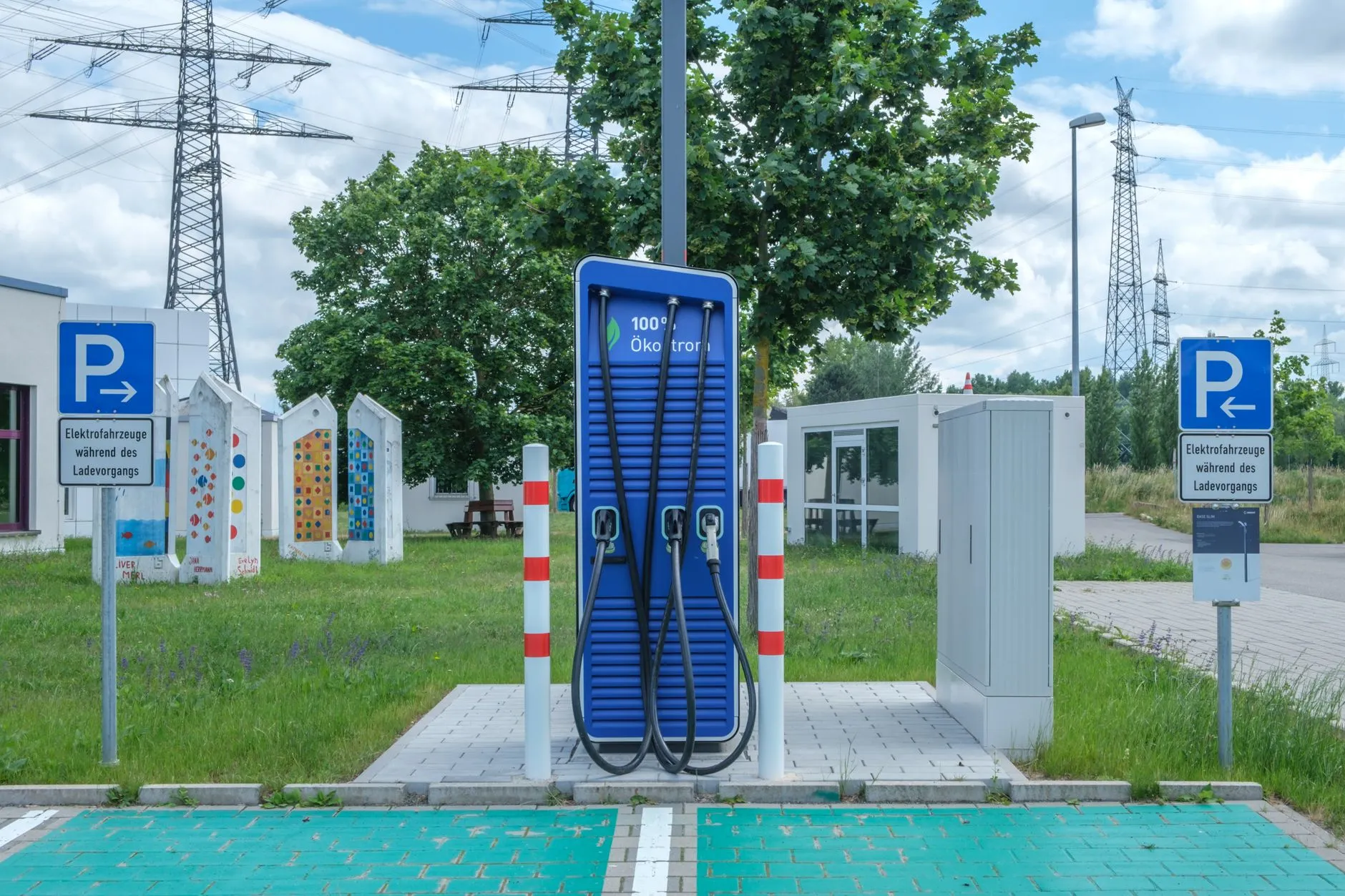
Octopus Energy launches free EV charging app across North America
Octopus Energy US has rolled out Octopus Charge, a public EV charging app that consolidates access to more than 210,000 chargers across the United States and Canada. The app lets drivers locate available charging points, start sessions, and pay for electricity without switching between multiple network apps or accounts.
This marks Octopus Energy's entry into North American EV charging software. The company already operates Electroverse in Europe, where it has built a reputation for simplifying public charging through network aggregation. Octopus Charge applies that model to a larger and more fragmented market, where drivers often need separate apps for ChargePoint, EVgo, and other operators.
The launch matters because charging infrastructure remains a practical barrier to EV adoption. Consequently, tools that reduce complexity can make electric vehicles more viable for businesses managing fleets or employees who drive for work.
Octopus says the app is free to download and use. Moreover, it passes through each operator's published charging price without adding a markup. That approach contrasts with some aggregation services that charge subscription fees or layer additional costs onto charging sessions.
Coverage spans 24 networks but excludes major operators
Octopus Charge connects to more than 24 charging networks, giving drivers access to roughly 211,000 chargers across North America. Participating networks include ChargePoint, EVgo, Blink, bp pulse, Shell Recharge, FLO, EV Connect, and Circle K.
The app provides real-time availability data. Drivers can filter results by charging speed, connector type, or network. In addition, the platform includes EV-specific route planning that accounts for charging stops during longer journeys.
However, several major networks are notably absent. Tesla Superchargers, Electrify America, and IONNA do not currently appear in the app. These networks represent a significant portion of North American fast-charging infrastructure, particularly along motorways and high-traffic corridors.
Tesla's Supercharger network remains the largest and most reliable fast-charging system in the region. Electrify America operates extensive DC fast-charging infrastructure, especially in areas where other networks have limited presence. IONNA is a joint venture between major automakers that aims to build a high-power charging network across the continent.
As a result, Octopus Charge offers broad coverage but not complete market access. Drivers will still need other apps or accounts for certain charging sessions, particularly on long-distance routes where Tesla or Electrify America stations may be the only available option.
European model adapted for fragmented US market
Octopus Energy launched Electroverse in Europe in 2020. The platform grew into one of the region's larger charging aggregation services, allowing drivers to access thousands of chargers through a single account. European charging networks tend to operate under different commercial and regulatory structures than their American counterparts, which creates both opportunities and challenges for replication.
The company entered the US energy market several years ago. It now supplies electricity to residential and business customers in multiple states. Furthermore, Octopus has positioned itself around renewable energy tariffs and time-of-use pricing that can reduce costs for EV owners who charge at home.
Bringing the Electroverse model to North America represents a logical extension of that strategy. The US charging market is more fragmented than Europe's, with dozens of network operators using incompatible payment systems and membership structures. This fragmentation creates friction for drivers, especially those who travel across state lines or between urban and rural areas.
Octopus Charge aims to function as a roaming layer that sits above individual networks. Drivers authenticate once, store payment details in one place, and access multiple networks without creating separate accounts. This approach mirrors roaming agreements in mobile telephony, where a single provider gives customers access to networks operated by different companies.
Practical implications for UK businesses with US operations
UK companies with North American subsidiaries, sales teams, or field operations increasingly face questions about EV fleet management. Charging infrastructure complexity directly affects total cost of ownership calculations for electric vehicles used in business.
Employees who drive company EVs in the US often struggle with charging access during work travel. They may need multiple apps, each requiring separate registration and payment setup. In addition, tracking and reconciling charging expenses across different networks creates administrative overhead for finance teams.
Octopus Charge offers a potential solution by centralising access and billing. One account can cover charging across most major networks outside Tesla and Electrify America. That simplification matters for businesses trying to understand actual EV running costs or justify fleet electrification to stakeholders.
The no-markup pricing model also creates transparency. Businesses can see what they would pay directly to each network operator, without wondering whether aggregation services add hidden fees. This transparency helps with budgeting and makes it easier to compare charging costs against petrol or diesel equivalents.
However, the absence of Tesla Superchargers and Electrify America limits usefulness for certain routes and vehicle types. Companies running Tesla fleets will still need separate accounts for Supercharger access. Similarly, businesses that rely on Electrify America for long-distance travel cannot consolidate all charging through Octopus Charge.
UK parent companies should also consider how North American charging infrastructure affects their climate commitments. Many businesses have set targets for fleet electrification as part of net-zero strategies. Practical barriers like charging complexity can slow adoption and create gaps between ambition and implementation.
Key facts about Octopus Charge
- The app provides access to more than 210,000 public chargers across the United States and Canada through partnerships with 24 charging networks.
- Octopus Energy does not charge subscription fees or add markup to network operators' published charging prices.
- Participating networks include ChargePoint, EVgo, Blink, bp pulse, Shell Recharge, FLO, EV Connect, and Circle K, among others.
- Tesla Superchargers, Electrify America, and IONNA are not currently available through the platform.
- The app includes real-time charger availability, filtering by speed and connector type, and EV-specific route planning features.
- Octopus Charge extends the company's European Electroverse model, which launched in 2020 and has become a major charging aggregation service in that market.
Competition and market dynamics in charging aggregation
Octopus Charge enters a market where several companies already offer charging aggregation services. PlugShare provides charger location data and user reviews but does not handle payment or session initiation. A Better Routeplanner helps drivers plan long-distance EV journeys with charging stops, yet it similarly does not process payments directly.
Some automakers bundle charging network access into vehicle purchase or lease agreements. Ford and General Motors, for example, have arranged for their customers to access certain networks through integrated vehicle systems. These arrangements typically require activation and may include time-limited benefits or subscription tiers.
Payment card providers have also entered this space. Shell Recharge and bp pulse offer physical charge cards that work across multiple networks. However, these solutions still require drivers to manage separate accounts and navigate different pricing structures.
Octopus Charge differentiates itself through transparent pricing and broad network coverage without subscription fees. Nevertheless, the platform's value depends heavily on which networks participate. If major operators remain outside the system, drivers will continue juggling multiple apps regardless of Octopus Charge's features.
The competitive landscape may shift if networks see aggregation as a threat to direct customer relationships. Charging operators generate revenue from electricity sales but also from data about driver behaviour, vehicle types, and usage patterns. Aggregation services can obscure that data or shift the customer relationship away from network operators.
Conversely, networks may benefit from increased utilisation if aggregation apps drive more charging sessions. Chargers that sit unused generate no revenue, so broader discovery and easier access could improve asset utilisation for operators willing to participate.
What businesses should consider about EV charging infrastructure
Companies evaluating EV adoption need to understand charging infrastructure beyond vehicle specifications and purchase costs. Public charging availability directly affects whether electric vehicles can replace petrol or diesel equivalents for specific business use cases.
Field service companies, for instance, must ensure engineers can charge vehicles during work hours without significant detours or downtime. Sales teams covering large territories need reliable fast charging along major routes. Delivery fleets require access to charging near customer concentrations or distribution centres.
Tools like Octopus Charge reduce one friction point by simplifying payment and access. However, businesses should also consider workplace charging, depot charging, and home charging arrangements for employees who use company vehicles. In many cases, public charging serves as a supplement rather than the primary charging method.
UK companies with operations in both Europe and North America should note that Octopus now offers charging solutions in both markets. That consistency could simplify fleet management for multinational operations. For example, employees might use Electroverse in the UK and Octopus Charge in the US with similar user experiences and billing processes.
Charging infrastructure also intersects with sustainability reporting requirements. Businesses that track Scope 1 and Scope 3 emissions need accurate data about electricity sources for vehicle charging. Carbon reporting programs increasingly ask companies to account for fleet emissions, which means understanding not just vehicle efficiency but also the carbon intensity of charging electricity.
Public charging networks vary in their renewable energy sourcing. Some operators offer renewable electricity guarantees or renewable energy certificates. Others source power from regional grids with mixed generation. Companies serious about emissions reduction should consider electricity sources as part of fleet planning, not just vehicle electrification rates.
In addition, businesses tendering for public sector contracts should be aware that sustainable procurement criteria often include questions about fleet emissions and electrification plans. Demonstrating practical arrangements for EV charging can strengthen tender responses and show operational readiness rather than aspirational commitment.
Government policy and regulatory context
The US government has committed significant funding to EV charging infrastructure through the Infrastructure Investment and Jobs Act. That legislation allocated $7.5 billion for charging network expansion, with requirements for charger reliability, payment interoperability, and coverage along designated corridors.
Federal standards increasingly emphasise payment accessibility. New regulations require federally funded chargers to accept contactless payment cards, reducing dependence on proprietary apps or membership accounts. These rules aim to make charging more accessible for drivers who do not want to download apps or create accounts with multiple networks.
Octopus Charge aligns with this policy direction by offering an alternative to fragmented payment systems. Nevertheless, the app still requires account creation and smartphone use, which may not suit all drivers. Physical payment options remain important for complete accessibility.
State-level policies also affect charging infrastructure development. California, for example, has implemented zero-emission vehicle mandates that require automakers to sell increasing percentages of electric vehicles. Other states have adopted California's standards, creating regional markets with stronger EV adoption and, consequently, more developed charging networks.
UK businesses operating in North America should track these policy developments. Regulatory requirements can affect fleet composition, particularly for companies bidding on government contracts or operating in states with emission reduction mandates. Understanding regional variations helps with expansion planning and compliance.
The Department for Energy Security and Net Zero has published guidance on international climate cooperation that includes transport electrification. UK companies with cross-border operations may find opportunities to align their North American fleet strategies with domestic sustainability commitments, creating consistency across jurisdictions.
Further information and resources
Octopus Energy US has published details about Octopus Charge on its website, including information about participating networks and app features. Drivers and fleet managers can download the app through iOS and Android app stores to explore coverage in specific regions.
The US Department of Energy maintains the Alternative Fuels Data Center, which provides data on public charging station locations, network operators, and federal funding programs. This resource helps businesses assess charging infrastructure availability in areas where they operate or plan to expand.
The Society of Motor Manufacturers and Traders publishes regular reports on EV adoption trends, including data on commercial fleet electrification in the UK and internationally. These reports provide context for businesses comparing domestic and international EV strategies.
Companies seeking support with fleet electrification, carbon reporting, or sustainability strategy can explore compliance services for ESG and emissions tracking. Understanding how transport emissions fit within broader net-zero commitments helps businesses make informed decisions about vehicle replacement cycles and charging infrastructure investments.