
Understanding the Ongoing Emissions Responsibility Mechanism
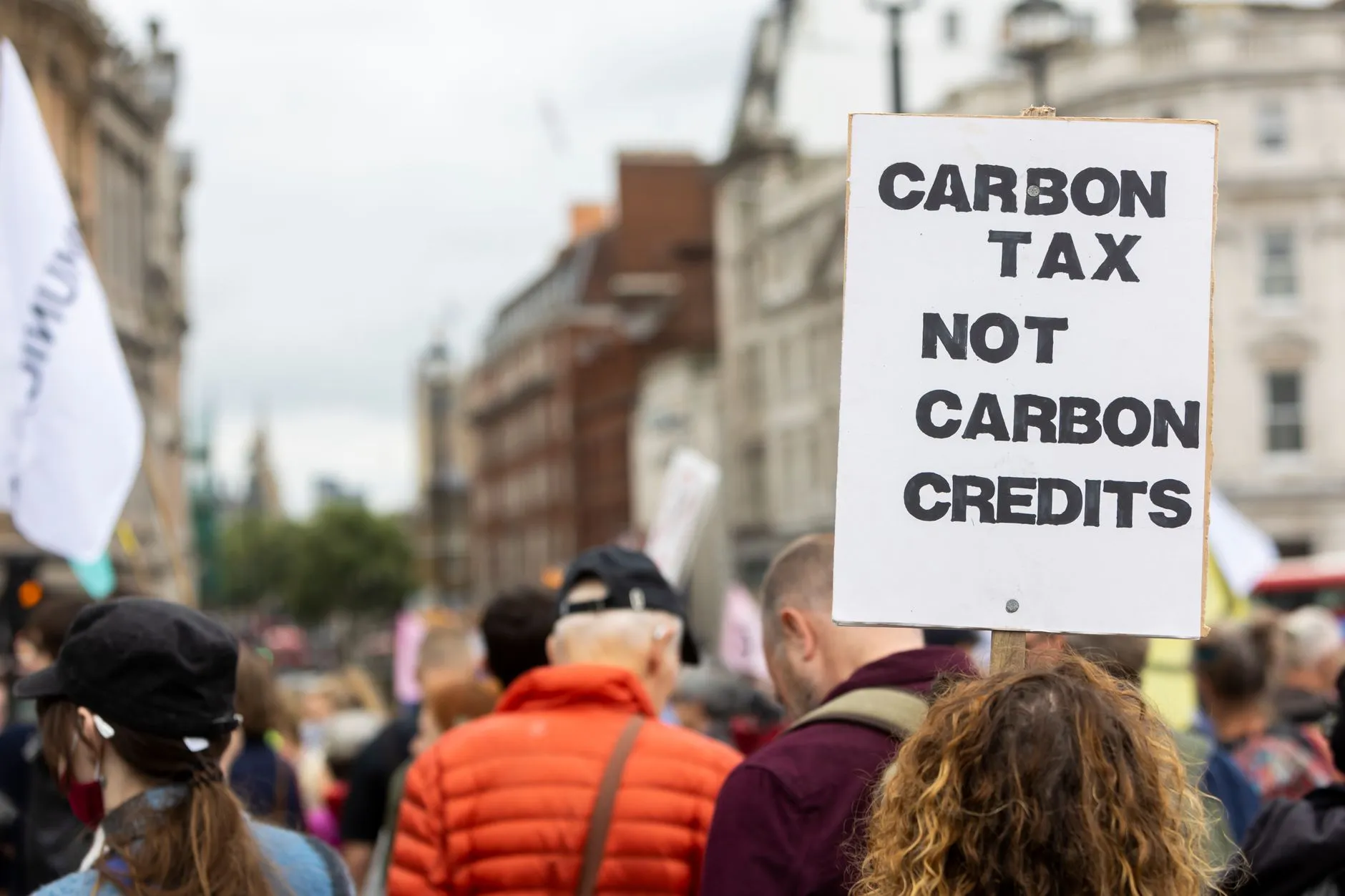
A new structure for how businesses buy carbon credits while working toward net zero could reshape the market from 2027 onwards. The Science Based Targets initiative has published a framework that turns what used to be voluntary into something closer to a requirement for larger companies within a decade.
The framework is called Ongoing Emissions Responsibility, or OER for short. It replaces an earlier concept that never quite took hold and instead builds a tiered system with clear thresholds, timelines and credit types. For UK businesses already reporting carbon or working toward net zero targets, this creates a new set of expectations about what counts as credible climate action.
The key shift is that OER treats carbon credits as part of a transition plan rather than a substitute for cutting emissions. It also sets a deadline. From 2035, Category A companies in the SBTi system will need to match at least 1% of their ongoing emissions with verified mitigation or removals. That percentage rises depending on how ambitious a business wants its claims to be.
This matters because it formalizes demand in a market that has often struggled with credibility. It also narrows the types of credit that qualify over time, favouring removals over reductions as companies approach their net zero date. Consequently, businesses will need to think harder about which credits they buy and when.
How the OER framework is structured
OER sits inside the Science Based Targets initiative's Corporate Net Zero Standard, version two. SBTi is the body that validates corporate climate targets against climate science, and its standards carry weight in procurement, finance and public disclosure. The new framework was introduced to create a consistent way for companies to fund climate action beyond their own value chains while they decarbonize.
The framework distinguishes between ongoing emissions and residual emissions. Ongoing emissions are what a company still produces during its transition to net zero, even as it reduces its footprint year on year. Residual emissions are what remains at the net zero target date after all feasible reductions have been made. OER applies to the first category, and it does so on a sliding scale.
There are three tiers. The first is called Engaged. Companies at this level commit to cover at least 1% of their ongoing emissions through verified mitigation outcomes or a financial contribution based on a defined carbon price. This is the minimum entry point and also the mandatory threshold for Category A companies from 2035.
The second tier is Advanced. Here, coverage rises to at least 10% of ongoing emissions. Some versions of the framework tie this level to a contribution price of around twenty pounds per tonne of carbon dioxide equivalent. The third tier is Leadership, which requires 100% coverage for Category A firms and uses a higher contribution budget, estimated at roughly eighty pounds per tonne in some market analyses.
Category A companies are those with the highest absolute emissions. SBTi has not published a fixed threshold, but the category is generally understood to include large enterprises with significant Scope 1, 2 and 3 footprints. Smaller firms can participate voluntarily at any tier but face no mandate under the current design.
The framework begins as voluntary in 2027. For eight years, companies can choose their tier and the type of credits they use. After 2035, the rules tighten. Mandatory participation begins for Category A companies, and the share of long-lived removals must increase over time, reaching 100% by the year each company has set as its net zero target date.
This staged approach gives businesses time to adjust procurement, budget and reporting. However, it also creates a known future liability that should influence decisions made today, particularly around supplier relationships and contract terms in carbon markets.
What counts as a qualifying credit under OER
Not all carbon credits are treated equally in this system. During the voluntary phase, companies can use reduction credits, avoidance credits and removal credits. Reduction credits come from projects that lower emissions compared to a baseline, such as energy efficiency or fuel switching. Avoidance credits come from projects that prevent emissions from occurring, such as forest conservation. Removal credits come from activities that extract carbon dioxide from the atmosphere, such as afforestation or direct air capture.
As the framework matures, the eligibility narrows. The shift is toward removals because they are considered more aligned with the physics of reaching net zero. You cannot offset ongoing emissions indefinitely with avoided emissions elsewhere. At some point, actual removal from the atmosphere is required to balance what is still being emitted.
This creates a clear market signal. Demand for removal credits is likely to grow, particularly for those with long storage durations. Meanwhile, reduction and avoidance credits may retain value in the near term but face declining eligibility in corporate net zero strategies tied to SBTi standards.
For businesses buying credits, this means understanding not just the quality of a credit today but its durability under evolving frameworks. A credit that meets current standards may not meet the requirements five years from now. Therefore, procurement teams should be asking suppliers about storage permanence, verification standards and compatibility with the latest SBTi guidance.
Market commentary and analysis around OER
Ecosystem Marketplace published an article on OER in September 2026, describing it as a potential turning point for corporate climate finance. The piece was titled "To be OER not to be" and was updated a day after initial publication. It argued that the framework could become a major demand driver in carbon markets because it links corporate climate claims to verified mitigation and introduces mandatory elements from 2035.
Other market observers have noted that OER positions carbon credits as a complement to emissions reductions rather than a substitute. This framing is important because it addresses a longstanding criticism of carbon markets, namely that they allow companies to buy their way out of making real operational changes. Under OER, credits are explicitly tied to transition plans and are subject to rising standards over time.
Carbon Capital Lab and similar market intelligence platforms have also tracked the development of OER alongside broader transparency efforts in voluntary carbon markets. The framework does not exist in isolation. It is part of a wider effort to standardize corporate climate claims, improve market integrity and direct finance toward higher quality mitigation outcomes.
What this means in practice is that OER is not just a new label. It is a signal that the voluntary carbon market is maturing into something more structured, with clearer rules and higher expectations. UK businesses that participate in public procurement or supply to multinational corporations are likely to encounter OER requirements in tender documents and supplier codes within the next few years.
Deadlines, thresholds and what happens from 2035
The voluntary phase runs from 2027 to 2034. During this period, companies can choose whether to participate and at what level. There is no penalty for opting out, but there may be reputational or commercial advantages to early adoption, particularly for firms that want to differentiate on climate credentials.
From 2035, the system changes. Category A companies with validated science based targets will be required to cover at least 1% of their ongoing emissions through OER. This is not a suggestion. It becomes a condition of maintaining SBTi validation, which in turn affects eligibility for certain funds, frameworks and procurement processes.
The 1% threshold is a floor, not a ceiling. Companies can aim for Advanced or Leadership status to support stronger climate claims. However, even the baseline requirement introduces new costs and administrative work. Businesses will need to measure ongoing emissions accurately, source eligible credits or contributions, verify compliance and report it publicly.
As companies move closer to their net zero target year, the proportion of long-lived removals must increase. By the target date, 100% of any remaining ongoing emissions must be matched with removals that store carbon for at least a century. This is a significant technical and procurement challenge, as the supply of long-duration removal credits is currently limited and relatively expensive.
Firms that have not started planning for this requirement may find themselves competing for a constrained pool of credits in the early 2030s. Prices are likely to rise as demand increases. Early procurement or long-term agreements may therefore offer cost and supply advantages.
Core details every business should understand
- OER is the Science Based Targets initiative's new framework for corporate climate contributions beyond direct emissions cuts.
- The system is voluntary from 2027 but becomes mandatory for Category A companies in 2035.
- Three tiers exist: Engaged requires 1% coverage, Advanced requires 10%, and Leadership requires 100% for the largest firms.
- Credits allowed during the voluntary phase include reductions, avoidance and removals, but the framework shifts toward removals only over time.
- By each company's net zero target year, 100% of ongoing emissions must be matched with long-lived carbon removals.
- The framework ties corporate climate claims to verified mitigation outcomes, raising the bar for credibility in carbon markets.
- Businesses with SBTi-validated targets will need to integrate OER into their transition plans and procurement strategies.
Questions UK businesses should be asking now
If your business has a net zero target validated by SBTi, or if you are working toward validation, you should be considering how OER affects your timeline and budget. The 2035 deadline is closer than it appears when you account for procurement cycles, contract negotiations and internal approval processes.
Start by reviewing your current emissions profile. How much of your footprint is ongoing rather than residual? Which emissions are hardest to eliminate, and what is your realistic timeline for phasing them out? These answers will determine how much coverage you need under OER and when you need to secure it.
Next, assess the carbon credit market. Not all credits will qualify under OER, and the ones that do may vary in price, availability and storage duration. Work with suppliers who understand the SBTi framework and can provide credits that meet the evolving eligibility criteria. Ask about verification standards, permanence and additionality.
Consider early procurement. Waiting until 2034 to source credits may be costlier and riskier than securing supply now. Long-term agreements or partnerships with removal project developers could offer price stability and guaranteed access as demand grows.
Also think about how OER intersects with other compliance and reporting requirements. Carbon reduction plans for public sector contracts, SECR reporting, TCFD disclosures and supply chain due diligence are all part of the same ecosystem. OER is another layer, but it should fit into a broader sustainability strategy rather than sit in isolation.
Finally, consider the reputational dimension. Early adopters of OER at the Advanced or Leadership tier may gain competitive advantage in tenders, investor relations and customer trust. Climate claims are under increasing scrutiny, and frameworks like OER offer a way to substantiate those claims with verifiable action.
We work with businesses on carbon reporting, net zero transition planning and compliance with public sector requirements. OER is the kind of emerging framework that should inform strategy now rather than later. If you are unsure how it applies to your business, our net zero program for carbon reporting compliance can help you map out the implications and build a plan that fits your timeline and budget.
Training your team on the changing landscape of carbon markets and climate frameworks can also reduce risk. Our SBS Academy training on sustainability and compliance covers the practical side of these issues, including how to evaluate credits, understand standards and integrate new requirements into existing systems.
Where to find authoritative guidance and updates
The Science Based Targets initiative publishes its standards and guidance on its official website. The Corporate Net Zero Standard version two, which includes the OER framework, is available there along with technical documentation and FAQs. SBTi also updates its guidance periodically, so businesses should check back regularly for revisions or clarifications.
For broader market intelligence and transparency data, Ecosystem Marketplace provides reports and analysis on voluntary carbon markets, including credit pricing, project types and market trends. Their September 2026 article on OER offers useful context on how the framework is being received by market participants and what demand signals are emerging.
UK businesses should also monitor government guidance on carbon reporting and net zero commitments. While OER is a voluntary standard rather than UK law, it intersects with mandatory reporting under the Streamlined Energy and Carbon Reporting framework and requirements for public sector suppliers under Procurement Policy Note 06/21. The government's green finance strategy provides context on how these initiatives connect.
Industry bodies such as the Institute of Environmental Management and Assessment offer professional guidance on carbon management and net zero planning. Their resources can help businesses understand how frameworks like OER fit into wider environmental management systems and corporate sustainability strategies.
Finally, for businesses that supply to the public sector, the Procurement Policy Note 06/21 guidance remains essential reading. OER does not replace the carbon reduction plan requirement, but it may become a benchmark for what counts as credible action in future tender evaluations.