
UK and US Join Forces to Boost Fusion Energy Development
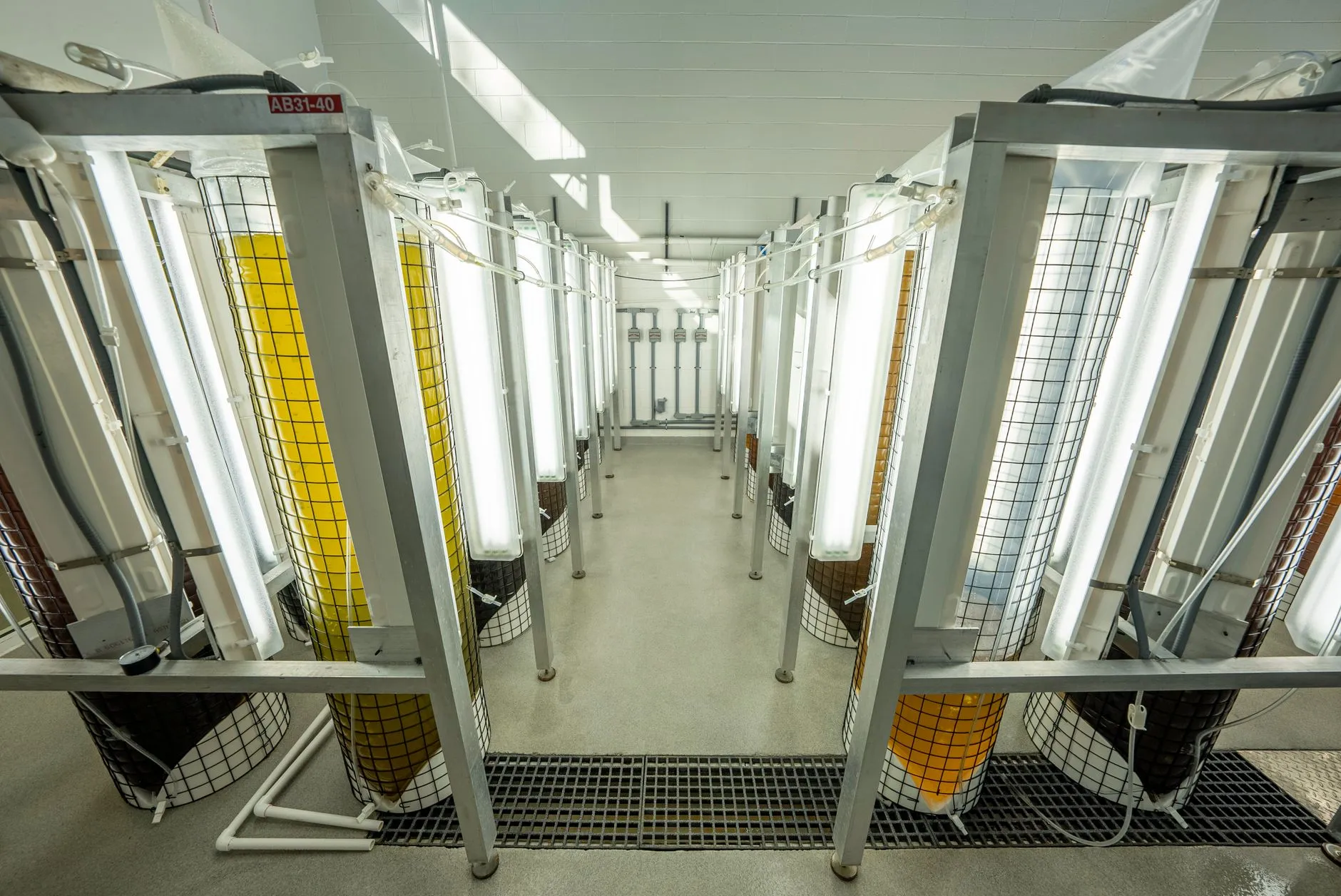
The UK and US governments have signed two new agreements intended to accelerate the commercial development of fusion energy. Announced at the Global Fusion Policy Summit in London on 14 September 2026, the partnership brings together computing resources and regulatory coordination to address two critical barriers facing the sector: lengthy design cycles and uncertain licensing pathways.
For UK businesses, this matters primarily as an industrial policy signal. Fusion remains years away from generating commercial electricity. However, the government has committed to supporting over 10,000 jobs in the fusion sector by 2030, and these agreements shape the regulatory environment and supply chain opportunities that will emerge as the technology matures.
The partnership builds on an earlier memorandum of understanding signed in June 2026 between the UK Atomic Energy Authority and Princeton Plasma Physics Laboratory. That initial agreement covered staff exchanges, research facilities, and joint work on advanced computing. The September announcement extends this cooperation into areas with more direct commercial implications.
Supercomputing partnership targets design bottlenecks
The first agreement establishes a supercomputing collaboration between the UK Atomic Energy Authority and Princeton Plasma Physics Laboratory. This partnership will combine artificial intelligence, high-performance computing, and fusion research expertise to reduce the time required to design and test reactor concepts.
Fusion reactor development has traditionally involved long iteration cycles. Physical experiments are expensive and time-consuming. Consequently, computational modelling has become essential for testing designs before committing capital to hardware. By pooling computing resources across the Atlantic, the partnership aims to speed up this process.
Importantly, the agreement links existing UK and US computing infrastructure rather than committing either country to building a demonstration plant immediately. This approach reflects the current stage of fusion development, where the focus remains on research and design rather than construction and grid connection.
The computing collaboration will support work on plasma physics, materials science, and reactor engineering. These are areas where simulation can reduce the need for physical prototyping. For businesses in the supply chain, this may eventually translate into clearer technical specifications and more stable procurement timelines as designs mature faster.
Regulatory cooperation addresses licensing uncertainty
The second agreement is a joint statement on regulatory cooperation. The UK Department for Energy Security and Net Zero and the US Department of Energy have committed to closer alignment on fusion regulation, with the goal of providing developers and investors with greater certainty as projects move toward deployment.
Regulatory uncertainty has been a persistent barrier to private investment in fusion. Unlike fission reactors, fusion does not produce long-lived high-level radioactive waste or carry the same proliferation risks. Nevertheless, fusion facilities will still require safety frameworks, licensing processes, and grid connection approvals. Currently, these pathways remain underdeveloped in most jurisdictions.
By coordinating regulatory approaches, the UK and US aim to reduce the risk that developers face inconsistent requirements in different markets. This is particularly relevant for businesses considering investment in the sector or participation in supply chains. A more predictable regulatory environment makes it easier to assess long-term commercial viability.
The joint statement does not introduce binding regulations immediately. Instead, it signals intent to work toward compatible frameworks. For companies, this means monitoring how UK and US regulators develop safety standards, environmental approvals, and grid connection procedures over the coming years.
Broader UK fusion strategy includes STEP and supply chain investment
These agreements sit within a wider UK fusion policy framework. In May 2026, the government announced £2.5 billion in public investment for fusion technology. This funding supports the Spherical Tokamak for Energy Production, known as STEP, which is planned for West Burton in Nottinghamshire. STEP is the UK's flagship demonstration project and represents the most concrete commitment to building a prototype fusion plant.
Alongside STEP, the government has supported materials research and industrial partnerships. One example is a £2.63 million collaboration involving the University of Birmingham, the Electric Power Research Institute, and industrial partners. This project focuses on materials capable of withstanding the extreme conditions inside a fusion reactor, including high neutron flux and temperature.
Materials development is a critical area for the supply chain. Fusion reactors will require specialised components that can endure harsh operating environments for extended periods. Businesses with capabilities in advanced manufacturing, metallurgy, or high-temperature engineering may find opportunities as these requirements become clearer.
The UK fusion sector currently employs several thousand people across research institutions, engineering firms, and component manufacturers. The government's target is to grow this to over 10,000 jobs by 2030. This expansion will depend on sustained public investment, private capital formation, and progress on key technical challenges.
What UK businesses need to know about fusion development
- The UK and US signed two agreements on 14 September 2026 to accelerate commercial fusion development through supercomputing collaboration and regulatory cooperation.
- The supercomputing partnership between the UK Atomic Energy Authority and Princeton Plasma Physics Laboratory will link computing resources to speed up reactor design and testing.
- The regulatory cooperation agreement aims to reduce licensing uncertainty for developers and investors by aligning UK and US approaches to fusion safety and grid connection.
- The UK government has committed over £2.5 billion to fusion technology and aims to support more than 10,000 jobs in the sector by 2030.
- The STEP project in Nottinghamshire remains the UK's primary demonstration plant, with additional investment in materials research and industrial partnerships announced alongside the US agreements.
- These agreements focus on research and policy infrastructure rather than immediate commercial deployment, meaning fusion-generated electricity remains several years away from grid connection.
- Supply chain opportunities are likely to emerge in advanced manufacturing, materials science, and high-temperature engineering as technical specifications mature.
Commercial timeline remains uncertain despite policy momentum
Despite the policy momentum, fusion energy remains a long-term proposition. No fusion reactor has yet produced net energy gain in a commercially viable way. The agreements announced in September address research and regulatory barriers but do not guarantee a specific timeline for commercial operation.
For businesses, this means weighing the opportunity against the uncertainty. The government's commitment to 10,000 jobs by 2030 suggests there will be publicly funded work available in research, engineering, and component supply. However, revenue from fusion-generated electricity sold to the grid is still years away.
Companies considering involvement in the fusion supply chain should focus on near-term opportunities in research and development rather than expecting immediate demand for large-scale manufacturing. This includes contracts for prototype components, materials testing, and engineering services related to STEP and similar projects.
The regulatory cooperation agreement also has implications for businesses with cross-border operations. If UK and US frameworks become more aligned, it may be easier to serve both markets with similar products and services. Conversely, divergence between UK and EU approaches could create additional complexity for companies operating across those jurisdictions.
Private investment in fusion has increased in recent years, with several companies pursuing alternative reactor designs outside traditional tokamak configurations. The UK-US partnership does not favour any particular technology but aims to create a more stable environment for all developers. This could accelerate competition and innovation but also makes it harder to predict which approaches will ultimately succeed.
Skills and workforce development will shape sector growth
Achieving the 10,000 jobs target by 2030 will require significant investment in skills and training. Fusion projects need expertise in plasma physics, nuclear engineering, materials science, and advanced manufacturing. Many of these skills are not currently available in sufficient numbers within the UK workforce.
Businesses entering the sector should consider workforce planning carefully. Recruiting experienced professionals may be difficult given the limited size of the existing fusion workforce. Therefore, apprenticeships, graduate programmes, and collaboration with universities will likely be necessary to build capability.
The UK Atomic Energy Authority has indicated it will expand training initiatives to support sector growth. Companies with existing capabilities in nuclear, aerospace, or advanced engineering may be well positioned to transfer skills into fusion-related work. However, they will need to invest in upskilling staff on fusion-specific challenges such as plasma confinement and neutron damage to materials.
For SMEs, the scale of fusion projects may present challenges. STEP and similar initiatives will likely involve large engineering firms as primary contractors. Smaller businesses may find opportunities as subcontractors or specialists in niche areas such as instrumentation, diagnostics, or materials testing. Understanding the procurement structures around major projects will be important for accessing these opportunities.
What to watch as the partnership develops
Several factors will determine whether these agreements translate into tangible commercial progress. First, the supercomputing partnership will need to deliver measurable improvements in design speed and reactor performance. If simulation can replace some physical testing, this could reduce development costs and timelines significantly.
Second, regulatory cooperation must produce concrete frameworks rather than remaining at the level of joint statements. Businesses should monitor publications from the UK Department for Energy Security and Net Zero and the US Department of Energy for updates on licensing pathways, safety standards, and grid connection procedures.
Third, the STEP project's progress will serve as a bellwether for the UK fusion sector. Construction timelines, technical milestones, and funding commitments will all provide signals about the government's long-term commitment and the sector's viability.
Finally, private investment levels will indicate whether the commercial case for fusion is strengthening. If the regulatory certainty promised by the joint statement attracts more capital into UK fusion companies, this will validate the government's approach. Conversely, if investment remains subdued, it may suggest that barriers beyond regulation are limiting growth.
Where to find official guidance and updates
The UK government publishes updates on fusion policy through the Department for Energy Security and Net Zero. Businesses can find official announcements, funding opportunities, and regulatory consultations on the gov.uk website.
The UK Atomic Energy Authority provides technical information about fusion research, the STEP programme, and industry collaboration opportunities. Their official site includes details on current projects and procurement processes.
For businesses interested in how fusion fits within broader net zero strategies, our net zero hub offers guidance on carbon reporting, compliance, and emerging clean energy technologies relevant to UK SMEs.
The US Department of Energy publishes information on American fusion initiatives and international partnerships through its main website, which includes updates on the Princeton Plasma Physics Laboratory collaboration and other bilateral agreements.
Companies considering involvement in fusion supply chains may also find relevant information through the Institution of Engineering and Technology and other professional bodies that publish guidance on nuclear and advanced energy technologies.