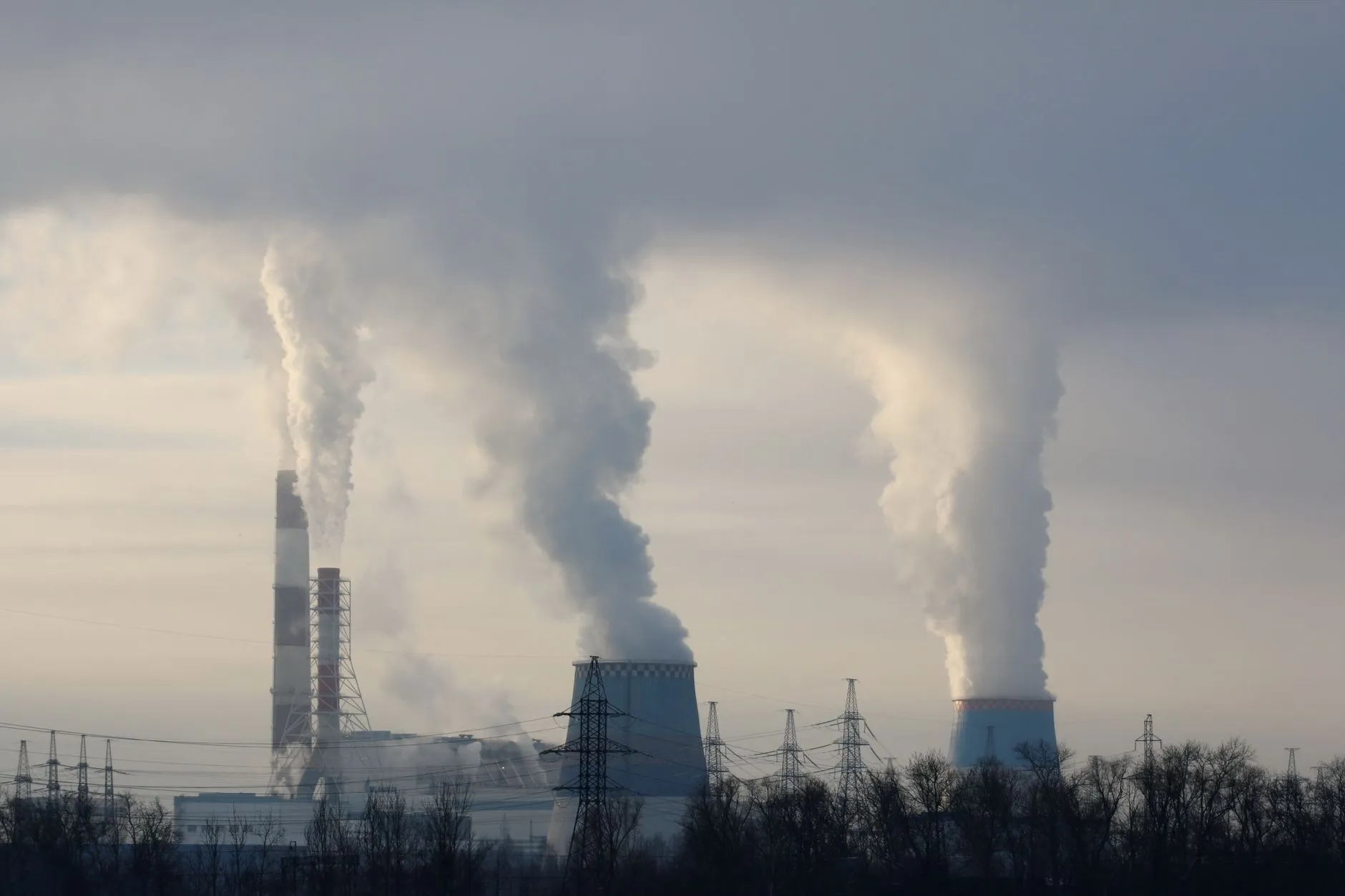
US Repeals Carbon Emission Limits for Power Plants: Implications for UK Businesses
<p>Power plants burning coal and gas have just seen their federal carbon limits removed. On 14 September 2026, the Trump administration finalised the repeal of most Biden-era carbon pollution standards for fossil fuel power stations. It then proposed removing the EPA's remaining legal authority to regulate power plant greenhouse gases altogether. The move is designed to block future federal climate rules for the electricity sector, with the EPA calling it a step toward "energy abundance" and critics warning it strips away one of the government's main tools for cutting emissions.</p><p>This matters for UK businesses with US operations, supply chains anchored to American energy prices, or climate commitments that depend on parallel progress across the Atlantic. It also signals the kind of regulatory volatility that can disrupt long-term decarbonisation planning wherever you operate.</p><h2>The Biden standards that have been dismantled</h2><p>The rules now being scrapped trace back to the Biden administration's 2024 Carbon Pollution Standards. Those standards required existing coal plants and some new natural gas plants to eventually capture about 90 percent of their carbon dioxide emissions. They were built around Clean Air Act authority that allows the EPA to regulate pollutants endangering public health or welfare. At the time, they ranked among the most consequential federal power sector climate rules ever adopted.</p><p>The Trump EPA argues the agency lacks authority under the Clean Air Act to regulate greenhouse gases from power plants for climate purposes. It also says the Biden framework relied on technology that is unavailable or impractical for widespread deployment. EPA Administrator Lee Zeldin announced the action at a G20 energy meeting in Houston, framing the rollback as part of a broader pro-fossil-fuel policy shift.</p><p>For context, power plants are one of the largest sources of US greenhouse gas emissions. Consequently, undoing these standards affects a major slice of the country's climate policy architecture. The reversal also has legal significance because the EPA's supplemental proposal seeks to foreclose future regulation of power plant greenhouse gases under the same Clean Air Act authority. That could force any future restoration of limits into protracted litigation.</p><h2>What the EPA has repealed and proposed</h2><p>The EPA finalised repeal of most provisions of the 2024 Carbon Pollution Standards on 14 September 2026. Meanwhile, the agency proposed rescinding the remaining greenhouse gas emissions standards for fossil fuel power plants. This second step would make it much harder for future administrations to restore climate limits without a major legal fight.</p><p>According to <a href="https://www.reuters.com/business/environment/trump-epa-repeals-biden-power-plant-emissions-rules-2026-09-14/">Reuters</a>, the EPA is not only repealing the Biden-era limits but also moving to "prevent future climate-focused regulations" of power plants. Similarly, <a href="https://www.npr.org/2026/09/14/trump-epa-climate-rules-power-plants">NPR</a> reported that the final action eliminates rules requiring existing coal and new gas plants to significantly reduce carbon dioxide pollution starting in the 2030s. The supplemental proposal would rescind all remaining power plant greenhouse gas standards.</p><p>The practical effect is twofold. First, coal and gas operators will face fewer federal compliance costs and less pressure to adopt carbon capture or other emissions control technologies. Second, climate advocates warn the decision will increase cumulative emissions and weaken long-term US decarbonisation efforts. The EPA's own estimate, reported by <a href="https://www.theguardian.com/us-news/2026/sep/14/trump-epa-power-plant-emissions">The Guardian</a>, suggests the rollback could add 123 million metric tons of carbon emissions over the next decade.</p><p>In practical terms, the agency estimated the change would remove more than $300 billion in power plant compliance costs over time. However, the administration has said the Biden-era rules delivered "virtually no benefit." This central clash frames the debate: the EPA says the prior rules were legally unsupported and economically burdensome, while opponents see the rollback as a direct setback for climate policy.</p><h2>Coal and gas plants no longer face carbon capture requirements</h2><p>Under the Biden standards, some coal and gas plants would have had to capture about 90 percent of carbon dioxide emissions over time. That requirement is now off the table. Existing coal plants and certain new natural gas facilities can continue operating without installing carbon capture technology or meeting equivalent emissions cuts. For operators, this removes a significant capital and operational burden. For climate strategy, it removes a regulatory driver that would have accelerated the shift away from unabated fossil generation.</p><p>The EPA's position is that the agency does not have authority under the Clean Air Act to regulate greenhouse gas emissions from power plants in this way. Therefore, it argues, the Biden standards exceeded statutory limits. Critics counter that the Clean Air Act has been used to regulate other pollutants for decades and that greenhouse gases meet the legal definition of a pollutant endangering public welfare. This legal disagreement is likely to play out in court if a future administration attempts to restore similar rules.</p><p>For UK businesses, the immediate impact depends on how exposed you are to US energy markets or emissions accounting. If you source from US suppliers or operate facilities there, lower regulatory costs for power generators might translate to cheaper electricity over time. Conversely, if your climate commitments assume carbon intensity will fall in line with US federal policy, you now face a weaker trajectory than you might have planned for. The broader risk is regulatory whiplash: what one administration imposes, another can dismantle, making long-term investment in low-carbon infrastructure harder to justify on either side of the Atlantic.</p><h2>Federal climate regulation for power plants may be blocked long-term</h2><p>The supplemental proposal is the more strategic piece. By rescinding the EPA's remaining greenhouse gas standards for power plants, the administration is trying to close the door on future climate rules under the same legal authority. If this proposal is finalised, any future EPA would need to rebuild the legal foundation for regulating power plant carbon emissions from scratch. That process would almost certainly involve litigation and could take years.</p><p>This is more than a routine deregulatory action. It is a strategic attempt to dismantle federal climate regulation for the power sector now and constrain it in the future. The move may intensify legal and political conflict over how far federal agencies can go in regulating greenhouse gases, especially after recent Supreme Court challenges to the administrative state. For businesses with cross-border operations, it underscores the importance of building climate strategy on stable, enforceable policy rather than assumed regulatory convergence.</p><p>In addition, the decision affects how US states and regions approach power sector emissions. Some states have their own carbon pricing or emissions performance standards. Those regional policies may become more important if federal regulation remains absent. For UK firms tendering for US public contracts or participating in US supply chains, understanding which states maintain their own climate rules will become a more granular due diligence question.</p><h2>Core details in summary</h2><ul><li>The Trump EPA finalised repeal of most Biden-era carbon pollution standards for coal and gas power plants on 14 September 2026.</li><li>The Biden standards required some coal and new gas plants to capture about 90 percent of carbon dioxide emissions over time.</li><li>The EPA also proposed rescinding all remaining greenhouse gas emissions standards for fossil fuel power plants, aiming to prevent future climate-focused regulation.</li><li>The agency claims the Biden rules delivered virtually no benefit and that the rollback removes more than $300 billion in compliance costs over time.</li><li>The EPA's own estimate suggests the rollback could add 123 million metric tons of carbon emissions over the next decade.</li><li>Power plants are one of the largest sources of US greenhouse gas emissions, so the reversal affects a major part of US climate policy.</li><li>The legal basis for the rollback is that the EPA says it lacks authority under the Clean Air Act to regulate power plant greenhouse gases for climate purposes.</li></ul><h2>What this means for UK firms with US exposure</h2><p>If your business operates in the US, sources from US suppliers, or benchmarks climate performance against American peers, this rollback introduces new uncertainty. The immediate effect is that US power generators face lower compliance costs and weaker emissions reduction pressure. Over time, that could mean cheaper electricity in some regions but also higher carbon intensity in the US energy mix. For firms with science-based targets or net zero commitments, this complicates Scope 2 and Scope 3 accounting if your emissions footprint includes US electricity consumption or supply chain inputs.</p><p>Similarly, if you tender for US public contracts or participate in US corporate supply chains, the baseline expectation for climate performance may diverge further from UK norms. Some US buyers and procurers will continue to demand low-carbon credentials regardless of federal policy. Others may ease those requirements if regulatory pressure disappears. Understanding which category your US customers fall into becomes a commercial intelligence question, not just a compliance one.</p><p>For businesses with operations on both sides of the Atlantic, the broader challenge is regulatory volatility. What one administration imposes, another can dismantle. That makes long-term capital planning harder, especially for energy-intensive sectors where investment cycles span decades. If you are planning a manufacturing facility, a logistics network, or a long-term supply agreement, you now need to model scenarios where US federal climate policy either strengthens again in four years or remains absent for the foreseeable future.</p><p>There is also a reputational dimension. UK investors, customers, and employees increasingly expect climate action to be consistent across your global footprint. If your US operations benefit from weaker regulation while your UK sites face tightening standards, that asymmetry may attract scrutiny. Consequently, some firms may choose to apply consistent internal carbon standards regardless of local regulation, treating climate performance as a brand and talent issue rather than just a compliance one.</p><p>Finally, this decision affects how you interpret climate risk disclosures and transition plans from US partners or competitors. If a US utility or manufacturer built its transition plan around meeting the Biden standards, that plan may now be obsolete. Conversely, if a competitor was lobbying against those standards, it may now face lower costs and gain a short-term commercial advantage. Either way, the regulatory landscape has shifted, and your risk assessment should reflect that.</p><h2>How UK compliance and procurement teams should respond</h2><p>For compliance teams, the most immediate task is reviewing how this affects your Scope 2 and Scope 3 emissions accounting. If you use location-based emissions factors for US electricity, those factors may rise over time as coal and gas plants continue operating without carbon capture. If you use market-based accounting, you may need to reassess whether your US renewable energy certificates or power purchase agreements still deliver the carbon savings you expected. The rollback does not change the mechanics of carbon accounting, but it does change the baseline trajectory you are measuring against.</p><p>Procurement teams should consider how this affects supplier emissions and cost structures. US suppliers in energy-intensive sectors may see lower electricity costs if power generators pass on savings from avoided compliance. That could make US sourcing more competitive on price, but it may also increase the carbon intensity of your supply chain. If you have contractual commitments to reduce supply chain emissions or report under the <a href="https://sbs.eco/compliance/">Streamlined Energy and Carbon Reporting (SECR) scheme</a>, those trade-offs need to be visible in your sourcing decisions.</p><p>For firms bidding on UK public contracts, the rollback highlights the gap between US and UK climate policy. UK procurement policy increasingly favours suppliers with credible net zero plans and transparent emissions reporting. If you rely on US inputs or subcontractors, you may need to demonstrate that your supply chain meets UK expectations regardless of where regulation is weaker. This is particularly relevant for PPN 06/21 compliance, where buyers expect suppliers to publish carbon reduction plans and show year-on-year progress.</p><p>More broadly, this is a reminder that regulatory alignment cannot be assumed. The UK has legal commitments under the Climate Change Act 2008 and a net zero target enshrined in law. The US does not. Consequently, UK firms should build climate strategy on domestic legal requirements and stakeholder expectations rather than relying on parallel US policy to drive the same outcomes. If your US operations or supply chain are part of your <a href="https://sbs.eco/net-zero-program/">net zero program</a>, you may need internal standards that go beyond federal regulation to maintain consistency.</p><h2>Where to find authoritative guidance and updates</h2><p>For official details on the EPA's actions, the US Environmental Protection Agency publishes final rules and proposed rules on its website. These documents include the legal reasoning, cost-benefit analysis, and technical details behind the rollback. UK businesses should monitor these sources if they need to understand the scope and timing of the changes.</p><p>For UK firms, the Department for Energy Security and Net Zero provides guidance on how UK climate policy interacts with international developments. The department's net zero strategy outlines the UK's legal commitments and the policy framework for meeting them. This context is useful when assessing how divergence in US policy affects your own compliance obligations or commercial planning.</p><p>Industry bodies such as the Institute of Environmental Management and Assessment (IEMA) offer guidance on managing climate risk in volatile regulatory environments. IEMA's resources on carbon accounting, transition planning, and environmental due diligence are relevant for UK businesses with international operations or supply chains. Similarly, the Chartered Institute of Procurement and Supply (CIPS) publishes guidance on sustainable procurement and supply chain emissions management.</p><p>For legal analysis of the EPA's authority under the Clean Air Act and the likely trajectory of litigation, UK firms with US counsel should seek specific advice. The legal questions raised by this rollback are complex and may take years to resolve through the courts. Monitoring those developments is important if your business planning assumes future restoration of US federal climate regulation.</p>