
Bangladesh Apparel Industry Draws Global Investment for Clean Energy Transition
Bangladesh produces more garments for export than almost any other country. The sector employs around four million people and generates roughly 80% of national export earnings. Yet manufacturers now face a compounding energy crisis that threatens both production schedules and their ability to meet the carbon requirements of international buyers.
Gas shortages, unreliable grid electricity and rising fuel costs have combined to disrupt factory operations across the country. At the same time, global brands are tightening emissions standards for their supply chains. As a result, the shift to cleaner energy has moved from a future consideration to an immediate commercial necessity.
For UK businesses sourcing apparel from Bangladesh, these developments carry direct implications. Supply reliability, lead times and product costs are all affected by how quickly factories can secure stable, low-carbon energy. Understanding the scale of the transition underway helps clarify the risks and opportunities in one of the world's most important manufacturing regions.
Energy shortages are disrupting factory output and order fulfilment
Bangladesh's textile and garment sector has historically depended on natural gas. Factories use it to generate electricity through captive power plants and to produce the steam and heat needed for dyeing, washing, drying and finishing processes. Domestic gas production has declined in recent years. Imported liquefied natural gas has become more expensive. Consequently, supply disruptions have exposed the vulnerability of a fossil-fuel-dependent model.
A September 2026 survey of 134 knitwear factories found that 78% had partially halted production because of gas and electricity shortages. Delivery delays affected 87% of respondents. Meanwhile, 55% reported that buyers had cancelled or reduced orders as a direct result of energy problems. Reuters confirmed similar findings and noted that the crisis was putting export schedules at risk while increasing pressure on manufacturers to find more resilient power sources.
The scale of the problem extends beyond individual factories. Bangladesh's garment industry supports millions of workers and underpins a significant portion of the national economy. Prolonged energy disruptions therefore threaten household incomes, export performance and the country's broader economic stability.
For international buyers, these disruptions translate into delayed shipments, incomplete orders and increased sourcing risk. Factories that cannot guarantee reliable production are less able to meet tight delivery windows or maintain consistent quality. Consequently, the energy transition is becoming a critical factor in supply-chain resilience.
Rooftop solar provides partial relief but cannot replace thermal systems
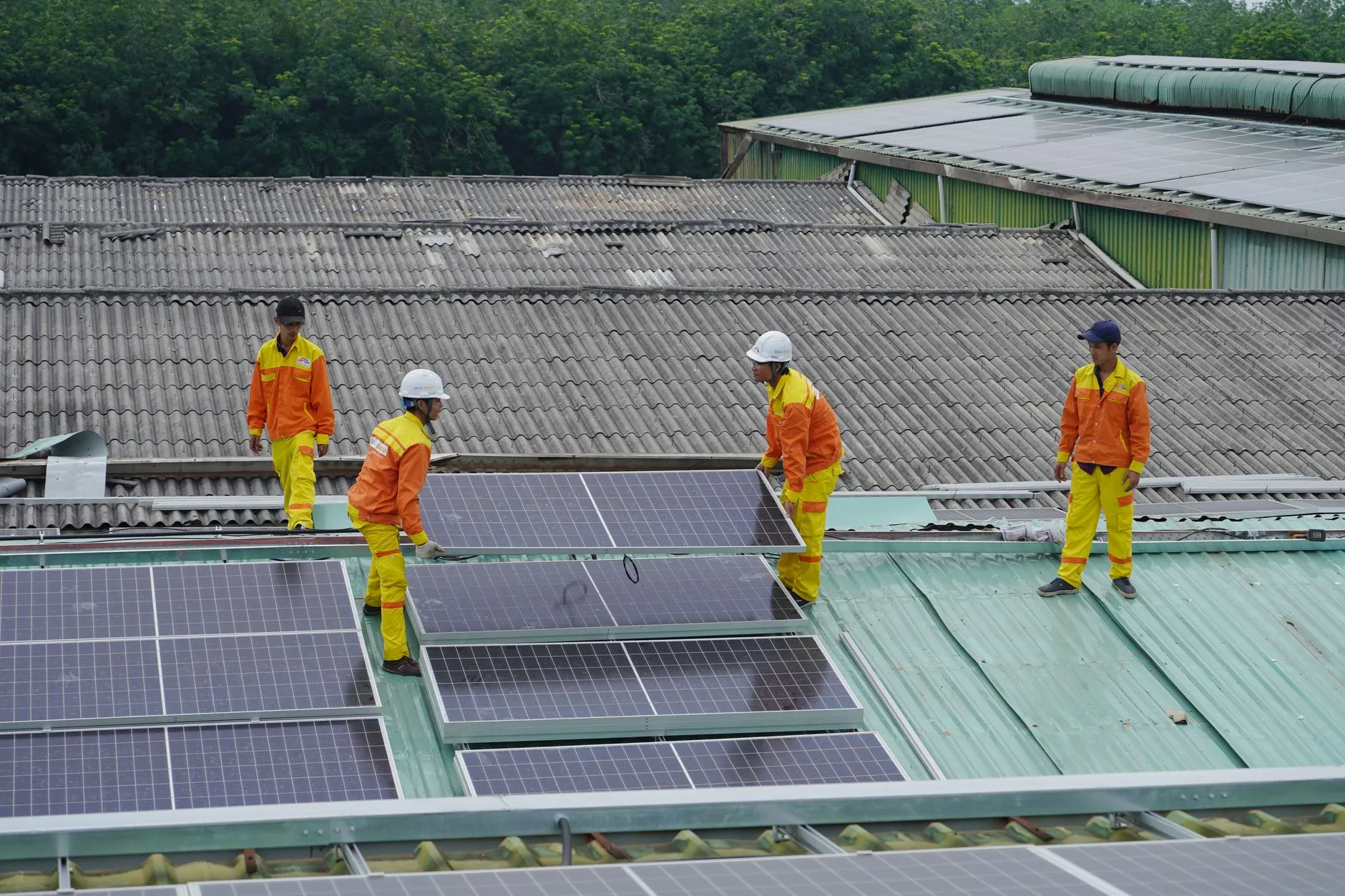
Solar panels installed on factory rooftops offer one of the most accessible ways to reduce dependence on grid electricity and diesel generators. They supply power during daylight hours, cut fuel purchases and provide a degree of protection against grid outages.
The government-owned Infrastructure Development Company Limited estimates that Bangladesh's textile, garment and export-processing zones could install approximately 2,815 megawatt-peak of rooftop solar capacity. The total investment required is estimated at around 126.7 billion Bangladeshi taka, equivalent to roughly $1.03 billion.
However, the potential is constrained by available roof space. A study of surveyed factories found that only about 5.8% of total floor area was suitable for solar installation. Even if manufacturers used all available rooftop space, solar would meet only around 14% of current energy demand at existing efficiency levels.
This limitation is important. Rooftop solar can reduce electricity-related emissions and costs, but it cannot replace the gas-fired boilers and other thermal systems used in dyeing, washing and finishing. Research led by Dhaka University economist Atonu Rabbani found that appropriately sized rooftop solar systems could recover their costs in roughly five to eight years. Nevertheless, 88% of factories surveyed identified high installation costs as a major barrier to adoption.
For UK buyers, this means rooftop solar alone will not solve the energy and emissions challenges facing Bangladeshi suppliers. A broader mix of technologies, financing mechanisms and infrastructure improvements is necessary to secure stable, low-carbon production over the medium term.
Major manufacturers are combining solar with storage and efficiency measures
Some large manufacturers have begun investing in renewable energy at scale. Ha-Meem Group, a major Bangladeshi apparel and denim producer, has installed 29.2 megawatt-peak of rooftop solar and plans to add another 3 megawatt-peak. The company reports that solar generation has reduced diesel consumption by nearly 60%, particularly during peak daytime production hours.
Individual factories are also exploring battery storage to manage outages and solar intermittency. Reuters reported that 4A Yarn Dyeing, a supplier to major international brands, is planning an industrial-scale battery system to keep production running for several hours when electricity sources fail. Such projects demonstrate that the transition involves more than replacing fossil-fuel generation with solar panels. It also requires batteries, improved energy management and more efficient machinery.
These early adopters illustrate the business case for investment. Lower fuel costs, reduced exposure to price volatility and improved production reliability all contribute to a stronger competitive position. Nevertheless, smaller suppliers often lack the capital and technical capacity to replicate these investments without external support.
International brands are setting emissions targets but face questions over financing
Global fashion brands are increasingly requiring suppliers to reduce emissions across their value chains. Bangladesh's apparel sector has committed to cutting greenhouse gas emissions by 30% by 2030 while improving energy efficiency and increasing renewable energy use.
The scale of investment required is substantial. Cascale, an industry sustainability organisation, estimates that Bangladesh's apparel sector may need approximately $6.6 billion by 2030 to meet its carbon reduction objectives. The organisation has argued that manufacturers cannot finance the transition alone, especially while facing tight margins and volatile energy prices.
A Stand.earth analysis estimated that 15 international fashion companies sourcing from Bangladesh could help avoid 1.26 million tonnes of carbon dioxide emissions annually by 2040, or 8.59 million tonnes cumulatively. The report called for brands to provide financing that does not simply increase supplier debt and to support renewable energy projects, electrification, worker protection and transparent progress reporting.
Some brand-led financing mechanisms are already emerging. H&M's Green Fashion Initiative has financed projects intended to reduce energy demand and support renewable alternatives. Five of its 24 projects were located in Bangladesh, according to reporting on the programme.
For UK businesses, these developments raise questions about the balance of responsibility between buyers and suppliers. Short lead times, low prices and unpredictable order volumes can make it difficult for factories to invest in cleaner technology. Long-term purchasing commitments, co-investment and concessional lending could reduce that tension and support a more stable transition.
Thermal energy remains a structural challenge beyond electricity generation
Electricity generation is only one part of the sector's energy profile. Solar can offset grid power and diesel generation, but it does not automatically provide the high-temperature heat required for dyeing, washing and finishing. The Centre for Policy Dialogue has warned that Bangladesh's apparel industry remains structurally dependent on carbon-intensive thermal energy even if renewable electricity expands.
A broader transition will therefore require technologies and infrastructure that address thermal processes as well as electricity supply. High-efficiency boilers and heat-recovery systems can reduce fuel consumption. Electric boilers and heat pumps offer low-carbon alternatives where reliable electricity is available. Biomass may be viable in some cases, provided sustainable fuel supplies and emissions controls are in place.
Industry reporting suggests that electric boilers and heat pumps may reduce energy consumption by as much as 45%. However, their adoption requires substantial upfront capital and improved electricity reliability. Battery storage can manage outages and solar intermittency, but it adds cost and complexity. Off-site renewable energy procurement may be necessary for factories with insufficient rooftop space.
Affordable loans, guarantees, grants and blended-finance programmes are needed to support these investments. Standardised factory-level energy and carbon reporting can help manufacturers track progress and demonstrate compliance to buyers. Energy-performance standards for industrial equipment can drive efficiency improvements across the sector.
What UK businesses sourcing from Bangladesh need to understand
The energy transition in Bangladesh's apparel sector is not simply a response to climate policy. It is a strategy for protecting production from fuel-price volatility and energy shortages. Factories that invest in solar power, storage and efficient equipment can reduce operating costs, improve supply reliability and meet the environmental requirements of global buyers.
The transition could also strengthen Bangladesh's position in international apparel markets. Brands face growing scrutiny over supply-chain emissions. Factories able to document lower-carbon production may therefore become more competitive. Conversely, manufacturers that cannot secure reliable and affordable clean energy could face higher costs, missed deliveries and reduced access to future orders.
However, no single technology can solve the problem. Rooftop solar can reduce electricity-related emissions, but thermal processes, grid reliability, financing and buyer purchasing practices must also change. The evidence increasingly points to a shared-responsibility model in which manufacturers, international brands, financial institutions and the Bangladeshi government jointly fund and manage the transition.
For UK businesses, this means considering how sourcing decisions, contract terms and investment mechanisms can support suppliers through the transition. Long-term partnerships, transparent carbon reporting and collaborative financing arrangements can reduce risk and improve supply-chain resilience.
Key points for UK businesses sourcing apparel from Bangladesh
- Gas shortages and unreliable electricity have disrupted production at 78% of surveyed knitwear factories, leading to delivery delays and order cancellations.
- Rooftop solar could meet around 14% of current energy demand if all available space were used, but cannot replace gas-fired thermal systems used in dyeing and finishing.
- Bangladesh's apparel sector may need approximately $6.6 billion by 2030 to meet its carbon reduction targets, an investment manufacturers cannot fund alone.
- Early adopters such as Ha-Meem Group have reduced diesel consumption by nearly 60% through solar installations combined with battery storage and efficiency improvements.
- International brands are setting emissions targets for suppliers, but purchasing practices and financing mechanisms will determine whether factories can invest in cleaner technology.
- Thermal energy remains a structural challenge, requiring electric boilers, heat pumps, biomass or other low-carbon alternatives beyond rooftop solar.
How SBS supports UK businesses with supply-chain emissions and procurement
UK businesses sourcing from high-emission regions face increasing pressure to measure and reduce supply-chain emissions. Scope 3 reporting requirements, tender criteria and investor expectations all demand greater transparency and action on indirect emissions.
We help businesses understand their supply-chain carbon footprint and develop strategies to reduce it. Our compliance support includes carbon reporting services aligned with UK regulatory requirements and PPN 06/21 standards for public sector suppliers. We also provide sustainable procurement guidance to help businesses assess supplier performance, manage sourcing risk and build long-term partnerships that support emissions reduction.
For businesses navigating complex supply-chain transitions, our net-zero programme offers practical support for carbon measurement, reduction planning and verification. We work with UK SMEs to translate policy and market developments into clear, actionable steps that protect both compliance and competitiveness.
The energy transition in Bangladesh's apparel sector illustrates the broader challenge facing UK businesses with global supply chains. Emissions reduction is no longer optional. It is becoming a commercial requirement that affects supplier selection, contract terms and long-term sourcing strategy. Understanding the financial, technical and operational realities facing suppliers is essential for managing that transition effectively.
Where to find further information on Bangladesh's apparel sector and energy transition
The Department for Energy Security and Net Zero provides guidance on carbon reporting and net-zero strategy relevant to UK businesses with international supply chains.
The Department for Business and Trade publishes country-specific export and sourcing guidance, including information on Bangladesh's textile and garment sector.
Stand.earth's research on fashion industry emissions in Bangladesh offers detailed analysis of the financing gap and potential emissions reductions. The Centre for Policy Dialogue in Dhaka publishes reports on energy policy, industrial development and trade performance in Bangladesh's apparel sector.
For UK businesses seeking sector-specific guidance on supply-chain emissions, the Institute of Environmental Management and Assessment provides resources on Scope 3 measurement and reporting best practice.