
Batteries help reduce emissions, but how do we reduce their emissions?
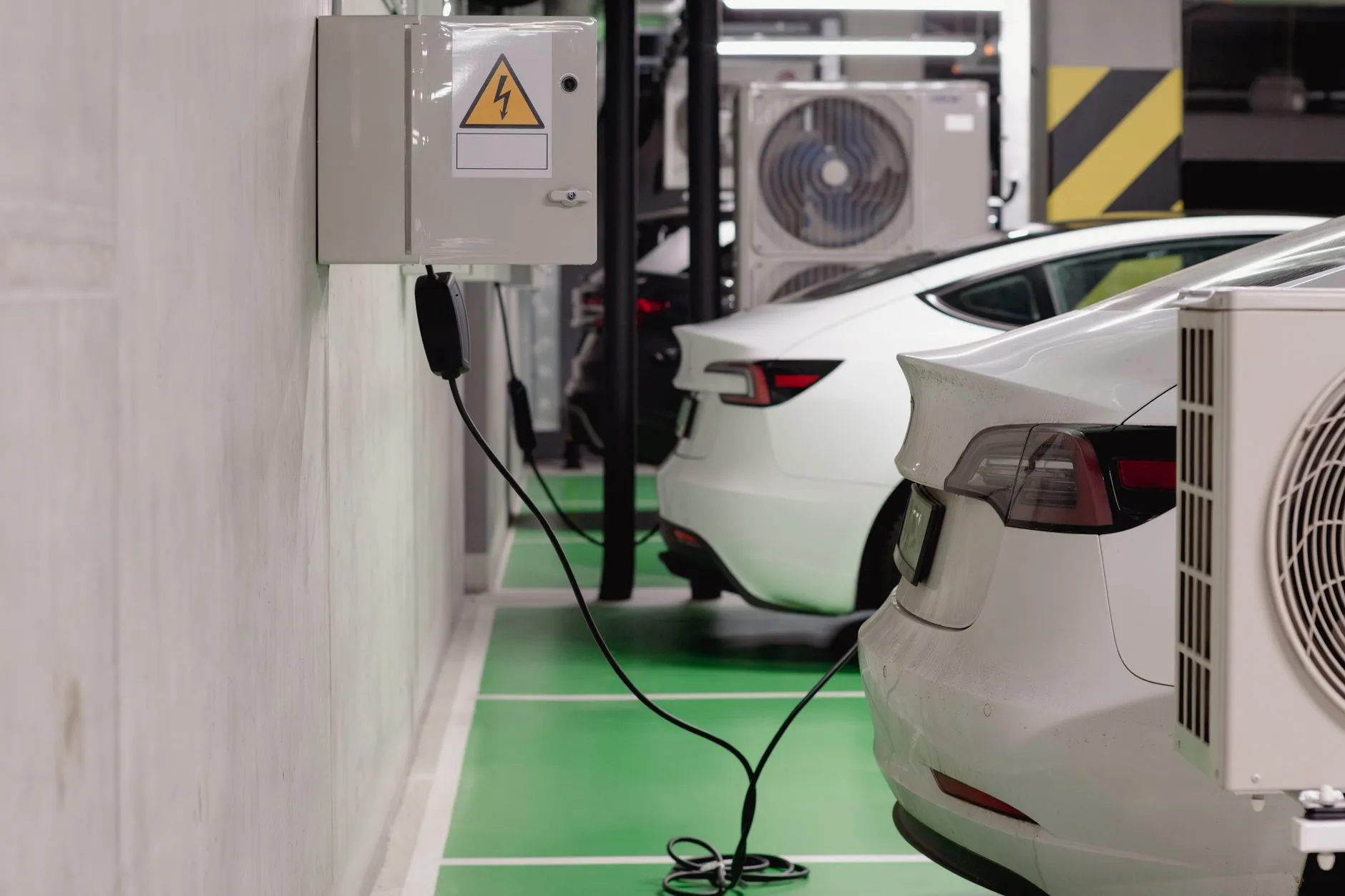
Lithium-ion batteries power electric vehicles, store renewable energy, and help replace fossil fuels across transport and industry. However, producing them creates a substantial carbon footprint. Mining, refining, processing, and manufacturing all require energy and generate emissions. Consequently, the question is no longer just how to make batteries cleaner. It is also whether we need to make as many batteries as current projections suggest.
A recent study led by Haiwei Zhou at the University of Melbourne explores this question. The research, reported by Ars Technica, argues that reducing the total number of batteries manufactured could deliver greater emissions savings than incremental improvements to production processes alone. This finding adds a new dimension to discussions about electrification and climate strategy.
For UK businesses, particularly those in manufacturing, logistics, or fleet management, this matters commercially. Battery costs affect vehicle pricing and total cost of ownership. Supply chain emissions influence tender eligibility, especially for public sector contracts subject to carbon reduction requirements. Understanding where battery emissions come from, and how to reduce them, helps businesses make informed decisions about vehicle specification, replacement cycles, and sustainability reporting.
Battery production emissions are small but growing fast
Battery manufacturing currently accounts for roughly 0.18 percent of global greenhouse gas emissions annually, according to the study. That share could increase more than tenfold by 2050 as demand for batteries rises. Transport electrification, grid-scale storage, and industrial applications will all require significantly more battery capacity over the next two decades.
Emissions occur at every stage of the battery supply chain. Mining operations extract lithium, nickel, cobalt, manganese, and other materials. Refining and processing convert these ores into battery-grade chemicals. Cathode and anode production follows, then cell manufacturing and pack assembly. Transportation moves materials between stages, and end-of-life management involves either recycling or disposal.
The International Energy Agency reports that critical mineral processing generates approximately 55 percent of lifecycle emissions for high-nickel nickel-manganese-cobalt batteries. For lithium-iron-phosphate batteries, this figure drops to around 35 percent. Cell manufacturing contributes almost half the lifecycle emissions for LFP batteries, compared with roughly 15 percent for high-nickel chemistries.
Electricity supply matters significantly. A 2025 meta-analysis of lithium-ion battery life-cycle assessments identified manufacturing electricity and cathode material production as the primary emissions drivers. Transport, by contrast, plays a smaller role. Therefore, where and how batteries are made influences their carbon footprint as much as the chemistry used.
Electric vehicles still cut emissions substantially despite battery production
Battery production creates an upfront emissions burden. Nevertheless, electric vehicles produce fewer lifecycle emissions than petrol or diesel equivalents. The IEA estimates that medium-sized battery electric cars generate about half the emissions of comparable internal combustion vehicles on a global average.
The payback period varies depending on battery size, electricity mix, and driving patterns. Analysis summarized in the IEA's Global EV Outlook suggests electric vehicles can offset additional battery production emissions in approximately two years. As electricity grids become cleaner, this benefit increases further.
This distinction is important for UK businesses evaluating fleet transition. Reducing battery emissions does not undermine the case for electrification. Instead, it represents the next phase of decarbonization after replacing fossil fuel consumption with electric power. Companies reporting Scope 1 and Scope 3 emissions need to account for both the manufacturing footprint and the operational savings.
Making fewer batteries may reduce emissions more than making cleaner batteries
The Melbourne study introduces a less obvious strategy for cutting battery emissions. Rather than focusing solely on cleaner production, it examines whether we can reduce the total number of batteries manufactured. Several approaches support this goal.
Higher energy density allows vehicles and storage systems to deliver the same performance with fewer cells. Better vehicle design ensures battery packs match actual usage patterns rather than maximizing range unnecessarily. Improved thermal management and charging controls extend operating life. Second-life applications reuse automotive batteries in stationary storage once they no longer meet vehicle requirements. High-quality recycling recovers materials and feeds them back into new production.
Transport planning offers another route. Better public transit, shared mobility, and higher vehicle utilization all reduce the number of vehicles required. Fewer vehicles mean fewer batteries. Similarly, efficient grid planning, demand management, and transmission expansion can reduce stationary storage needs without compromising renewable energy integration.
Oversized battery packs illustrate the trade-off clearly. A larger pack provides more range and reduces charging frequency. However, it also requires more mining, processing, and manufacturing energy. If a smaller battery meets most daily travel needs, avoiding the additional capacity may cut emissions more effectively than marginal production improvements for a larger pack.
Production methods still matter for batteries that are needed
Avoiding unnecessary battery production is one part of the solution. For batteries that are still required, cleaner production methods remain essential. Several measures can reduce emissions from manufacturing.
Electricity supply is critical. Battery factories consume substantial power during electrode production, cell assembly, drying, and formation. Moving manufacturing to grids with more renewable and low-carbon electricity cuts emissions significantly. Electrifying industrial heat and improving factory efficiency provide additional reductions.
Chemistry choices affect both material demand and emissions. The IEA estimates that LFP battery packs generate lifecycle emissions roughly one-third lower than high-nickel NMC batteries at pack level. LFP batteries avoid nickel and cobalt, although they still require lithium, iron, phosphate, and graphite. They often offer advantages in cost, safety, and durability. High-nickel chemistries generally provide greater energy density. The appropriate choice depends on the application rather than a single universally superior chemistry.
Higher energy density allows a battery to deliver the same energy with less material and fewer structural components. The IEA projects battery lifecycle emissions could fall by approximately 35 percent by 2035 in its Announced Pledges Scenario. This reduction is supported by roughly 30 percent greater pack-level energy density, cleaner electricity grids, and increased use of recycled cathode material.
Energy density alone is not sufficient. If higher energy density simply encourages manufacturers to install much larger batteries, some potential environmental benefit may be lost. Therefore, efficiency gains need to translate into smaller packs or longer service life, not just increased capacity.
Recycling and second-life use extend battery value and reduce emissions
Recycling reduces the need for future mining and refining. Recovering lithium, nickel, cobalt, manganese, copper, and other materials generally requires less energy than obtaining them from new ores. Nevertheless, benefits depend on recycling technology, energy source, recovery rates, and material quality. The IEA describes recycling as an important way to reduce demand for primary critical minerals and strengthen battery supply chain sustainability.
Effective recycling requires collection systems, standardized battery designs, safe transport, and clear responsibility for end-of-life management. For UK businesses, this has commercial implications. Extended producer responsibility schemes may place obligations on manufacturers and importers. Companies holding large battery stocks need disposal or recycling plans that meet environmental regulations and support sustainability commitments.
Second-life applications offer another route to reduce emissions. A battery that no longer provides sufficient range or power for a vehicle may still retain useful capacity for stationary applications. Possible uses include solar-plus-storage systems, backup power for buildings, commercial and industrial peak demand management, grid balancing, and charging infrastructure support.
Industry analysis estimates that EV battery packs may remain in automotive service for 10 to 20 years before capacity falls below approximately 80 percent. Actual life depends on chemistry, temperature, charging behavior, vehicle use, and battery management systems. Second-life applications can delay recycling and avoid manufacturing an entirely new stationary storage battery. However, they are not automatically beneficial. Testing, transport, repackaging, safety controls, and integration costs can be substantial. In some cases, direct recycling may produce greater environmental benefits than repurposing a degraded pack.
Durability cuts emissions without reducing electrification benefits
Battery longevity is one of the clearest ways to reduce emissions without reducing electrification benefits. A battery that lasts longer spreads its manufacturing emissions over more kilometers driven or more kilowatt-hours stored. For UK businesses, longer battery life also reduces total cost of ownership and delays capital expenditure on replacement packs.
Durability can be improved through better cell chemistry, more accurate battery management systems, thermal control, and charging limits that reduce stress on cells. Repairable and replaceable modules, software that manages high-power charging and extreme temperatures, and designs that facilitate inspection and component replacement all extend service life.
Longer battery life also reduces the frequency with which vehicles or storage systems need replacement packs. This directly supports the central argument of the Melbourne study: the cleanest battery is often the one that does not need to be manufactured yet. For fleet operators, this translates into lower replacement costs, fewer supply chain disruptions, and reduced exposure to critical mineral price volatility.
What UK businesses need to know about battery emissions
- Battery manufacturing currently accounts for approximately 0.18 percent of global greenhouse gas emissions, but this share could increase more than tenfold by 2050 as demand grows.
- Medium-sized battery electric cars produce about half the lifecycle emissions of equivalent internal combustion vehicles on a global average, according to the IEA.
- Electric vehicles can offset additional battery production emissions in around two years, depending on battery size, electricity mix, and driving conditions.
- Lithium-iron-phosphate battery packs generate lifecycle emissions roughly one-third lower than high-nickel nickel-manganese-cobalt batteries at pack level.
- Critical mineral processing generates about 55 percent of lifecycle emissions for high-nickel NMC batteries and approximately 35 percent for LFP batteries.
- The IEA projects battery lifecycle emissions could fall by about 35 percent by 2035, supported by approximately 30 percent greater pack-level energy density, cleaner electricity, and increased recycled material use.
- EV battery packs may remain in automotive service for 10 to 20 years before capacity falls below roughly 80 percent, depending on chemistry, usage, and thermal management.
Commercial and compliance implications for UK firms
Battery emissions affect several commercial considerations for UK businesses. Companies reporting carbon footprints under PPN 06/21 or other carbon reporting requirements must account for supply chain emissions. Vehicle procurement decisions influence Scope 3 emissions, which increasingly matter for tender eligibility and supply chain assessments.
Fleet operators face decisions about battery size and vehicle specification. Larger batteries increase upfront cost and embedded emissions, but may reduce operational complexity. Smaller batteries lower initial cost and environmental impact, but require more frequent charging and careful route planning. Understanding actual usage patterns helps match battery size to real needs rather than worst-case scenarios.
Residual value calculations need to account for battery degradation and second-life potential. Vehicles with well-managed batteries retain higher resale values. Batteries designed for second-life use may command a market at end of automotive service, offsetting disposal costs. However, this market is still developing, and residual value assumptions should be conservative.
Supply chain due diligence matters for reputational and regulatory reasons. Companies increasingly face scrutiny over critical mineral sourcing, labor conditions in mining regions, and environmental impacts of battery production. Supplier selection should include questions about energy sources, recycling processes, and material traceability. Many of these considerations align with sustainable procurement practices that reduce risk and support compliance.
Energy procurement decisions also influence battery emissions indirectly. Charging infrastructure powered by renewable electricity reduces operational emissions. For businesses with on-site generation or storage, integrating vehicle charging with solar or wind capacity improves economics and cuts carbon. This requires coordination between energy management, fleet operations, and sustainability reporting.
Policy implications extend beyond factory efficiency
The findings from the Melbourne study broaden the policy debate beyond manufacturing efficiency. Climate policy often focuses on making each battery cleaner. However, total environmental impact also depends on how many batteries are produced, how large they are, how long they last, and what happens to them afterward.
This has several implications for regulation and industry practice. Automakers face incentives to avoid unnecessary battery oversizing and prioritize efficiency. Governments can support smaller, lighter vehicles and efficient public transportation rather than treating maximum range as the primary measure of progress. Grid planners can combine batteries with transmission, demand response, flexible generation, and improved forecasting.
Manufacturers can design packs for repair, reuse, disassembly, and recycling. Regulators can require supply chain emissions reporting and minimum recycled content standards. Consumers can reduce impacts by choosing appropriately sized vehicles, preserving battery health, and keeping products in service longer. The IEA summarizes the required approach as a comprehensive supply chain that covers extraction, refining, manufacturing, end-of-life management, and recycling while minimizing carbon emissions.
For UK businesses, these policy directions signal where regulation and market expectations are heading. Companies preparing for tighter environmental standards should consider battery lifecycle planning now rather than waiting for mandates. Early action on durability, second-life planning, and recycling partnerships can reduce costs and create competitive advantages.
Practical steps for businesses managing battery-related emissions
Understanding battery emissions is one thing. Acting on that understanding requires practical measures businesses can implement now. Several steps apply across different sectors and fleet sizes.
First, match battery size to actual usage. Analyze daily travel patterns, charging infrastructure availability, and operational requirements. Specify vehicles with appropriately sized batteries rather than maximizing range unnecessarily. This reduces upfront cost, embedded emissions, and vehicle weight, which in turn improves efficiency.
Second, extend battery life through proper management. Implement charging protocols that avoid extremes of state of charge where possible. Provide training for drivers and fleet managers on battery care. Monitor battery health and address degradation early. Consider vehicles with thermal management systems that protect batteries in hot and cold conditions.
Third, plan for end-of-life options before they are needed. Establish relationships with recyclers or second-life integrators. Understand residual value markets for used batteries. Include end-of-life planning in procurement specifications and supplier contracts. This avoids last-minute decisions and potential compliance issues.
Fourth, integrate battery considerations into net zero programs and carbon reporting. Account for Scope 3 emissions from battery production. Track operational emissions savings from electrification. Report both figures transparently. This supports credible sustainability communication and meets growing stakeholder expectations.
Fifth, engage with suppliers on production emissions. Ask about manufacturing electricity sources, recycled content, and supply chain traceability. Favor suppliers with credible emissions reduction plans. This sends market signals that support cleaner production and reduces reputational risk.
Further information and authoritative sources
The International Energy Agency publishes regular updates on battery technology, supply chains, and lifecycle emissions through its Global EV Outlook and related reports. These provide detailed analysis of battery chemistry, energy density trends, and emissions projections.
The Department for Energy Security and Net Zero sets UK policy on transport electrification, grid decarbonization, and critical mineral supply chains. Guidance on carbon reporting requirements and public procurement standards is available through gov.uk.
For businesses seeking support with carbon reporting, supply chain emissions, or sustainable procurement, compliance support can help navigate regulatory requirements and develop credible carbon reduction strategies. Understanding battery lifecycle emissions is increasingly important for tender eligibility, stakeholder confidence, and long-term cost management.