
Will Canada's Environmental Laws Impact EU Relations?
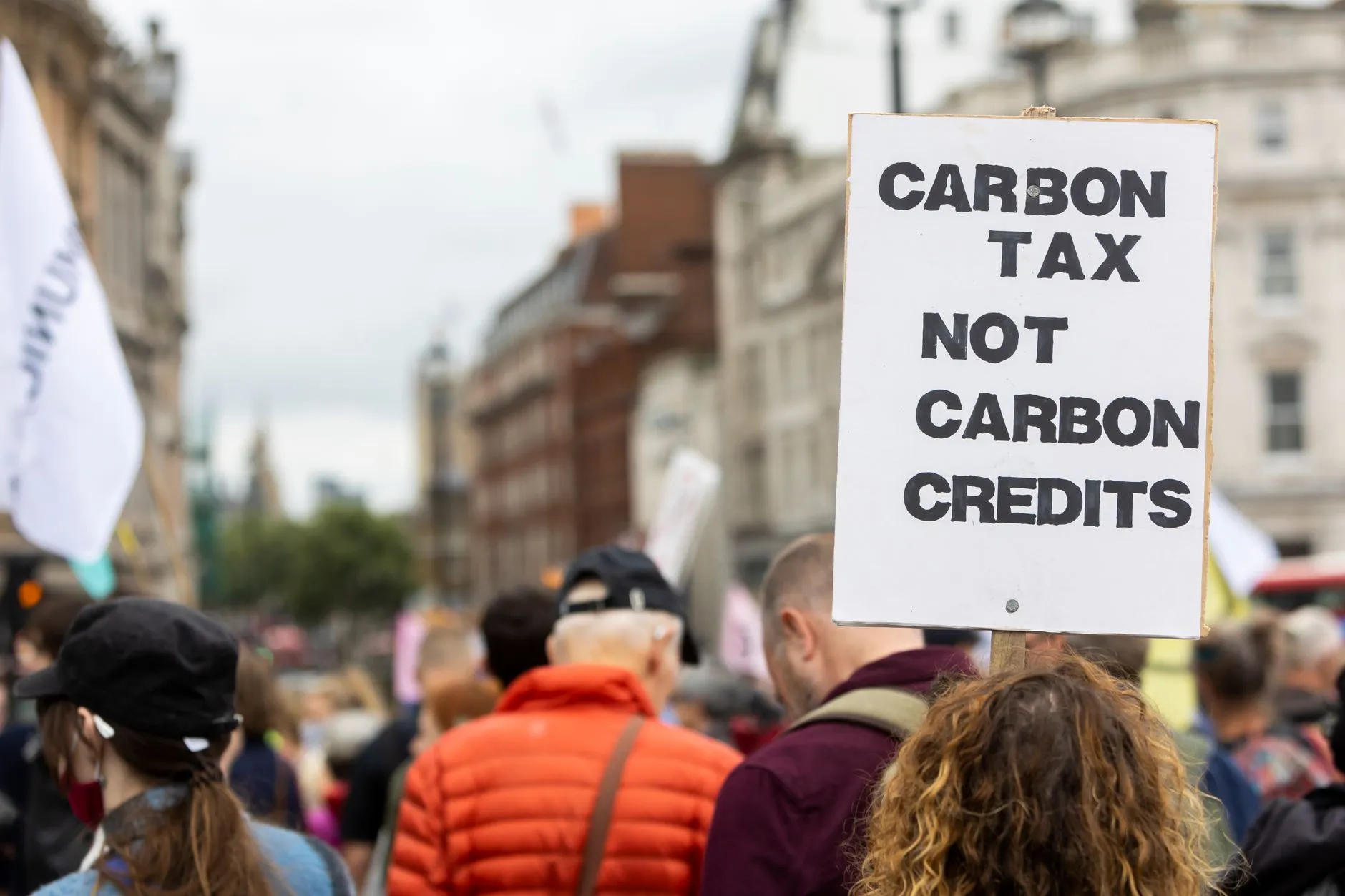
Canada's recent rollback of consumer carbon pricing, vehicle electrification mandates and emissions caps has sparked debate about more than domestic climate policy. The changes raise a commercial question for UK businesses trading with or investing in Canada: can Ottawa pursue closer EU ties while adopting regulatory approaches that increasingly resemble US deregulation?
The answer matters because European markets now link trade access to climate credibility. As the EU Carbon Border Adjustment Mechanism becomes enforceable, Canadian exporters must demonstrate that their emissions data and domestic carbon pricing meet European standards. Policy reversals complicate that task.
For UK firms operating in Canadian supply chains or sourcing materials from North America, the trajectory of Canadian environmental law affects procurement risk, compliance obligations and the reliability of carbon accounting. Regulatory divergence between Canada and the EU creates friction that eventually shows up in documentation requirements, border charges and tender eligibility.
Canada cancels consumer carbon pricing and sectoral emissions rules
In late 2025 and early 2026, the federal government withdrew several high-profile climate measures. These included the consumer carbon price, the proposed oil and gas emissions cap, and fleet electrification rules for commercial vehicles. Environmental Defence, a Canadian advocacy group, argued in October 2026 that the changes undermine Canada's ability to meet its emissions targets and align with European climate standards.
The organization also questioned whether industrial carbon pricing alone can deliver the reductions Ottawa has committed to. According to Environmental Defence, an agreement between Alberta and the federal government weakened the industrial pricing system by reducing stringency and limiting compliance obligations for large emitters.
Environmental Defence summarized the dilemma in direct terms: "We can't pivot towards Europe unless we stop writing environmental laws like Washington." The statement highlights a tension between regulatory alignment with the United States and convergence with the EU's more prescriptive sustainability framework.
Canada's industrial carbon pricing system applies to large facilities through the Output-Based Pricing System. The system sets emissions benchmarks for specific sectors and charges facilities for emissions above those thresholds. Every province and territory now operates an industrial carbon pricing framework that meets federal minimum standards, although designs vary.
The federal government has published a trajectory for industrial carbon prices that rises steadily through 2040. Prices are scheduled to reach C$95 per tonne in 2026, hold at C$100 per tonne from 2027 through 2029, then increase to C$115 per tonne in 2030 and C$130 per tonne in 2035. After 2035, the price rises annually with inflation, reaching C$140 per tonne by 2040.
Ottawa describes the framework as a tool to reduce emissions while managing competitiveness risks and preventing carbon leakage. However, the balance between environmental stringency and industrial flexibility remains politically contentious. If compliance costs or tightening rates are reduced too far, the price signal may no longer drive technological change. Conversely, industry groups argue that rapid increases could disadvantage Canadian producers competing with jurisdictions that impose weaker obligations.
EU carbon border rules now apply to Canadian exports
The EU Carbon Border Adjustment Mechanism entered its definitive phase on 1 January 2026. CBAM requires importers of carbon-intensive goods to report embedded emissions and purchase certificates reflecting the carbon content of those products. Certificate prices are linked to EU Emissions Trading System allowance prices.
Initially, CBAM covers iron and steel, aluminium, cement, fertilizers, electricity and hydrogen. The European Commission has proposed expanding coverage to approximately 180 steel and aluminium-intensive downstream products from 2028. For Canadian exporters, the mechanism creates new compliance burdens and raises the commercial value of credible emissions data.
The EU presents CBAM as a response to carbon leakage, the risk that production shifts to jurisdictions with weaker climate rules. In practice, it also functions as an industrial policy tool designed to protect European producers subject to stringent domestic carbon costs. Free emissions allowances for EU producers are being phased out as CBAM takes effect.
Canadian exporters must now demonstrate that their emissions accounting is reliable, their carbon pricing is comparable to EU standards, and their documentation can withstand European scrutiny. Smaller and medium-sized exporters may face disproportionate compliance costs. Consequently, the strength and credibility of Canada's domestic carbon pricing system directly affects market access for Canadian goods in the EU.
The EU has legally binding commitments to reduce net greenhouse gas emissions by at least 55% from 1990 levels by 2030 and reach climate neutrality by 2050. Environmental Defence contrasted those obligations with what it described as weakening US environmental standards, claiming that US emissions rules had become 32% less stringent while EU vehicle emissions standards were approximately 60% tighter.
Those comparisons form part of the advocacy organization's argument rather than a comprehensive assessment of every federal, state or EU regulation. Nevertheless, they illustrate a genuine policy divergence. The EU is embedding climate targets in detailed product standards, reporting requirements and market access conditions. Meanwhile, the United States has experienced substantial regulatory fluctuation.
Proposed changes to environmental assessments raise compliance concerns
Environmental Defence also raised concerns about Bill C-39, arguing that the legislation would weaken the framework used to evaluate major industrial projects. The organization objected to proposed "regions of national interest" that it characterized as areas where normal environmental law requirements could be reduced or suspended.
Environmental impact assessment affects project finance, institutional investment, supply chain eligibility, Indigenous consultation and corporate sustainability reporting. A weaker assessment regime could reduce public confidence domestically and make Canadian projects less attractive to investors subject to environmental, social and governance requirements.
Academic analysis of environmental assessments in Canada, the United States and the EU finds that environmental review has become increasingly connected to trade policy and treaty obligations. Climate change and water pollution are among the issues most frequently examined in Canadian and EU assessments. Therefore, changes to Canada's project assessment framework could influence how European investors and buyers evaluate Canadian projects and suppliers.
The practical impact will depend on the final legislative text, implementing regulations and how courts and regulators interpret the new provisions. However, any perception that Canada is systematically weakening environmental safeguards could complicate efforts to deepen economic ties with Europe.
Industrial carbon pricing alone may not close the emissions gap
Environmental Defence cited Canadian Climate Institute research claiming that recent policy changes have placed Canada approximately 20 years behind its goal of reaching net zero by 2050. That claim requires careful interpretation. A projected delay is not the same as a measured 20-year increase in emissions, and the estimate depends on assumptions about policy implementation, technology deployment, economic growth and provincial action.
Nevertheless, the warning highlights a familiar problem: long-term targets lack credibility unless supported by enforceable near-term measures. Industrial carbon pricing provides a broad economic incentive, but it is unlikely to deliver all necessary emissions reductions on its own. Its effectiveness depends on the stringency of emissions benchmarks, the treatment of free allocations, verification procedures, availability of low-carbon technologies and penalties for non-compliance.
Complementary measures such as methane controls, clean electricity standards, building efficiency programs, public transit investment and zero-emission vehicle policies can address sectors where carbon pricing alone may be insufficient. Consequently, the cancellation of consumer carbon pricing, vehicle electrification mandates and sectoral emissions caps raises questions about whether Canada's overall policy mix remains sufficient to meet its commitments.
For UK businesses, the key concern is not Canada's domestic political debate but whether Canadian suppliers can provide reliable emissions data and meet the standards increasingly attached to procurement, finance and trade. If Canada's climate policies weaken to the point where its carbon pricing system is no longer recognized as comparable under EU rules, Canadian exporters could face higher CBAM charges and reduced competitiveness in European markets.
Canada manages three competing objectives
Canada must balance North American competitiveness, domestic and international climate commitments, and access to European capital and markets. The country's economy is deeply integrated with the United States, particularly in energy, manufacturing and cross-border supply chains. At the same time, Ottawa has sought closer European economic and political ties through the Canada-EU Strategic Partnership and the Comprehensive Economic and Trade Agreement framework.
A US-style regulatory rollback may reduce short-term compliance costs for Canadian producers. However, it could also make Canadian exports less competitive in Europe if buyers question the reliability of emissions data or if producers face higher border-related charges under CBAM. Conversely, closer EU alignment could strengthen market access and investor confidence but may raise costs for sectors exposed to international competition.
The immediate test is whether Canada's industrial carbon pricing system remains stringent enough to satisfy both domestic climate objectives and foreign trade partners. The longer-term test is whether Ottawa can offer a stable regulatory environment that changes predictably rather than shifting with political cycles.
For UK firms trading with or investing in Canada, regulatory stability matters as much as the stringency of individual policies. Supply chain partners and project sponsors need confidence that emissions accounting standards, environmental assessment procedures and carbon pricing frameworks will remain consistent over the life of contracts and investments.
Commercial implications for UK businesses with Canadian exposure
UK companies sourcing materials from Canada, operating joint ventures with Canadian partners or financing Canadian projects face several practical considerations. First, Canadian suppliers in CBAM-covered sectors must now provide product-level emissions data that meets EU verification standards. If Canada's domestic carbon pricing and reporting systems weaken, compliance burdens and border charges may increase.
Second, investors subject to environmental, social and governance requirements may face additional due diligence obligations when evaluating Canadian projects. Weakened environmental assessments or inconsistent climate policies could trigger questions from institutional investors, lenders or sustainability auditors.
Third, procurement teams managing supply chain emissions must assess whether Canadian suppliers can meet the standards attached to public sector tenders, corporate net zero commitments and voluntary carbon reporting frameworks. If Canada's climate policies diverge from EU standards, procurement risk increases.
Fourth, UK firms with operations in both Canada and the EU must navigate two regulatory environments that may be moving in opposite directions. Compliance strategies, emissions accounting systems and sustainability reporting frameworks may need to accommodate increasing divergence between North American and European requirements.
Finally, businesses relying on Canadian emissions data for Scope 3 reporting must ensure that those data are credible, verifiable and compatible with UK and EU reporting standards. Consequently, changes to Canada's carbon pricing and environmental assessment frameworks are not purely domestic policy matters. They directly affect the commercial risks and compliance obligations facing UK businesses with Canadian exposure.
Key facts about Canada's policy shift and EU trade rules
- Canada cancelled its consumer carbon price, oil and gas emissions cap and vehicle electrification mandates in late 2025 and early 2026.
- Canada's industrial carbon price is scheduled to reach C$130 per tonne by 2035 and C$140 per tonne by 2040, with annual inflation-linked increases thereafter.
- The EU Carbon Border Adjustment Mechanism entered its definitive phase on 1 January 2026, covering iron and steel, aluminium, cement, fertilizers, electricity and hydrogen.
- The European Commission has proposed expanding CBAM to approximately 180 steel and aluminium-intensive downstream products from 2028.
- The EU has legally binding commitments to reduce net greenhouse gas emissions by at least 55% from 1990 levels by 2030 and reach climate neutrality by 2050.
- Environmental Defence claimed that recent policy changes have placed Canada approximately 20 years behind its net zero target.
- Proposed changes to environmental assessments in Bill C-39 could affect project finance, institutional investment and supply chain eligibility.
Steps for UK businesses managing Canadian supply chain risk
UK firms should review their exposure to Canadian suppliers in CBAM-covered sectors. Aluminium, steel, cement and fertilizer imports from Canada will require embedded emissions data and may trigger border charges if Canada's carbon pricing is not recognized as comparable under EU rules. Therefore, procurement teams should verify that Canadian suppliers can provide credible product-level emissions data.
Businesses should also assess whether Canadian partners and project sponsors are subject to robust environmental assessments. Weakened project approval frameworks could increase reputational risk for UK investors and lenders. Due diligence procedures may need to account for changes in Canadian environmental law.
Companies reporting Scope 3 emissions should confirm that Canadian suppliers use emissions accounting methodologies compatible with UK and EU reporting standards. If Canada's carbon pricing and verification systems diverge from European norms, compliance support for carbon reporting may be necessary to ensure that supply chain emissions data remain credible.
Firms operating in both Canada and the EU should consider whether their sustainability strategies can accommodate regulatory divergence. A single carbon accounting framework may not satisfy both North American and European requirements if Canada's policies continue to weaken. Consequently, businesses may need separate compliance pathways for different jurisdictions.
UK businesses should monitor developments in Canada's industrial carbon pricing framework, particularly any changes to emissions benchmarks, tightening rates or compliance obligations. The strength and credibility of Canada's carbon pricing system will determine whether Canadian exports face higher CBAM charges and whether Canadian emissions data are accepted by European buyers and regulators.
Finally, procurement teams should evaluate whether Canadian suppliers can meet the standards attached to UK public sector tenders. Sustainable procurement requirements increasingly include carbon reporting obligations, supply chain due diligence and alignment with net zero commitments. If Canada's climate policies weaken, Canadian suppliers may struggle to meet those requirements.
Further information on EU carbon border rules and Canadian climate policy
The European Commission provides detailed guidance on the Carbon Border Adjustment Mechanism, including covered sectors, reporting requirements and certificate pricing. UK businesses can access official resources through the EU's CBAM information portal.
The Canadian government publishes information on industrial carbon pricing, including the Output-Based Pricing System and provincial frameworks, through Environment and Climate Change Canada.
Environmental Defence's October 2026 article on Canada's climate policy and EU alignment is available through the organization's website. The analysis provides additional detail on the policy changes discussed in this article.
UK businesses seeking guidance on Scope 3 emissions reporting and supply chain carbon accounting can consult the UK government's resources on greenhouse gas reporting conversion factors.
The International Emissions Trading Association offers comparative analysis of carbon pricing systems globally, including technical assessments of how different jurisdictions' frameworks interact with the EU Emissions Trading System and CBAM.