
Cemex UK supplies lower-carbon concrete for 65 Crutched Friars redevelopment, London
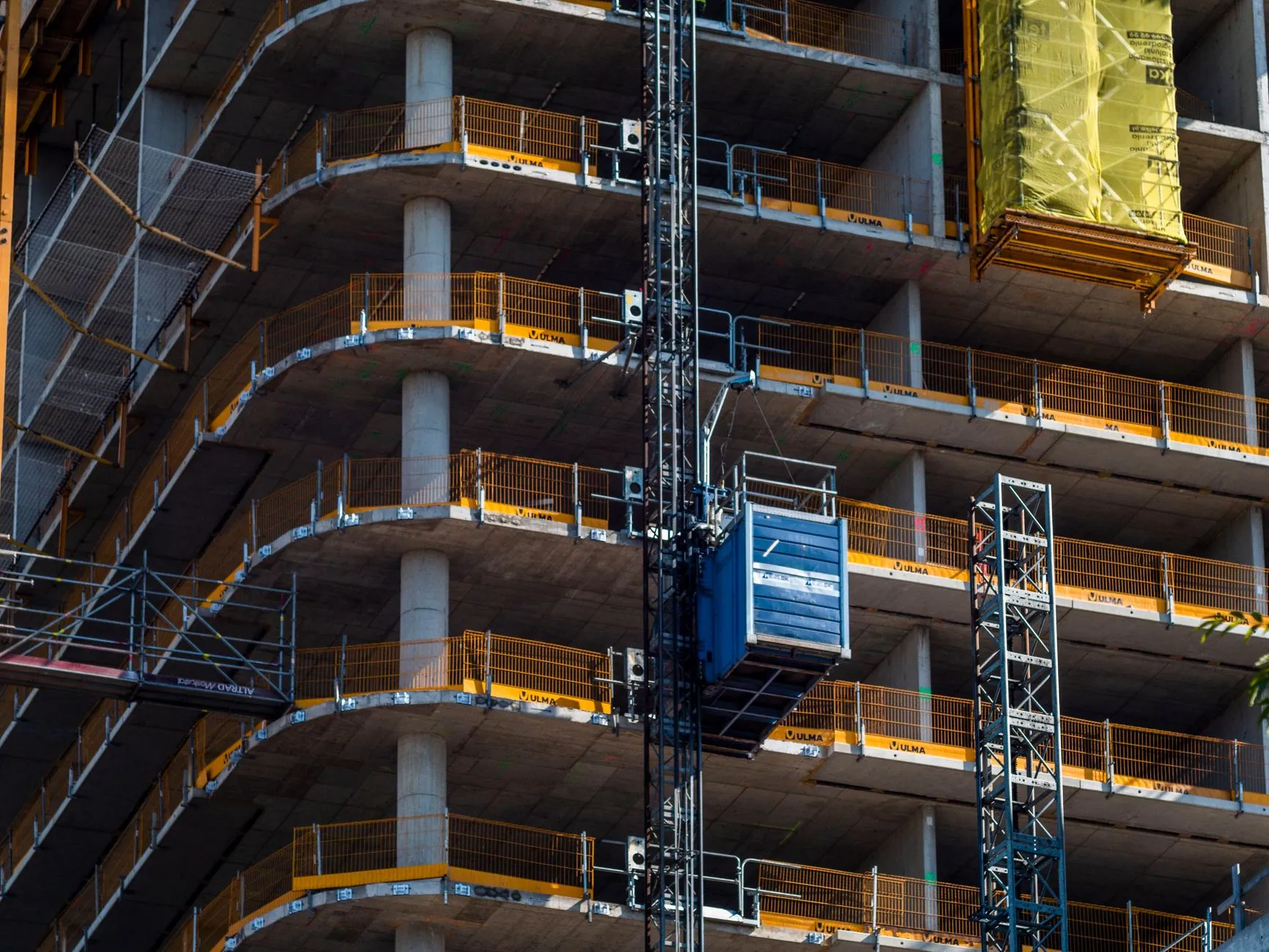
Lower-carbon concrete supplied at scale for City of London office redevelopment
Cemex UK has delivered 13,000 cubic metres of lower-carbon concrete for 65 Crutched Friars, a 20-storey mixed-use scheme in the City of London. The project represents one of the first high-profile uses of CEM II/A-L cement with GGBS on a major City development, and it highlights how embodied-carbon reduction is becoming a core procurement requirement rather than an optional add-on.
The development is being delivered by McAleer & Rushe and Consarc Architects for developer-operator Dominus. It targets BREEAM Outstanding certification, placing it within the top 1% of UK buildings for sustainability performance. Practical completion is scheduled for 2027.
This matters because it shows lower-carbon concrete moving from pilot schemes into mainstream commercial construction. The volume supplied, the use of CEM II/A-L with ground granulated blast-furnace slag, and the explicit link to BREEAM Outstanding demonstrate that embodied carbon is now a measurable specification requirement on major urban projects.
Demolition to basement level and rebuild to 61 metres
The site was previously occupied by an office building. Demolition proceeded to basement level, and the new structure rises to 61 metres across a basement, ground floor, and 20 upper storeys. The development combines office space with student accommodation, with students expected to arrive for the 2027/28 academic year.
Cemex says the project's sustainability ambitions made embodied-carbon reduction a central design requirement from the outset. This influenced material selection alongside the structural and programme demands typical of high-rise urban construction. The concrete package included approximately 1,000 cubic metres of slab pours using slipform operations, which require precise control over mix design and delivery schedules.
The structure uses reinforced concrete combined with post-tensioned concrete and steel frameworks to meet performance requirements. For the C40/50 floor slabs, Cemex supplied CEM II/A-L with 25% GGBS. This blend reduces the clinker content compared to traditional Portland cement, lowering the embodied carbon without compromising structural strength or durability.
CEM II/A-L and GGBS blends reduce clinker content
CEM II/A-L is a Portland-limestone cement that incorporates up to 20% limestone filler. It reduces the proportion of clinker, which is the most carbon-intensive component of cement production. When combined with GGBS, a by-product of steel manufacturing, the overall clinker content falls further. This matters because clinker production accounts for the majority of cement's carbon footprint.
For this project, Cemex used CEM II/A-L with 25% GGBS for the floor slabs. This blend maintains the strength and workability required for C40/50 concrete while reducing embodied carbon. The approach aligns with broader industry efforts to replace traditional CEM I with lower-carbon alternatives wherever structural performance allows.
James Drobka, general commercial manager at Cemex, said working closely with McAleer & Rushe and Ian Black Consulting early in the project helped the team develop a high-performance solution. He noted that the lower-carbon concrete was designed to meet the critical BREEAM rating while delivering the structural performance required for a high-rise build.
Cemex describes the 65 Crutched Friars project as its first high-profile use of CEM II/A-L on a major scheme in the City of London. This signals a shift in how developers and contractors approach material specifications in central London, where sustainability credentials are increasingly scrutinised alongside cost and programme delivery.
BREEAM Outstanding requires measurable embodied-carbon reductions
BREEAM Outstanding certification places buildings in the top 1% nationally for sustainability performance. Achieving this rating requires measurable reductions in embodied carbon, energy use, water consumption, and waste generation. Material choices are a significant factor in the assessment, particularly for concrete, which typically accounts for a large proportion of a building's total embodied carbon.
The decision to use lower-carbon concrete at 65 Crutched Friars was therefore not a branding exercise. It was a necessary step to meet the project's BREEAM targets. This reflects a broader trend in UK construction: sustainability ratings are becoming tighter, and developers must demonstrate verifiable carbon reductions to achieve the highest certifications.
For contractors and suppliers, this means that concrete mixes must be designed to meet both structural and environmental performance criteria. In practice, this requires early collaboration between developers, structural engineers, and concrete suppliers. The 65 Crutched Friars project illustrates how this process works on a large urban scheme.
What this project reveals about UK construction procurement
Developers and contractors are now routinely asking suppliers to prove carbon reductions without compromising strength, durability, or delivery schedules. This is not limited to public sector projects where Procurement Policy Note 06/21 applies. Private developers are also specifying lower-carbon materials to meet planning requirements, investor expectations, and tenant demand for sustainable buildings.
The 65 Crutched Friars project demonstrates how this shift is playing out in practice. Cemex supplied a lower-carbon mix that met the structural requirements for a 61-metre high-rise while contributing to the project's BREEAM Outstanding target. The concrete was delivered on schedule using slipform operations, which require precise timing and consistency.
This shows that lower-carbon concrete is no longer confined to pilot projects or low-risk applications. It is being used at scale on high-profile commercial developments where performance, cost, and programme certainty are non-negotiable. The implication for other suppliers is clear: the ability to provide verified lower-carbon products is becoming a competitive requirement, not a market differentiator.
Cemex's wider UK lower-carbon concrete strategy
Cemex markets its UK lower-carbon concrete range under the Vertua brand. The company states that qualifying products deliver reductions of around 30% to 70% depending on the specification. These reductions are achieved through a combination of cement substitution, alternative binders, and supply-chain efficiencies.
The 65 Crutched Friars project fits into a broader programme of lower-carbon product development across Cemex's UK operations. The company has previously announced lower-carbon mortar capacity expansion near London and the introduction of net-zero-ready concrete offerings. These initiatives reflect a supply-chain shift driven by regulatory pressure, investor expectations, and client demand.
For businesses specifying concrete, this means that lower-carbon options are now available at commercial scale. However, not all lower-carbon concretes are equivalent. The carbon savings depend on the cement type, the proportion of alternative binders, and the specific mix design. Businesses should request product-specific carbon data rather than relying on generic claims.
Key facts about the 65 Crutched Friars project
- Cemex UK supplied 13,000 cubic metres of lower-carbon concrete for the redevelopment.
- The development will rise to 61 metres and includes 20 upper storeys above a basement and ground floor.
- Approximately 1,000 cubic metres of slab pours were completed using slipform operations.
- The project targets BREEAM Outstanding, placing it in the top 1% of UK buildings for sustainability performance.
- CEM II/A-L with 25% GGBS was used for the C40/50 floor slabs to reduce embodied carbon.
- Practical completion is scheduled for 2027, with students due to arrive for the 2027/28 academic year.
- Cemex describes this as its first high-profile use of CEM II/A-L on a major project in the City of London.
Commercial implications for businesses specifying concrete
If your business is involved in construction projects, particularly in commercial or mixed-use sectors, you should expect lower-carbon concrete to become a standard specification requirement. This applies whether you are a developer, contractor, or consultant advising on material choices.
Planning conditions and building certifications increasingly require measurable embodied-carbon reductions. BREEAM Outstanding, LEED, and other ratings now assess material choices as part of the overall sustainability performance. For projects targeting these certifications, specifying lower-carbon concrete is often necessary rather than optional.
Public sector projects are also affected. Procurement Policy Note 06/21 requires suppliers bidding for central government contracts above £5 million to publish a carbon reduction plan. For construction firms, this means demonstrating how you will reduce carbon across your supply chain. Specifying lower-carbon concrete is one of the most effective ways to achieve this, given concrete's contribution to total embodied carbon.
However, businesses should be aware that not all lower-carbon concrete products deliver the same carbon savings. The reduction depends on the cement type, the proportion of alternative binders such as GGBS or fly ash, and the overall mix design. You should request product-specific environmental product declarations or third-party verified carbon data rather than relying on supplier marketing claims.
Early engagement with suppliers is also important. The 65 Crutched Friars project involved collaboration between Cemex, McAleer & Rushe, and Ian Black Consulting from the design stage. This allowed the team to develop a mix that met both structural and environmental performance criteria without delaying the programme. For businesses managing similar projects, this approach reduces the risk of late-stage specification changes or programme delays.
Questions to ask your concrete supplier
If you are specifying concrete for a project, you should ask your supplier the following questions. What is the embodied carbon per cubic metre for the proposed mix? Can you provide an environmental product declaration or third-party verification? How does the lower-carbon mix compare to a standard CEM I equivalent in terms of strength, durability, and curing time?
You should also ask whether the supplier can meet your delivery schedule using the lower-carbon product. Some mixes require longer curing times or have specific handling requirements. Understanding these factors early helps avoid programme delays or unexpected cost increases.
Finally, ask whether the supplier can provide project-specific carbon data for reporting purposes. Many BREEAM and LEED assessments require detailed carbon calculations based on actual materials used, not generic estimates. Suppliers who can provide this data will make your compliance reporting simpler and more accurate.
Businesses involved in construction should also consider how material choices affect their broader sustainability reporting. If you are required to publish carbon reduction plans under PPN 06/21 or report Scope 3 emissions, specifying lower-carbon concrete contributes to measurable reductions in your supply chain. For more detail on carbon reporting requirements, see our compliance support for ESG and carbon reporting.
What the 65 Crutched Friars project tells us about market direction
The 65 Crutched Friars redevelopment is significant because it shows lower-carbon concrete being used at scale on a high-profile commercial project in central London. The volume supplied, the structural complexity, and the BREEAM Outstanding target indicate that embodied-carbon reduction is now a practical procurement requirement rather than a pilot-stage experiment.
For the construction sector, this suggests that lower-carbon materials are moving into the mainstream. Developers, contractors, and consultants should expect sustainability specifications to tighten further as building regulations evolve and certification schemes raise their standards. The ability to specify, deliver, and verify lower-carbon products will become a baseline expectation rather than a competitive advantage.
Businesses that engage early with suppliers, request verified carbon data, and integrate sustainability into their procurement processes will be better positioned to meet these requirements. Those that treat sustainability as a compliance checkbox or rely on generic claims risk falling behind as the market shifts.
Further information and resources
For further detail on BREEAM certification and material assessments, see the BRE Group's BREEAM resources. The Procurement Policy Note 06/21 sets out carbon reduction plan requirements for central government contracts.
Businesses involved in public sector supply chains should also review the government's guidance on measuring and reporting environmental impacts. This provides context on how carbon data is used in procurement decisions.
For businesses seeking support with carbon reporting, procurement strategies, or sustainability compliance, our net-zero program for carbon reporting compliance provides practical guidance tailored to UK SMEs.