
Climate Change and Methane: Impact of Wildfires
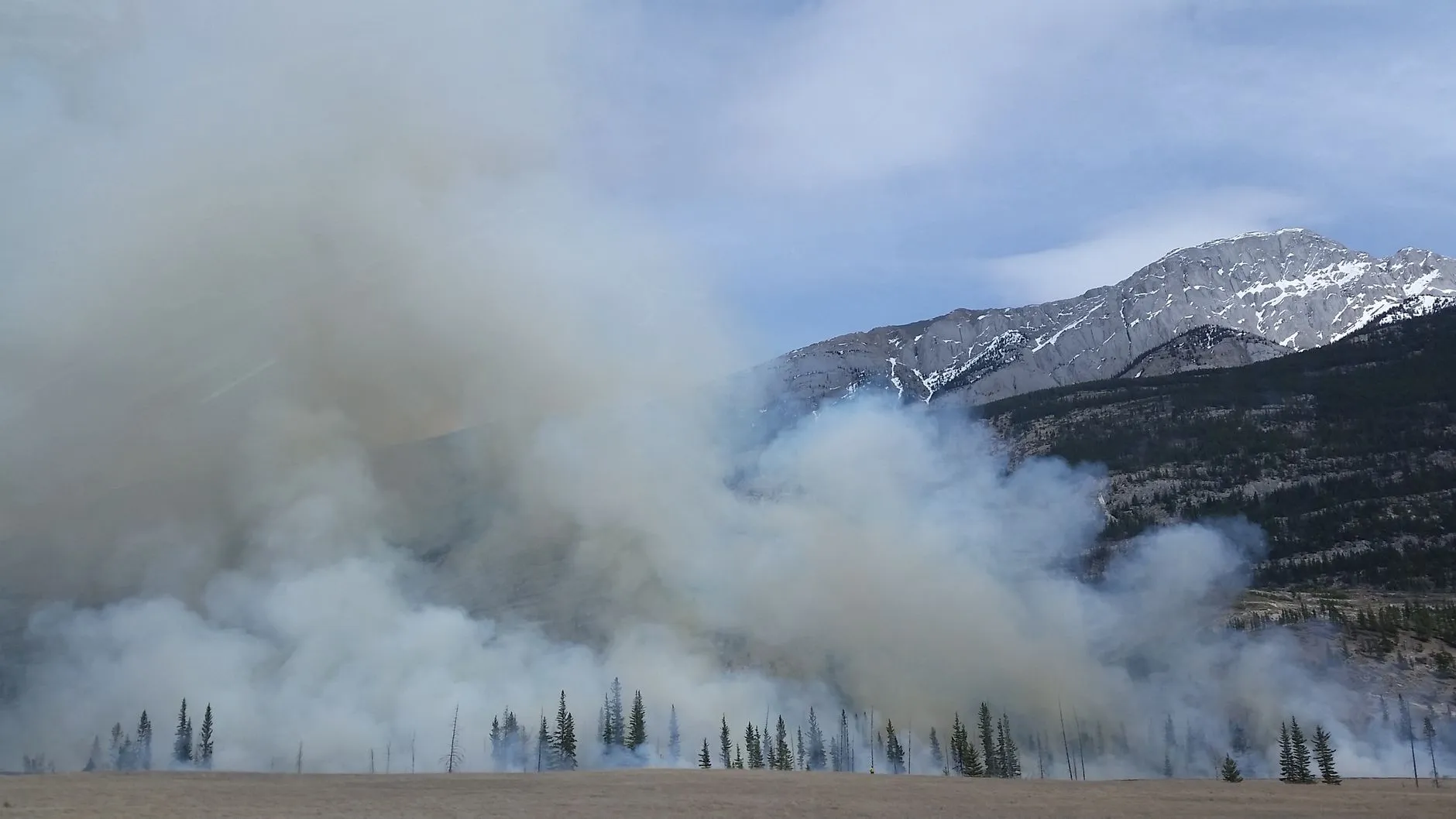
Recent measurements of the global atmosphere have revealed something climate scientists have long suspected but never directly confirmed. Wildfires now burn with enough intensity, across large enough areas, that their methane emissions are beginning to leave a measurable mark on the planet's atmospheric chemistry. The evidence comes from analysis led by Earth Sciences New Zealand, which found a sharp rise in the proportion of methane linked to biomass burning between mid-2023 and 2025.
The finding matters because it suggests we may be watching the early stages of a feedback loop. Hotter, drier conditions produce more severe fires. Those fires release methane and other greenhouse gases. The additional warming from those emissions can then create conditions that favour even more intense fire seasons.
For UK businesses working to control emissions and meet net-zero commitments, the research highlights a broader challenge. Methane is the second most important greenhouse gas after carbon dioxide. Its concentration has risen sharply since 2007. Understanding where that methane comes from, and whether the mix of sources is changing, affects how governments set policy, how regulators write standards, and ultimately how businesses plan their own carbon reduction programmes.
What atmospheric chemistry reveals about fire emissions
Methane molecules carry chemical signatures that reveal their origin. Researchers measure the ratio of carbon-13 to carbon-12 isotopes in atmospheric methane samples. Different processes leave different isotopic fingerprints. Wildfires and biomass burning produce one characteristic pattern. Wetlands and agriculture, where methane forms through microbial breakdown of organic matter, produce another. Fossil fuel extraction and use leave a third distinct signature.
By tracking changes in these isotopic ratios over time, scientists can identify shifts in the overall mix of methane sources. They are not simply measuring total methane concentration. They are working out which sources are becoming more or less prominent in the global atmospheric record.
The Earth Sciences New Zealand team examined methane samples collected as part of the World Meteorological Organization's annual greenhouse gas assessment. From mid-2023 through 2025, the share of methane carrying the biomass-burning signature increased sharply relative to methane from microbial sources. The researchers link this change primarily to record-breaking wildfires in North America and the Amazon during 2023 and 2024.
Drought played a dual role during the same period. Drier conditions reduced methane emissions from some wetlands, which made the fire-related contribution more prominent in the atmospheric mix. By the end of the observation period, the relative contribution of wildfire-associated methane had nearly returned to its 2023 baseline. Nevertheless, the temporary increase was large enough to be detected in the global isotope record.
Dr Peter Sperlich, the atmospheric scientist who led the analysis, described the observation as a possible early warning. He noted that increasing frequency and severity of wildfires is one of the climate impacts expected as global temperatures continue to rise. The temporary spike demonstrated that large-scale fires have the potential to drive greater increases in global methane emissions and accelerate climate change.
How New Zealand's monitoring network contributes to global data
New Zealand operates atmospheric research stations that provide unusually valuable data. The country's remoteness from major industrial emission sources means its measurements capture large-scale atmospheric patterns without the complicating influence of nearby cities or industrial facilities. Methane has been measured continuously at the Lauder atmospheric research station in Central Otago since 2007. Additional monitoring takes place at Baring Head near Wellington and Arrival Heights in Antarctica.
These stations contribute to a global network that tracks not just methane concentrations but also their isotopic composition. The long-term record enables scientists to distinguish short-term anomalies from sustained trends. It also helps researchers test whether changes detected at one location reflect regional events or broader atmospheric shifts.
Earth Sciences New Zealand is now developing mobile methane-measurement systems that can be deployed from drones and vehicles. Combined with isotope analysis, these tools could help distinguish emissions from farms, wetlands, landfills and wastewater facilities. For a country where methane accounts for more than half of national greenhouse gas emissions, accurate source attribution is essential for assessing whether mitigation policies are working.
Why earlier fire emissions declined before recent increases
Wildfires have always contributed to global methane budgets, but their influence has varied considerably over time. NASA-led research published earlier this decade found that global fire activity actually declined between the early 2000s and the period from 2007 to 2014. The area burned annually fell by approximately 12 percent. Fire-related methane emissions decreased more rapidly than many models had predicted, dropping by around 4 teragrams per year during that period.
That decline helped scientists balance the global methane budget and explained why total atmospheric methane concentrations did not rise as quickly as some projections had suggested. However, the recent Earth Sciences New Zealand findings point to a different pattern. Climate change appears to be driving more severe and regionally concentrated fire seasons, even if the total global area burned has not yet exceeded historical peaks.
Satellite-based research has shown that extreme fire events can produce unusually large methane emissions, particularly in regions experiencing intense fire activity. Consequently, the relationship between burned area and methane release is not linear. A smaller area burning at very high intensity can release more methane than a larger area burning under cooler, less severe conditions.
Modelling work published in 2026 estimated that climate-driven intensification of fires could increase the global methane burden by approximately 302 teragrams by the 2050s compared with the 2000s. That projection assumes both direct fire emissions and atmospheric chemical effects are included. The estimate is distinct from the measured short-term change documented by Earth Sciences New Zealand, which observed an actual shift in the atmospheric methane source mix during a specific period.
Fire intensity increased in North America and the Amazon
The period from mid-2023 through 2025 saw exceptional wildfire activity in two major regions. North America experienced record-breaking fire seasons, with extensive burning across Canada and parts of the western United States. The Amazon faced severe drought conditions that intensified fires across large areas of rainforest and adjacent ecosystems.
These fires released substantial quantities of methane directly. They also altered the atmospheric chemistry that determines how long methane remains in the air. Pollutants from fires can affect the concentration of hydroxyl radicals, which are the main mechanism for removing methane from the atmosphere. When fires reduce hydroxyl radical availability, methane persists longer before breaking down.
Burning vegetation can damage ecosystems that would otherwise absorb or store carbon. Loss of forest and peatland cover exposes previously protected carbon stocks to further release. In tropical regions, fires can shift landscapes from carbon sinks to carbon sources, creating long-term changes in regional greenhouse gas balances.
Drought played a compounding role during the same period. Drier conditions reduced methane emissions from wetlands, which normally release significant amounts of methane through microbial processes. As wetland emissions decreased, the relative contribution of fire emissions became more prominent in the atmospheric isotope record. This made the wildfire signal easier to detect in global measurements.
Methane levels measured between 2023 and 2025
- Earth Sciences New Zealand led the isotope analysis, building on atmospheric research formerly conducted through NIWA.
- Dr Peter Sperlich, an atmospheric scientist, authored the methane-isotope analysis that identified the shift in source contributions.
- The observation period ran from mid-2023 through 2025, capturing two exceptional fire seasons in North America and the Amazon.
- Researchers measured the ratio of carbon-13 to carbon-12 isotopes in atmospheric methane to distinguish between biomass burning, microbial sources, and fossil fuel emissions.
- New Zealand monitoring sites at Lauder, Baring Head, and Arrival Heights contributed data to the global atmospheric observation network.
- Methane accounts for more than half of New Zealand's national greenhouse gas emissions, primarily from livestock farming and waste facilities.
- The relative contribution of wildfire-associated methane increased sharply during the observation period before declining toward earlier levels by 2025.
What the temporary spike means for climate feedback
The significance of the Earth Sciences New Zealand observation lies in what it reveals about potential climate feedback mechanisms. The sequence begins with higher temperatures and drought, which increase fire risk. Larger and more severe fires release more methane directly. Fire-related emissions alter the atmospheric methane source balance. Methane contributes to additional warming. Further warming can then increase the likelihood of hot, dry conditions that favour severe fires.
This feedback is not yet continuous or self-sustaining. The fire-related isotopic signal had largely declined toward earlier levels by the end of the observation period. However, the ability to detect wildfire methane at the global scale provides a new way to test whether increasingly severe fire seasons are beginning to alter the Earth's methane cycle.
Several factors complicate interpretation of the result. The analysis concerns the relative contribution of wildfire methane, which can rise because fire emissions increase, microbial emissions decrease, or both occur simultaneously. The observation period is relatively short compared with the multi-decadal record needed to establish a long-term trend. Fire emissions vary widely with drought, vegetation type, burned area, and fire intensity. Atmospheric transport can distribute methane far from the region where it was originally emitted.
Methane levels are also affected by atmospheric removal processes, especially reactions with hydroxyl radicals. Fires can reduce hydroxyl radical concentrations, which extends methane's atmospheric lifetime. Modelling studies have estimated that these chemical effects could substantially amplify the direct methane released by fires. The 2026 modelling work suggested that chemical effects might account for a significant portion of future methane increases linked to fire intensification.
The temporary nature of the signal therefore makes continued monitoring essential. A single exceptional fire season cannot by itself establish a permanent change. However, the detection of wildfire methane in the global atmospheric record during 2023-2025 demonstrates that extreme fires are now large enough, at least during exceptional seasons, to leave a measurable fingerprint on planetary chemistry.
Implications for UK businesses managing carbon footprints
For UK companies working to reduce emissions and meet net-zero commitments, the research carries several practical implications. First, it reinforces the importance of Scope 3 emissions accounting. Supply chains that source materials from fire-prone regions may face increasing carbon intensity as wildfire emissions rise. Companies relying on timber, agricultural commodities, or other products from North America, the Amazon, or other high-risk regions need to consider how climate-driven fires might affect the carbon footprint of those materials.
Second, the finding highlights the limitations of relying solely on static carbon accounting methods. If the mix of methane sources is changing, then emission factors and carbon intensity calculations that assume stable source distributions may underestimate the true climate impact of certain activities or materials. Businesses using carbon accounting software or preparing greenhouse gas inventories may need to review whether their methodologies account for changing atmospheric conditions.
Third, the research strengthens the case for treating wildfire risk as a material climate risk in supply chain assessments. Companies that have not previously considered fire exposure in their climate risk evaluations may need to update their frameworks. This is particularly relevant for businesses seeking public sector contracts, where PPN 06/21 requires suppliers to demonstrate carbon reduction plans and an understanding of climate-related risks.
Fourth, the work underscores the value of science-based emissions tracking. Earth Sciences New Zealand's development of mobile methane-measurement systems demonstrates how improved monitoring can distinguish between different emission sources and verify whether mitigation measures are working. UK businesses implementing carbon reduction programmes may benefit from similar verification approaches, particularly when reporting progress to regulators, investors, or procurement teams.
Finally, the finding illustrates why methane reduction has become a priority in climate policy. Methane is a more potent greenhouse gas than carbon dioxide over short timescales, even though it persists in the atmosphere for a shorter period. Rapid reductions in methane emissions can therefore produce faster climate benefits than equivalent reductions in carbon dioxide. For businesses in sectors with significant methane emissions, such as agriculture, waste management, or natural gas supply, this creates both regulatory pressure and potential competitive advantage for early action.
SBS support for emissions reporting and net-zero planning
Businesses navigating carbon reporting requirements and net-zero commitments face an increasingly complex landscape. Understanding which emission sources matter most, how to account for them accurately, and what reduction measures will deliver real results requires both technical expertise and practical commercial judgement. Therefore, many SMEs benefit from external support when developing carbon reduction plans or preparing for compliance requirements.
SBS works with UK businesses to measure emissions, identify reduction opportunities, and build credible net-zero programmes. Our compliance services help companies meet regulatory requirements and prepare carbon reports that satisfy procurement standards. For businesses pursuing net-zero certification or preparing for PPN 06/21 assessments, we provide structured programme support that covers measurement, target setting, and implementation.
Methane accounting presents particular challenges because emissions often occur through diffuse sources that are difficult to measure directly. Consequently, businesses in agriculture, waste management, or supply-chain-intensive sectors may need specialised support to ensure their carbon inventories capture methane emissions accurately. We help companies identify appropriate methodologies and build robust monitoring systems that support credible reporting.
Where to find authoritative information on methane and climate science
The Met Office publishes detailed information on climate change effects, including the role of greenhouse gases like methane in driving temperature increases. Their resources explain how different gases contribute to warming and how atmospheric concentrations are changing over time.
The Department for Energy Security and Net Zero sets UK climate policy and publishes guidance on emissions reporting, net-zero planning, and carbon accounting standards. Businesses preparing carbon reduction plans for public sector procurement or regulatory compliance should refer to DESNZ publications for current policy frameworks.
For businesses seeking technical guidance on greenhouse gas accounting, the Greenhouse Gas Protocol provides internationally recognised standards for measuring and reporting emissions. Their corporate accounting and reporting standard covers Scope 1, 2, and 3 emissions and offers detailed guidance on methane accounting across different sectors.
The Intergovernmental Panel on Climate Change publishes comprehensive assessment reports on climate science, including detailed analysis of methane sources, atmospheric chemistry, and the role of wildfires in the global carbon cycle. Their reports provide the scientific foundation for climate policy and offer authoritative information on greenhouse gas trends.