
Concrete's Limited Role in Reducing Cement Emissions: Insights from UCLA Study
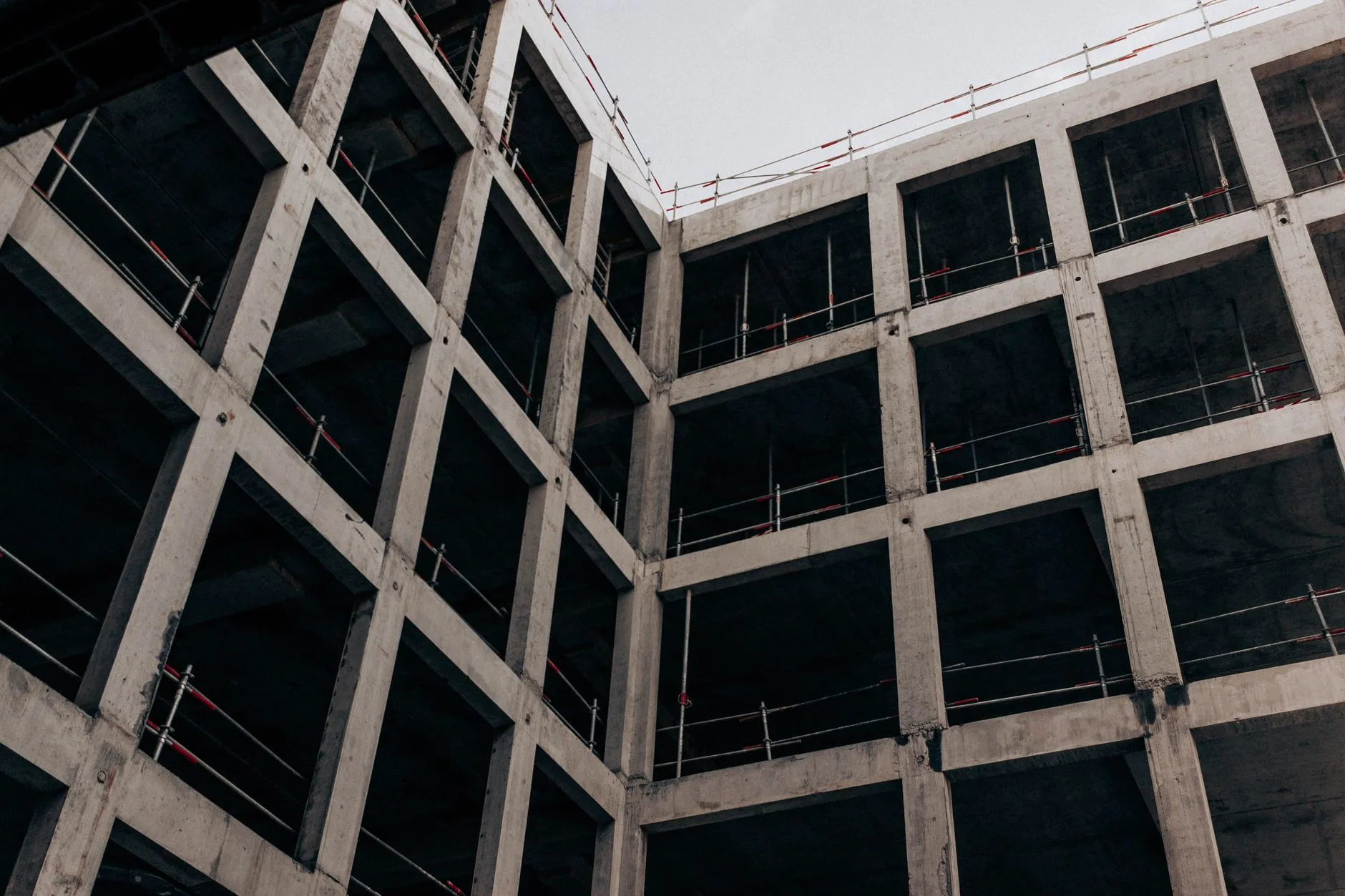
New UCLA research challenges passive carbonation claims
Concrete absorbs carbon dioxide as it ages. That much is true. However, a UCLA-led study published in Communications Sustainability shows the process happens far too slowly to make a dent in cement industry emissions. The researchers found that ambient carbonation removes less than 10% of the sector's annual carbon output, undermining claims that the material's natural chemistry offers a credible climate solution.
This matters for UK construction firms, developers, and public-sector buyers. Cement production remains one of the largest industrial sources of CO2 worldwide. Consequently, even large absorption figures look small when set against total emissions. For businesses tracking embodied carbon in tenders or supply chains, the findings confirm that passive uptake cannot be counted as meaningful mitigation.
The study was led by Gaurav Sant, professor of civil and environmental engineering at UCLA Samueli. His team used thermodynamic and diffusion-based modeling to estimate how quickly concrete structures absorb CO2 over their working lives. Their conclusion is blunt: relying on ambient carbonation as a decarbonisation tool is not credible.
What the UCLA modeling actually shows
Concrete undergoes a process called ambient carbonation. CO2 from the air reacts with alkaline compounds in the material to form calcium carbonate. The reaction is real, but it is also extremely slow. According to the UCLA research, a typical concrete beam or slab exposed to outdoor air would take around 1,000 years to reach just 50% carbonation under normal conditions.
The team modeled carbonation rates across concrete in buildings, roads, and infrastructure globally. They estimate that by 2030, structures in service worldwide will passively absorb approximately 230 million metric tons of CO2 per year. That sounds substantial until you compare it to cement-sector emissions, which are expected to reach roughly 3 billion metric tons annually by the same date.
In other words, passive absorption will offset less than 8% of the industry's carbon output. The UCLA figure sits far below earlier estimates that suggested carbonation might counter as much as 57% of cement emissions. Those earlier claims relied on assumptions about exposure, surface area, and reaction rates that the new modeling shows were too optimistic.
Professor Sant put it simply: ambient carbonation cannot be relied upon as a meaningful tool for reducing atmospheric carbon dioxide. The chemistry works, but the timescale and scale do not align with the pace or volume of emissions reduction required.
Cement emissions remain a major industrial challenge
Cement manufacturing accounts for around 8% of global CO2 emissions. The majority of that carbon comes from the calcination process, where limestone is heated to produce clinker, the binding agent in cement. Each ton of clinker generates roughly 0.9 tons of CO2. As a result, even modest concrete production volumes create large emissions totals.
For UK businesses, this has direct implications. Construction projects increasingly require embodied carbon calculations. Public procurement now includes carbon reduction commitments under frameworks such as PPN 06/21. Contractors bidding for public work must demonstrate how they will lower emissions across materials, transport, and site operations. Meanwhile, developers face growing pressure from investors and planning authorities to cut whole-life carbon in new buildings.
The UCLA study makes clear that passive carbonation does not reduce embodied carbon at a rate or scale that meets these requirements. A concrete structure may absorb some CO2 over decades, but that uptake is too slow to affect compliance reporting or carbon accounting in the short to medium term. For practical purposes, the emissions associated with cement production remain on the balance sheet.
This creates a commercial problem. Businesses cannot assume that concrete's natural chemistry will offset its carbon footprint in any timeframe relevant to net-zero targets or regulatory deadlines. Therefore, they need to focus on reducing emissions at the point of production rather than relying on post-installation absorption.
Scrutiny of carbonation claims is increasing
The UCLA findings align with other recent research. A 2024 analysis published in Nature Communications also concluded that climate benefits from cement carbonation have been overstated. That study found similar patterns: passive uptake is real but insufficient relative to emissions. Together, these papers suggest a consensus is forming around the limits of ambient carbonation.
This matters because carbonation has sometimes been presented as a reason to moderate concern about concrete's carbon footprint. Some industry voices have argued that long-term absorption offsets a meaningful share of cement emissions. The new research challenges that narrative. It shows that even when carbonation is modeled optimistically, the effect remains marginal.
For UK SMEs, the implication is straightforward. If you are specifying concrete, reporting embodied carbon, or responding to sustainability questions in tenders, you cannot rely on passive carbonation as a justification for high-emission materials. The science does not support it. Instead, you need to look at alternative cements, lower-clinker mixes, or carbon-capture technologies that reduce emissions directly.
Practical alternatives to passive carbonation
The UCLA study does not suggest that concrete has no role in a low-carbon economy. It does, however, make clear that passive absorption is not the answer. Businesses looking to cut embodied carbon in construction need to focus on active emissions reduction strategies.
One approach is to specify lower-clinker cements. Ground granulated blast-furnace slag (GGBS) and pulverised fuel ash (PFA) can partially replace clinker in cement mixes, reducing the carbon intensity of the final product. These supplementary cementitious materials are widely available in the UK and are already used in projects where embodied carbon is a concern.
Another option is to consider emerging cement formulations that capture CO2 during production or curing. Carbon-mineralization technologies inject CO2 into fresh concrete, where it reacts quickly to form stable carbonates. Unlike ambient carbonation, this process happens in hours or days rather than centuries. Several UK suppliers are now offering carbon-cured concrete products, though availability and cost vary by region.
Timber and steel also merit consideration for projects where structural loads and fire regulations allow. Cross-laminated timber, for example, stores biogenic carbon and can deliver lower whole-life emissions than concrete in certain applications. Steel's carbon footprint depends heavily on production methods, but low-carbon steel options are becoming more common as the sector decarbonises.
Finally, design choices matter. Reducing the volume of concrete used in a project cuts emissions directly. Optimised structural design, thinner slabs, and modular construction can all lower material intensity without compromising performance. For businesses managing carbon budgets, this is often the most cost-effective route.
What UK businesses should focus on now
- Passive carbonation in concrete removes less than 10% of annual cement-sector emissions, according to UCLA research published in Communications Sustainability.
- A typical concrete structure would take approximately 1,000 years to reach 50% carbonation under normal outdoor conditions.
- By 2030, global concrete in service is expected to absorb around 230 million metric tons of CO2 per year, compared to roughly 3 billion metric tons emitted by cement production.
- Earlier estimates suggesting carbonation could offset up to 57% of cement emissions are not supported by the new modeling.
- Ambient carbonation cannot be counted as a credible emissions offset in carbon reporting or compliance frameworks such as PPN 06/21.
- The findings align with separate 2024 research in Nature Communications, which also concluded that carbonation benefits have been overstated.
How SBS supports embodied carbon reduction
We work with construction firms, developers, and supply-chain businesses to cut embodied carbon in projects and procurement. That includes helping clients specify lower-carbon materials, model whole-life emissions, and meet public-sector carbon requirements. Our net-zero program provides carbon reporting and compliance support for businesses responding to PPN 06/21 and similar frameworks.
For companies tendering for public contracts, embodied carbon reporting is no longer optional. Procuring authorities expect suppliers to demonstrate how they will reduce emissions across materials, logistics, and construction processes. We help businesses build credible responses grounded in measurable data rather than broad claims about material performance.
We also support firms looking to reduce carbon intensity in their supply chains. This includes reviewing cement and concrete specifications, identifying lower-emission alternatives, and modeling the cost and performance trade-offs involved. In many cases, modest changes to mix design or supplier selection can deliver significant carbon savings without additional expense.
Training is available through the SBS Academy, covering embodied carbon fundamentals, material selection, and regulatory requirements. Courses are designed for project managers, estimators, and procurement teams who need practical skills rather than theoretical overviews.
Finally, we provide ongoing compliance support for businesses managing ESG reporting, carbon disclosure, and sustainability audits. As regulations tighten and client expectations shift, having accurate, defensible carbon data becomes a commercial necessity. We help firms build systems that meet current requirements and adapt as standards evolve.
Where to find further guidance on cement emissions
The UK government's Department for Energy Security and Net Zero publishes guidance on industrial emissions and decarbonisation pathways for heavy industry, including cement. The Institute of Environmental Management and Assessment offers technical resources on embodied carbon assessment and life-cycle analysis for construction projects.
For businesses working on public contracts, the PPN 06/21 guidance on carbon reduction plans sets out the requirements for suppliers bidding on central government contracts above £5 million per year. The Climate Change Act 2008 remains the statutory framework for the UK's net-zero commitment, and amendments continue to shape sector-specific obligations.
The British Standards Institution publishes standards on carbon measurement and reporting, including PAS 2080 on managing whole-life carbon in infrastructure. These documents provide methodologies that align with regulatory expectations and client requirements across the construction sector.