
COP31: What UK Businesses Need to Know This Week
By James Staniforth, Founder and Director, Sustainable Business Services
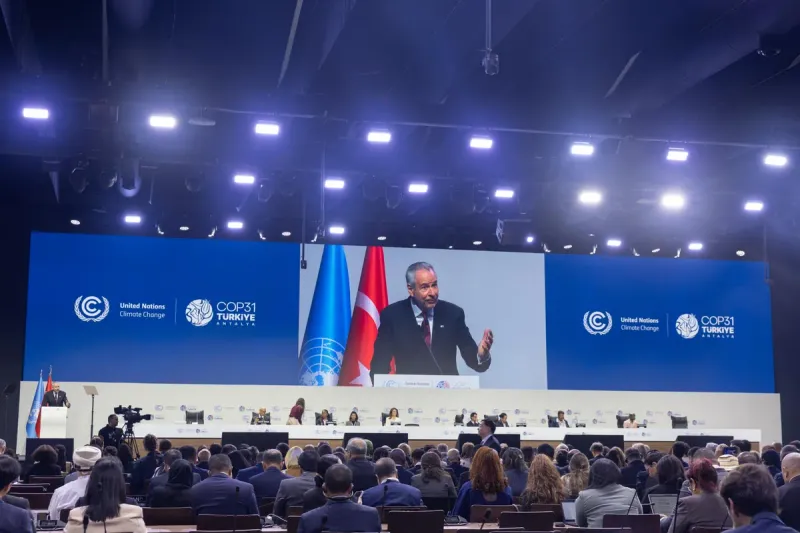
Delegates in the plenary hall at COP31 in Antalya, Türkiye.
COP31 is the United Nations climate conference, and it is running now in Antalya, Türkiye, from 9 to 20 November 2026. It will not hand most UK businesses a new compliance deadline this week. What it will do is set the direction for energy policy, customer and investor expectations, and resilience spending over the next few years.
This post covers what is on the agenda, what UK businesses should watch, and the practical steps worth taking now. We will update it when the conference closes on 20 November.
Key takeaways
- When and where: COP31 runs 9 to 20 November 2026 in Antalya, Türkiye.
- Direct impact: COP31 is unlikely to create an immediate compliance deadline for most UK firms. The impact arrives later, through regulation, customer procurement and investor questions.
- Business expectation: 88% of 307 senior UK business leaders surveyed by APM and Censuswide expect COP31 to require changes inside their organisation.
- Timing: the first hard dates are 1 January 2027, when the UK carbon border charge (CBAM) starts and listed companies begin reporting against the UK Sustainability Reporting Standards (UK SRS) on a comply or explain basis, for financial years beginning on or after that date. For most SMEs the effect arrives through customer requests during 2027 and 2028.
- First move for an SME: pick the two or three climate issues that affect your costs or contracts, then give each an owner, a budget and a measurable target.
What is COP31?
COP31 is the 31st annual Conference of the Parties under the UN climate framework. Governments use it to negotiate how the world cuts greenhouse gas emissions and adapts to climate impacts. Türkiye hosts the conference under a shared presidency arrangement with Australia.
The UK’s central aim, according to the UK government, is to keep momentum behind the Paris Agreement and the goal of limiting global warming to 1.5°C.
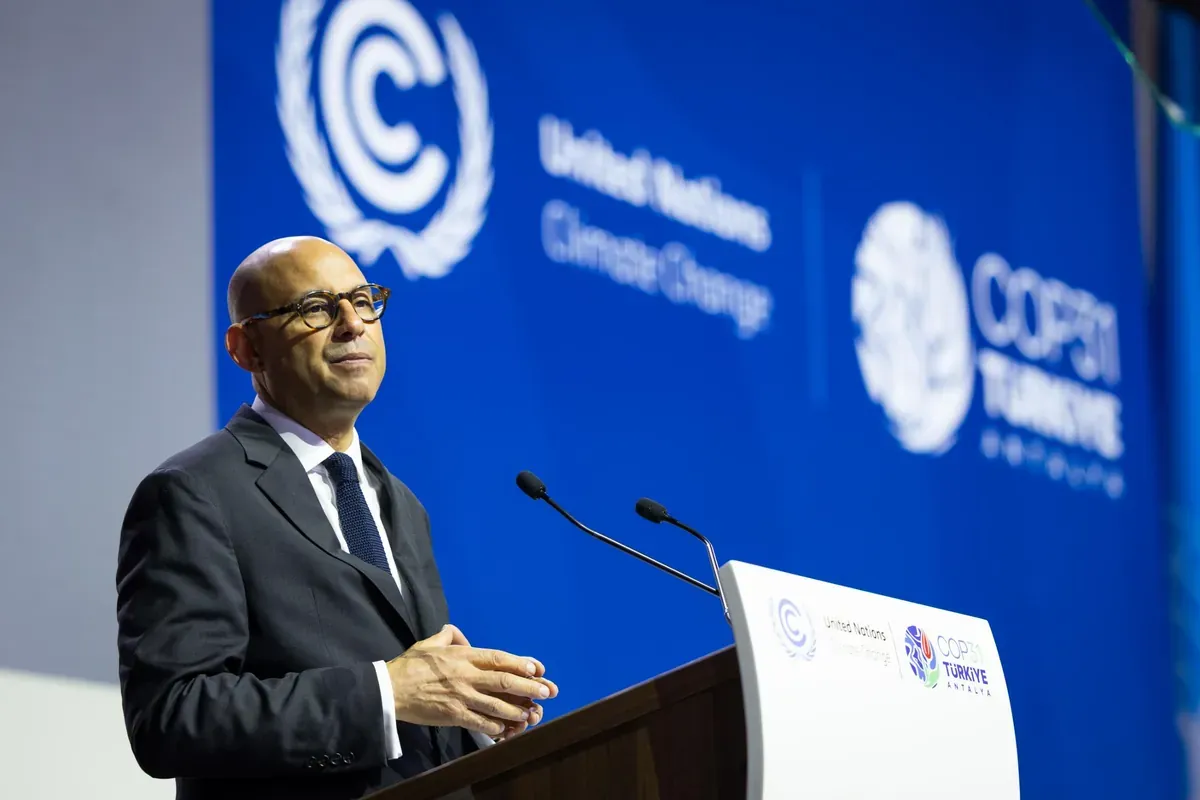
A speaker addresses the conference in Antalya.
What is on the COP31 agenda?
The UK delegation has set four priorities:
- Speeding up the global shift to clean energy and electrification.
- Cutting methane and other highly potent “super-pollutants”.
- Protecting forests, oceans and other critical ecosystems, while supporting sustainable food systems and circular economy approaches.
- Improving adaptation and climate resilience, including access to finance for countries preparing for climate risks.
The first week is expected to focus on delivery rather than new headline targets. IETA’s daily report for 10 November says early discussions include a Brazilian roadmap for country-specific fossil fuel transition plans, alongside negotiations on climate finance and the just transition.
What should UK businesses watch this week?
Three areas are most likely to turn into commercial pressure.
Energy and electrification. Expect more policy attention on renewables, grid capacity, electric vehicles, heat pumps and industrial electrification. The UK government is presenting clean energy as both a climate priority and an economic opportunity.
Adaptation and resilience. Expect a stronger focus on flood defence, supply chain continuity, extreme heat planning and climate-resilient infrastructure. The UK has committed £10.5 billion over the next decade to flood defences and coastal erosion work.
Finance and disclosure. Climate finance, private investment and practical support for transition planning are likely to stay central. This matters most for firms exposed to international supply chains and capital markets.
How will COP31 affect UK businesses?
COP31 does not set UK law. Its value for business owners is as an early signal of what customers, investors and regulators will ask for next.
UK leaders are already planning for it. In an APM and Censuswide survey of 307 senior business leaders, 88% expected COP31 to require changes within their organisations. Among those expecting change, 90% expected the impact to be positive.
| Expected business impact | What it may mean in practice |
|---|---|
| New or tighter environmental regulation | More detailed emissions, energy, waste or supply chain reporting over time |
| Climate adaptation investment | More demand for resilience planning, flood protection, business continuity and infrastructure upgrades |
| Changes to energy use or sourcing | A move toward electrification, renewable procurement, efficiency upgrades and lower-carbon supply chains |
| Sustainability skills and recruitment | More need for staff who can deliver decarbonisation, reporting, procurement and resilience projects |
| Commercial opportunity | Growth in clean technology, retrofit, consultancy, engineering, finance and low-carbon products and services |
When will COP31 affect UK businesses?
COP31 sets no UK deadline itself. The dates that matter come from UK rules already scheduled, which COP31 reinforces. Here is what is confirmed today:
| When | What happens | Who feels it first |
|---|---|---|
| Now to December 2026 | Customer and investor questions on emissions, energy and resilience | Any SME that supplies larger firms |
| 1 January 2027 | UK CBAM (carbon charge on imports) starts | Businesses importing £50,000 or more a year of aluminium, cement, fertiliser, hydrogen, iron and steel, plus firms that use those goods |
| 1 January 2027 | UK SRS reporting starts for FCA-listed companies on a comply or explain basis, for financial years beginning on or after this date | Listed companies, then their suppliers |
| 31 May 2028 | First UK CBAM return and payment due, covering 2027 imports | Importers in scope |
| 2029 at the earliest | Indirect emissions (Scope 2 and 3) added to UK CBAM | Importers and their supply chains |
| No date set | UK SRS scope widens to high turnover private companies and other public interest entities | Large private companies, then their suppliers |
What we do not know yet
Nobody can say what COP31 will agree, because the deal is not done until the conference closes on 20 November. Even then, agreements between governments take time to become UK rules, and the UK decides how and when. Treat any firm date for COP31-driven rules with caution.
For a business with 50 to 249 employees, the effect is mostly indirect. It arrives when a customer that is in scope asks you for emissions data.
How to plan when the timing is unclear
Plan around triggers, not dates. Watch three signals, listed in the order an SME is most likely to see them:
- A customer asks. This is the earliest and most likely trigger. The first emissions questionnaire, tender question or supplier code of conduct update is your cue. Have a measured footprint ready before it arrives.
- The UK publishes a consultation. After COP31, look for UK government or regulator consultations that name your sector, your customers’ sector or your imports. A consultation usually gives months of notice before a rule applies.
- Your costs move. Changes to energy prices, insurance terms or flood cover show that energy and resilience exposure is turning into a real cost.
A three-question test
- Do you import aluminium, cement, fertiliser, hydrogen, or iron and steel, or buy products made from them?
- Do you supply listed companies or large corporates?
- Are your costs energy-heavy, or are your sites exposed to flooding or extreme heat?
Yes to any one means this belongs on your next management meeting agenda. Yes to the first two means treat it as a priority for the next quarter. No to all three means a light plan: measure your baseline footprint and review again in six months.
Where is the opportunity for UK firms?
The UK government is using COP31 to promote British clean energy expertise and technology overseas. That creates potential export and partnership openings for firms in renewable energy, grid infrastructure, engineering, professional services, digital systems, construction and climate-finance-related services.
There is a domestic case for acting early too. The government argues that more clean energy reduces exposure to volatile global fossil fuel markets and can help lower energy bills, while creating jobs through electrification and clean energy deployment.
What is the delivery gap?
Optimism alone will not deliver results. APM warns that climate commitments turn into portfolios of projects that must be prioritised, funded, governed and delivered. Businesses that do not build delivery capability may struggle to turn ambition into measurable outcomes.
For a small or mid-sized business, the practical answer is to be selective. Pick the climate issues that materially affect operations, such as energy costs, supplier emissions, flood exposure, customer procurement requirements or reporting obligations. Then assign clear ownership, a budget and a target.
What should UK business owners do now?
- Map your exposure. List your energy-intensive operations, climate-vulnerable sites, key suppliers, and major customers with sustainability requirements.
- Review your energy strategy. Assess efficiency measures, renewable electricity options, electrification and your resilience to price swings.
- Prepare for procurement questions. Build a simple, evidence-based account of your emissions, environmental actions and supply chain risks before a customer asks for one.
- Build delivery capability. Train key staff or appoint a lead for sustainability, resilience and project delivery.
- Track the COP31 outcomes. Watch for announcements on finance, adaptation, methane, clean energy and transition planning, then judge which ones touch your sector.
Our recommendation: start with step 3. Customer questionnaires are the quickest route from a global climate conference to a real commercial consequence for an SME, and a measured carbon footprint answers most of them. SBS Compass and the SBS Net-Zero Program are built for exactly that job. Talk to the SBS team if you want a starting point.
COP31 frequently asked questions
When is COP31 and where is it held?
COP31 runs from 9 to 20 November 2026 at the Antalya EXPO Center in Antalya, Türkiye. It is the UN’s 31st annual climate conference. Türkiye hosts it under a shared presidency arrangement with Australia.
Does COP31 create new legal requirements for UK businesses?
Not directly. COP31 is a negotiation between governments, and it is unlikely to produce an immediate compliance deadline for most UK firms. Its outcomes can shape future UK regulation, procurement expectations, investor scrutiny and customer requirements, so the effect is indirect and delayed.
When will COP31 affect UK businesses?
COP31 sets no UK deadline. The first confirmed dates come from existing UK rules: UK CBAM starts on 1 January 2027, and listed companies report against the UK Sustainability Reporting Standards (UK SRS) on a comply or explain basis for financial years beginning on or after the same date. The first CBAM payment is due 31 May 2028. Most SMEs will feel this through customer requests during 2027 and 2028.
How can a business plan when nobody knows what COP31 will agree?
Plan around triggers, not dates. Watch for customer emissions questions, UK consultations that name your sector, and shifts in energy or insurance costs. Measure your baseline footprint now, because it is useful whatever COP31 agrees.
How will COP31 affect small and medium-sized businesses?
Most SMEs will feel it through their customers and costs rather than through new law. Expect more supply chain questions on emissions, more attention on energy costs and electrification, and more focus on flood and heat resilience. Firms in clean energy, engineering and consultancy may also see new demand.
What is the UK trying to achieve at COP31?
The UK wants to keep the Paris Agreement goal of limiting warming to 1.5°C within reach. Its four priorities are clean energy and electrification, cutting methane and other super-pollutants, protecting forests and oceans, and improving climate resilience and adaptation finance.
What should a UK business do this week because of COP31?
Map your exposure, then choose two or three climate issues that affect your costs, sites or customer contracts. Give each an owner, a budget and a measurable target. If customers already ask about emissions, prepare a simple, evidence-based emissions account first.
Sources
- COP31: what it is and the UK’s priorities, UK Government
- IETA COP31 Daily Report, 10 November 2026, IETA
- Businesses optimistic about COP31, but idealism and ambition must not outpace delivery, says APM, Association for Project Management
- UK businesses expect COP31 to lead to organisational changes, Sustainability Online
- UK CBAM: what businesses need to know about the new carbon charge on imports, ICAS
- Carbon Border Adjustment Mechanism policy paper, UK Government
- FCA finalises UK SRS reporting rules, ICAEW
- UK CBAM comes into force on 1 January 2027, Simarco
- UK CBAM, Zevero
- COP 31 Overview Schedule, UNFCCC
About Sustainable Business Services
Sustainable Business Services (SBS) helps UK SMEs measure, reduce and report their carbon emissions. It was founded in November 2020 by James Staniforth, who spent around 30 years in the waste and recycling industry beforehand. SBS is a member of the Carbon Accounting Alliance, and all SBS staff are Carbon Literacy trained.
Published 11 November 2026. We will update this post after COP31 closes on 20 November 2026.