
DSV and Google Cloud Partner to Cut Air Freight Emissions
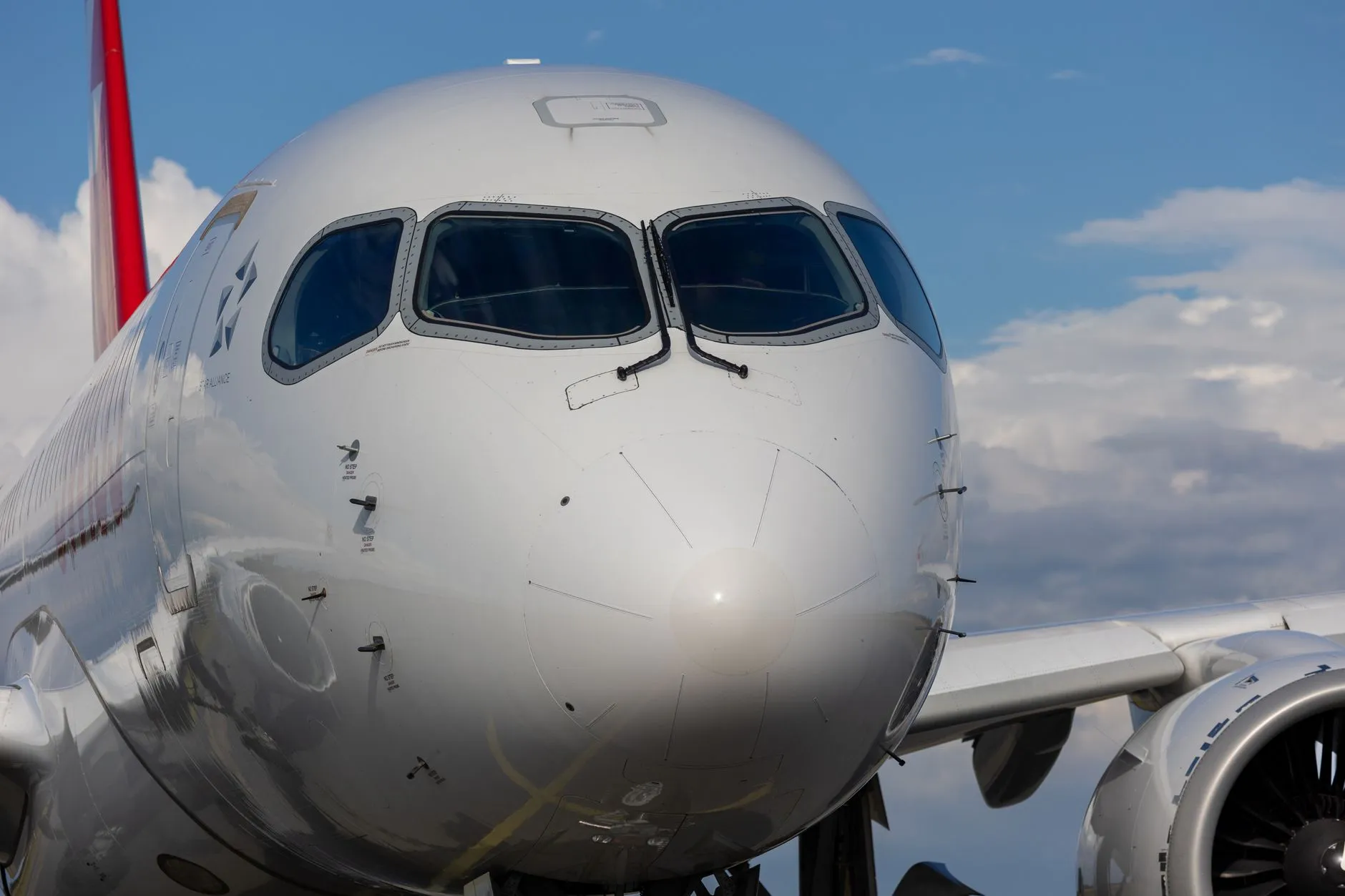
Google Cloud has signed a deal with DSV, the global freight forwarder, to secure sustainable aviation fuel for its air freight operations. The pilot programme aims to deliver up to 9.7 million litres of SAF and reduce lifecycle emissions by 25,000 tonnes of CO₂e compared with conventional jet fuel.
For UK businesses tracking corporate logistics emissions, the agreement shows how large multinationals are addressing air freight carbon footprints. It also highlights the growing use of book and claim systems in supply chain decarbonisation. These approaches let companies buy environmental credits from cleaner fuels used elsewhere in the network, even when their own shipments still run on standard kerosene.
Air freight remains one of the hardest transport modes to decarbonise. Unlike road haulage, where electric vans and alternative fuels are expanding fast, aviation still depends on liquid hydrocarbons. SAF offers a near term way to cut lifecycle emissions without replacing aircraft or rebuilding fuel infrastructure.
The DSV and Google Cloud pilot focuses on a single shipping lane rather than the entire global network. However, it provides a working example of how businesses can start addressing aviation emissions through certified fuel procurement. Consequently, the programme may be relevant for UK firms that rely on air freight and need to report Scope 3 transport emissions.
Feedstocks, certification and lifecycle emissions reduction
The SAF covered by the agreement comes from waste and residue feedstocks. DSV states that the fuel delivers an 85% reduction in lifecycle greenhouse gas emissions compared with fossil jet fuel. This figure reflects the full lifecycle, including production and combustion, rather than only the emissions released during flight.
Palm oil and palm derived materials are excluded from the feedstock mix. The fuel carries third party certification under the International Sustainability and Carbon Certification scheme. Additionally, environmental attributes are recorded and retired through the Sustainable Aviation Fuel Certificate Registry.
These certification layers are designed to prevent double counting. Each tonne of emissions reduction is allocated to a specific shipper and tracked through an auditable chain of custody. For businesses evaluating SAF claims, this kind of registry backed verification is becoming standard practice.
Nevertheless, the credibility of any lifecycle emissions figure depends on the underlying methodology. Feedstock sourcing, land use impacts, processing energy and transport all affect the final carbon balance. Independent verification and transparent disclosure are essential if book and claim systems are to gain wider trust.
How book and claim accounting works in practice
The DSV and Google Cloud arrangement uses a book and claim model. Under this system, SAF is injected into the aviation fuel supply at a location where it is available. Meanwhile, the associated emissions reductions are assigned to the participating customer, regardless of whether that customer's physical shipments use the exact fuel purchased.
This approach offers flexibility. SAF production is concentrated in regions with suitable feedstocks, refining capacity and regulatory support. Book and claim accounting allows a company based in the UK to support SAF use in, for example, California or Scandinavia, while claiming the environmental benefit for its own air freight operations.
The model mirrors renewable energy certificates in electricity markets. A business cannot always guarantee that electrons from a wind farm flow directly to its office. However, it can buy certificates that represent the environmental attributes of that renewable generation. Similarly, SAF certificates represent the carbon savings from using cleaner fuel somewhere in the aviation network.
For UK firms, this matters because SAF availability remains patchy. Physical supply in the UK is limited, and blending mandates are still developing. Book and claim systems let companies start addressing air freight emissions now, rather than waiting for widespread SAF availability at every airport.
That said, the system depends entirely on robust certification and transparent registries. Without clear tracking, there is a risk that the same emissions reduction gets claimed multiple times. DSV's use of the ISCC scheme and the SAF Certificate Registry is intended to address this concern.
Why air freight emissions are harder to tackle
Air freight accounts for a small share of total cargo volume but a disproportionately large share of transport emissions. The carbon intensity per tonne kilometre is far higher than for sea or road freight. Businesses that ship high value, time sensitive goods by air therefore face a significant emissions challenge.
Road transport is steadily shifting towards electric and alternative fuels. Electric vans are now common in urban delivery. Biogas and hydrogen trucks are in commercial trials. Rail freight runs largely on electricity in much of Europe. However, long haul aviation has no equivalent low carbon alternative yet.
Battery powered flight remains impractical for long distances due to energy density limits. Hydrogen aircraft are in development but face major infrastructure hurdles. SAF is the only option that works with existing planes and fuel systems. This makes it the main near term tool for cutting aviation emissions.
For UK businesses, this creates a practical dilemma. Many rely on air freight for international supply chains, especially for goods from Asia or the Americas. Switching to sea freight can cut emissions but adds weeks to delivery times. SAF offers a way to reduce the carbon impact of air freight without changing logistics timescales.
The challenge is availability and cost. SAF typically costs two to four times more than conventional jet fuel. Supply remains tight, and production capacity is growing slowly. This is why large buyers like Google Cloud are entering long term offtake agreements. These deals give producers the revenue certainty needed to invest in new capacity.
Scale, supply constraints and commercial implications
The 25,000 tonne reduction claimed by DSV and Google Cloud sounds substantial. In context, however, it represents a small fraction of global aviation emissions. Commercial aviation produces roughly one billion tonnes of CO₂ annually. The pilot programme therefore addresses around 0.0025% of the sector's annual footprint.
This does not diminish the value of the initiative. Every large scale SAF deployment starts with pilots and single lane projects. The question is whether the model can expand. That depends on several factors: feedstock availability, refining capacity, regulatory support and customer demand.
In the UK, the government has introduced a SAF mandate requiring fuel suppliers to blend a minimum percentage of SAF into jet fuel. The target is 10% by 2030 and 75% by 2050. This regulatory push should increase supply over time. However, meeting these targets will require significant investment in production facilities.
For businesses, the commercial implications are straightforward. Air freight costs will rise as SAF becomes mandatory. Companies that act early may lock in better pricing and secure supply before mandates drive wider demand. Those that wait may face higher costs and limited availability.
There is also a tender and procurement angle. Public sector buyers increasingly require carbon reporting for transport emissions. Many private sector clients are doing the same. Businesses that can demonstrate lower air freight emissions through SAF procurement may gain a competitive edge in bids and supplier selection.
Furthermore, Scope 3 emissions reporting is becoming more rigorous. UK companies preparing for mandatory climate disclosures under the Taskforce on Climate related Financial Disclosures framework need credible data on logistics emissions. SAF procurement, backed by registry certificates, provides that data in a verifiable form.
Programme details and emissions accounting
- DSV and Google Cloud announced the pilot programme in November 2024, covering a specific air freight lane within Google Cloud's global logistics operations.
- The agreement secures up to 9.7 million litres of SAF, equivalent to approximately 2.5 million US gallons, with an estimated lifecycle emissions reduction of 25,000 tonnes of CO₂e.
- The fuel is produced from certified waste and residue feedstocks, excluding palm oil and palm derived materials, and carries International Sustainability and Carbon Certification.
- Environmental attributes are tracked and retired through the Sustainable Aviation Fuel Certificate Registry to prevent double counting.
- The book and claim model allows SAF to be used where supply and infrastructure permit, while the emissions benefit is assigned to Google Cloud's air freight operations.
- DSV described the pilot as a foundation for potential broader collaboration on supply chain decarbonisation between the two companies.
Demand signals, scalability and UK business considerations
The DSV agreement reflects a wider trend in corporate climate strategy. Large shippers are increasingly willing to pay a premium for lower carbon transport. These demand signals are critical because SAF production depends on long term revenue commitments. Without buyers willing to lock in supply, producers struggle to finance new facilities.
For logistics providers, aggregating customer demand can help secure better SAF pricing and availability. DSV's role in this pilot is not just freight forwarding but also procurement coordination. Smaller UK businesses may find it difficult to negotiate SAF contracts individually. Working through freight forwarders or industry groups could provide more practical access.
Scalability remains the central question. The pilot covers one lane and a defined volume. Expanding this model across Google Cloud's entire air freight network would require far more SAF than is currently available. Expanding it across multiple large shippers would require even more.
This is where policy and investment intersect. The UK government's SAF mandate creates a regulatory floor, but meeting the 2030 target requires rapid capacity growth. Businesses that need to decarbonise air freight now should consider early SAF procurement, even at a premium, to secure supply and build reporting track records.
There is also a reputational dimension. Companies that can demonstrate credible action on logistics emissions may strengthen their position with clients and investors. However, book and claim systems attract scrutiny. Businesses using these approaches should ensure their claims are backed by transparent certification and third party verification. Vague or unsubstantiated claims risk backlash and regulatory attention.
Our compliance support helps UK businesses navigate Scope 3 reporting requirements, including transport emissions and supply chain carbon accounting.
What this means for freight buyers and supply chain managers
The DSV and Google Cloud pilot offers a working model for corporate SAF procurement. It shows that large buyers can secure defined volumes of SAF through logistics partners, claim the associated emissions reductions via certified registries, and integrate this into Scope 3 reporting.
For UK businesses, the immediate takeaway is that SAF procurement is no longer a distant prospect. It is happening now, at scale, with major multinationals. The question is whether smaller firms can access similar arrangements and whether the cost premium fits within logistics budgets.
The book and claim model lowers the barrier to entry. Businesses do not need to find SAF at their local airport or reroute shipments through specific hubs. They can buy certificates representing SAF used elsewhere in the network. This flexibility makes it easier to start addressing air freight emissions, even with limited physical SAF supply.
However, the cost remains a challenge. SAF typically adds a significant premium to air freight rates. Businesses need to weigh this against the value of emissions reductions in tender requirements, client expectations and regulatory compliance. In some cases, the premium may be justified by competitive advantage or risk mitigation. In others, it may not yet be commercially viable.
Timing is also important. Early movers may secure better pricing and supply before mandates push up demand. Waiting may mean facing higher costs and tighter availability in the future. Businesses with significant air freight volumes should consider engaging freight forwarders and logistics partners now to explore SAF options.
Additionally, Scope 3 reporting requirements are tightening. Many UK companies will soon need to disclose supply chain emissions in annual reports and sustainability disclosures. SAF procurement provides auditable evidence of emissions reductions in one of the hardest transport categories to decarbonise. This can strengthen reporting credibility and meet stakeholder expectations.
Training on Scope 3 emissions and transport carbon accounting is available through the SBS Academy, covering practical tools for supply chain decarbonisation.
Registry systems, verification and avoiding greenwash
The credibility of book and claim SAF depends entirely on certification and registry infrastructure. Without robust tracking, the same emissions reduction could be claimed by multiple parties. This is not a theoretical risk. It has happened in voluntary carbon markets, where poor registry controls led to double counting and inflated claims.
The SAF Certificate Registry is designed to prevent this. Each tonne of emissions reduction is recorded, transferred to a specific buyer, and then retired. Once retired, it cannot be sold or claimed again. This mirrors the approach used in renewable energy certificate markets, which have decades of operational experience.
ISCC certification adds another layer. The scheme verifies that feedstocks meet sustainability criteria, that production processes are documented, and that lifecycle emissions calculations follow recognised methodologies. Third party auditors check compliance, and certificates can be traced back through the supply chain.
For businesses considering SAF procurement, these details matter. Claims backed by registry certificates and ISCC certification are far more defensible than vague statements about "green fuel" or "carbon neutral shipping". Regulators and investors increasingly expect this level of documentation.
UK firms should also be aware of evolving standards. The government's SAF mandate includes sustainability criteria that go beyond simple carbon accounting. Feedstocks must not cause deforestation, compete with food production, or harm biodiversity. Certification schemes like ISCC are aligned with these requirements, but businesses should verify that any SAF they procure meets UK regulatory standards.
There is also a broader question about lifecycle emissions methodology. Different calculation methods can produce different results. The 85% reduction claimed by DSV is based on a specific lifecycle assessment. Businesses should understand what is included in that assessment, how it compares with alternatives, and whether independent verification has been carried out.
Further information and regulatory context
The UK government has published detailed guidance on SAF policy and the blending mandate. The Department for Transport's SAF mandate page provides the regulatory framework, sustainability criteria and compliance timelines. Businesses involved in aviation fuel supply or large scale air freight should review this material.
The International Sustainability and Carbon Certification scheme is widely used across European SAF markets. Full details of the certification process, auditing requirements and approved feedstocks are available on the ISCC website. This is essential reading for anyone evaluating SAF claims or considering procurement.
The Sustainable Aviation coalition, which includes UK airlines, airports, manufacturers and fuel suppliers, publishes regular updates on SAF deployment, production capacity and decarbonisation progress. Their roadmap provides useful context on industry targets and technology development.
For businesses working on Scope 3 emissions reporting, the Greenhouse Gas Protocol provides the recognised methodology for supply chain carbon accounting. The Scope 3 calculation guidance includes specific sections on transport and logistics emissions, including air freight.
Our net zero programme supports UK businesses with carbon reporting, Scope 3 emissions accounting and supply chain decarbonisation planning, including transport emissions strategies.