
Why the Energy Transition Needs a Circular Approach
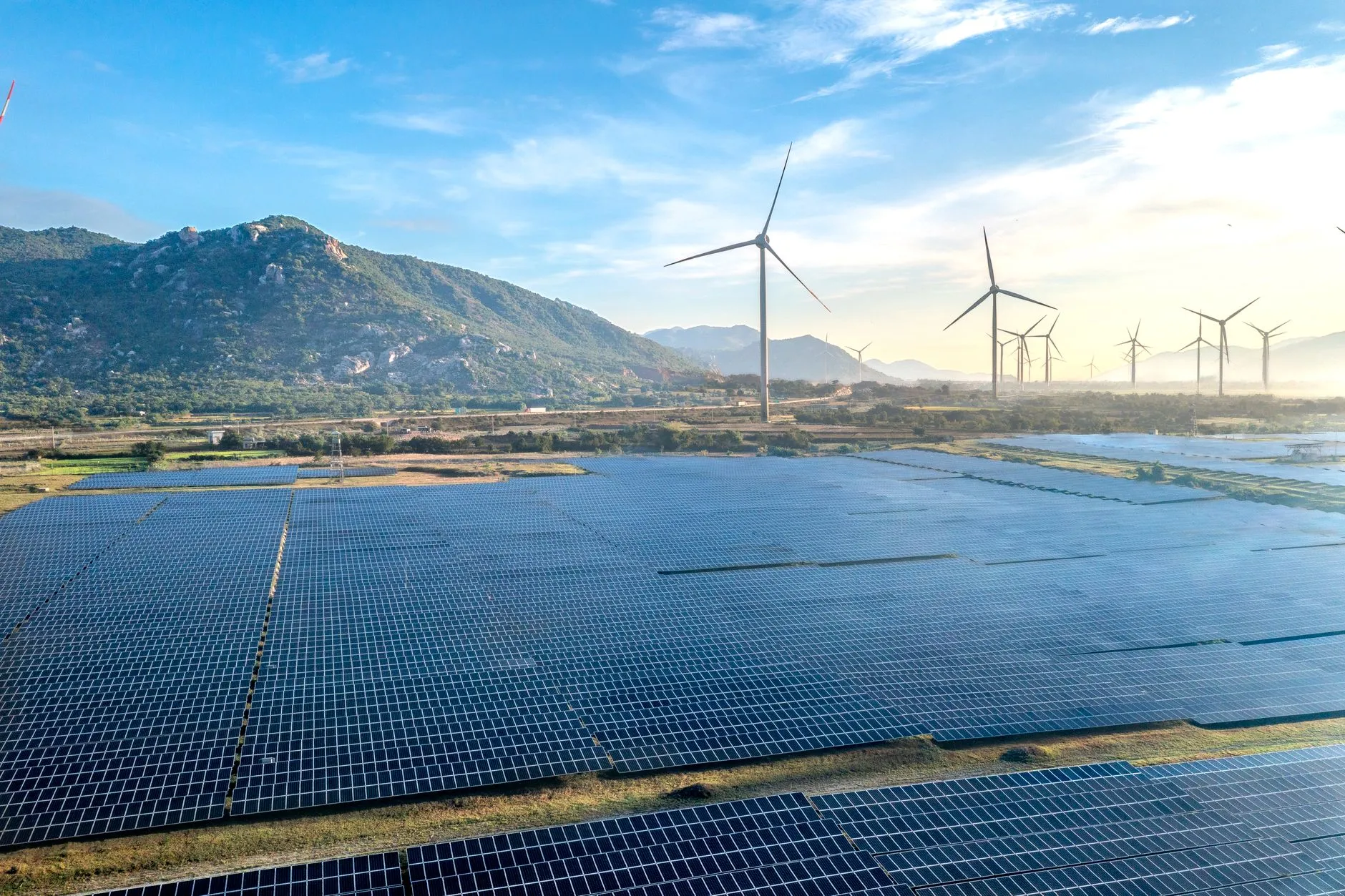
The energy transition requires more than renewable power and electric vehicles. It also depends on cutting material use, extending product life and designing goods for recovery and reuse. That message formed the central argument of the third episode of edie's COP31 Covered podcast, which featured Patrick Schröder from Chatham House and examined why circular-economy thinking now sits alongside electrification as a climate priority.
For UK businesses, the shift matters commercially. Material costs represent a rising share of operating expenses. Supply chains for critical minerals face volatility and scrutiny. Meanwhile, public procurement and investor expectations increasingly favour suppliers who can demonstrate resource efficiency and long-term resilience.
The podcast also covered the opening of COP31's World Leaders' Summit in Antalya, Turkey, and the conference's focus on zero waste. Together, these developments suggest that implementation is now being judged not only by how quickly economies move away from fossil fuels, but also by how responsibly they manage the materials required to build low-carbon infrastructure.
COP31 opens with focus on delivery and zero waste
COP31 runs from 9 to 20 November 2026 at the Antalya EXPO Center. The Turkish presidency has framed the meeting as an Implementation COP, signalling a shift from long-term pledges towards practical delivery. The agenda includes energy transition, circularity, zero waste, resilient infrastructure, sustainable food systems, industrial transformation and climate finance.
The Leaders' Summit opened on 11 November. UN Secretary-General António Guterres called for cooperation over fragmentation. Brazil's President Luiz Inácio Lula da Silva warned that lack of consensus must not prevent progress. However, the absence of several G7 leaders raised questions about political momentum and the summit's capacity to secure binding agreements.
Zero Waste Day took place on 11 November, deliberately timed to coincide with the arrival of heads of state. Governments and cities used the occasion to present waste-reduction and resource-efficiency initiatives. The day gave circular-economy measures greater political visibility and connected waste policy with discussions about industrial competitiveness and supply-chain security.
The timing was significant. It placed circularity alongside electrification at the centre of the COP31 programme. Consequently, climate policy is increasingly being framed around emissions embedded in material production, not just energy generation.
Circular economy as climate mitigation strategy
Traditional energy-transition narratives emphasise renewable capacity, grid expansion, battery deployment and electrification of transport, buildings and industry. Those measures remain essential. Nevertheless, they require substantial quantities of minerals, metals, manufactured components and infrastructure. A circular approach seeks to reduce the environmental pressure created by that expansion.
Schröder argued in the podcast that electrification will be more resilient if it is accompanied by circular design and resource efficiency. His perspective is important because it treats circularity as a system-wide economic model rather than simply a waste-management tool.
Wind turbines, solar panels, electric vehicles, transmission networks and batteries all require materials whose extraction and processing create environmental and social pressures. Circularity cannot eliminate those impacts. However, it can reduce demand for virgin resources and improve supply security.
A circular economy keeps products and materials in use for as long as possible. The approach includes several core principles. First, products should be designed for durability, repair, refurbishment and disassembly. Second, components and valuable materials should be reused and recovered at end of life. Third, material use should be reduced through efficiency and resource-conscious design. Fourth, supply chains should become less dependent on virgin extraction. Finally, waste prevention should take priority over recycling.
Evidence for economic and environmental benefits
The podcast cited European Environment Agency research showing that 17 circular-economy interventions could reduce the EU's climate footprint by more than 20 per cent. This finding illustrates why circularity is increasingly viewed as a mitigation strategy in its own right, not merely as a way to handle waste generated by other sectors.
The episode also referenced the United Nations Environment Programme's Global Environment Outlook 7. According to the report, transforming systems covering materials and waste could generate global economic benefits of up to $20 trillion annually by 2070. These figures suggest that circular models offer economic returns alongside environmental gains.
Investment is already flowing into circular activities, although it remains small compared with spending that sustains linear production. A Chatham House analysis estimated that approximately $1.3 trillion is invested annually in initiatives related to waste reduction, reuse and recycling. Around $800 billion comes from corporate finance, with fashion and automotive among the sectors attracting the greatest interest.
Schröder described the business case directly. He noted that recycling, reusing materials and reducing waste makes clear business sense, which is why spending on the circular economy is rising rapidly. However, he also cautioned that current funding remains insufficient to capture the full economic and environmental benefits of moving from a linear to a circular model.
Electrification pledge and the need for clean power
The podcast also reported on Energy and Transport Day, including the COP31 Presidency's "35 by 35" electrification pledge. The initiative gained additional supporters during the summit. Debate continued, however, over whether the additional electricity required by electrification must come from clean sources.
That distinction is central. Electrifying vehicles, heating and industry can reduce direct fossil-fuel use. Nevertheless, the climate benefits depend on the electricity mix and on the materials used to build the necessary infrastructure.
A circular approach therefore strengthens electrification in three ways. First, it reduces the materials required for new infrastructure. Second, it improves the longevity and utilisation of equipment. Third, it supports recovery and reuse when batteries, vehicles and energy systems reach the end of their initial service life.
Without those measures, rapid electrification could shift environmental pressures from fossil-fuel combustion towards mining, manufacturing and waste management. For businesses, this means that material efficiency and product design are now integral to energy strategy, not separate concerns.
Supply chains, human rights and due diligence
The episode's wider headlines included a proposed UK law introducing mandatory human-rights due diligence for large businesses. It also reported that corporate net-zero targets remain broadly stable while cities lag behind. These developments reinforce the broader COP31 theme that implementation increasingly depends on corporate governance, supply-chain accountability and action at subnational level.
Circularity intersects directly with human-rights due diligence. Mining and processing of critical minerals can expose workers and communities to labour, land and environmental risks. Companies that reduce virgin-material demand, improve traceability and design products for longer use may be better placed to manage both climate and human-rights responsibilities.
For UK manufacturers and importers, this connection has practical consequences. Supply-chain scrutiny is rising. Public procurement now requires carbon reporting and increasingly asks for evidence of responsible sourcing. Consequently, businesses that embed circular principles into product design and procurement may find themselves better positioned to meet both climate and compliance expectations.
Key facts about circularity and the energy transition
- COP31 is taking place in Antalya, Turkey, from 9 to 20 November 2026, with circularity and zero waste among the core themes.
- European Environment Agency research indicates that 17 circular-economy interventions could reduce the EU's climate footprint by more than 20 per cent.
- The UN Environment Programme estimates that transforming material and waste systems could generate global economic benefits of up to $20 trillion annually by 2070.
- Annual investment in circular-economy initiatives is estimated at $1.3 trillion, with around $800 billion from corporate finance.
- Wind turbines, solar panels, electric vehicles and batteries all require materials whose extraction and processing create environmental and social pressures.
- Circular approaches reduce demand for virgin resources, improve supply security and support recovery and reuse at end of life.
- Proposed UK legislation on mandatory human-rights due diligence will increase scrutiny of supply chains, particularly for critical minerals.
What UK businesses should consider now
The podcast's central argument has direct implications for companies preparing for a low-carbon economy. Businesses that treat circularity as a narrow recycling issue may miss opportunities to reduce costs, manage supply risks and strengthen climate strategies.
Material dependencies should be assessed across products and operations. This includes understanding where critical minerals and components come from, what risks exist in those supply chains, and where alternatives or design changes could reduce exposure. For manufacturers, this means looking beyond direct suppliers to understand the full material chain.
Products and equipment should be designed for repair, modularity and reuse. This requires changes to specifications, procurement standards and contracts with designers and suppliers. It also requires collaboration across functions, as product life and material recovery affect finance, operations, compliance and customer relationships.
Take-back, refurbishment and remanufacturing systems should be established where viable. Some sectors already have mature systems in place. Others will need to build capability or work with specialist partners. In either case, the commercial case improves as material costs rise and as customers and procurers demand evidence of responsible product stewardship.
Recycled and recovered content should be tracked alongside operational emissions. Carbon reporting increasingly covers Scope 3 emissions, which include materials. ESG compliance services can help businesses integrate material tracking into existing reporting systems and identify opportunities to reduce embodied emissions through circular design.
Circularity should be integrated into procurement, product development and capital planning. This means setting specifications that favour durability and recyclability, rewarding suppliers who demonstrate material efficiency, and building whole-life cost assessments into investment decisions. For businesses that supply the public sector, these changes are increasingly necessary to meet tender requirements under PPN 06/21 and related policy.
Climate targets should be connected with supply-chain and human-rights due diligence. The proposed UK legislation on mandatory due diligence will require large businesses to assess and address human-rights risks in their supply chains. Material sourcing and product design directly affect those risks, particularly for critical minerals. Therefore, circular strategies that reduce virgin-material demand can support both climate and compliance objectives.
Investment, policy and the gap that remains
For investors and policymakers, the key issue is scale. Current circular investment is substantial, but it remains dwarfed by finance directed towards linear production models. Closing that gap will require regulation, better product standards, infrastructure for collection and recycling, reliable markets for secondary materials and business models that reward durability rather than constant replacement.
UK policy is moving in that direction. Extended producer responsibility schemes are expanding. Carbon reporting requirements now cover Scope 3 emissions, which include materials. Public procurement increasingly requires suppliers to demonstrate resource efficiency and long-term resilience. Meanwhile, investor scrutiny of supply-chain risks and material dependencies is rising.
Nevertheless, the infrastructure required to support circular business models remains incomplete. Collection systems vary by region and material. Markets for secondary materials are often fragmented and lack price transparency. Product standards continue to favour low initial cost over whole-life performance. As a result, businesses that want to adopt circular approaches often face practical and commercial barriers.
Overcoming those barriers will require coordinated action. Government can set standards, fund infrastructure and use procurement to create demand for circular products. Industry can invest in design, collection and reprocessing capability. Financial institutions can direct capital towards business models that prioritise longevity and material recovery. Meanwhile, businesses can use net-zero programmes and training resources to build internal capability and integrate circular thinking into strategy and operations.
Why this matters for climate credibility
The third COP31 Covered episode makes a broader point about the credibility of the energy transition. Renewable energy and electrification are indispensable. However, they will not be sufficient if they reproduce a high-consumption, high-waste economic model.
Circularity offers a way to connect climate mitigation with resource security, industrial resilience and economic efficiency. Its inclusion alongside electrification and zero waste at COP31 signals that implementation is increasingly being judged not only by how quickly economies abandon fossil fuels, but also by how responsibly they use the materials needed to build what comes next.
For the transition to be durable, the goal must therefore be more than replacing one energy system with another. It must involve redesigning the wider economy so that energy, products and materials remain in productive use for longer, with less waste and lower environmental cost.
UK businesses that understand this shift will be better placed to manage costs, meet compliance expectations and respond to changing customer and investor demands. Those that continue to treat circularity as a separate issue from energy and climate strategy may find themselves at a disadvantage as policy, procurement and competition evolve.
Further reading and resources
The Department for Energy Security and Net Zero provides policy updates and guidance on the UK's energy transition and net-zero commitments. The department's publications include strategies on critical minerals, renewable energy and industrial decarbonisation.
The UK government's environmental reporting guidance covers mandatory greenhouse gas emissions reporting, including Scope 3 emissions related to materials and products. This resource is essential for businesses preparing carbon reports or responding to procurement requirements.
The Cambridge Institute for Sustainability Leadership offers research and practical tools on circular-economy business models, including sector-specific case studies and frameworks for integrating circularity into corporate strategy.
The edie website publishes regular news and analysis on sustainability, climate policy and circular-economy developments. The COP31 Covered podcast series provides ongoing coverage of the conference and related policy discussions.