
As Europe Tightens Forest Rules, Can East Asia Plug 'Sustainability Leakage'?
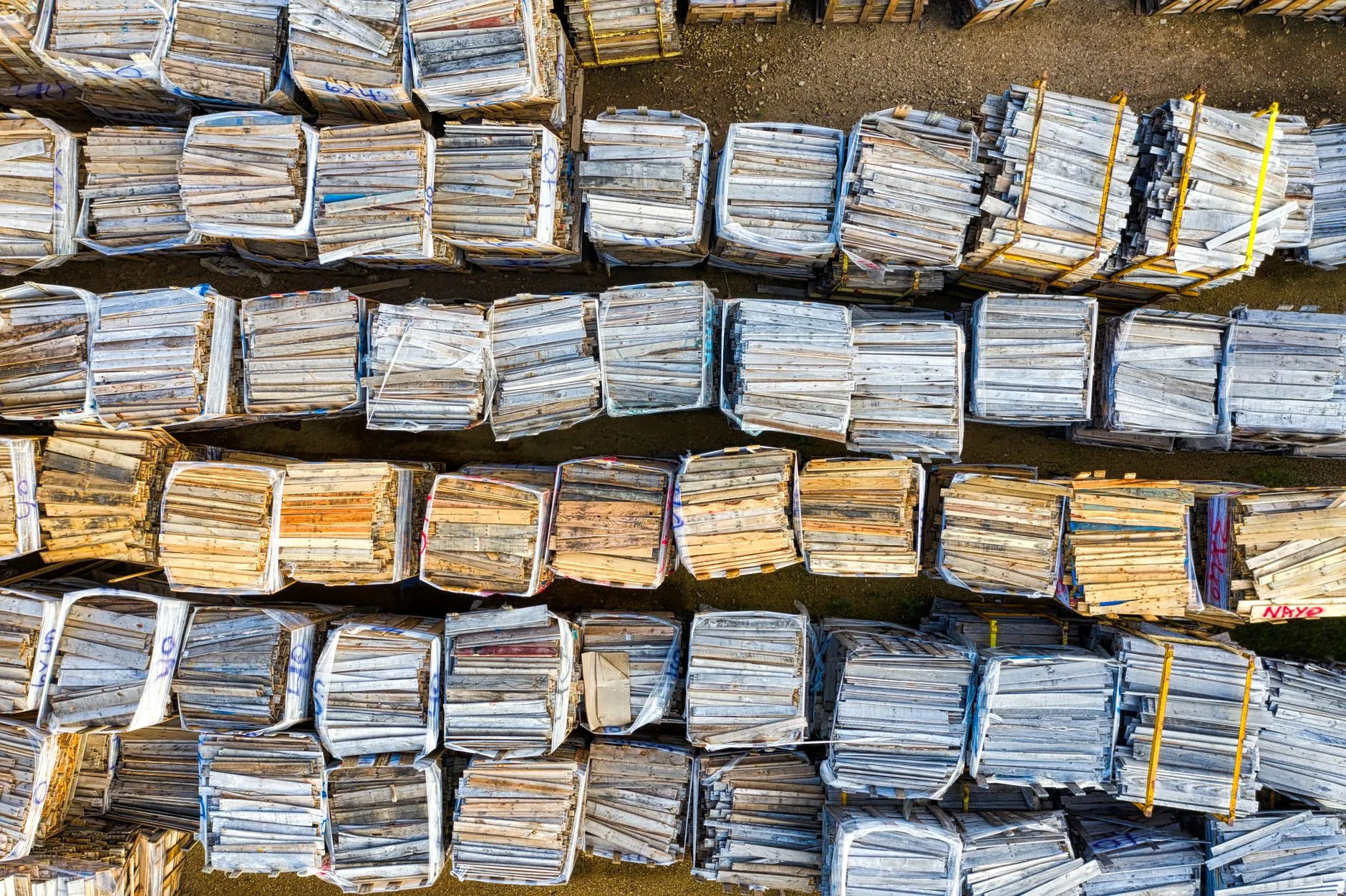
Europe's tougher rules on forest-risk commodities are changing global trade patterns. However, their real-world impact depends partly on what other major buyers do. Japan and South Korea import significant volumes of timber, wood pellets and agricultural products from Southeast Asia. Unless these countries raise their own standards, there is a risk that goods rejected by Europe simply find new markets elsewhere.
This problem has a name: sustainability leakage. Essentially, stricter rules in one place can shift environmental damage rather than reduce it. For UK businesses with Asian supply chains or export markets, this creates both compliance complexity and strategic questions about how global sourcing standards will develop.
What the EU Deforestation Regulation actually requires
The European Union's Deforestation Regulation covers seven commodities linked to forest loss. These include cattle, cocoa, coffee, palm oil, rubber, soy and wood. Products made from these materials are also covered. Companies must prove that goods are deforestation-free and comply with the laws of the country where they were produced.
The regulation became law in June 2023. Originally, it was due to apply from late 2024. That timeline has since been extended. Large and medium-sized operators now face a compliance date of 30 December 2026. Most micro and small enterprises have until 30 June 2027. Small operators already covered by the earlier EU Timber Regulation must comply by 30 December 2026.
The European Commission has adjusted the product list. Certain items, such as cattle hides, some rubber articles and soybeans for sowing, were removed. Meanwhile, soluble coffee, specific palm-oil derivatives and frozen cattle tongues were added. These newly added products will be subject to the rules from 30 December 2027.
In practice, businesses must provide detailed supply-chain information. This includes geolocation data for production areas, risk assessments and due-diligence statements. These must be submitted through the EU's information system. Traceability is no longer optional or part of voluntary corporate responsibility. It is now a condition for market access.
Understanding sustainability leakage in commodity markets
Sustainability leakage occurs when tighter environmental standards in one market push high-risk goods toward markets with weaker controls. Trade patterns change, but deforestation or ecosystem damage does not necessarily fall.
The risk is particularly acute for globally traded commodities. Suppliers unable to meet EU documentation requirements may look for buyers in other regions. Consequently, environmental pressure moves geographically while overall demand remains steady.
Research examining the EU Timber Regulation found increased forest loss in countries heavily reliant on timber exports to the EU. Trade diversion toward less-regulated markets was identified as a contributing factor. Separate modelling of palm oil and soy restrictions suggested that EU-only measures would have limited global impact without participation from other major importers.
These findings do not prove that every rejected shipment directly causes deforestation elsewhere. They do, however, highlight a structural weakness. Companies may maintain separate supply chains if buyers apply different standards. One batch meets rigorous European requirements. Another, from the same supplier, goes to a market with lighter checks.
Japan and South Korea's role in Asian commodity flows
Japan and South Korea are major economies with deep commercial ties to Southeast Asian producers. Their purchasing decisions matter in sectors such as timber, agricultural commodities and biomass energy.
Both countries are important destinations for wood pellets from Vietnam and Indonesia. Renewable-energy incentives have supported this demand. Biomass is often promoted as a lower-carbon energy source. Nevertheless, it can still carry risks linked to forest conversion, questionable harvesting practices or weak traceability.
South Korea requires importers of designated timber products to provide evidence of legal harvesting before customs clearance. This system focuses on legality rather than the broader EU standard of being deforestation-free. A product can be legally harvested under national law while still raising concerns about biodiversity loss or inadequate protection of local communities.
South Korea has also shown political interest in corporate due diligence. A legislative proposal for mandatory human-rights and environmental due diligence was introduced in 2023. Another bill followed in August 2024. The National Human Rights Commission of Korea has called for stronger supply-chain accountability and meaningful stakeholder participation.
If developed into binding requirements, such measures could extend corporate responsibility beyond timber legality. They would cover wider environmental and human-rights risks.
Japan revised its Clean Wood Act in April 2025. The changes introduced mandatory legality verification for designated businesses. More detailed guidance on risk assessment and supply-chain information management was also provided. Like South Korea's system, this is an important step. However, it does not automatically guarantee that imported wood is deforestation-free.
Japan has also moved toward broader nature-related procurement guidance. The Ministry of the Environment issued practical guidelines in 2024 for nature-positive procurement. These encourage companies to map supply chains, assess environmental risks, improve traceability and prevent deforestation and ecosystem degradation.
The guidelines are significant because they broaden the discussion. The question shifts from whether timber is legally harvested to whether procurement contributes to wider ecological harm. Their ultimate impact will depend on adoption, enforcement and whether voluntary guidance becomes embedded in purchasing rules and public procurement standards.
Corporate commitments vary widely in depth and transparency
Some companies have moved ahead of regulation. Fuji Oil, a major food-ingredients manufacturer, adopted a No Deforestation, No Peatland Development and No Exploitation policy in 2016. Such policies can establish requirements covering land conversion, peatland drainage, labor conditions and community rights.
Public promises are not equivalent to verified performance. Effective systems generally require traceability to the production area, risk-based supplier screening and independent verification where risks are high. Mechanisms for resolving non-compliance are essential. So are monitoring of corrective action and transparent reporting on progress and unresolved problems.
The same standards should ideally apply across a company's global operations. Applying stringent criteria only to goods destined for Europe could deepen the market segmentation that produces sustainability leakage. UK businesses exporting to multiple markets need to consider whether maintaining separate supply chains is commercially viable or reputationally sustainable.
Legality verification does not equal deforestation-free sourcing
The emerging frameworks in Japan and South Korea focus heavily on timber legality. The EU Deforestation Regulation goes further. It requires products to be linked to land that was not deforested after a specified cutoff date. It also requires compliance with applicable laws in the country of production.
That distinction matters. Legality depends on the rules and enforcement capacity of the producing country. Deforestation-free sourcing adds an environmental outcome that may not be fully captured by domestic law. For example, a government may permit forest clearance for agricultural expansion. That clearance is legal under national law but fails the EU's deforestation-free test.
A stronger regional approach would combine legal-harvest verification, satellite and geospatial monitoring, and supply-chain mapping. It would also recognize customary and community rights, conduct risk-based audits and publicly disclose due-diligence results. Support for smallholders and smaller suppliers is equally important.
Without financial and technical support, stricter requirements could exclude small producers rather than improve their practices. That could concentrate trade among larger suppliers while leaving informal or lower-standard markets intact. The environmental problem remains. It simply becomes less visible to regulated buyers.
What this means for Southeast Asian producers and UK supply chains
Southeast Asian exporters face both compliance costs and commercial opportunities. Producers able to document origin, land-use history and legal compliance may gain preferred access to multiple high-value markets. Those unable to provide reliable data could face higher transaction costs, shipment delays or exclusion.
The transition will be particularly challenging for smallholders. They may lack mapping tools, formal land documentation, certification access or the resources needed for digital traceability. Importing companies can reduce this risk by funding technical assistance, sharing data systems and rewarding verified improvements rather than simply terminating suppliers.
The alternative is rapid supplier exclusion. That could shift production toward less transparent channels, weaken environmental outcomes and potentially harm rural livelihoods. UK businesses sourcing from Southeast Asia should assess whether their procurement practices support or undermine supplier improvements.
For UK firms exporting to Japan or South Korea, the question is different. Will your customers in those markets start asking the same questions that European buyers now ask? If so, preparing now could offer a competitive advantage. If not, you may face pressure to maintain separate supply chains with different documentation standards.
Practical steps businesses and governments can take
Several steps could reduce the risk of sustainability leakage and support credible improvements across global supply chains.
- Companies should adopt consistent standards across destinations rather than maintaining separate sourcing rules for Europe, Japan, South Korea and other markets.
- Due diligence should address deforestation, ecosystem degradation, labor rights and community impacts, not just legal compliance.
- Common approaches to geolocation, supplier records and risk classification could reduce duplication and compliance costs across regions.
- Technical assistance and finance can help smallholders meet traceability and environmental requirements without exclusion.
- Governments can create demand for verified products through purchasing standards for construction, energy and food.
- Banks and investors can assess deforestation and land-use risks when financing companies and projects.
- Regional policy coordination would reduce incentives for traders to route high-risk commodities toward the least-regulated market.
Frameworks such as the Taskforce on Nature-related Financial Disclosures and the Carbon Disclosure Project provide starting points for corporate and financial reporting. However, disclosure alone cannot substitute for enforceable due diligence. Reporting what you do is not the same as changing what you do.
Six key points on deforestation regulation and market leakage
- The EU Deforestation Regulation applies to large and medium-sized operators from 30 December 2026, with extended deadlines for most small and micro enterprises until 30 June 2027.
- Sustainability leakage occurs when stricter environmental standards in one market redirect high-risk goods toward markets with weaker requirements, shifting rather than reducing environmental harm.
- Japan and South Korea are major importers of timber, wood pellets and agricultural commodities from Southeast Asia, making their regulatory choices significant for global deforestation outcomes.
- Current systems in Japan and South Korea focus on timber legality, which does not automatically guarantee that products are deforestation-free or produced without ecosystem degradation.
- Corporate commitments to deforestation-free sourcing vary widely in quality and require traceability, independent verification and transparent reporting to be credible.
- Without coordinated standards across major importing markets, companies may maintain separate supply chains with different environmental and social safeguards for different destinations.
Where UK businesses should focus attention and resources
UK companies with supply chains in Southeast Asia or export markets in East Asia face a period of regulatory divergence. European requirements are clear and enforceable. Asian requirements are developing but remain lighter in most cases. This creates a choice.
One option is to maintain separate supply chains. European shipments meet full traceability and deforestation-free standards. Asian shipments meet legality checks but not necessarily broader environmental criteria. This approach may reduce short-term compliance costs. However, it carries reputational risk and may prove unsustainable if Asian markets tighten their rules.
The alternative is to adopt a single global standard based on the most stringent requirements you face. This simplifies supplier management, reduces the risk of documentation errors and positions your business for future regulatory tightening. It also aligns with the expectations of investors, lenders and customers who increasingly assess nature-related risks.
For businesses in sectors covered by the EU Deforestation Regulation, carbon reporting and compliance support can help you assess supply-chain risks and prepare documentation. For those looking to reduce carbon footprints alongside deforestation risks, structured programs for net-zero planning provide a broader framework.
Ultimately, the question is not just about compliance. It is about whether your supply-chain practices can withstand scrutiny from multiple markets, stakeholders and regulatory systems. Preparing for that scrutiny now, rather than waiting for enforcement action, is the more prudent approach.
Where to find authoritative guidance and updates
The European Commission provides detailed guidance on the Deforestation Regulation, including the information system, product scope and timelines, through its official deforestation policy page. The UK government's guidance on due diligence on forest-risk commodities offers context for businesses operating in both UK and EU markets.
For broader context on nature-related risks and corporate disclosure, the Taskforce on Nature-related Financial Disclosures has published frameworks and guidance that are being adopted by financial institutions and large companies. The Carbon Disclosure Project's forests program provides data and benchmarking on corporate deforestation commitments and performance.
UK businesses should also monitor developments in Japan and South Korea. Japan's Ministry of the Environment publishes guidance on nature-positive procurement, while South Korea's legislative developments on corporate due diligence are covered by the National Assembly and the National Human Rights Commission of Korea. These sources are primarily in Japanese and Korean but are increasingly referenced in English-language trade and sustainability publications.