
Slowing the Flow: Why Flood Resilience Is Becoming Nature’s First Investable Asset
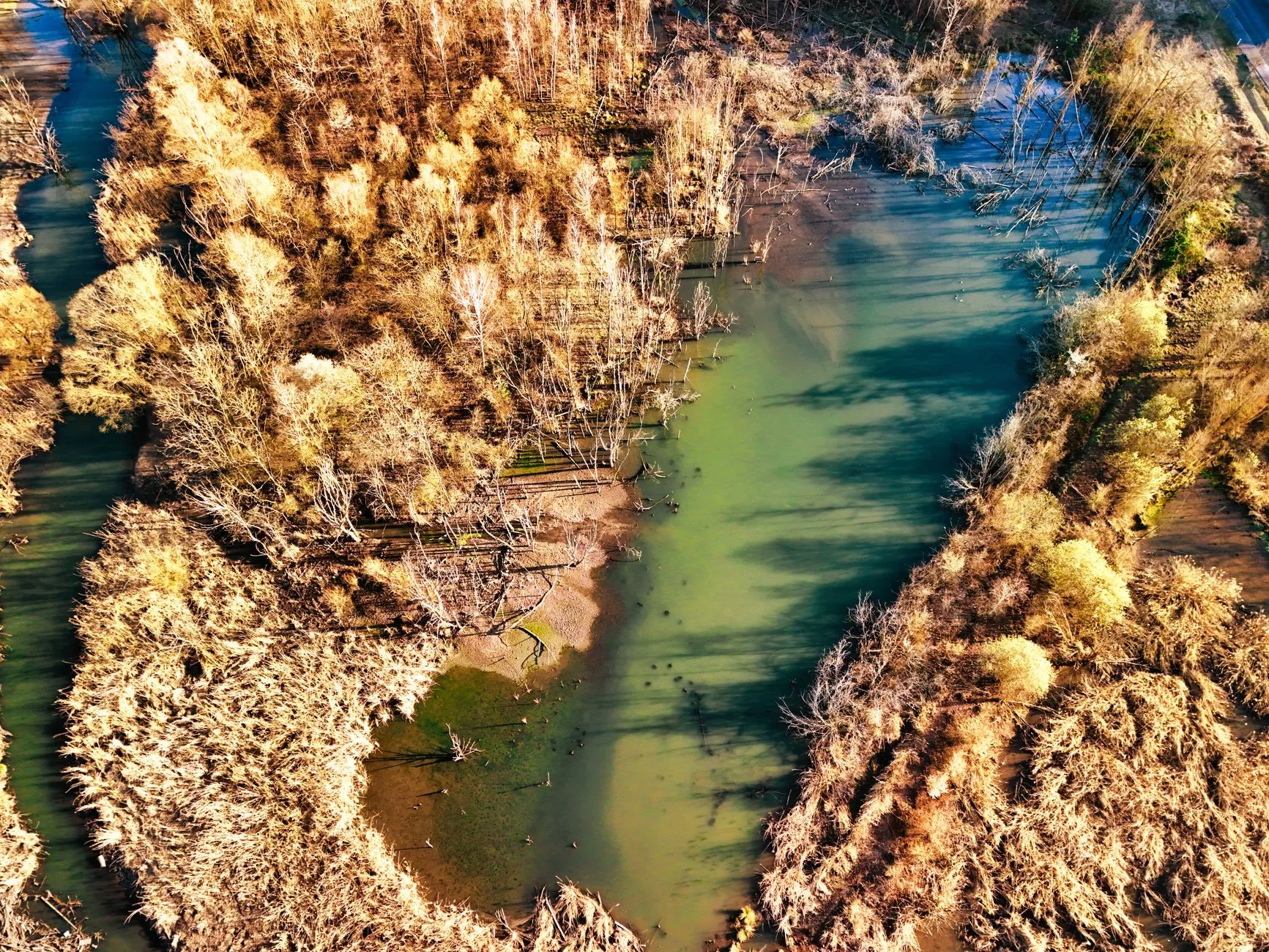
Flooding in England used to mean emergency repairs and insurance claims. Now it increasingly means upstream wetlands, restored floodplains and woodland planted to slow the rain before it reaches your property. That shift from reactive to preventative is creating what may become the first commercially credible nature investment market in the UK.
Around 6.3 million homes and businesses in England already face flood risk. Climate change is making the problem worse. Traditional defences remain necessary but are expensive and site specific. Natural solutions offer something different: they work across whole catchments, deliver multiple benefits and could attract institutional capital if structured correctly.
Environment Bank has proposed a model that treats upstream nature restoration as measurable infrastructure. The idea is straightforward. Insurers already pay when floods happen. They also hold substantial investment portfolios. What has been missing is a credible structure that defines the product, assigns the benefits and monitors the results over time.
Insurers hold both the risk and the capital
Insurers occupy an unusual position in flood management. They bear financial losses when water damages property. They also have the analytical tools to identify where risk is concentrated and the resources to fund interventions that reduce future claims.
That creates a potential shift from paying after the event to financing measures that prevent it. Aviva, for example, has more than £100 billion invested in the UK, including approximately £35 billion in infrastructure. The firm has supported the FloodAction Coalition, a partnership involving insurers, investors and asset owners working to develop a UK market for nature based flood management.
The coalition aims to connect investment with measurable reductions in water related risk. Its reported pipeline is expected to begin at around £150 million in nature based projects in 2026, scaling to £1 billion by 2028. Consequently, insurers could invest in projects that reduce claims volatility while meeting environmental disclosure expectations associated with the Taskforce on Nature related Financial Disclosures.
Traditional flood protection includes engineered defences, drainage improvements and property level measures. However, these interventions are often expensive and difficult to expand quickly across whole catchments. Natural flood management offers a complementary approach through wetlands, restored floodplains, woodland, healthier soils and better designed agricultural landscapes.
Small upstream spending can prevent larger downstream losses
One project in Norfolk illustrates the financial logic. Aviva and WWF supported a scheme delivered by Norfolk Rivers Trust that used flood relief channels, leaky dams, hedgerow planting and culvert replacement across three sites: Gissing, Hempnall and Edgefield.
The project cost approximately £43,000. It reportedly protected 24 homes from flooding and generated a 17:1 return on investment when compared with the cost of restoring flood damaged properties. That result does not guarantee every natural flood management project will deliver the same return. Outcomes depend on catchment characteristics, land availability, rainfall patterns, maintenance and the assets being protected.
Nevertheless, the example demonstrates an important principle. Relatively modest upstream spending can sometimes prevent substantially larger downstream losses. Aviva's Claudine Blamey has described nature based solutions as a "really nice low cost option" for building flood resilience. Moreover, the broader investment case rests on combining avoided damage with additional benefits including biodiversity, water quality, carbon storage and community wellbeing.
Natural approaches can help slow the movement of rainfall into rivers, temporarily store water, reduce peak flows downstream, improve water quality and biodiversity, and capture carbon while supporting wider ecosystem recovery. The Cambridge Institute for Sustainability Leadership describes nature based approaches as part of a wider mix of prevention, protection and resilience measures. It identifies wetland and floodplain restoration, tree planting in suitable locations and improved soils as actions that can slow, contain or capture water.
Commercial structures remain underdeveloped despite proven benefits
Nature based flood resilience has struggled to attract private capital because its benefits are dispersed, long term and difficult to assign to a single buyer. A wetland may reduce flood risk for several towns, roads, industrial sites, farms and utility assets downstream. No single beneficiary may want to pay the full cost even though many gain from the intervention.
For institutional investors, a viable asset typically requires a defined unit of value, a known or modelled cost, a clear revenue or payment mechanism, an accountable project operator, monitoring and verification, a defined period of performance and protection against delivery and environmental risks. The Cambridge Institute for Sustainability Leadership identifies the same commercial barriers. Projects need identifiable buyers, predictable revenues, credible evidence, committed counterparties, appropriate risk sharing and sufficient scale.
Revenue can come from multiple outcomes including flood risk reduction, biodiversity, carbon, catchment services and land based products. This points toward a blended finance and multi benefit model rather than a single purpose flood asset. Consequently, a project might combine payments from insurers, water companies, infrastructure owners, developers seeking biodiversity units, carbon markets, public funds and local beneficiaries.
How Environment Bank proposes to structure nature as infrastructure
Environment Bank's existing Habitat Bank model provides a possible template for structuring nature as an investable asset. The company develops habitat restoration sites in partnership with landowners. Its Habitat Banks are generally secured for at least 30 years, with ecological management continuing while new habitats become established. The sites may include meadows, woodland, wetlands and scrubland.
According to information submitted to Parliament, Environment Bank's Habitat Banks are supported by Gresham House capital. Developer contributions fund habitat creation and 30 years of management. Meanwhile, an evergreen bond with a UK high street bank is intended to support long term viability.
The relevance to flood resilience is structural rather than identical. Biodiversity projects already demonstrate how long term ecological obligations can be linked to defined payments, management responsibilities and monitoring. A similar framework could be applied to flood outcomes, provided the benefits can be modelled and verified.
Environment Bank's proposed process has four broad stages. First, diagnose the risk by identifying the causes of flooding and the assets or communities exposed. Second, define interventions that balance location, ecological outcomes, cost and delivery timescales. Third, deliver a catchment scale programme with clear responsibilities, milestones and management arrangements. Finally, demonstrate performance through monitoring and evidence suitable for investor reporting and TNFD aligned disclosure.
Flood risk demands coordination across catchments and asset owners
Flood risk does not follow property boundaries. A single intervention may protect several groups while several interventions may be required to reduce risk at a downstream location. That makes catchment scale coordination essential.
The FloodAction model uses opportunity clusters: areas in which insurers, landowners, infrastructure owners and other stakeholders share exposure to water related risks. These clusters help identify locations for pilot projects. Potential participants include insurers seeking to reduce claims exposure, water companies managing sewer flooding and water quality obligations, transport and energy operators protecting critical infrastructure, manufacturers and logistics companies exposed to supply chain disruption, local authorities responsible for communities and public assets, landowners who can host restoration measures, and developers seeking biodiversity and other environmental outcomes.
A portfolio approach could aggregate multiple projects, spread delivery risk and reduce transaction costs. It could also make the investment proposition more attractive to institutions that cannot efficiently assess hundreds of small, fragmented interventions individually. Furthermore, combining projects at catchment scale allows for more comprehensive risk modelling and clearer attribution of benefits.
Critical questions that must be resolved before scaling investment
The investment case remains promising but several issues require careful treatment. Measurement and attribution present the first challenge. Investors need to distinguish between expected and observed outcomes. Flood reduction depends on weather, upstream conditions and the performance of multiple interventions. Models must be transparent, locally relevant and regularly updated.
Additionality is equally important. Private finance should support outcomes that would not otherwise occur rather than simply replacing existing public obligations. Maintenance presents another challenge. Wetlands, leaky dams, woodland and altered land management systems require ongoing stewardship. Contracts must specify who maintains them, for how long and what happens if performance declines.
Benefit allocation matters because multiple parties may benefit. Projects need clear purchasing commitments and mechanisms for sharing costs. Revenue certainty is not guaranteed. Biodiversity, carbon and voluntary nature markets can supplement flood resilience payments but they may have different rules, prices and time horizons. Combining revenues increases viability but also adds contractual complexity.
Natural systems have limits. Nature based measures are not a universal substitute for engineered defences. They may be highly effective for frequent or moderate events while offering less protection during extreme floods. Their role should therefore be integrated with rather than presented as a replacement for conventional infrastructure.
The Cambridge Institute for Sustainability Leadership stresses that private finance will not be appropriate for every project. Public, philanthropic and private capital will likely need to work together, particularly where benefits are widely shared or where commercial revenues are insufficient.
Five key facts about flood resilience investment
- Around 6.3 million homes and businesses in England already face flood risk, with climate change increasing pressure on communities, infrastructure owners and insurers.
- The FloodAction Coalition has a reported pipeline of approximately £150 million in nature based projects starting in 2026, scaling to £1 billion by 2028.
- A Norfolk project costing £43,000 reportedly protected 24 homes and generated a 17:1 return on investment compared with the cost of restoring flood damaged properties.
- Environment Bank's Habitat Banks are secured for at least 30 years, with developer contributions funding habitat creation and long term management supported by institutional capital.
- Viable investment structures require defined units of value, clear revenue mechanisms, accountable operators, monitoring and verification, and protection against delivery and environmental risks.
What businesses should consider as the market develops
Flood risk affects more than homes. Manufacturers, logistics operators, utility companies and infrastructure owners all face exposure to water related disruption. Supply chains can be interrupted when flood water closes roads or damages facilities. Business interruption insurance covers some losses but prevention remains more cost effective than recovery.
Companies with assets in flood prone areas should assess whether participation in catchment scale projects could reduce their exposure. Similarly, businesses required to demonstrate environmental performance under emerging disclosure standards may find that flood resilience projects deliver multiple reportable outcomes including biodiversity, carbon and water quality.
Public sector suppliers face additional considerations. Procurement Policy Note 06/21 requires larger public contracts to demonstrate social value including environmental benefits. Supporting nature based flood resilience could help meet those requirements while reducing operational risk.
Land based businesses including agriculture, forestry and estate management may have opportunities to host restoration measures. Revenue streams could include payments from insurers, water companies, biodiversity units, carbon credits and public funds. However, hosting agreements typically require long term commitments, defined management obligations and ongoing monitoring.
For businesses new to carbon reporting and ESG compliance, flood resilience projects offer tangible environmental outcomes that can be monitored and verified. They also demonstrate commitment to climate adaptation rather than mitigation alone. Participation in catchment scale programmes could strengthen both regulatory compliance and stakeholder confidence.
At SBS, we work with businesses navigating environmental obligations including carbon measurement, supply chain sustainability and tender requirements. Flood resilience investment is emerging as a new category of natural capital but the commercial structures remain underdeveloped. Consequently, businesses considering participation should assess contractual clarity, revenue certainty, delivery risk and alignment with broader environmental objectives before committing capital.
The opportunity is real but the market is immature. Early participants will help define how contracts are written, how performance is measured and how benefits are allocated. That creates both opportunity and risk.
Where to find authoritative guidance on flood risk and nature finance
The Department for Environment, Food and Rural Affairs provides policy guidance on flood risk management and nature based solutions. The Environment Agency publishes flood maps, catchment data and guidance on natural flood management approaches.
The Cambridge Institute for Sustainability Leadership has published research on financing nature based solutions including flood resilience. The Institute of Environmental Management and Assessment offers professional guidance on environmental risk assessment and nature recovery.
For businesses evaluating flood risk exposure, the Environment Agency's long term flood risk assessment service provides property level data. Companies exploring participation in nature finance markets may also find value in guidance from the Taskforce on Nature related Financial Disclosures on measuring and reporting nature related risks and opportunities.