
Only Five Countries Committed to Phasing Out Fossil Fuel Subsidies
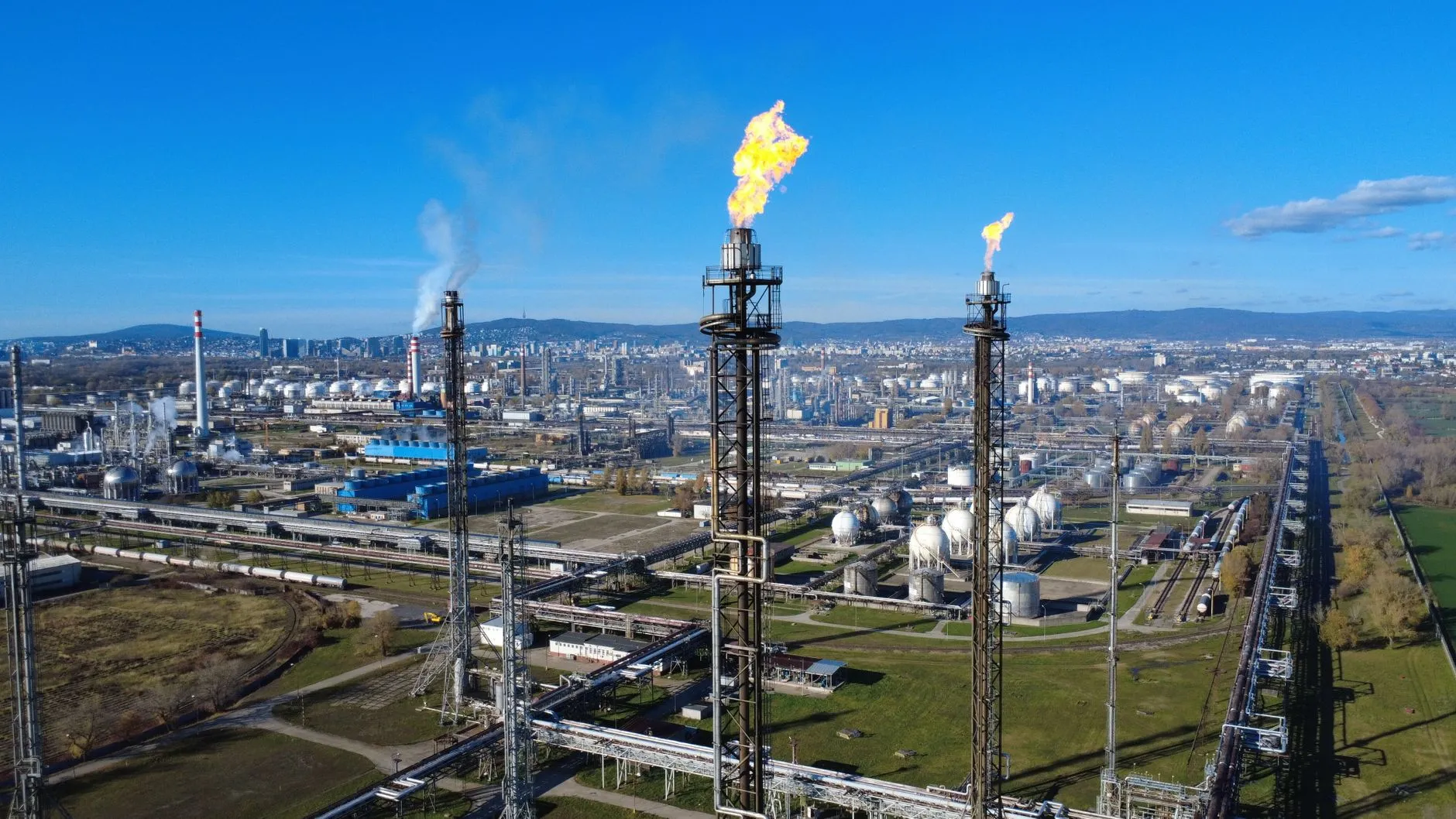
Governments across the world continue to promise they will phase out fossil fuel subsidies. However, only five countries have set firm deadlines to actually do it. This gap between rhetoric and action matters because subsidies keep fossil fuels artificially cheap, weaken the business case for clean energy, and drain public finances that could support the transition to net zero.
For UK businesses, particularly those pursuing carbon reduction or tendering for public contracts, the global picture on subsidy reform has direct implications. Supply chain emissions, international competitiveness, and the pace of energy transition all depend partly on whether governments align their spending with their climate commitments. Meanwhile, fiscal support for fossil fuels reached $916 billion worldwide in 2024, according to data from the OECD and International Energy Agency.
The figure represents an 11% decline from the previous year, largely because temporary measures introduced during the energy crisis were scaled back. Nevertheless, support remains well above historical norms. More importantly, the reduction reflects short term adjustments rather than structural change. Most production and consumption subsidies remain in place, and few governments have committed to ending them by a specific date.
That absence of deadlines creates uncertainty for businesses trying to plan long term investments in cleaner technologies. It also undermines the credibility of international climate agreements, where subsidy reform has been a recurring pledge since well before the Paris Agreement.
What counts as a fossil fuel subsidy
Fossil fuel subsidies take many forms. They include direct budget transfers, tax exemptions, reduced fuel duties, price controls, preferential loans, and infrastructure support for coal, oil, and gas. Governments typically introduce them to shield households and businesses from high energy costs. In practice, they also impose fiscal burdens, increase emissions, and reduce incentives for efficiency and low carbon alternatives.
The OECD has noted that these measures often benefit wealthier households disproportionately because higher earners consume more fuel. Consequently, blanket subsidies can be both environmentally harmful and regressive. Targeted support, by contrast, directs assistance to those who need it most while removing the broad price distortions that favour fossil fuels over renewables.
Global subsidies surged during the energy crisis. Prices for gas, oil, and electricity spiked in 2022, prompting governments to introduce or expand consumer protection measures. Total support exceeded $1 trillion that year. As wholesale prices eased, many emergency schemes were wound down or replaced with more focused assistance. Even so, hundreds of billions in ongoing support remain.
This pattern illustrates a central dilemma. Removing subsidies can raise energy bills in the short term, creating political risk. Retaining them, however, locks in fossil fuel consumption, diverts funds from climate priorities, and delays the shift to cleaner energy systems.
Why only five countries have binding phase out dates
The finding comes from recent research highlighted by trade publication BusinessGreen. It reveals that while many governments have made general commitments to reform or eliminate "inefficient" subsidies, only five have set explicit, time bound deadlines. The distinction is significant because vague political declarations are not the same as actionable implementation plans.
A firm deadline provides several advantages. It creates a benchmark for accountability, establishes a timetable for changing tax and spending policies, and gives businesses greater certainty. It also forces governments to identify which measures will end, who will be affected, and what replacement policies are needed. Without a deadline, reform can be postponed indefinitely, particularly when fuel prices rise or political pressure mounts to protect household budgets.
Other countries have adopted intermediate targets or sectoral plans. For example, Lithuania has committed to phasing out 13 specific fossil fuel support measures by 2026. Italy has pledged to reduce environmentally harmful subsidies, while France has set targets for lowering certain harmful expenditure ratios through 2027. These examples show that "phase out" can mean different things depending on scope, timescale, and definition.
The broader policy landscape remains uneven. Some plans eliminate defined lists of tax benefits. Others reduce the overall value of harmful subsidies or establish interim milestones rather than ending all support by a single date. The lack of consistency makes it difficult to compare national efforts or assess whether governments are genuinely reforming or simply managing appearances.
International pledges have not produced widespread domestic action
At the 2021 UN climate conference in Glasgow, governments agreed to accelerate efforts to phase down unabated coal power and phase out inefficient fossil fuel subsidies. The agreement included a commitment to provide targeted support for the poorest and most vulnerable. However, the wording contains important qualifications that limit its enforceability.
"Inefficient" is not universally defined. As a result, governments often argue that certain subsidies are necessary to protect low income households, maintain energy security, or support domestic industries. The same measure may be classified by one government as temporary social protection and by another as a subsidy that should be eliminated. This ambiguity allows governments to endorse the principle of reform while preserving most existing support.
The OECD has repeatedly concluded that current policies remain insufficient for the Paris Agreement. Its 2022 assessment found that existing nationally determined contributions would still allow global greenhouse gas emissions to rise by 10.6% by 2030 compared with 2010 levels. Meanwhile, limiting warming to 1.5°C requires emissions to fall by roughly 43% from 2019 levels by 2030.
That gap gives subsidy reform particular significance. When subsidies lower the apparent price of fossil fuels, they encourage consumption and make alternatives such as public transport, electric vehicles, heat pumps, and renewable power less competitive. For UK manufacturers and suppliers, this dynamic affects both domestic competitiveness and the emissions profile of international supply chains.
Progress on emissions remains far off track
OECD countries have reduced emissions since 2007, when net emissions peaked. Between 2010 and 2019, gross emissions fell by 7% in the United States, 14% in the European Union, and 5% in Japan. Despite those reductions, much steeper cuts are needed to meet 2030 targets.
The OECD estimated that additional reductions from 2019 to 2030 would need to reach approximately 44% for the United States, 38% for the European Union, and 34% for Japan to align with stated objectives. National commitments have helped reduce projected emissions compared with earlier forecasts. Nevertheless, even full implementation of existing targets would not be enough to meet Paris temperature goals.
Fossil fuel subsidies are only one part of the problem. Energy mix, industrial production, land use, transport, buildings, and investment decisions all affect national emissions. However, subsidy policy is a particularly visible test of whether governments are willing to align public finances with climate commitments. It also directly influences the relative cost of clean versus carbon intensive energy, which in turn affects business investment decisions.
For UK businesses pursuing net zero or participating in carbon reporting programmes, the global pace of subsidy reform affects the context in which they operate. Slower reform abroad can mean continued price advantages for high carbon competitors, while faster reform can level the playing field and accelerate market shifts toward low carbon alternatives.
How the energy crisis reshaped subsidy politics
The sharp rise in energy prices during 2022 created a policy dilemma for governments. Emergency support helped shield households and firms from sudden cost increases, but it also increased the overall level of fossil fuel subsidisation and, in some cases, reduced incentives to conserve energy. The OECD reported that fossil fuel consumption subsidies exceeded $1 trillion in 2022, largely because governments attempted to protect consumers from price shocks.
As wholesale prices later eased, many measures were scaled back or replaced with more targeted mechanisms. This experience exposed the central political challenge of subsidy reform. Removing blanket support can raise energy bills and provoke public backlash. Retaining it, however, diverts funds from climate and social priorities while locking in fossil fuel consumption for the longer term.
The OECD recommends an approach that does not simply withdraw support without safeguards. Instead, it calls for reforms that better target assistance toward those most in need, while phasing out inefficient support and using the resulting fiscal space to advance energy efficiency and clean energy. For businesses, this means understanding that subsidy reform will likely be gradual and uneven, with different countries moving at different speeds depending on political and economic conditions.
UK companies reliant on international supply chains should consider how energy subsidy policies in key markets might shift over the next decade. Changes in fuel pricing, carbon costs, and government support can affect input costs, logistics, and the emissions intensity of traded goods. In turn, those factors influence Scope 3 reporting and the ability to meet carbon reduction targets linked to procurement frameworks like PPN 06/21.
Key points for UK businesses
- Only five countries worldwide have set firm deadlines to phase out fossil fuel subsidies, despite widespread international commitments to reform.
- Global government support for fossil fuels totalled $916 billion in 2024, down from $1.03 trillion in 2023 but still well above historical averages.
- The absence of binding deadlines creates uncertainty for businesses planning long term investments in clean technologies and low carbon supply chains.
- Fossil fuel subsidies reduce the competitiveness of renewable energy, electric vehicles, heat pumps, and energy efficiency measures by artificially lowering fossil fuel prices.
- Current emissions trajectories remain misaligned with Paris Agreement goals, with global emissions needing to fall 43% from 2019 levels by 2030 to limit warming to 1.5°C.
- The OECD recommends targeted support for vulnerable households rather than blanket subsidies, which disproportionately benefit higher earners and increase fiscal costs.
- Energy crisis measures introduced in 2022 temporarily increased subsidy levels but have since been scaled back, though structural support remains in place.
What subsidy reform means for competitiveness and compliance
For UK businesses, global subsidy reform matters in several ways. First, it affects international competitiveness. When governments subsidise fossil fuels abroad, they lower production costs for competitors, potentially disadvantaging UK firms that have invested in cleaner processes. Consequently, the pace and consistency of reform influence whether early movers on decarbonisation face cost penalties or competitive advantages.
Second, subsidy policy affects supply chain emissions. Many UK companies are now required to measure and report Scope 3 emissions, which include emissions generated by suppliers and logistics. If key suppliers operate in countries with heavy fossil fuel subsidisation, those emissions may be higher and more persistent than in markets where subsidies are being withdrawn. Understanding where subsidy support remains entrenched can help businesses assess supply chain risk and identify opportunities to switch to lower carbon alternatives.
Third, reform timelines influence the credibility of national climate commitments. Investors, customers, and procurement bodies increasingly scrutinise whether governments are backing climate pledges with actual policy change. When subsidy reform is delayed or reversed, it signals that political commitment may be weaker than headline targets suggest. For businesses, this creates uncertainty about future carbon pricing, regulation, and the speed of market transition.
The OECD's Climate Action Monitor recorded a major increase in national bans and phase outs covering fossil fuel assets and equipment, rising from 12 measures in 2015 to 135 in 2022. However, it also documented delays and reversals linked to the energy crisis, including postponed coal phase out plans and adjustments to vehicle policies. This combination of progress and retreat underscores why clear, dated commitments matter more than broad political statements.
Effective subsidy reform typically requires several elements. Governments need a public inventory of all support measures, a definition of which subsidies are inefficient or environmentally harmful, and a timetable with interim milestones. They also need compensation or targeted assistance for vulnerable households, consultation with affected workers and industries, transparent reporting on progress, and legal or budgetary mechanisms capable of surviving political cycles.
The International Institute for Sustainable Development has proposed grouping reforms into three categories. Rapid phase outs within one year suit measures that are easily replaced or clearly harmful. Reforms requiring a robust strategy over two to four years apply where alternatives need time to develop. Time limited exemptions lasting more than four years may be justified where energy affordability is at serious risk or infrastructure is unavailable. However, a long implementation period is not the same as indefinite delay, and the absence of a deadline makes it difficult to determine whether a government is managing a transition or preserving the status quo.
For businesses navigating ESG compliance requirements, understanding subsidy policy in key markets can inform risk assessments and scenario planning. It also provides context for engaging with suppliers on emissions reduction and evaluating the long term viability of carbon intensive supply routes.
Fiscal and strategic considerations for policy makers
From a fiscal perspective, reducing fossil fuel subsidies could free resources for energy efficiency, clean infrastructure, and targeted social protection. It could also improve the credibility of national climate plans and reduce the risk of stranded assets in fossil fuel dependent sectors. For consumers, reform will be politically sustainable only if governments prevent disproportionate impacts on low income households.
Broad fuel subsidies often benefit wealthier households more because they consume more fuel. Targeted cash transfers or energy efficiency programmes, by contrast, can direct assistance more effectively while avoiding the regressive effects of blanket price support. For businesses and investors, clear phase out dates improve policy certainty. They signal that fossil fuel advantages will not continue indefinitely and can accelerate investment in renewable energy, storage, electrification, and efficiency.
For climate diplomacy, the limited number of active deadlines highlights a credibility problem. Governments can endorse global commitments while leaving underlying tax and spending systems largely unchanged. The result is a widening gap between international language and measurable domestic action. This gap matters for UK businesses engaged in international trade or supply chains, because it affects the pace at which carbon costs and clean technology advantages will materialise across different markets.
Ultimately, subsidy reform is a political choice that reflects how governments balance short term pressures with long term commitments. The fact that only five countries have binding deadlines suggests that most governments remain reluctant to accept the political risk of removing support, even when the environmental and fiscal case for doing so is clear. For businesses, this means planning for a prolonged period of uneven policy signals, where some markets move faster than others and where subsidy levels may fluctuate in response to energy price volatility.
Where to find further guidance and data
Businesses seeking detailed information on fossil fuel subsidies and reform progress can consult several authoritative sources. The OECD publishes regular assessments of government support for fossil fuels, including country level breakdowns and analysis of policy trends. These reports are available through the OECD website and provide valuable context for understanding how subsidy levels vary across major economies.
The International Energy Agency also tracks fossil fuel subsidies and publishes data on consumption and production support. Its annual World Energy Outlook includes projections for how subsidy reform could affect energy markets and emissions trajectories. The IEA website offers access to reports, data tools, and policy guidance relevant to energy transition planning.
For UK specific policy context, the Department for Energy Security and Net Zero publishes guidance on carbon reporting, net zero strategy, and energy policy. Businesses can access this information through gov.uk, which also provides updates on regulatory requirements affecting energy intensive sectors and public procurement.
The International Institute for Sustainable Development maintains a database of subsidy reforms and offers practical guidance on how governments can phase out support while protecting vulnerable groups. Its resources are particularly useful for understanding the design and sequencing of reform measures. Finally, businesses requiring support with carbon reporting, supply chain emissions, or sustainable procurement can access tailored advice to help navigate the policy landscape as it continues to evolve.