
Government expected to approve Jackdaw gas field
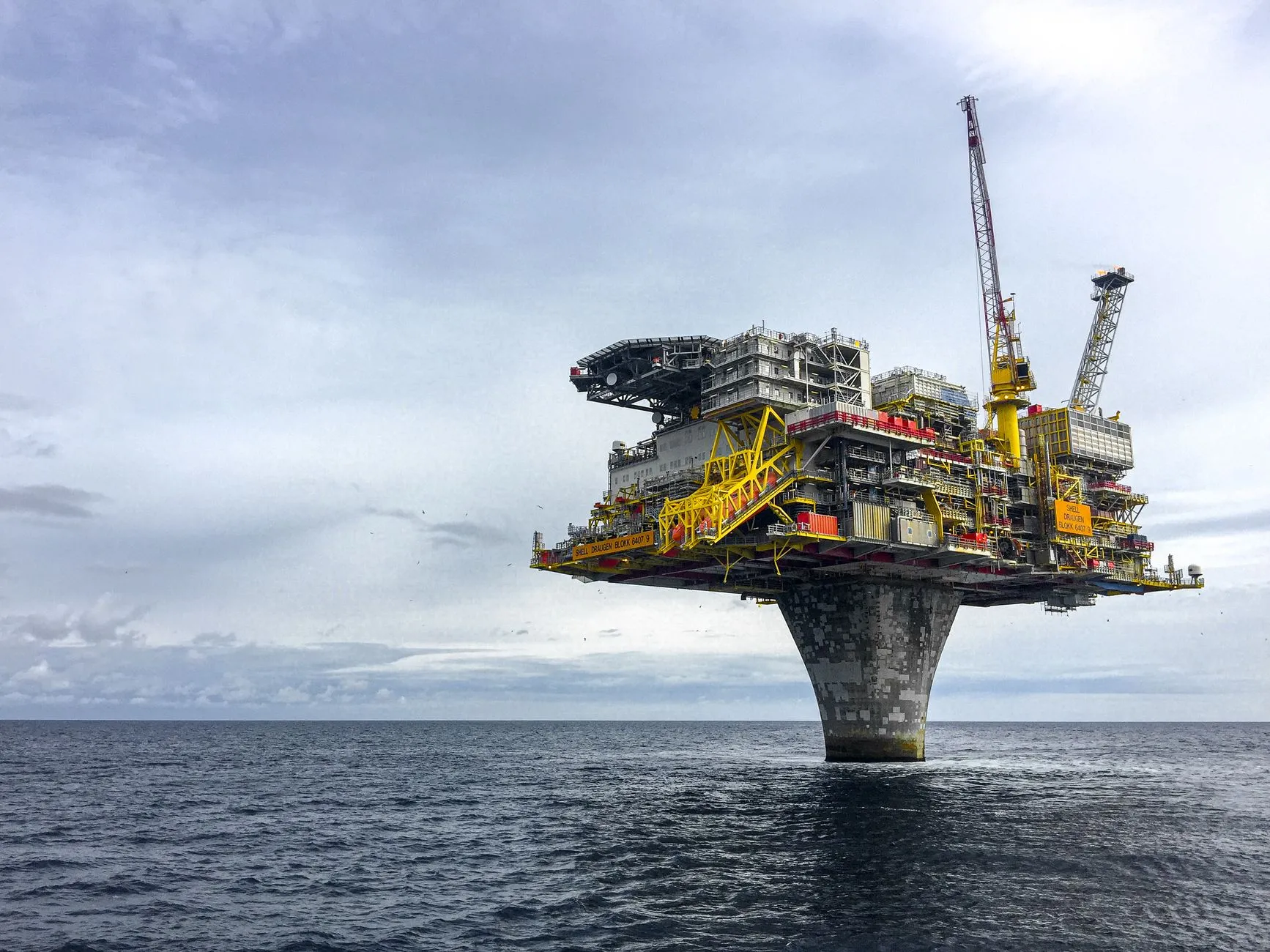
The UK government is preparing to decide whether Shell can produce gas from its Jackdaw field in the North Sea. This is the second time ministers have been asked to approve the project. The first consent, granted in 2022, was struck down by the courts after environmental groups argued that regulators had ignored the climate impact of burning the gas once extracted. Shell has now submitted a revised environmental assessment. The outcome will test how the government balances its climate commitments against claims that domestic gas production supports energy security.
For businesses watching the UK's energy policy, the decision matters. It sets a precedent for how future North Sea projects will be assessed. More importantly, it signals whether the government will prioritise domestic fossil fuel production during the transition to net zero or tighten restrictions on new extraction.
Court ruling forced reassessment of emissions
Jackdaw is a gas and condensate field located around 150 miles east of Aberdeen in the Central North Sea. Shell operates the project through Adura, a partnership with Equinor. The development involves a normally unmanned wellhead platform with four wells. Gas would flow through a 31 kilometre pipeline to the existing Shearwater hub before entering the UK network.
The North Sea Transition Authority, previously known as the Oil and Gas Authority, granted development consent on 1 June 2022. Production was expected to begin in 2026. However, Greenpeace and Uplift challenged the approval in court. They argued that the decision failed to account for Scope 3 emissions, meaning the carbon dioxide released when consumers eventually burn the gas.
In January 2025, the Court of Session in Edinburgh ruled that both the Jackdaw and Rosebank approvals were unlawful. The judgment did not stop construction work. Instead, it required Shell to carry out a new environmental impact assessment that included downstream emissions. The government would then need to make a fresh decision based on that revised assessment.
The ruling followed an earlier High Court judgment in 2024 that reached a similar conclusion. Together, these decisions changed the legal standard for approving oil and gas projects in UK waters. Regulators must now explicitly consider the climate impact of burning extracted fuels, not just the emissions produced during drilling and production.
Shell's revised climate assessment and lifetime emissions
Shell submitted its updated environmental impact assessment after the court ruling. The company reported that Jackdaw would produce a maximum of 35.8 million tonnes of carbon dioxide equivalent over its lifetime. The central estimate was approximately 23.6 million tonnes. For context, that central figure represents roughly 60 per cent of Scotland's total emissions in 2023. The higher estimate equals around 90 per cent of Scotland's annual emissions.
Shell argued that the field would account for less than 0.02 per cent of global greenhouse gas emissions annually. The company said this meant Jackdaw would not materially influence global warming. Greenpeace rejected that interpretation. Doug Parr, the organisation's UK chief scientist, described the claim as self-serving. He said approving the project would be reckless given the UK's international climate commitments.
The debate highlights a tension in how emissions from individual projects should be assessed. Shell's position is that Jackdaw's contribution to global emissions is negligible. Environmental groups argue that approving new fossil fuel extraction undermines the UK's legally binding carbon budgets and weakens the credibility of its climate policy. Neither side disputes the emissions figures themselves. The disagreement is over whether those figures should prevent approval.
Energy security claims and gas supply context
Supporters of the project say domestic gas production strengthens energy security. Shell and Equinor have described approval as essential to avoid winter gas shortages. The company says construction is approximately 99 per cent complete. If consent is granted, the field could begin delivering gas within months.
Shell claims that Jackdaw could provide around 6 per cent of UK gas output at peak production. Campaigners dispute that figure. They argue that once imports are included, the field would contribute closer to 2 per cent of total UK gas consumption. The project would not make the UK self-sufficient in gas. Moreover, much of the gas market is internationally priced. Additional North Sea production does not automatically translate into lower household energy bills.
Consequently, the energy security argument rests on reducing import dependence rather than cutting costs. The government must decide whether that benefit justifies approving a new fossil fuel project that will add millions of tonnes of emissions to the UK's carbon account. The choice is not between Jackdaw and energy shortages. It is between domestic production and continued reliance on imported gas while the UK scales up renewable electricity and low carbon heating.
Separate decisions expected for Jackdaw and Rosebank
The government consultation on Jackdaw and Rosebank closed in August 2024. Energy Minister Kate White told MPs that the Energy Secretary would make separate decisions on the two projects. Each decision would be based on environmental assessments and public representations. Reports suggest that Jackdaw is expected to receive approval before Rosebank, whose decision is likely to take longer.
The separate treatment reflects the fact that each project must be assessed independently under the revised legal framework. Jackdaw is a gas field, while Rosebank is primarily an oil development. The emissions profiles differ. So do the commercial and infrastructure timelines. Jackdaw is largely built. Rosebank is at an earlier stage. The government's approach to each will signal how it intends to handle other North Sea projects awaiting consent.
Labour's position complicates the decision. The party pledged to end new North Sea drilling. However, Jackdaw received its original licence and was substantially developed before the latest court ruling. The government must therefore balance its commitment to reduce fossil fuel dependence against claims that cancelling or delaying the project could undermine investor confidence and domestic energy supply. The decision will be scrutinised by both climate campaigners and industry groups as a test of Labour's energy policy in practice.
What the court ruling means for future North Sea projects
The legal challenge has changed the approval process for oil and gas developments. Future consents must explicitly consider the emissions produced when extracted fuels are consumed. This creates a more demanding evidential test for operators. It also gives environmental groups a stronger basis for challenging projects that do not adequately assess downstream climate impacts.
The ruling does not automatically prohibit new North Sea development. It requires that the full climate consequences of a project are addressed before approval is granted. For businesses involved in offshore energy, this means environmental impact assessments must now include detailed Scope 3 emissions modelling. Operators will need to demonstrate how their projects align with the UK's carbon budgets and net zero trajectory.
The outcome of the Jackdaw decision will influence how other projects are handled. If the government approves the field despite its revised emissions assessment, it suggests that energy security considerations can outweigh climate concerns where a project is already substantially developed. If consent is refused, it strengthens the case that new fossil fuel extraction is incompatible with the UK's legal climate framework, regardless of how far construction has progressed.
Commercial and compliance implications for UK businesses
For companies that rely on stable energy costs and secure supply, the Jackdaw decision has indirect consequences. Approval would add domestic gas capacity in the short term. However, it would not eliminate exposure to international gas prices. Businesses should not assume that more North Sea production will reduce energy bills. Gas markets are globally traded. Prices are set by international supply and demand, not just domestic output.
The decision also affects companies with carbon reporting obligations. If the government approves Jackdaw, it signals that new fossil fuel projects can still proceed where energy security arguments are deemed sufficient. That creates uncertainty for businesses planning long term decarbonisation strategies. Supply chain emissions could be affected if gas from new fields enters the UK network and is used by manufacturers, heating systems, or power generation.
Furthermore, companies bidding for public sector contracts must increasingly demonstrate alignment with net zero targets. Procurement Policy Note 06/21 requires suppliers to publish carbon reduction plans. If the government approves new fossil fuel extraction while tightening emissions standards for suppliers, businesses may face questions about policy consistency. Understanding how the government weighs energy security against climate commitments helps businesses anticipate future regulatory direction and manage compliance risk.
For organisations in sectors affected by gas prices, such as manufacturing, food production, or logistics, the Jackdaw decision does not change the fundamental transition away from fossil fuels. Gas boilers will be phased out in new builds. Industrial decarbonisation grants increasingly favour electrification and hydrogen. Approval of Jackdaw might stabilise short term supply, but it does not reverse the long term policy shift towards renewable energy and electrification.
Key facts about the Jackdaw field and approval process
- Jackdaw is a gas and condensate field located approximately 150 miles east of Aberdeen in the Central North Sea, near the UK-Norway median line.
- Shell operates the project through Adura, a partnership involving Shell and Equinor.
- The development involves a normally unmanned wellhead platform with four wells, connected by a 31 kilometre pipeline to the Shearwater hub.
- Original consent was granted by the North Sea Transition Authority on 1 June 2022, but was ruled unlawful by the Court of Session in January 2025 for failing to assess Scope 3 emissions.
- Shell's revised environmental assessment estimates lifetime emissions of up to 35.8 million tonnes of carbon dioxide equivalent, with a central estimate of approximately 23.6 million tonnes.
- The field could provide around 6 per cent of UK gas output at peak production according to Shell, though campaigners argue this represents closer to 2 per cent of total UK gas consumption when imports are included.
- Construction is reported to be approximately 99 per cent complete, and the field could begin delivering gas within months if approval is granted.
- The government is expected to make separate decisions on Jackdaw and the Rosebank oil field, with Jackdaw likely to be approved first.
Regulatory precedent and what businesses should watch
The Jackdaw decision establishes a precedent for how the UK government assesses new fossil fuel projects under its net zero framework. Businesses should monitor the decision for signals about future energy policy direction. Approval would suggest that the government is willing to permit new extraction where energy security arguments are strong and projects are already advanced. Refusal would indicate a tighter interpretation of climate obligations, even for projects with substantial sunk investment.
Either outcome is likely to be challenged. Environmental groups have already taken the project to court once. A new consent could face further legal scrutiny over whether the government has properly assessed the field's full climate impact. Conversely, if approval is refused, Shell and its partners could pursue legal or commercial remedies. The project's advanced state of construction raises questions about compensation and stranded assets.
For businesses planning energy procurement or infrastructure investment, the decision provides limited clarity. It does not resolve the tension between short term energy security and long term decarbonisation. However, it does confirm that Scope 3 emissions will be central to future approvals. Companies involved in fossil fuel supply chains should expect greater scrutiny of downstream emissions in environmental assessments and planning decisions.
Businesses with carbon reporting obligations under PPN 06/21 should also consider how government energy policy affects their own emissions disclosures. Gas consumed by UK businesses will carry embedded emissions regardless of whether it is extracted domestically or imported. The Jackdaw decision does not change that. What it does affect is the signal the government sends about the pace and direction of the fossil fuel phase-out.
Wider implications for UK climate policy and investor confidence
The controversy over Jackdaw reflects a broader challenge facing the UK government. The country has legally binding carbon budgets and a commitment to reach net zero by 2050. At the same time, gas continues to provide a significant share of UK energy supply. The transition to renewable electricity, heat pumps, and hydrogen is underway but not yet complete. The question is whether new fossil fuel extraction is compatible with that transition or whether it delays the shift to low carbon alternatives.
Environmental groups argue that approving Jackdaw undermines the UK's climate credibility. They point out that the International Energy Agency has said no new oil and gas fields are needed if the world is to limit warming to 1.5 degrees Celsius. Approving a new field, even one that is largely built, sends a signal that the UK is prioritising short term energy supply over long term climate commitments.
Industry groups counter that refusing consent would damage investor confidence and deter future energy investment. They argue that the UK needs domestic gas while the transition to renewables continues. Cancelling projects that have received planning permission and are nearly complete creates regulatory uncertainty. That uncertainty could make the UK a less attractive destination for energy infrastructure investment, whether in oil and gas or in renewables.
The government must navigate these competing pressures. Its decision on Jackdaw will be closely watched by businesses, investors, and climate campaigners. It will also influence how other countries approach the tension between energy security and decarbonisation. The UK has positioned itself as a climate leader. The Jackdaw decision tests whether that leadership extends to restricting new fossil fuel production or whether pragmatism and energy security take precedence.
What businesses should consider in response
Organisations that depend on gas should not wait for the Jackdaw decision to shape their energy strategy. The project, if approved, would add supply in the short term. However, it does not change the long term policy direction. Gas heating will be phased out. Industrial users are being encouraged to switch to electric or hydrogen alternatives. Energy efficiency grants increasingly favour low carbon technologies.
Businesses should focus on reducing gas dependence regardless of whether Jackdaw proceeds. That means assessing options for electrification, improving energy efficiency, and exploring renewable heat sources. For manufacturers, it may involve switching to electric furnaces or investing in on-site renewable generation. For logistics and distribution, it could mean transitioning vehicle fleets to electric or hydrogen power.
Companies with supply chain emissions reporting requirements should also review how gas consumption affects their carbon footprint. Scope 3 emissions are becoming a key consideration in procurement decisions. Large buyers are increasingly requiring suppliers to demonstrate emissions reductions. Understanding where gas is used in your operations and how to reduce or eliminate that use is essential for maintaining competitiveness in public and private sector supply chains.
Training and skills development will also be important. The transition away from fossil fuels requires knowledge of new technologies, regulations, and reporting standards. Businesses that invest in training on carbon management and energy efficiency are better positioned to navigate policy changes and meet customer expectations. The Jackdaw decision does not change that. What it does is clarify the direction of government policy and the likelihood of further legal challenges to fossil fuel projects.
Where to find authoritative guidance and updates
Businesses seeking detailed information on the Jackdaw project can refer to the Department for Energy Security and Net Zero for official government updates and policy statements. The department is responsible for the final decision on the project and will publish the outcome once it is made.
For information on North Sea oil and gas regulation, the North Sea Transition Authority provides technical and environmental assessments of offshore projects. The authority's website includes details of approved and pending developments, environmental impact assessments, and regulatory guidance for operators.
Companies with carbon reporting obligations should consult the Procurement Policy Note 06/21 guidance for requirements on carbon reduction plans. The note sets out the standards that suppliers must meet when bidding for central government contracts above £5 million per year. Understanding these requirements is essential for businesses that supply the public sector.
For broader climate policy and emissions targets, the Climate Change Committee provides independent advice to the UK government on progress towards net zero. The committee publishes annual reports on emissions reduction and the compatibility of government policies with the UK's carbon budgets. These reports offer valuable context for understanding how decisions like Jackdaw fit within the wider climate framework.
Organisations looking for practical support with carbon reporting and regulatory compliance can access tools and guidance to help meet evolving standards. Staying informed about both energy policy and emissions reporting requirements is essential as the regulatory landscape continues to develop in response to the net zero transition.