
Greenvolt to Sell 400 MW Battery Storage Projects in Poland
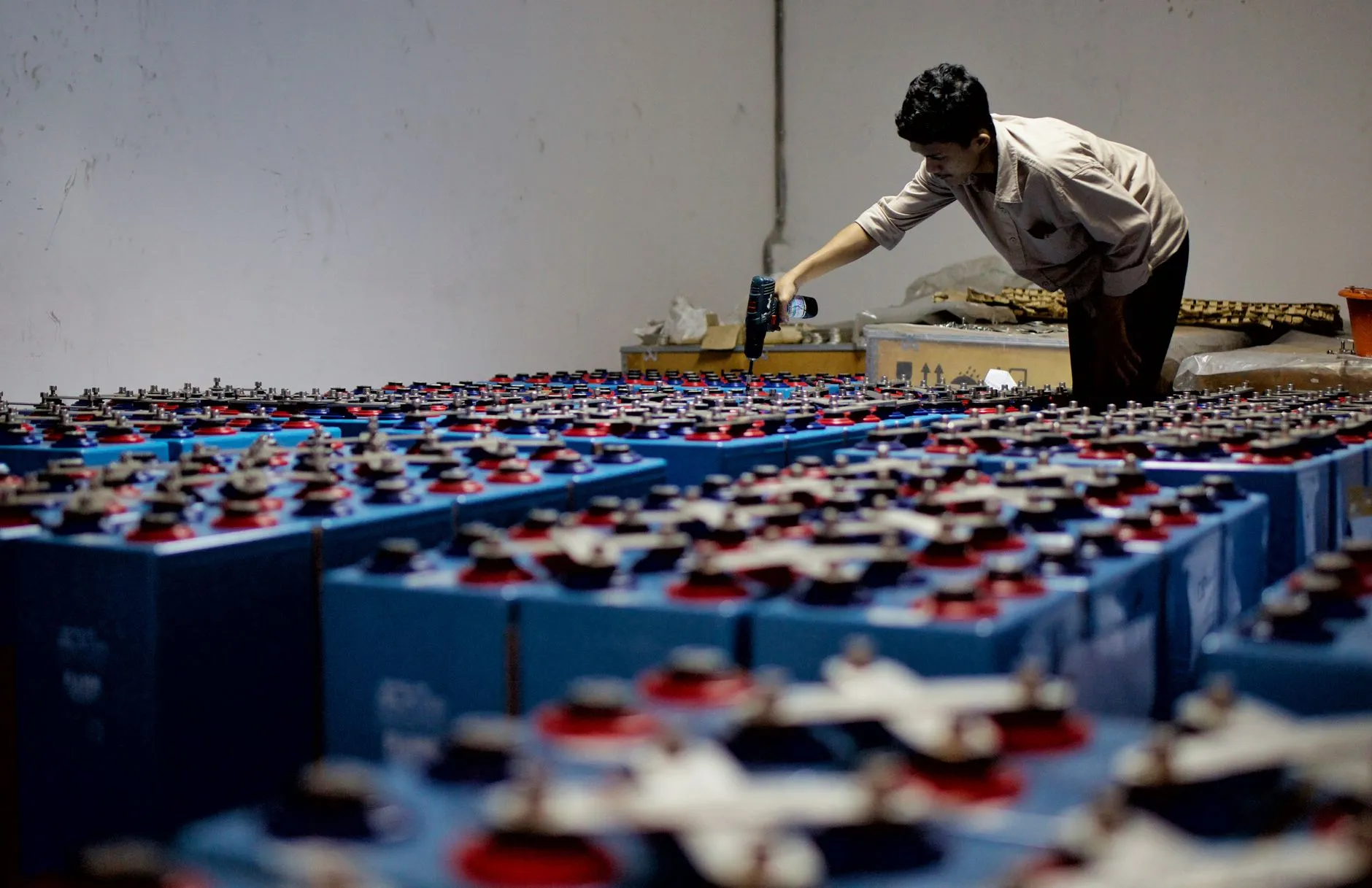
Poland is rapidly establishing itself as a battery storage market worth watching. Recent transactions by Portuguese developer Greenvolt reveal something significant: utility-scale batteries are no longer experimental technology. They are tradable infrastructure assets attracting serious capital.
The company has sold, or agreed to sell, multiple large battery projects across Poland. These deals involve operational facilities and ready-to-build sites. Buyers include international infrastructure investors and renewable energy operators. The combined capacity runs into gigawatts.
For UK businesses tracking European energy markets, Poland's battery buildout offers a clear signal. Storage is becoming a strategic necessity as grids absorb more wind and solar generation. Moreover, the commercial model is maturing. Developers can now build projects, secure grid access and capacity contracts, then monetise those assets before construction completes.
This progression mirrors the UK's own journey with battery storage. However, Poland's market is moving faster from a smaller base. The implications stretch beyond energy policy. They touch on supply chain dynamics, equipment procurement, financing structures, and the evolving relationship between renewable generation and grid flexibility.
Two operational facilities sold for 400 MW combined capacity
Greenvolt Power, the developer's project subsidiary, recently sold two operational battery facilities to A&R Investments, a Malta-based investment vehicle. The Ełk and Turośń Kościelna sites sit in north-eastern Poland. Each delivers 200 MW of power capacity and 800 MWh of energy storage.
Together, the projects total 400 MW and 1.6 GWh. This design allows each battery to discharge at full output for approximately four hours. Greenvolt described the transaction as one of Europe's largest battery storage deals measured by capacity.
The sale reflects a broader pattern. Developers increasingly build storage projects to the point of grid connection, then transfer ownership to infrastructure investors. This approach releases capital for new developments while giving buyers exposure to grid flexibility revenues.
For Greenvolt, the transaction forms part of a much larger Polish portfolio. The company has either completed or announced the sale of multiple battery projects across different stages of development. Some were operational at the point of sale. Others had secured permits and grid-connection agreements but had not yet broken ground.
Three more projects sold to infrastructure investors
In September 2025, Greenvolt sold the Kozienice battery project to DRI, the European renewable arm of Ukraine's DTEK. The facility has a capacity of 112 MW and 448 MWh. It had reached ready-to-build status with all necessary administrative approvals and grid agreements in place.
DRI stated the acquisition increased its total Polish storage capacity to 245 MW. The purchase followed an earlier battery investment in the country. Consequently, DRI is building a material storage presence in Poland's electricity market.
Greenvolt then announced the sale of two additional ready-to-build projects to Northland Power. The Mieczysławów site is designed for 200 MW and 800 MWh. Kamionka will provide 100 MW and 400 MWh. Together, they total 300 MW and 1.2 GWh. Construction is expected to start in 2026.
Notably, both projects have secured 17-year capacity market contracts indexed to inflation. These contracts provide long-term revenue streams in addition to potential income from electricity trading and balancing services. Such arrangements improve project bankability and reduce financing costs.
Greenvolt has also partnered with Entrix to manage and trade five Polish battery projects totaling 1.3 GW and 5.2 GWh. Two of those assets were already under construction and scheduled to enter service in the first half of 2026.
Taken together, these transactions show Greenvolt is not developing isolated battery projects. Instead, it is assembling a sizeable portfolio, securing grid access and capacity revenues, then monetising assets at different stages of development. This approach suggests a deliberate strategy rather than opportunistic deal-making.
Poland's electricity system requires flexible resources
Poland's power sector is undergoing structural change. Historically dependent on coal, the country is now adding substantial wind and solar capacity. These sources reduce emissions but produce electricity intermittently. Solar output falls in the evening. Wind production can vary rapidly.
Battery storage addresses several challenges inherent in this transition. First, batteries can time-shift electricity. They charge when renewable generation is plentiful and discharge when demand rises. This capability helps balance supply and demand across hours and days.
Second, batteries respond quickly to changes in system conditions. Consequently, they can provide grid balancing services and frequency control. These functions are essential for maintaining system stability as conventional power plants retire.
Third, storage can reduce renewable curtailment. When wind or solar output exceeds immediate demand, batteries can absorb the surplus. This makes new renewable projects easier to connect and improves their economic returns.
Fourth, batteries can participate in capacity markets. Poland's capacity mechanism pays resources to be available when the system needs them. Battery projects with capacity contracts receive predictable revenues, which supports investment.
A Polish government announcement on the Żarnowiec project described energy storage as essential to integrating renewable energy and improving power system flexibility. That facility, developed by state-owned PGE, has a planned capacity of 263 MW and 900 MWh. Completion is scheduled for the second quarter of 2027.
Żarnowiec is intended to support offshore wind integration. The site is located near existing energy infrastructure, including a pumped storage plant. It has received a grid-connection agreement and a 17-year capacity market contract beginning in 2029.
Four-hour batteries offer operational versatility
The four-hour design of the Ełk, Turośń Kościelna, Mieczysławów and Kamionka projects is commercially significant. A system capable of delivering full rated output for four hours can shift a substantial block of electricity from periods of surplus to periods of higher demand.
For example, a 200 MW and 800 MWh battery can theoretically deliver 200 MW continuously for four hours. In practice, usable output depends on operating limits, reserve requirements, efficiency losses and battery degradation.
However, four-hour systems can participate in multiple markets. They may earn revenue from capacity market availability payments, wholesale market arbitrage, balancing and ancillary services, renewable energy management, and congestion management where market rules permit.
This diversification matters because no single revenue source is guaranteed to remain sufficient over the life of a project. As more batteries enter the market, price spreads and balancing revenues may narrow. Therefore, disciplined trading and operational management become increasingly important.
For businesses considering investments in battery storage or related supply chains, the four-hour configuration has become a de facto standard for utility-scale projects. This standardisation can reduce equipment procurement costs and simplify financing arrangements.
Contracted capacity rising from a small base
Poland's storage market remains relatively young, but its projected growth is substantial. LCP Delta estimates that utility-scale battery capacity could increase from less than 1 GW currently to 13 GW by 2030.
Policy support is driving much of this expansion. A Polish storage aid programme worth approximately €1.2 billion attracted around 630 applications. The programme was more than seven times oversubscribed by value. It is expected to support 172 projects totaling 14.5 GWh by 2028.
Capacity market auctions have also helped establish a bankable revenue model. According to Modo Energy, four auctions held between 2022 and 2025 contracted an estimated 11 GW of physical battery capacity. Meanwhile, 172 projects obtained approximately PLN 4.15 billion in subsidies with a 2028 commissioning deadline.
Greenvolt reportedly secured 1.2 GW of battery capacity in Poland's 2023 capacity auction, the largest battery allocation in a Polish capacity market round. It later sold 300 MW of that portfolio to Northland Power.
These figures should be interpreted as contracted or planned capacity rather than operational capacity. Projects must still secure permits, equipment, financing, construction and final grid commissioning. The gap between announced projects and operating facilities remains a critical issue for the sector.
Modo Energy reports that more than 240 GW of renewable and storage projects were in Poland's grid-connection queue. This includes roughly 150 GW of renewables and 90 GW of storage, while only about 33 GW was operational.
This disparity highlights the risk of a development pipeline that grows faster than the grid can accommodate. Batteries can alleviate some local and temporal constraints. However, they cannot replace sufficient network capacity. Coordinated planning will be needed to ensure that storage is located where it provides the greatest system value.
What these transactions mean for UK businesses
Greenvolt's Polish sales carry implications beyond Poland's borders. For UK businesses, several points merit attention.
First, Poland is demonstrating that large-scale battery projects can attract international infrastructure capital. The buyers in these transactions include investors with diverse profiles. Their common conclusion appears to be that grid-scale batteries are infrastructure, not experimental technology.
Second, capacity market mechanisms are proving crucial to project bankability. Long-term contracts provide predictable availability revenues. This improves financing conditions while allowing projects to retain potential upside from market-based services.
Third, the development and ownership of storage assets are becoming distinct businesses. Greenvolt creates value by securing land, permits, grid rights and capacity contracts. It then sells projects to investors better positioned to own and operate them over the long term. This model may become more common in the UK as well.
For UK manufacturers and supply chain businesses, Poland's battery buildout represents a significant procurement opportunity. Projects totaling gigawatts will require batteries, power electronics, transformers, control systems and construction services. European suppliers with proven delivery capabilities may benefit from this demand.
For businesses working in public sector supply chains, understanding battery storage is becoming increasingly relevant. Tenders for energy services, carbon reduction programmes, and resilience projects may increasingly involve or reference battery technology. Familiarity with how storage works commercially can strengthen tender responses.
Additionally, businesses with operations in Poland should monitor grid developments. The expansion of battery storage may improve local grid stability and reduce the risk of curtailment for renewable generators. However, it may also affect electricity price patterns, particularly during periods of high renewable output.
Key facts about Poland's battery market
- Greenvolt has sold or agreed to sell multiple battery projects in Poland totaling over 1 GW of capacity across operational and ready-to-build sites.
- The Ełk and Turośń Kościelna facilities sold to A&R Investments total 400 MW and 1.6 GWh and are already operational.
- Poland's utility-scale battery capacity could grow from less than 1 GW currently to 13 GW by 2030, according to LCP Delta estimates.
- Four capacity market auctions between 2022 and 2025 contracted an estimated 11 GW of physical battery capacity, as reported by Modo Energy.
- A Polish storage aid programme worth approximately €1.2 billion was more than seven times oversubscribed and is expected to support 172 projects totaling 14.5 GWh by 2028.
- More than 240 GW of renewable and storage projects are in Poland's grid-connection queue, while only about 33 GW is currently operational.
- Capacity market contracts for Polish battery projects typically run for 17 years and are indexed to inflation, providing long-term revenue certainty.
Commercial and operational risks remain
Poland's battery market is expanding rapidly, but capacity payments do not remove all risks. Developers and owners must still manage construction costs, battery supply constraints, connection delays, degradation, fire safety requirements and uncertain future electricity price spreads.
Battery supply chains have experienced volatility in recent years. Lithium prices rose sharply in 2021 and 2022, then fell in 2023 and 2024. Equipment lead times have fluctuated. For projects with fixed-price capacity contracts, cost overruns can materially affect returns.
Grid-connection delays are another concern. Poland's connection queue is large relative to operational capacity. Delays in transmission reinforcement or substation upgrades can push back commissioning dates and reduce project revenues.
Fire safety regulations for battery storage are also evolving. Requirements vary by jurisdiction and can affect site design, construction costs and insurance premiums. Developers must stay current with changing standards.
Finally, the environmental benefits of battery storage depend on how systems are operated and supplied. Storage can reduce renewable curtailment and displace fossil fuel generation during peak periods. However, its climate impact is influenced by battery manufacturing, electricity used for charging, and end-of-life recycling.
For businesses considering involvement in the battery sector, due diligence on these operational and supply chain risks is essential. The technology works, but the commercial success of individual projects depends on disciplined execution.
Poland's storage buildout signals broader trends
Greenvolt's transactions point to three broader developments that UK businesses should track.
First, storage is moving into the mainstream of energy infrastructure investment. Large projects are attracting international buyers before or after construction, supported by capacity market mechanisms and growing electricity system needs. This trend is not unique to Poland. Similar patterns are emerging across Europe.
Second, Poland is becoming one of Central and Eastern Europe's most important battery markets. Its large coal-based power system, rising renewable deployment and need for flexibility create strong structural demand for batteries. As the country continues its energy transition, storage requirements will likely increase further.
Third, project development and asset ownership are becoming increasingly distinct businesses. This specialisation allows developers to focus on permitting, grid access and contract procurement. Meanwhile, infrastructure investors can acquire projects with predictable revenue streams and operational upside.
The success of this model will ultimately depend on execution. Poland must convert contracted capacity into operating assets, expand transmission infrastructure, establish clear storage rules and maintain investment conditions that reward flexibility without imposing excessive costs on consumers.
For UK businesses with European operations or supply chain exposure, Poland's battery market offers both opportunities and lessons. The country is demonstrating that large-scale storage can be financed, built and traded as infrastructure. However, it is also revealing the challenges inherent in scaling a new asset class rapidly.
At SBS, our work with businesses on net zero planning and carbon reduction increasingly involves understanding energy market developments. Storage affects electricity costs, grid reliability and renewable project economics. Businesses with material energy consumption should monitor these trends as part of broader sustainability and cost management strategies.
Where to find more information
For businesses seeking additional detail on Poland's battery market and energy transition, several authoritative sources provide ongoing coverage and data.
The Polish government's energy ministry publishes updates on capacity market auctions, grid development and renewable energy policy. These announcements often include specific project details and timelines.
The Polish transmission system operator, PSE, provides grid-connection data and reports on system balancing. This information can help businesses understand how storage is being integrated into the national electricity network.
For broader European context, the European Commission publishes regular reports on energy storage deployment, grid flexibility and renewable integration across member states. These documents often include comparative data and policy analysis.
Industry bodies such as the International Energy Agency and the European Association for Storage of Energy also publish research on battery technology, market development and regulatory frameworks. These resources can help businesses understand longer-term trends beyond individual transactions.
UK businesses with specific questions about how battery storage developments affect their operations, supply chains or sustainability strategies should consider seeking advice tailored to their circumstances. Energy markets are complex and evolving rapidly. General market trends may not always translate directly to individual business situations.