
Hertfordshire leisure centre cuts electricity costs by 61%
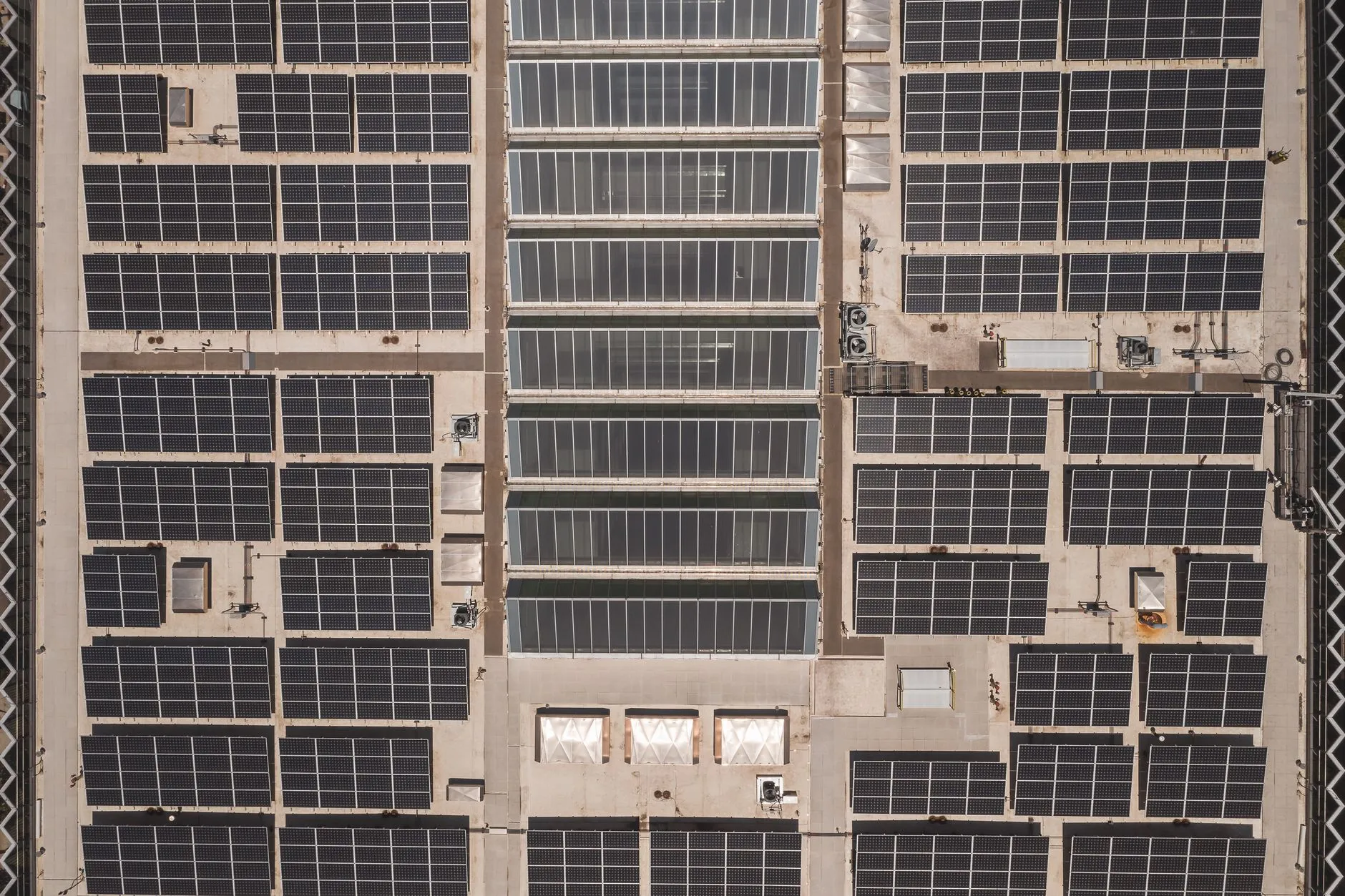
A leisure centre in Hertfordshire has cut its electricity costs by more than 60% after installing rooftop solar panels and battery storage. The project shows how public buildings with high energy use can reduce both carbon emissions and running costs at the same time.
Redbourn Leisure Centre now generates around 130 megawatt-hours of renewable electricity each year. Early data suggests the facility uses roughly 90% of that power on site. The remaining 10% goes back to the grid.
This approach matters because leisure centres are expensive to run. Swimming pools need constant heating, filtration and ventilation. Sports halls require substantial lighting. Gyms run equipment throughout the day. Consequently, energy bills can consume a significant portion of operating budgets.
The installation combines 278 bifacial solar panels with a 104 kilowatt-hour battery system. Bifacial panels generate electricity from light hitting both sides. This design can increase output compared to standard panels, particularly when mounted above reflective surfaces.
How the system reduces costs and emissions
The centre expects to save more than £19,000 annually on electricity. Meanwhile, carbon emissions should fall by approximately 19 tonnes each year. Those figures are projections based on expected performance, not yet verified results.
However, the early consumption data supports the financial case. Using 90% of generated electricity on site means the centre avoids buying power at retail rates. Exporting surplus electricity typically earns less than the cost of purchasing it.
A 90-kilowatt inverter converts the solar panels' direct current into alternating current for the building's systems. Power optimisers help individual panels work efficiently even when shading or dirt affects part of the array. Energy-management software coordinates generation, storage and consumption.
The battery stores surplus electricity produced during daylight hours. It then releases that power during evening operations, when solar generation has stopped but demand remains high. For leisure centres with extended opening hours, this capability can significantly increase the value of a solar installation.
Funding sources and financial structure
The Energy Resilience Fund provided 40% of the capital cost. This fund brings together UK social-investment organizations to support community energy projects. Details of the remaining 60% were not disclosed in available reports.
Social investment typically involves below-market-rate lending or patient capital that accepts longer payback periods. Therefore, community facilities can access renewable-energy technology without bearing the full upfront cost immediately.
The predicted £19,000 annual saving suggests a reasonable payback period, though exact project costs were not published. Furthermore, the centre plans to use these savings to support additional community infrastructure. Specifically, management has mentioned a new sports hall and 3G football pitches.
This connection between energy savings and facility investment illustrates a broader principle. Reducing operating costs can free up budget for capital projects that might otherwise require separate fundraising or public subsidy.
Technical capacity and annual generation
The solar array has a capacity of approximately 130 kilowatt-peak. This figure represents the maximum power output under standard test conditions. Actual generation varies with weather, season and time of day.
Annual generation is forecast at 130.86 megawatt-hours. To put that in context, typical UK household consumption sits around 2.7 megawatt-hours per year. Consequently, the installation could theoretically power about 48 homes.
In practice, all that electricity goes into the leisure centre's operations. Swimming pools alone can consume substantial power for heating water to 28-30 degrees Celsius and maintaining air temperature above that. Filtration pumps run continuously. Ventilation systems prevent condensation and maintain air quality.
The battery has a capacity of 104 kilowatt-hours. This allows the centre to store surplus midday generation for use during peak evening demand. Battery storage becomes particularly valuable during winter months, when solar generation drops but heating and lighting requirements increase.
Similar projects across Hertfordshire councils
Redbourn is part of a wider pattern across the county. In May 2025, Watford Leisure Centre at Woodside installed 680 solar panels with a capacity of approximately 282 kilowatt-peak. That system produces around 255,700 kilowatt-hours annually.
Between June and August 2025, the Watford installation generated about 113,000 kilowatt-hours. This met almost half the centre's electricity demand during those months. On sunny days, it supplied all daytime power requirements.
Sport England's Swimming Pool Support Fund provided a £403,900 grant for the Watford project. This funding stream specifically targets swimming facilities facing financial pressure from rising energy costs. Notably, it recognizes that pool closures would reduce public health infrastructure and community access to exercise.
Harpenden Leisure Centre received around 174 solar panels, expected to generate approximately 93 megawatt-hours each year. That installation should cut operational emissions by roughly 18 tonnes annually. North Hertfordshire District Council secured approximately £7.74 million through the Public Sector Decarbonisation Scheme for work including air-source heat pumps and solar systems at several centres.
These examples demonstrate that councils and leisure operators are pursuing decarbonization at scale. Moreover, they are combining solar power with other technologies like heat pumps and battery storage rather than treating installations as isolated projects.
Why leisure facilities present specific challenges
Leisure centres rank among the most difficult public buildings to decarbonize. Swimming pools require year-round heating, typically to temperatures well above ambient. Water treatment systems run continuously to maintain hygiene standards. Ventilation prevents moisture damage to building structures.
Sports halls need adequate lighting for safe play and spectator visibility. Changing rooms require hot water throughout operating hours. Gyms run treadmills, exercise bikes and other electrical equipment. Consequently, total energy consumption remains high even during periods of low visitor numbers.
This creates both challenges and opportunities. High baseline consumption means substantial bills, but it also means rooftop solar can offset significant demand. Furthermore, many leisure centres operate from early morning until late evening, extending the period when generated electricity can be used on site.
The Redbourn project addresses these factors through three complementary measures. Solar panels generate electricity without direct operational carbon emissions. Battery storage shifts some consumption from daylight to evening hours. Energy-management software matches generation and demand to maximize on-site use.
Nevertheless, the overall carbon benefit depends on several variables. Grid electricity is becoming less carbon-intensive as renewable generation increases nationally. Battery performance degrades over time, requiring eventual replacement. Energy prices may change, affecting the financial value of avoided purchases.
Therefore, projects should be monitored over multiple years to verify that predicted savings materialize. The £19,000 annual figure is a forecast, not a confirmed result. Actual performance will depend on weather patterns, operational changes and maintenance quality.
Key facts about the Redbourn installation
- The system comprises 278 bifacial solar panels with a total capacity of approximately 130 kilowatt-peak.
- Annual generation is forecast at around 130.86 megawatt-hours of renewable electricity.
- A 104 kilowatt-hour battery stores surplus daytime generation for use during evening operations.
- Early data shows approximately 90% of generated electricity is consumed on site, with 10% exported to the grid.
- The Energy Resilience Fund provided 40% of the project's capital cost through social investment.
- Projected savings include a 61% reduction in electricity costs and more than £19,000 annually in avoided energy expenditure.
- Carbon emissions should fall by approximately 19 tonnes each year based on current grid intensity and generation forecasts.
- Financial savings are earmarked to support additional community facilities including a sports hall and 3G football pitches.
What this means for public facilities and operators
The Redbourn project demonstrates that renewable energy can serve dual purposes. It reduces emissions while also protecting the financial sustainability of community services. For facilities facing budget pressure, this combination becomes particularly important.
Local authorities and leisure operators should consider several factors when evaluating similar projects. First, building demand profiles matter significantly. Facilities with high daytime consumption make better candidates for rooftop solar because they can use more generated electricity immediately.
Second, battery storage adds cost but increases value when demand extends beyond daylight hours. Therefore, the business case strengthens for facilities with evening operations, particularly during winter months when solar generation drops earlier.
Third, carbon reporting requirements increasingly affect public-sector organizations. Demonstrating measurable emissions reductions helps meet regulatory obligations while also supporting funding applications that prioritize environmental criteria.
Fourth, energy-price volatility creates financial risk for organizations with large electricity bills. On-site generation provides partial insulation from market fluctuations, making budgets more predictable over time.
Social investment offers an alternative to conventional commercial finance. Organizations like those backing the Energy Resilience Fund accept longer payback periods in exchange for community benefit. Consequently, projects that might not meet standard commercial lending criteria can still proceed.
However, technical due diligence remains essential. Roof structures must support panel weight. Electrical systems need capacity for new generation equipment. Planning permissions may be required depending on building type and location. Furthermore, ongoing maintenance contracts ensure systems continue performing as expected.
The wider Hertfordshire pattern suggests that combining measures produces better results than isolated interventions. Solar arrays work alongside heat pumps, energy-efficiency improvements and building-management systems. This integrated approach addresses multiple aspects of energy consumption rather than focusing narrowly on electricity generation.
Implications for supply chains and tenders
Public procurement increasingly includes environmental criteria. Suppliers bidding for local-authority contracts may need to demonstrate their own carbon-reduction efforts. Additionally, organizations that operate public facilities under management contracts face growing expectations around sustainability performance.
For leisure operators, investments like Redbourn's solar installation provide tangible evidence of environmental commitment. This matters when contracts come up for renewal or when competing for new opportunities. Moreover, demonstrated cost control through energy efficiency strengthens the financial credibility of tender responses.
Supply-chain partners to leisure facilities should also note these trends. Equipment manufacturers, maintenance contractors and energy suppliers all operate within a sector that is actively decarbonizing. Consequently, companies offering relevant expertise in renewable integration, battery storage or energy management may find growing demand.
Our sustainable procurement guidance helps businesses understand how environmental criteria affect tender evaluation. Furthermore, we support suppliers in developing credible sustainability documentation that meets public-sector requirements without overstating performance.
Monitoring performance and verifying results
Projected savings are valuable for business cases, but verified results matter more over time. Energy-management systems should track actual generation, consumption and export on an ongoing basis. This data allows operators to identify performance issues early and confirm that financial benefits materialize as expected.
Battery degradation deserves particular attention. Storage capacity declines gradually with each charge cycle. After several years, replacement may be necessary to maintain performance. Therefore, financial models should include future battery costs rather than assuming indefinite operation without additional investment.
Solar panel performance also changes over time, though degradation typically occurs more slowly than with batteries. Panels may lose 0.5% to 1% of capacity annually depending on technology and environmental conditions. Cleaning schedules, inverter maintenance and power-optimizer checks all affect long-term output.
Weather variations mean annual generation will never exactly match forecasts. However, multi-year averages should align with predictions if the system has been sized correctly. Significant deviations warrant investigation to identify technical faults, unexpected shading or operational changes that affect consumption patterns.
Carbon savings depend partly on grid electricity's emissions intensity. As the national grid incorporates more renewable generation, the carbon benefit of avoiding purchased electricity gradually decreases. Nevertheless, on-site renewable generation remains advantageous because it reduces overall demand on transmission infrastructure and provides resilience during supply disruptions.
Where to find further information
The Department for Energy Security and Net Zero publishes guidance on renewable energy for public buildings and community facilities. Visit gov.uk for policy updates and funding information.
Sport England's Swimming Pool Support Fund provides grants specifically for pool facilities facing financial pressure from energy costs. Details are available through Sport England's website, including eligibility criteria and application processes.
The Public Sector Decarbonisation Scheme offers capital funding for energy-efficiency and low-carbon heating projects in public buildings. Information on application windows and qualifying measures can be found on gov.uk.
Local authorities considering similar projects may benefit from case studies published by the Local Government Association. These documents outline technical specifications, procurement approaches and lessons learned from completed installations.
For organizations needing support with carbon measurement, reporting or reduction planning, our net zero program provides structured guidance tailored to UK regulatory requirements and business realities.