
IEA forecasts significant growth in global renewable capacity by 2031
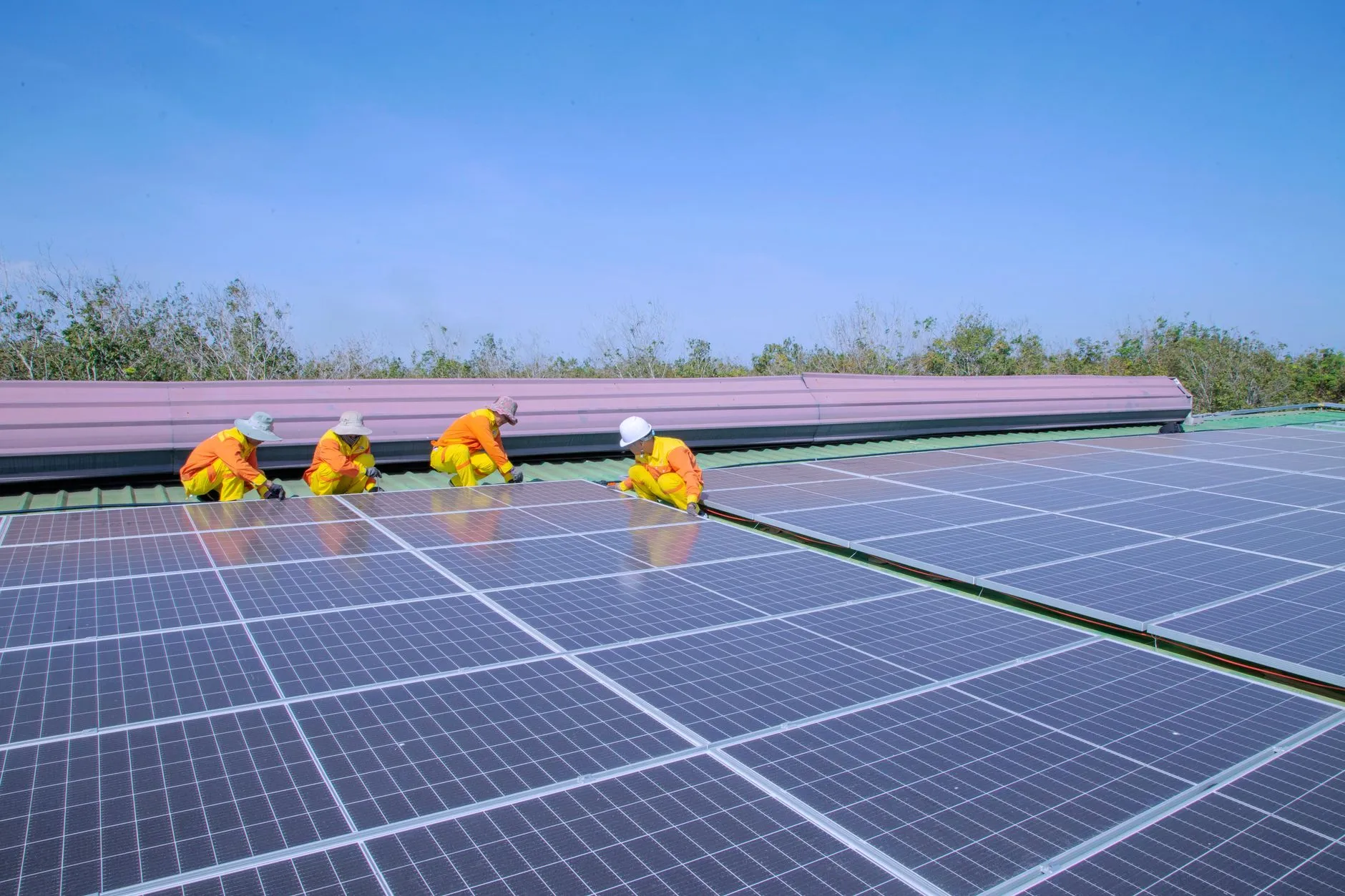
The global renewable energy expansion is entering a new phase. The International Energy Agency has published forecasts showing almost 4,800 gigawatts of new renewable capacity will come online between 2026 and 2031. That figure represents roughly 57% more capacity than was added during the previous six years.
For UK businesses, these projections matter. They signal where energy infrastructure investment is flowing, how power costs may move, and which supply chains will experience the greatest change. Renewables are no longer a niche consideration. They are becoming the dominant source of new electricity generation worldwide.
The forecast also reveals a geographic shift. Emerging and developing economies outside China will add approximately the same amount of renewable capacity as advanced economies for the first time. That balance has implications for manufacturing, procurement, and the structure of global supply chains that UK companies rely on.
Solar dominates as deployment accelerates globally
The International Energy Agency's Renewables 2026 report attributes the stronger outlook to three factors. Energy security concerns have risen sharply. Government policies in multiple regions now support renewable deployment more consistently. Meanwhile, the cost of wind and solar power continues to fall relative to conventional generation.
Consequently, global annual renewable additions are expected to average nearly 800 gigawatts each year through 2031. Solar photovoltaic technology will account for more than three-quarters of that new capacity. Onshore wind remains the second-largest contributor, with global capacity projected to increase by over 70% and reach approximately 2,040 gigawatts by 2031.
Renewables are forecast to provide nearly 45% of global electricity generation in 2031. That compares with around 33% in 2025. Electricity generated by wind and solar combined is expected to more than double, exceeding 28% of global power generation by the end of the forecast period.
This trajectory reflects not just climate policy but commercial logic. Renewable power reduces dependence on imported coal, oil, and natural gas. Solar and wind projects can often be deployed faster than large conventional power plants, which matters when energy security and price volatility become business risks.
China's share declines as other markets grow
China remains the world's largest renewable growth market. It is expected to add approximately 2,520 to 2,550 gigawatts during the forecast period. However, its share of global additions is projected to fall from more than 60% in 2025 to about 53% on average through 2031.
This decline reflects policy changes that are expected to moderate the pace of solar deployment. It does not indicate a reversal of China's renewable energy expansion. Even after the reduction, China would account for more than half of the world's projected capacity growth.
Stronger growth elsewhere offsets the downward revision to China's outlook. India, Southeast Asia, the United States, sub-Saharan Africa, and Latin America are all expected to accelerate installation rates. As a result, the geographic concentration of renewable capacity is easing.
India is forecast to become the world's second-largest renewable growth market after China. Its total renewable capacity is expected to more than double by 2031. Outside China, the Asia-Pacific region is projected to add more than 840 gigawatts, over twice its additions during 2020 to 2025.
Emerging economies match advanced markets for the first time
Emerging and developing economies outside China are forecast to add about 1,100 gigawatts of renewable capacity between 2026 and 2031. That figure roughly matches the additions expected in advanced economies during the same period.
This represents a marked change. During 2020 to 2025, emerging and developing economies outside China expanded renewable capacity at approximately half the rate of advanced economies. The convergence signals a structural shift in where energy infrastructure investment is flowing.
Installations in Southeast Asia, the Middle East, North Africa, and sub-Saharan Africa are expected to almost triple compared with the previous six years. Distributed solar is becoming particularly important in Africa. Residential, commercial, and off-grid systems are expected to account for nearly two-thirds of new solar photovoltaic capacity in the region, led by Nigeria, South Africa, and Kenya.
Fatih Birol, the International Energy Agency's Executive Director, said renewables are moving to the top of the policy agenda as countries respond to energy security pressures. The report also identifies declining costs and wider availability of wind and solar technologies as important factors supporting deployment in new markets.
Projected capacity growth through 2031
- Nearly 4,800 gigawatts of renewable capacity will be added globally from 2026 through 2031, according to the International Energy Agency.
- This forecast represents a 57% increase compared with additions during the previous six-year period from 2020 to 2025.
- Average annual additions are expected to reach nearly 800 gigawatts per year during the forecast period.
- Solar photovoltaic technology will account for more than 75% of new renewable capacity worldwide.
- China is projected to add approximately 2,520 to 2,550 gigawatts, though its share of global additions will fall to about 53% on average.
- Emerging and developing economies outside China are expected to add about 1,100 gigawatts, roughly matching advanced economies for the first time.
- Renewables will provide nearly 45% of global electricity generation in 2031, up from about 33% in 2025.
- Global onshore wind capacity is projected to reach approximately 2,040 gigawatts by 2031, an increase of more than 70%.
Grid capacity and financing will determine actual delivery
The forecast suggests the next phase of renewable growth will be more geographically diverse. China will continue to determine the global pace of deployment. However, India and developing markets across Asia, Africa, the Middle East, and Latin America are expected to become increasingly influential.
This shift could support wider access to electricity and reduce exposure to imported fossil fuels. It also creates opportunities for local manufacturing, construction, grid investment, and distributed energy systems in countries that have historically received a smaller share of clean energy investment.
For UK businesses with supply chains in these regions, the implications are direct. Manufacturing costs may change as energy prices shift. Transport and logistics networks will be affected by new infrastructure. Suppliers in emerging markets may gain access to cheaper, more reliable power, which affects their competitiveness.
The outlook is not without constraints. Grid capacity, permitting, financing costs, and supply chain requirements could limit how quickly projects are connected and operated. The International Energy Agency specifically identifies grid constraints as a factor slowing growth in advanced economies. Annual additions in Europe through 2031 are expected to remain broadly in line with 2025 levels.
Transmission expansion, storage, flexible demand, stronger planning, and access to affordable finance will be essential if the projected 4,800 gigawatts is to translate into reliable electricity. The central issue is therefore moving from whether renewable capacity can grow rapidly to whether electricity systems can absorb and manage that growth.
What UK companies should consider now
UK businesses face several practical implications from this forecast. First, energy prices in key manufacturing regions are likely to diverge further. Countries that successfully deploy renewables at scale may offer lower long-term power costs, which affects where it makes sense to source components or locate production.
Second, supply chain risks are shifting. Companies relying on suppliers in regions with weak grid infrastructure may face disruption if renewable capacity grows faster than transmission networks can handle. Conversely, suppliers in markets that combine renewables with grid investment may become more reliable.
Third, public procurement and tender criteria in the UK increasingly reference carbon reporting and net zero commitments. As renewable capacity expands globally, buyers expect suppliers to demonstrate that their operations reflect this transition. That means understanding where your supply chain sources its energy and how that profile is changing.
Fourth, businesses with operations or suppliers in emerging markets should monitor grid development closely. Renewable capacity is only useful if it can be connected and dispatched reliably. Markets that invest in both generation and transmission will offer better conditions for commercial activity.
We recommend businesses review their supply chain energy profiles now. Ask suppliers in high-growth renewable markets how they plan to use new capacity. Assess whether your procurement contracts account for energy price volatility in regions still dependent on imported fossil fuels. Consider whether your own operations could benefit from direct renewable power purchase agreements, particularly if you operate in markets with expanding solar or wind capacity.
For companies preparing sustainability reports or responding to public sector tenders, the geographic spread of renewable deployment offers opportunities. Demonstrating that your supply chain benefits from renewable energy in emerging markets can strengthen your position. However, it requires evidence, not assumptions. Carbon reporting support can help you document energy sources accurately and meet compliance requirements.
Finally, businesses should consider the financial implications. As renewables provide a larger share of global electricity, exposure to fossil fuel price volatility becomes a more visible risk. Companies that lock in renewable power agreements may gain a competitive advantage over those that remain exposed to imported gas or coal pricing.
Where to find further information
The International Energy Agency publishes its renewable energy forecasts annually. The Renewables 2026 report provides detailed analysis of capacity projections, regional breakdowns, and technology trends.
The UK government's Department for Energy Security and Net Zero offers guidance on energy policy, grid infrastructure, and the UK's own renewable deployment plans.
For businesses assessing supply chain energy profiles, the UK energy statistics portal provides data on electricity generation, imports, and pricing trends that can inform procurement decisions.
Companies looking to understand how renewable deployment affects carbon reporting requirements may find training on Scope 3 emissions useful, particularly when evaluating suppliers in high-growth renewable markets.