
A Smart, Low-Carbon Cooling Solution for Railways
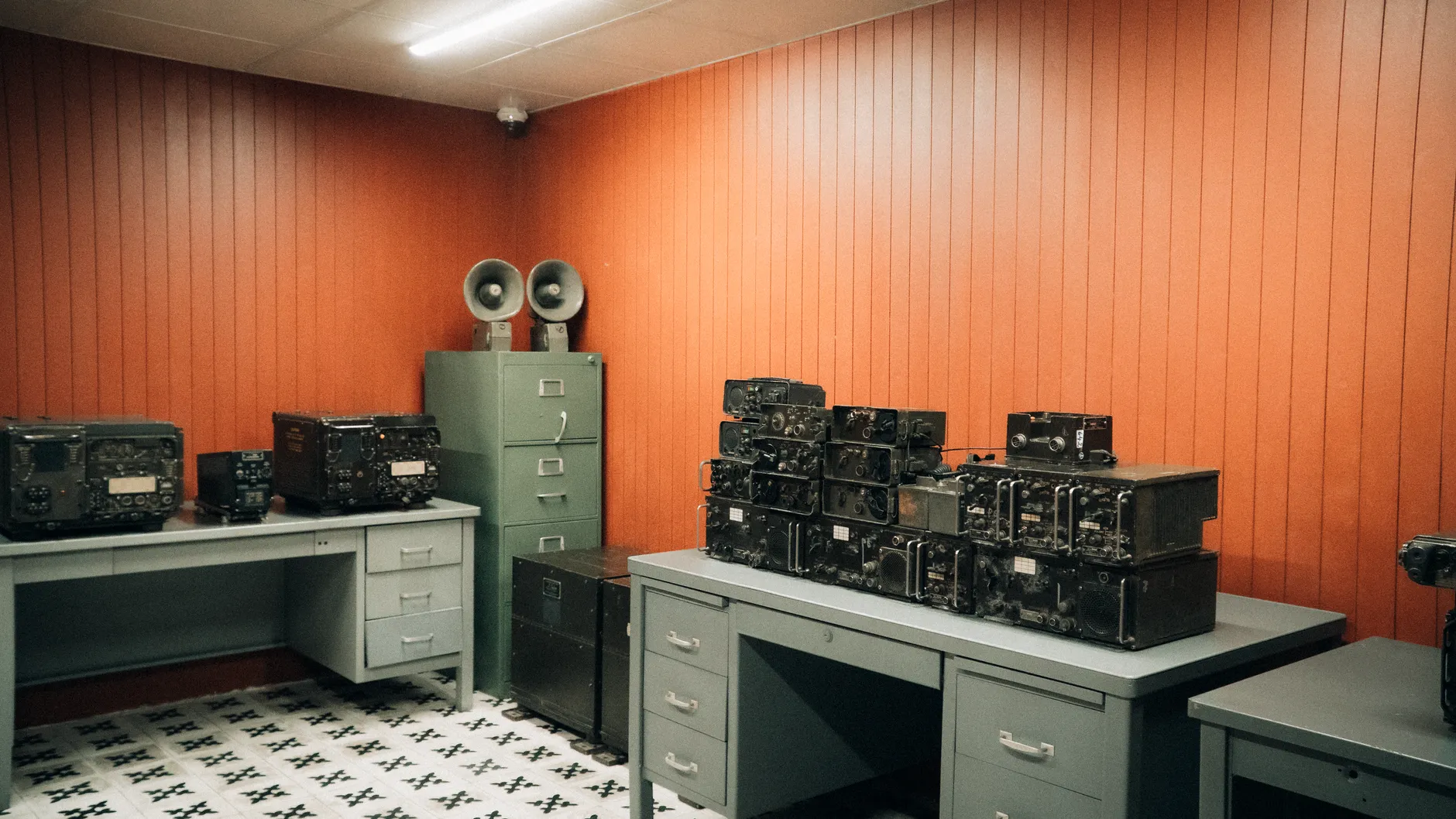
Railway communication rooms rarely attract attention, yet they keep train systems running. These technical spaces house the equipment that coordinates signals, controls operations, and maintains telecommunications. When temperatures rise too high, hardware fails. Services stop. Expensive equipment breaks down.
A recent trial at China Railway Beijing Group demonstrates how a different approach to cooling can cut energy costs, reduce carbon emissions, and improve resilience during emergencies. The project used phase change materials to stabilize temperatures in communication equipment rooms, achieving a 17% reduction in electricity consumption over six months.
The results matter because cooling accounts for a substantial share of energy use across rail networks. In some Chinese subway systems, air conditioning consumes 40% to 50% of total electricity. Consequently, even modest improvements in cooling efficiency can produce significant savings when applied across multiple facilities.
Temperature control in railway technical spaces
Equipment rooms need stable conditions. Most telecommunications and control hardware operates reliably near 22°C. Above that threshold, components overheat. Failures become more likely. The useful life of expensive systems shortens.
Traditional mechanical air conditioning runs continuously to maintain target temperatures. However, this approach creates two problems. First, compressors consume large amounts of electricity. Second, when power fails or cooling systems malfunction, temperatures rise quickly. Railway operators have limited time to respond before equipment damage occurs.
Beijing's railway operator therefore needed a system that could reduce electricity consumption under normal conditions while providing protection during emergencies. Standard air conditioning alone could not meet both requirements effectively.
Phase change materials as thermal buffers
Beijing Anxing High Tech New Energy Development Co., Ltd. supplied the cooling technology. The company specializes in thermal management using phase change materials.
These materials absorb heat as they change from solid to liquid. They release heat when temperatures drop and they solidify again. This process creates a thermal buffer that moderates temperature fluctuations without requiring continuous mechanical cooling.
In practical terms, the system performs two functions. During normal operations, it reduces the workload on air conditioning compressors by absorbing excess heat. During power outages or cooling failures, it slows the rate of temperature increase, giving operators additional time to restore systems or protect equipment.
The installation took place across multiple communication rooms within China Railway Beijing Group's network. The World Intellectual Property Organization's GREEN Acceleration Project coordinated the deployment, bringing together the technology provider, railway operator, Beijing Intellectual Property Office, and Bluetech Clean Air Alliance.
Six months of monitored performance
Independent evaluators compared rooms equipped with phase change materials against rooms using conventional cooling alone. The trial ran for six months under controlled conditions.
Average monthly electricity consumption fell from 729.75 kilowatt-hours per room to 602.23 kilowatt-hours. That represents a saving of approximately 127.52 kilowatt-hours each month, or about 1,530 kilowatt-hours annually per room.
Using standard emissions factors, evaluators estimated that each room would avoid roughly 0.97 metric tons of carbon dioxide per year. For context, that amount equals the carbon sequestered by approximately 54 trees annually.
Beyond energy savings, the system delivered operational benefits. Reduced compressor workload may extend the life of cooling equipment. Lower peak temperatures decrease the risk of hardware damage. Improved thermal buffering enhances infrastructure resilience during abnormal conditions.
These benefits accumulate across multiple rooms. Rail networks contain numerous technical spaces. Therefore, even modest per-room savings can produce substantial total impacts when replicated widely.
Wider cooling improvements across Beijing's rail system
The communication room project forms part of broader efforts to improve cooling efficiency throughout Beijing's railway network. In 2024, Beijing Subway introduced dual-temperature carriages, allowing passengers to choose between compartments set 2°C apart.
For underground lines, cold carriages maintain 24°C while cool carriages stay at 26°C. Ground-level lines operate at 23°C and 25°C respectively. Settings adjust according to weather, passenger volumes, time of day, and whether trains run above or below ground.
Additionally, Beijing has upgraded train air conditioning systems, replaced outdated station equipment, and installed heat-insulating film at elevated stations. These measures address passenger comfort and system-wide energy management.
In contrast, the phase change material project targets less visible infrastructure. Communication rooms rarely appear in public discussions about railway efficiency. Nevertheless, they consume significant energy and perform essential functions. Improving their cooling efficiency therefore contributes meaningfully to overall network sustainability.
How technology transfer accelerated deployment
The WIPO GREEN project connected an operational problem with an existing local solution. Beijing Anxing had already developed phase change cooling technology. China Railway Beijing Group needed better thermal management. However, the two organizations operated in different sectors with limited direct contact.
WIPO GREEN, supported by its China office, facilitated matchmaking between technology provider and end user. The Beijing Intellectual Property Office and Bluetech Clean Air Alliance provided additional coordination. This process shortened the time between identifying the problem and implementing a solution.
The approach illustrates a broader point about decarbonization. Railway operators rarely need entirely new technologies. More often, they need help finding and adapting solutions that already exist. Technology transfer mechanisms can bridge that gap.
WIPO's work in Beijing prioritizes carbon reduction across industry, transport, and electricity consumption. The railway cooling project demonstrates how modular technologies can fit into existing facilities without requiring complete redesigns. Consequently, deployment becomes faster and less disruptive.
Carbon savings and UK business relevance
UK businesses face similar cooling challenges in technical spaces. Data centers, telecommunications facilities, industrial control rooms, and transport infrastructure all require stable temperatures. Air conditioning often represents a major share of operational electricity costs.
The Beijing results suggest that phase change materials could reduce those costs while cutting carbon emissions. For UK companies reporting under environmental regulations or pursuing carbon reduction commitments, cooling efficiency offers a clear pathway to measurable improvements.
Furthermore, passive thermal management addresses a commercial risk. Equipment failures during heatwaves or power interruptions create financial losses. Extended temperature buffering provides additional response time, potentially preventing costly downtime.
UK businesses supplying the public sector should note similar priorities. Procurement Notice 06/21 requires suppliers to publish carbon reduction plans. Demonstrating active energy management in facilities and operations strengthens those submissions. Cooling improvements therefore serve both operational and commercial purposes.
The technology also aligns with broader compliance requirements around environmental reporting. Companies measuring Scope 2 emissions from electricity consumption can point to specific interventions that reduce kilowatt-hour use. Passive cooling offers a tangible example of efficiency investment.
Interpreting the trial results
The 17% reduction in electricity consumption is promising. However, the published account describes a six-month trial rather than long-term, network-wide deployment. Several factors will determine whether these results hold across different conditions.
Seasonal variation matters. Beijing experiences cold winters and hot summers. The trial period may not have captured peak summer cooling loads when thermal stress is greatest. Similarly, performance during extreme weather events would provide additional validation.
Room characteristics also vary. Larger spaces, higher equipment densities, and different ventilation rates will affect how well phase change materials stabilize temperatures. Results from one set of rooms may not transfer directly to others without adjustment.
Installation and maintenance costs require consideration as well. Energy savings alone do not justify investment unless total lifecycle costs remain competitive with conventional cooling alternatives. Published accounts have not provided detailed cost comparisons.
Carbon estimates depend on emissions factors that convert electricity savings into avoided carbon dioxide. As electricity grids incorporate more renewable generation, the carbon benefit per kilowatt-hour saved will change. Nevertheless, reducing electricity demand remains valuable because it lowers operating costs and reduces pressure on power systems.
Key facts about the Beijing railway cooling project
- Phase change materials reduced average electricity consumption by 17% in railway communication equipment rooms over six months.
- Monthly electricity use fell from 729.75 kilowatt-hours to 602.23 kilowatt-hours per room.
- Each room achieved estimated annual savings of approximately 1,530 kilowatt-hours and avoided roughly 0.97 metric tons of carbon dioxide.
- The system provides passive thermal buffering that slows temperature increases during power outages or cooling failures.
- WIPO GREEN coordinated technology transfer between Beijing Anxing High Tech New Energy Development and China Railway Beijing Group.
- Air conditioning can account for 40% to 50% of total electricity consumption in some Chinese subway systems.
- Beijing Subway has introduced dual-temperature carriages and upgraded station cooling equipment as part of wider efficiency efforts.
Applying passive cooling principles to UK facilities
UK businesses operating technical facilities should consider how passive thermal management might reduce costs and carbon emissions. Communication rooms, server spaces, and control centers all share similar characteristics: they require stable temperatures, they run continuously, and cooling represents a significant operational expense.
Phase change materials offer one approach. Other passive strategies include improved insulation, thermal mass, night-time ventilation, and shading. The common principle is reducing reliance on mechanical cooling by managing heat flows more intelligently.
Small and medium-sized businesses often overlook technical spaces when planning energy improvements. Consequently, cooling systems run at full capacity regardless of actual thermal load. Simple monitoring can reveal opportunities for adjustment.
For example, equipment rooms may not need cooling overnight if thermal mass keeps temperatures stable. Alternatively, setpoint temperatures might rise slightly during cooler months without affecting equipment performance. These changes require minimal investment but produce immediate savings.
More substantial interventions, such as installing phase change materials or upgrading cooling systems, need careful evaluation. Carbon reduction planning should assess both upfront costs and long-term operational savings. Well-designed projects typically pay back within three to five years through reduced electricity bills.
Businesses should also consider resilience benefits. UK summers are becoming hotter. Power networks face increasing strain during heatwaves. Passive cooling provides a buffer that keeps critical systems running when mechanical cooling fails or electricity supplies become unreliable.
Replication potential and next steps
If long-term monitoring confirms the Beijing trial results, phase change cooling could extend to other railway technical spaces. Signaling facilities, substations, and equipment shelters all face similar thermal management challenges. Modular technologies that fit into existing buildings offer practical deployment pathways.
Wider adoption will depend on several factors. Transparent cost data would help facility managers compare passive cooling against conventional alternatives. Standardized installation guidance would reduce deployment complexity. Long-term performance monitoring would build confidence in reliability.
The railway sector also needs clear frameworks for assessing resilience benefits. Energy savings can be measured directly through electricity meters. However, quantifying the value of extended emergency protection requires different methods. Insurance premiums, downtime costs, and equipment replacement expenses all contribute to the business case.
UK rail operators and infrastructure managers should watch developments closely. Network Rail, Transport for London, and regional operators all manage numerous technical buildings where cooling efficiency matters. Learning from international trials can inform UK-specific deployments.
Beyond railways, the principles apply to other infrastructure sectors. Telecommunications companies, data center operators, and industrial facilities all face similar challenges. Passive thermal management offers a low-carbon pathway that complements rather than replaces existing cooling systems.
Practical decarbonization in critical infrastructure
The Beijing railway cooling project demonstrates that decarbonization does not always require large-scale infrastructure replacement. Targeted improvements to thermal management can produce measurable energy savings while enhancing operational resilience.
For UK businesses, this approach offers several advantages. Capital costs are typically lower than full system replacements. Deployment can happen incrementally across multiple sites. Operational disruption remains minimal because existing cooling equipment stays in place.
Moreover, passive cooling aligns with multiple business objectives simultaneously. It reduces electricity costs, cuts carbon emissions, improves compliance credentials, and strengthens operational resilience. Few interventions deliver such a broad range of benefits from a single investment.
The key is matching technology to specific circumstances. Not every facility will benefit equally from phase change materials. However, systematic assessment of technical spaces often reveals opportunities that have been overlooked.
Businesses should start by measuring current cooling energy consumption. Identify which spaces use the most electricity. Assess whether temperatures fluctuate significantly. Evaluate what would happen during cooling failures. These questions reveal where improvements will deliver the greatest impact.
Professional support can accelerate this process. Energy audits, thermal modeling, and technology assessments help businesses make informed decisions about where and how to invest in cooling efficiency.
Further information and resources
Detailed information about the Beijing railway cooling project appears in WIPO GREEN's success stories publication, which documents technology transfer initiatives across multiple sectors.
UK businesses seeking guidance on cooling efficiency and carbon reduction can consult the Department for Energy Security and Net Zero, which publishes resources on energy management and decarbonization.
The Chartered Institution of Building Services Engineers provides technical guidance on cooling system design, efficiency standards, and passive thermal management strategies for commercial and industrial buildings.
Information about environmental reporting requirements for businesses appears on the government's guidance pages for measuring and reporting environmental impacts.
For businesses interested in how energy efficiency supports public sector procurement, the government's Procurement Policy Note 06/21 explains carbon reduction plan requirements for suppliers.