
Mowi Chile launches first floating-solar salmon farm
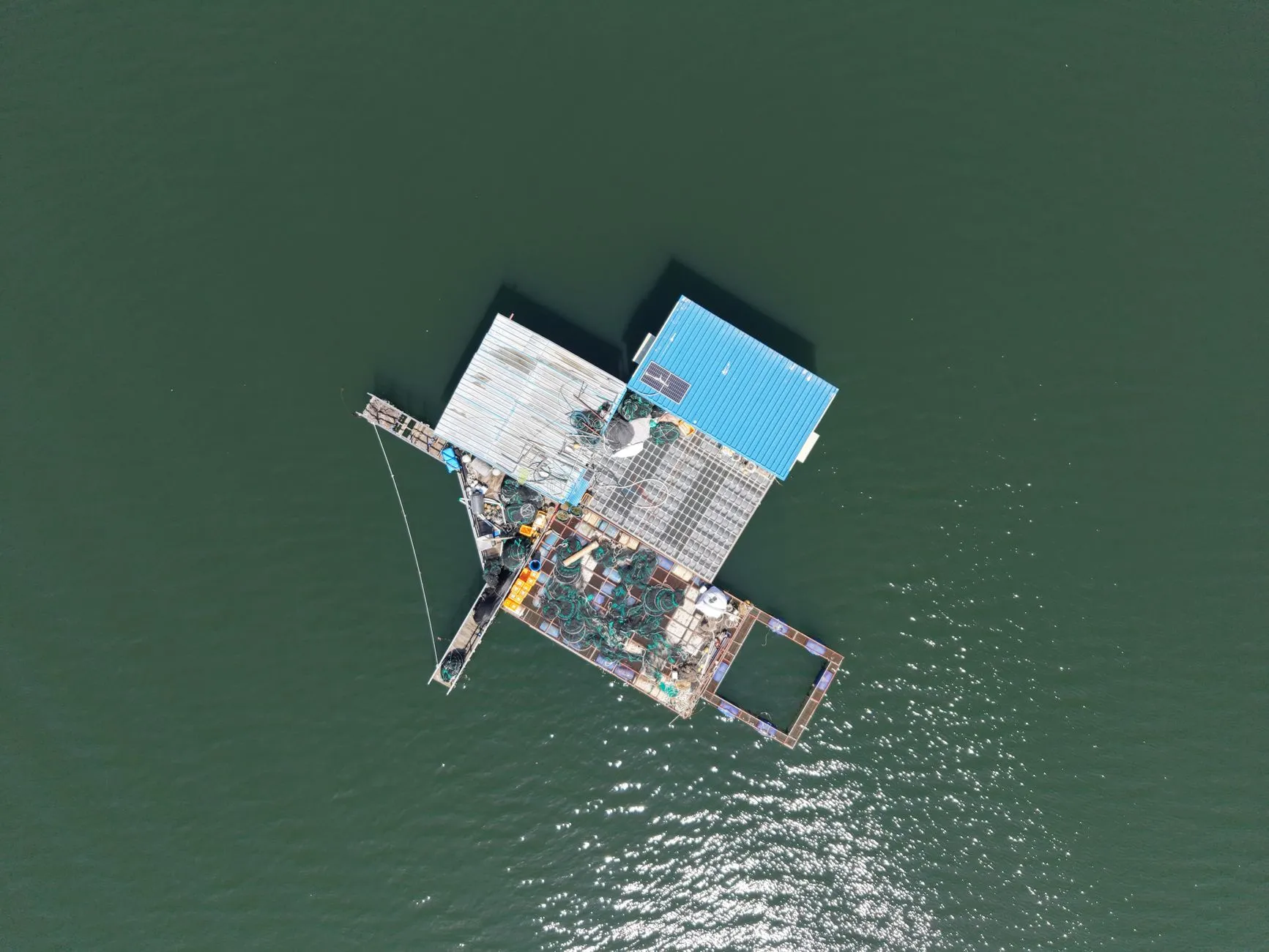
Offshore salmon farm cuts diesel by 36,750 gallons with floating solar
A salmon farm in southern Chile has replaced more than half its diesel consumption with solar power. Mowi's Huar Norte site now runs on a floating solar array and battery system that covers roughly 57% of annual energy demand. The installation avoids around 350 to 385 tons of CO2 each year and cuts fuel use by approximately 36,750 gallons.
The project matters because it shows how offshore fish farms can reduce fossil-fuel dependence without moving operations onshore. Moreover, it addresses a practical challenge facing many coastal industries: how to power remote sites when grid connection is impossible and diesel generators are the only option. Consequently, the system has attracted attention beyond aquaculture as a template for other energy-intensive operations in exposed marine environments.
Chilean salmon farming has historically relied on diesel generators at coastal locations where electrification is difficult. Fuel must often be delivered by boat, adding cost and logistical complexity. Mowi developed the Huar Norte project with partners including Alotta Energy, AKVA Group, and Fjord Maritime, combining floating solar panels, battery storage, and energy-management systems in a hybrid setup designed for harsh marine conditions.
Ocean Sun identifies the installation as a 250 kWp system commissioned in March 2025. This was a commercial deployment rather than a pilot experiment. The floating solar array is mounted on pontoons around the fish cages, with batteries storing excess power and a control system balancing solar, storage, and generator output.
How the system works in practice
The floating solar panels sit on pontoons positioned around the perimeter of the fish cages. Batteries store surplus energy generated during daylight hours. A control system then manages the flow between solar, battery storage, and the backup diesel generator, switching between sources depending on demand and available sunlight.
Mowi Chile describes the installation as its first floating solar cage in the country. The company states that the system can cover up to 50% of the site's energy demand while reducing fuel transport and local emissions. Independent coverage reports a slightly higher annual energy share at approximately 57%, with diesel displacement estimated at around 139,200 litres per year.
The system was designed to withstand the marine environment in southern Chile, where farms face strong winds, salt spray, and wave action. Therefore, the pontoons and mounting structures had to meet higher durability standards than land-based solar installations. Battery storage was essential because fish farms need consistent power for feeding systems, oxygen monitoring, and other critical operations that cannot tolerate interruptions.
Mowi Chile has stated that the project will deliver an annual reduction of 350 tons of CO2. Additionally, the company notes that it will reduce boat traffic for fuel deliveries, improving both environmental and workplace conditions. Alotta Energy similarly described the system as a way to reduce fossil-fuel use and minimise CO2 emissions in offshore aquaculture.
Measured results from the first year of operation
The Huar Norte system has now been operating long enough to show measurable results. Solar and batteries currently cover a majority share of the farm's energy needs over the course of a year. Specifically, the installation displaces approximately 139,200 litres of diesel annually, equivalent to roughly 36,750 gallons.
Annual emissions reductions are estimated at around 350 tons of CO2, with some sources reporting the figure as 385 to 386 tons. The variation likely reflects different calculation methods for diesel-to-CO2 conversion factors. However, all sources agree that the system avoids several hundred tons of emissions each year.
Power coverage sits at approximately 50% to 57% of annual energy needs, depending on the source and measurement period. This variation is typical for solar installations, where output fluctuates with seasonal sunlight and weather patterns. Nevertheless, the system consistently offsets more than half the farm's diesel consumption across a full year.
The system size is listed as 250 kWp at the Huar Norte site. Commissioning took place in March 2025, giving the installation several months of operational data. Recent reporting from 2026 suggests the project is now being viewed as a template for further deployments across Chilean salmon farming.
Why offshore aquaculture still depends on diesel
Chilean salmon farms operate in remote coastal waters, often kilometres from the nearest electrical infrastructure. Building grid connections to these sites would require submarine cables and significant capital investment. Consequently, most farms have relied on diesel generators as the only practical power source.
Diesel must be transported to these sites by boat, creating logistical challenges and adding operational costs. Fuel deliveries require dedicated trips, increasing vessel traffic and introducing safety risks in exposed waters. Furthermore, generators produce noise and vibration that can affect both workers and the farm environment.
These factors make floating solar an attractive alternative for farms looking to reduce operating costs and meet sustainability targets. For example, carbon reporting requirements under regulations like PPN 06/21 are pushing companies to reduce Scope 1 emissions from on-site fuel combustion. Aquaculture is one of several sectors where remote operations create significant fossil-fuel dependence.
Offshore fish farming is energy-intensive. Farms need continuous power for feeding systems, water-quality monitoring, oxygen pumps, and lighting. Unlike many industrial processes that can tolerate brief outages, aquaculture operations face serious production risks if power fails. Therefore, any renewable-energy system must include reliable backup or storage to maintain 24-hour availability.
Commercial impact for UK businesses in food supply chains
UK businesses that source seafood or operate in food supply chains should pay attention to developments like the Huar Norte project. Major retailers and foodservice companies now face increasing pressure to demonstrate sustainability across their procurement. Salmon is one of the most commonly imported proteins in the UK market, with Chile being a significant supplier.
Carbon reporting requirements are expanding to include supply-chain emissions under Scope 3. Companies that import Chilean salmon will need to account for the emissions embedded in production. Consequently, sourcing from farms with lower diesel dependence can help reduce reported Scope 3 figures and improve overall environmental performance.
Public procurement is another area where these developments matter. Sustainable procurement policies increasingly require suppliers to demonstrate measurable emissions reductions. Food suppliers bidding for contracts with schools, hospitals, or government agencies may need to show that their seafood sources meet specific sustainability criteria.
There is also a reputational dimension. Consumers and advocacy groups are scrutinising the environmental impact of salmon farming, particularly around diesel use, chemical inputs, and waste. Farms that adopt renewable energy can differentiate themselves in sustainability assessments and certification schemes. This shift may influence purchasing decisions for retailers looking to strengthen their own environmental credentials.
The operational benefits extend beyond emissions. Fewer fuel deliveries mean reduced vessel traffic, which lowers the risk of accidents and spills. Less generator noise can improve working conditions for farm staff and potentially reduce stress on fish populations. These factors contribute to better overall farm management and may translate into higher-quality production.
What the Chile deployment tells us about scaling renewable energy offshore
The Huar Norte project is significant because it demonstrates that floating solar can function in industrial conditions, not just in controlled pilot environments. The system has delivered consistent results over multiple months in an exposed marine location. Moreover, it has done so without requiring changes to farm layout or production processes.
Battery storage proved essential to the system's success. Solar panels generate power only during daylight, but fish farms need energy around the clock. Batteries bridge the gap, storing excess solar generation for use at night or during cloudy periods. The control system manages the transition between solar, battery, and generator, ensuring uninterrupted power supply.
The hybrid approach is important because it allows farms to retain diesel generators as backup. This design reduces risk while still delivering substantial fuel savings. In contrast, a fully renewable system without backup might struggle to meet reliability standards for critical aquaculture operations. Therefore, the Huar Norte model offers a practical pathway for farms that cannot eliminate diesel entirely but want to reduce dependence.
Replication potential is high. Chile's salmon industry operates hundreds of farms in similar coastal environments. If floating solar systems spread across even a fraction of these sites, the cumulative diesel savings and emissions reductions could be substantial. Coverage from 2026 suggests the industry is exploring exactly that possibility, with the Huar Norte project serving as a reference case.
Other coastal industries may also adopt similar systems. Offshore energy installations, remote island communities, and marine research stations all face comparable challenges with diesel dependence and limited grid access. Floating solar with battery storage offers a modular solution that can scale to different power requirements and environmental conditions.
Key facts about the Huar Norte installation
- The system displaces approximately 139,200 litres of diesel each year, equivalent to roughly 36,750 gallons.
- Annual emissions reductions are estimated at around 350 tons of CO2, with some sources reporting 385 to 386 tons.
- Solar and batteries now cover approximately 50% to 57% of the farm's annual energy needs, depending on measurement period.
- The installation is rated at 250 kWp and was commissioned in March 2025 as a commercial deployment.
- Mowi Chile reports that the system reduces boat traffic for fuel deliveries and lowers generator noise, improving workplace conditions.
- The project was developed with partners including Alotta Energy, AKVA Group, and Fjord Maritime, combining floating solar panels, battery storage, and hybrid energy management.
What UK SMEs should consider if operating in remote or marine environments
Businesses operating in coastal locations, offshore installations, or remote sites without grid access should assess whether similar renewable-energy systems could reduce their diesel dependence. The Huar Norte project shows that hybrid solar and battery systems can function in harsh marine environments while delivering measurable fuel savings.
Cost reduction is a primary driver. Diesel prices fluctuate, and transport costs add significantly to fuel expenses in remote locations. Solar panels have no fuel cost once installed, and battery storage allows businesses to use stored energy during expensive peak-demand periods. Over the system's lifespan, these savings can offset the initial capital investment.
Emissions reporting is another consideration. Regulatory requirements for carbon reporting are expanding, and Scope 1 emissions from on-site fuel combustion are often the easiest to measure and reduce. Replacing diesel with solar power directly cuts these emissions, simplifying compliance and improving reported performance.
Operational resilience also improves with hybrid systems. Relying solely on diesel generators creates vulnerability to fuel-supply disruptions, price spikes, or delivery delays. Adding solar and battery capacity provides a second energy source, reducing dependence on external logistics. This diversification can be particularly valuable for businesses in isolated locations.
Planning and technical assessment are essential. Floating solar systems must be engineered for local conditions, including wave action, wind loads, and salt-water exposure. Battery storage needs to be sized correctly to match demand patterns and provide adequate backup. Energy-management systems must integrate with existing infrastructure, whether that means diesel generators, grid connections, or other power sources.
Funding and support mechanisms may be available for renewable-energy projects, particularly those that reduce emissions or improve energy security. Businesses should explore grants, tax incentives, or financing programs designed to support decarbonisation in hard-to-reach sectors. Professional advice can help identify relevant schemes and structure projects to maximise financial viability.
Where to find detailed guidance and policy updates
The UK government provides comprehensive information on carbon reporting requirements and net-zero targets through the Department for Energy Security and Net Zero. This resource includes guidance on Scope 1, 2, and 3 emissions accounting, which is relevant for businesses assessing their supply-chain impacts.
For businesses involved in public procurement, the Procurement Policy Note 06/21 outlines carbon-reduction plan requirements for suppliers bidding on major government contracts. Understanding these requirements is essential for companies operating in sectors with significant public-sector exposure.
The UK government's greenhouse gas reporting conversion factors provide the calculation methods needed to translate fuel consumption into CO2 emissions. These factors are updated annually and cover diesel, electricity, and other energy sources commonly used in business operations.
Industry bodies such as the Institute of Environmental Management and Assessment offer technical guidance on environmental performance and sustainability standards. IEMA resources can help businesses understand best practices for emissions measurement, reporting, and reduction strategies across different sectors.
Businesses looking for practical support with carbon reporting, Scope 3 measurement, or renewable-energy assessments can explore our net-zero resources for guidance tailored to UK SMEs navigating compliance and sustainability requirements.