
Image: Sustainable Carbon / Gold Standard Marketplace
Buenos Aires Renewable Energy Project
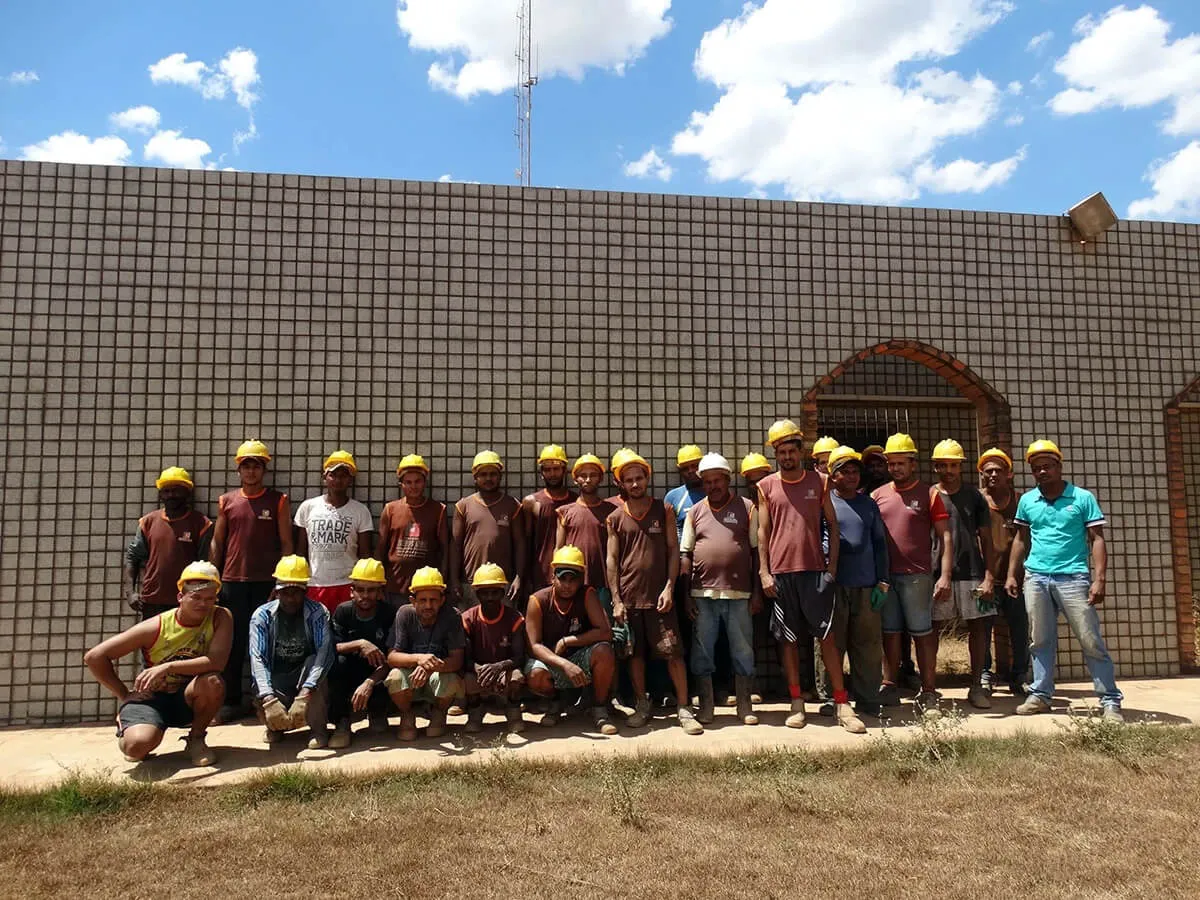
A ceramic factory in Pernambuco, Brazil switched from illegal firewood to agricultural and industrial residue, turning waste into fuel and local income.
About this project
The project is in Pernambuco, in Brazil’s Caatinga, a dry region covering around 11% of the country, where limited access to grid electricity has historically pushed local industry toward illegally sourced firewood and charcoal for fuel.
At the heart of the project is a ceramic factory that switched its fuel source from that illegal firewood to agricultural and industrial residue, waste material that would otherwise have been discarded. The switch does two things at once: it eases pressure on the surrounding forest, and it creates a market for local suppliers, who earn income by collecting and delivering the biomass the factory now runs on.
The benefit extends beyond the factory gates. Automated kilns introduced alongside the fuel switch have reduced heat exposure and indoor air pollution for the 91 people working there, and the wider project (including housing and food support, and sponsorship of local sports and education) reaches more than 110 families in the surrounding community.
Why we support it
Sustainable Business Services deliberately holds a mixed nature portfolio: UK woodland removal projects like Jon’s Wood, alongside Gold Standard-verified avoidance projects like this one. The two types of credit make different claims, and it’s worth being clear about which is which.
Jon’s Wood removes carbon already in the atmosphere, by growing new trees. The Buenos Aires project avoids carbon that would otherwise have been released; it stops a ceramic factory from burning illegally sourced firewood, rather than pulling existing CO2 back out of the air. Avoidance credits are a well-established, internationally recognised part of a credible offsetting portfolio, but they are not a substitute for removal, and a business using both should report them as what they are.
We chose this specific project for its Gold Standard verification, its direct link to a named, auditable site rather than a pooled scheme, and the fact that its environmental case (ending illegal deforestation for fuel) carries a genuine social outcome alongside it, rather than the two being separate.
Impact
Figures below describe the Buenos Aires project as a whole, verified under Gold Standard’s methodology. A client’s own retirement is a purchase of credits from this project, not a share of these totals; the numbers here are the scale of the scheme, not what any one buyer holds.
- 132,953 tCO2e avoided over the project’s 10-year crediting period
- 1,970 hectares of forest saved over the same period, about 1,900 football pitches
- 91 people employed at the ceramic factory, working under improved conditions since the fuel switch
- More than 110 families benefiting directly, through employment, biomass supply income, or community support (housing, food, and sponsorship of local sports and education initiatives)
Sustainable Development Goals
SDG 7: Affordable and Clean Energy. The factory switched its fuel source from illegally sourced firewood to agricultural and industrial residue that would otherwise have been discarded as waste.
SDG 8: Decent Work and Economic Growth. 91 people are employed at the factory under improved working conditions: automated kilns have reduced both heat exposure and indoor air pollution. The switch has also created a local income stream for the individuals and businesses who supply the biomass.
SDG 13: Climate Action. The fuel switch avoids an estimated 132,953 tCO2e of greenhouse gas emissions over the project’s 10-year crediting period, while also easing pressure on the surrounding Caatinga forest.
Verification
The Buenos Aires Renewable Energy Project is certified under the Gold Standard, an international verification standard requiring independent, third-party audit of both the emissions-avoidance claim and the project’s wider social and environmental impact.
This is an avoidance project, not a removal project: it stops emissions that would otherwise have occurred, rather than extracting existing CO2 from the atmosphere. Businesses reporting against both this project and a UK removal scheme (such as Jon’s Wood) should describe each accurately in their own reporting, since the two make different claims.
Across the whole project over its crediting period, the developer's figure of 132,953 tCO₂e is the equivalent of
- 410,853UK homes powered for a year
- 338,302,799miles driven
DESNZ (subnational consumption 2024; GHG conversion factors 2026) (2024) · US EPA, Greenhouse Gas Equivalencies Calculator (2022)