
Image: Gold Standard Marketplace project listing
Cleaner, Safer Water in Cambodia
Hydrologic's ceramic water purifiers give rural Cambodian households safe drinking water without boiling it over wood, cutting indoor smoke, fuel costs and pressure on forests.
About this project
According to the project’s Gold Standard listing, untreated water and poor sanitation cause an estimated ten million cases of diarrhoea and ten thousand deaths a year in Cambodia, most of them among children in rural areas. The usual household answer is to boil drinking water over wood or charcoal, which costs money and time, fills the home with smoke, and draws on forests that are already under pressure.
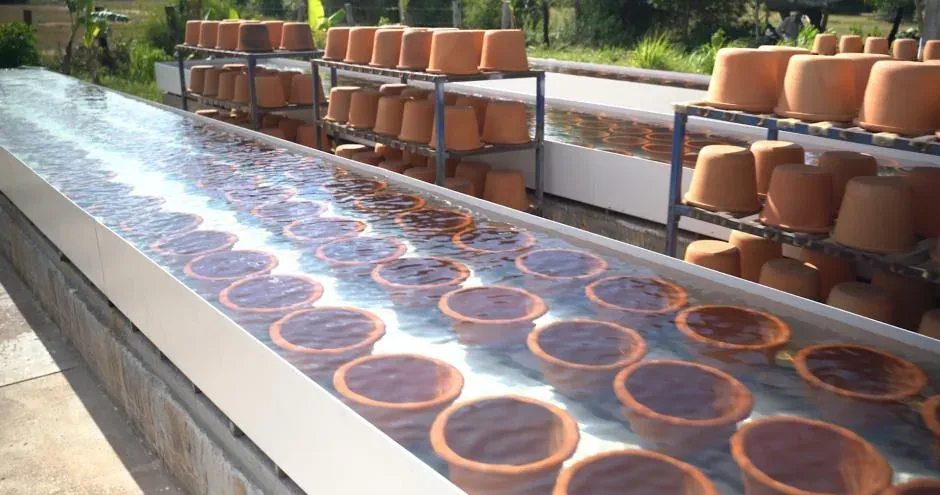
Hydrologic, a Cambodian social enterprise, sells ceramic water purifiers that give a household clean drinking water without burning any fuel. A household that owns one stops boiling. The carbon finance from Gold Standard credits is what keeps the purifiers affordable for the rural families who need them most, and funds its rural sales force.
Why we support it
Sustainable Business Services holds a mixed nature portfolio: UK woodland removal projects such as Jon’s Wood, alongside Gold Standard-verified avoidance projects such as this one and the Buenos Aires fuel-switching project in Brazil. The two kinds of credit make different claims, and a business using both should report each as what it is.
We chose this project because its climate case and its human case are the same action. Every purifier in use means a household that no longer burns wood to make water safe, so the avoided emissions, the cleaner indoor air and the protected forest all follow from a family getting clean water. It is also a project where the money reaches a locally run enterprise that employs and promotes women.
Impact
Figures below describe the Hydrologic programme as a whole, as published on the Gold Standard Marketplace. A client’s own retirement is a purchase of credits from this project, not a share of these totals; the numbers here are the scale of the scheme, not what any one buyer holds.
- Around 90,000 tCO2e avoided a year across the programme, by households that no longer boil their drinking water over wood
- More than 600,000 purifiers distributed since the programme began, reaching nearly two million people
- 74% of households that used to boil water report less exposure to smoke in the home
- Women make up 47% of Hydrologic’s staff, including 60% of senior managers and 60% of the rural sales force
Sustainable Development Goals
SDG 1: No Poverty. A household that stops buying fuel to boil water keeps that money. The marketplace listing puts the household fuel saving at around USD 30,000 for every 1,000 credits issued.
SDG 3: Good Health and Well-being. Safe drinking water cuts diarrhoeal disease, and ending daily wood fires cuts the indoor air pollution that causes respiratory illness.
SDG 6: Clean Water and Sanitation. The purifiers remove bacteria from household drinking water, in homes that have no piped supply.
SDG 7: Affordable and Clean Energy. Filtering replaces burning. The energy to make water safe drops to zero.
SDG 8: Decent Work and Economic Growth. Hydrologic sells the purifiers through its own rural sales force, on credit where a household needs it, creating local jobs in a Cambodian social enterprise.
SDG 13: Climate Action. Each purifier in use avoids the emissions of the wood or charcoal a household would otherwise burn.
SDG 15: Life on Land. Less demand for firewood eases pressure on Cambodia’s forests; the listing estimates five hectares of forest protected for every 1,000 credits.
Verification
Cleaner, Safer Water in Cambodia is certified under the Gold Standard, an international verification standard requiring independent, third-party audit of both the emissions-avoidance claim and the project’s wider social and environmental impact.
This is an avoidance project, not a removal project: it stops emissions that would otherwise have occurred, rather than extracting existing CO2 from the atmosphere. Businesses reporting against both this project and a UK removal scheme should describe each accurately in their own reporting, since the two make different claims.