
Nottinghamshire’s 800 MW solar park and Radisson's net-zero hotel
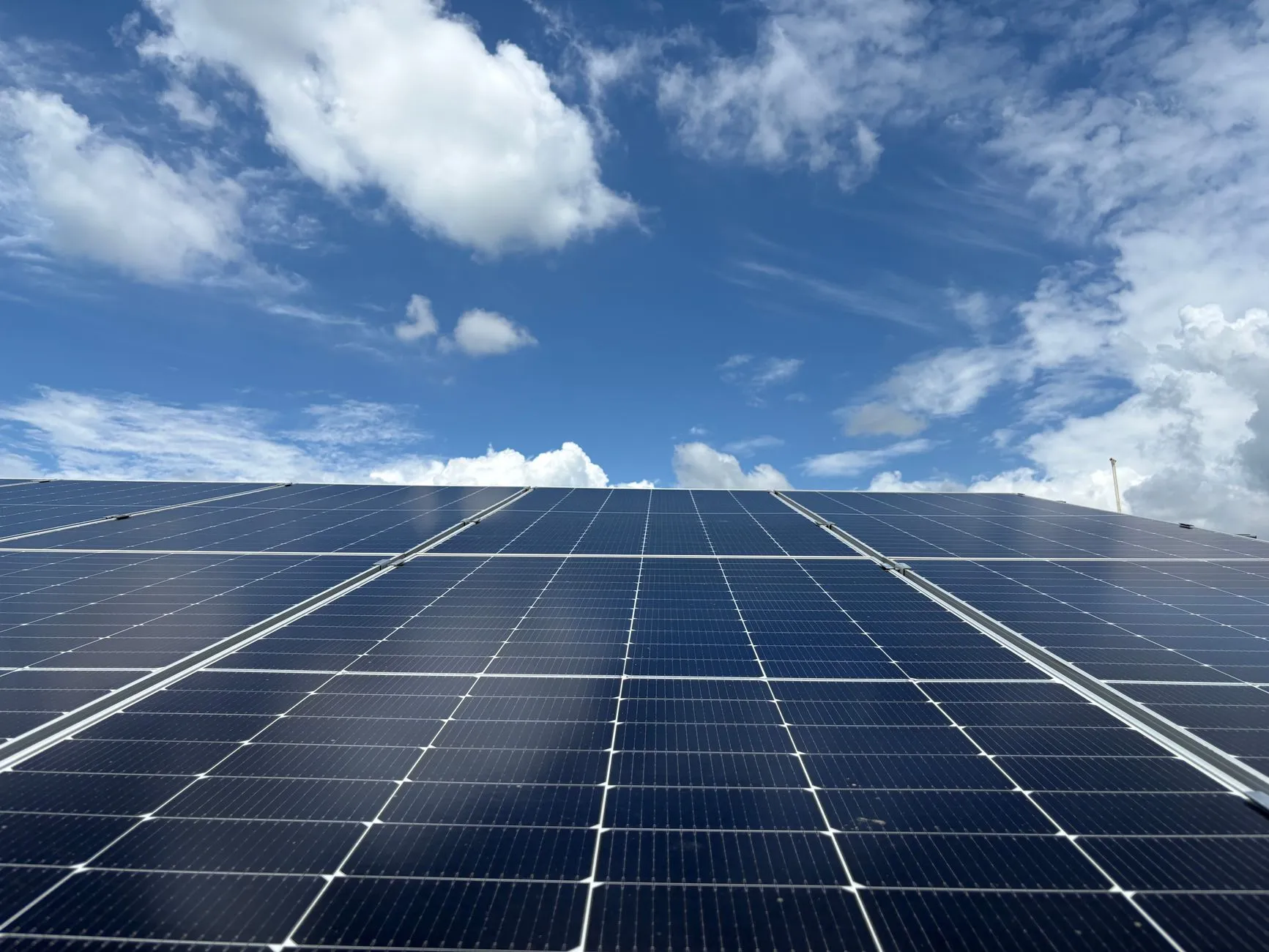
Two projects announced this week show how the shift to net zero plays out at different scales. A major renewable energy scheme in the East Midlands has cleared a significant regulatory hurdle, while a South African hotel has set a new benchmark for verified emissions reductions in the hospitality sector.
The UK Government granted development consent for an 800 megawatt solar farm in Nottinghamshire on 27 October 2026. Meanwhile, Radisson Safari Hotel Hoedspruit became the first hotel in Africa to achieve independently verified net zero status. One focuses on expanding clean electricity supply. The other tackles emissions across the operational footprint of a service business.
Both developments matter for different reasons. Large infrastructure projects like the Nottinghamshire scheme determine how quickly renewable capacity can be built out. Smaller initiatives, like the hotel certification, test whether net zero claims can be verified across complex value chains. Together, they illustrate the breadth of activity required to meet carbon reduction targets.
Government approves 800 MW solar scheme near Newark
The Department for Energy Security and Net Zero approved the Great North Road Solar and Biodiversity Park on 27 October 2026. Elements Green Trent Limited submitted the application in June 2025. The Planning Inspectorate examined it over 13 months before recommending consent.
The project sits north-west of Newark-on-Trent. It covers approximately 1,765 hectares, though only around 1,025 hectares will host solar panels. The remaining land is earmarked for cabling, access routes, mitigation measures and habitat creation.
Proposed infrastructure includes up to 800 MW of solar photovoltaic capacity, battery storage, underground cables and grid connection works. The scheme will link to the existing Staythorpe 400 kilovolt substation. Construction is expected to begin in 2027, with initial electricity exports scheduled for 2028.
Elements Green estimates annual generation of approximately 1.1 terawatt hours. That volume could meet the electricity demand of around 400,000 homes, based on typical household consumption. However, actual output will depend on weather, grid conditions and how effectively the battery storage manages periods of excess generation.
The developer has also committed to planting roughly 64,500 trees and establishing more than 50 kilometres of species-rich hedgerow. After an operating life of about 40 years, the equipment would be removed and the land reinstated under the terms of the consent.
Why battery storage matters for solar projects
Solar generation is variable. Output peaks during daylight hours, but demand often rises in the evening when solar panels produce little or nothing. Consequently, battery storage allows electricity to be shifted from periods of high production to times when it is needed most.
At 800 MW, the Great North Road scheme would rank among the UK's largest solar developments. Its inclusion of storage infrastructure addresses one of the main criticisms of renewable energy: intermittency. Storage does not eliminate the problem, but it reduces reliance on fossil fuel backup during periods of low generation.
The project also highlights tensions around land use. Large solar farms occupy significant areas, often agricultural land. This raises questions about food security, visual impact and local acceptance. Because of its scale, the scheme was assessed under the nationally significant infrastructure planning regime rather than through local planning alone.
The Planning Inspectorate accepted the application for examination on 22 July 2025. The examining authority submitted its recommendation to the Secretary of State on 28 July 2026. The final decision took a further three months, reflecting the complexity of balancing energy security, environmental protection and community concerns.
South African hotel achieves verified net zero certification
Radisson Safari Hotel Hoedspruit in Limpopo has become Africa's first hotel to achieve verified net zero status. The 138-room property is located near Kruger National Park and the Blyde River Canyon. TÜV Rheinland independently verified the certification under Radisson Hotel Group's Verified Net Zero Hotels programme.
The programme addresses emissions across all three scopes defined by the Greenhouse Gas Protocol. Scope 1 covers direct emissions from sources the hotel controls, such as on-site fuel combustion. Scope 2 includes emissions from purchased electricity. Scope 3 encompasses indirect value-chain emissions, including food procurement, waste disposal, water treatment and guest-related activities.
Most corporate carbon strategies focus on Scope 1 and Scope 2 emissions because they are easier to measure and control. Scope 3 is more challenging. It requires tracking emissions from suppliers, transport providers, waste contractors and other third parties. For hotels, it often represents the largest share of total emissions.
Radisson's programme aims to virtually eliminate Scope 1 and Scope 2 emissions, substantially reduce Scope 3 emissions and address residual emissions through carbon removal credits. The Hoedspruit hotel uses a combination of on-site solar generation and contracted renewable electricity to meet its energy needs.
A rooftop solar installation produces approximately 374,000 kilowatt hours annually. That covers roughly 20 per cent of the hotel's electricity requirements. The remainder is supplied through renewable energy arrangements, including an agreement with energy company SolarAfrica. A solar wheeling arrangement is planned for 2027, under which renewable electricity is fed into the national grid and an equivalent volume is allocated to the hotel's consumption.
Emissions reductions across food, waste and procurement
Electricity accounts for a significant portion of a hotel's carbon footprint, but it is not the only source of emissions. Food and beverage operations generate emissions through agriculture, transport, refrigeration and waste. Laundry services consume water and energy. Maintenance activities involve purchased goods and contractor travel. Guest transport to and from the property adds another layer of indirect emissions.
Addressing these areas requires operational changes, not just switching energy suppliers. For example, reducing food waste involves menu planning, portion control and staff training. Lowering procurement emissions means selecting suppliers based on their environmental performance, not just cost. Water conservation requires investment in efficient fixtures and recycling systems.
The Hoedspruit hotel's certification covers these broader measures. Danie Smit, the hotel's general manager, described the milestone as evidence that sustainability can be embedded into operations rather than treated as a separate initiative. Nevertheless, the details of how the hotel has addressed each emissions category matter more than the headline claim.
Independent verification by TÜV Rheinland provides external assurance that the hotel meets the programme's methodology. However, verification does not standardise what counts as net zero. Different schemes use different boundaries, accounting methods and approaches to offsetting. Transparent disclosure of the hotel's emissions, reduction measures and residual emissions strategy remains essential for credibility.
What UK businesses should consider from these developments
The Nottinghamshire solar project illustrates the long timescales involved in renewable energy infrastructure. Elements Green submitted its application in June 2025. Consent was granted 16 months later. Construction is expected to begin in 2027, with initial exports in 2028. From application to first generation, the process spans around three years.
For businesses relying on renewable electricity, this highlights the importance of long-term planning. Corporate power purchase agreements, on-site generation and grid connections all require lead time. Waiting until regulatory deadlines approach leaves little room for delays or complications.
The hotel certification demonstrates that emissions reductions across Scope 3 require engagement with suppliers and contractors. Most UK SMEs do not have the resources to verify every supplier's carbon footprint. However, asking basic questions about energy sources, waste management and transport can identify opportunities for improvement.
Scope 3 reporting is not yet mandatory for most UK businesses, but it is increasingly expected in public sector tenders and supply chain audits. Large buyers are starting to ask suppliers for emissions data. Businesses that can provide credible answers will have an advantage over those that cannot.
Both projects also underscore the value of independent verification. The Nottinghamshire scheme went through statutory examination by the Planning Inspectorate. The hotel's certification was verified by TÜV Rheinland. In each case, external scrutiny provided assurance that claims were backed by evidence.
For businesses making environmental claims, third-party verification reduces the risk of greenwashing allegations. It also makes it easier to demonstrate compliance with regulations like the Green Claims Code. As enforcement of environmental standards increases, businesses without credible evidence may face reputational damage or regulatory action.
Essential facts from this week's announcements
- The Great North Road Solar and Biodiversity Park received development consent on 27 October 2026 for up to 800 MW of solar capacity and battery storage near Newark-on-Trent.
- The project covers approximately 1,765 hectares, with around 1,025 hectares used for solar panels and the rest for mitigation, cabling and access infrastructure.
- Elements Green estimates the scheme could generate approximately 1.1 terawatt hours annually, equivalent to the electricity demand of around 400,000 homes.
- Proposed biodiversity measures include planting roughly 64,500 trees and establishing more than 50 kilometres of species-rich hedgerow.
- Radisson Safari Hotel Hoedspruit became Africa's first independently verified net zero hotel, with certification covering Scope 1, Scope 2 and Scope 3 emissions.
- The 138-room hotel generates about 20 per cent of its electricity from on-site solar, with the remainder sourced through renewable energy contracts.
- A solar wheeling arrangement planned for 2027 will allow renewable electricity to be fed into the national grid and allocated to the hotel's consumption.
Planning for infrastructure and operational emissions
The Nottinghamshire project addresses a supply-side challenge. The UK needs more renewable generation capacity to meet net zero targets and reduce reliance on imported fossil fuels. Large solar farms, wind developments and storage infrastructure are essential components of that transition.
However, infrastructure alone will not deliver net zero. Demand-side measures matter just as much. Businesses need to reduce energy consumption, switch to low-carbon fuels and tackle emissions embedded in their supply chains. The Hoedspruit hotel's certification shows what this looks like in practice for a service-sector business.
For UK SMEs, the practical takeaway is that both sides of the equation require attention. Switching to renewable electricity is important, but it does not address emissions from transport, procurement, waste or business travel. Similarly, improving operational efficiency will not eliminate the need for clean energy sources.
Businesses should consider which emissions sources they control directly and which require collaboration with suppliers or contractors. Direct emissions, such as those from company vehicles or on-site heating, can often be reduced through investment in electric vehicles or heat pumps. Indirect emissions require engagement with third parties and may involve longer timescales.
Public sector suppliers face additional scrutiny. Procurement Policy Note 06/21 requires bidders for central government contracts above £5 million to publish a carbon reduction plan. Many local authorities and public bodies have adopted similar requirements. Businesses without credible carbon data may struggle to compete for public contracts.
Our net zero program for carbon reporting compliance supports businesses in measuring emissions, identifying reduction opportunities and preparing documentation for tenders. We also offer sustainable procurement support for public sector suppliers to help navigate evolving buyer expectations.
Where to find government guidance and regulatory updates
The Department for Energy Security and Net Zero publishes details of nationally significant infrastructure decisions on its website. These include development consent orders for renewable energy projects, grid connections and storage facilities. Businesses involved in energy-intensive sectors should monitor these decisions to understand how clean electricity capacity is expanding.
The Planning Inspectorate maintains a register of nationally significant infrastructure projects at various stages of examination. This provides visibility of upcoming developments that may affect energy markets, land use or local supply chains.
For emissions reporting and verification, the Greenhouse Gas Protocol provides the international standard for corporate carbon accounting. UK businesses should familiarise themselves with the three-scope framework, particularly if they are subject to mandatory reporting requirements or supply chain audits.
The Green Claims Code, enforced by the Competition and Markets Authority, sets out legal requirements for environmental claims. Businesses making net zero or carbon neutral claims should ensure they have robust evidence to support those statements. The CMA has taken enforcement action against companies making misleading environmental claims.
Additional guidance is available from the Department for Energy Security and Net Zero, the Planning Inspectorate's infrastructure projects portal and the Green Claims Code published by the Competition and Markets Authority.