
Oil and gas expansion threatens climate goals
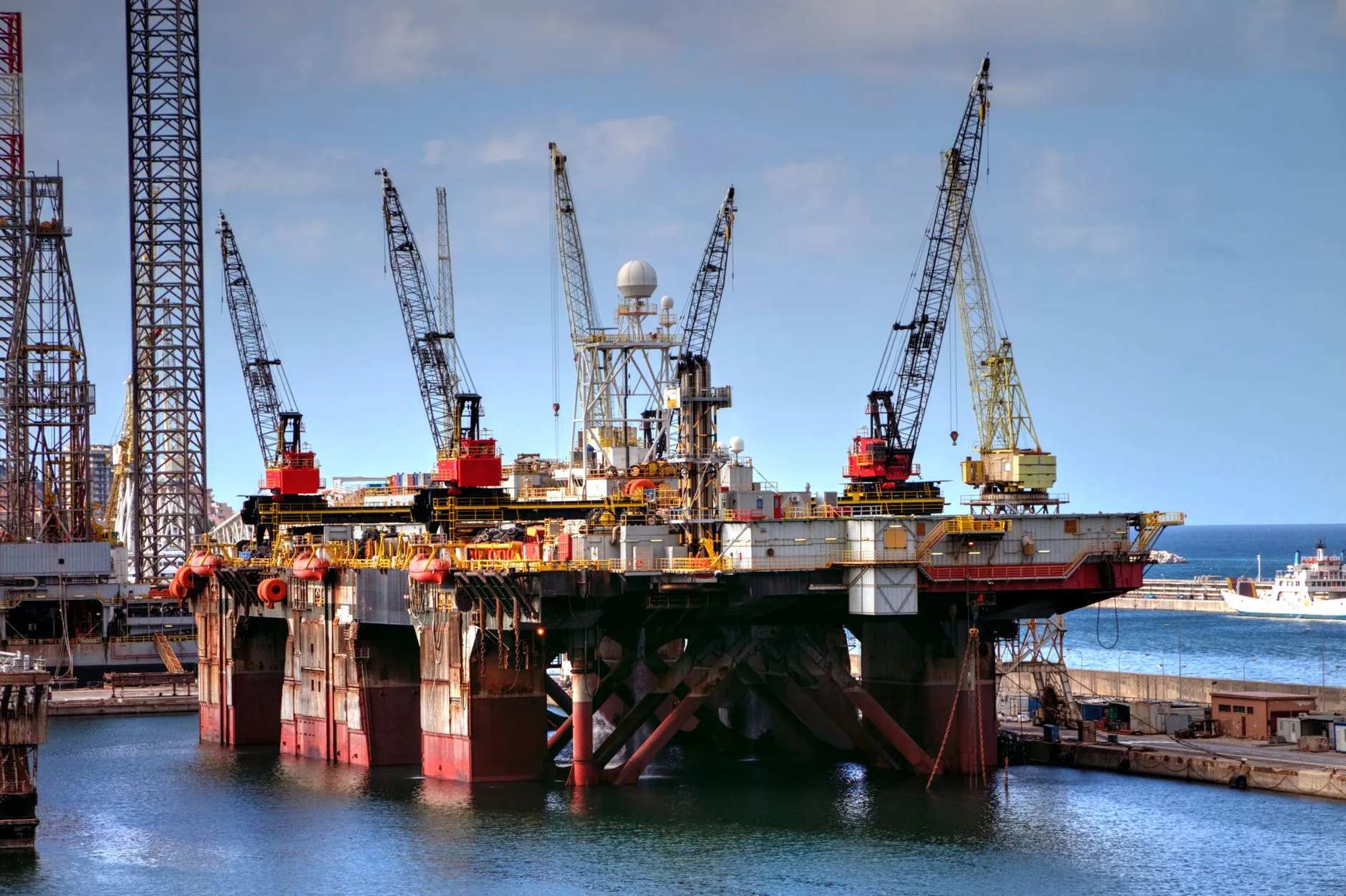
Global oil and gas producers are forging ahead with new extraction projects on a scale that appears difficult to reconcile with international climate goals. Recent data shows nearly all upstream companies continue to explore for new reserves and plan to bring hundreds of billions of barrels into production, even as scientific consensus warns that such expansion could push global warming past 1.5°C.
For UK businesses, this matters in several ways. Supply chains remain exposed to fossil fuel price volatility. Investors and lenders increasingly scrutinise carbon risk. Public procurement rules now require suppliers to demonstrate credible emission reductions. Meanwhile, the gap between stated climate ambition and actual industry behaviour raises questions about transition planning across every sector that depends on energy.
Understanding what major producers are actually doing, rather than what they say they will do, helps businesses make informed decisions about energy contracts, capital investment and long-term risk. The latest industry figures reveal a expansion trajectory that sits awkwardly alongside net-zero commitments.
Industry expansion plans dwarf climate pathway limits
Environmental research organisation Urgewald publishes the Global Oil & Gas Exit List, a database tracking roughly 1,800 companies involved in exploration, production, transport and power generation. Analysis of the 2025 edition shows that 96% of upstream oil and gas companies remain actively engaged in finding or developing new reserves.
Collectively, these firms plan to bring approximately 256 billion barrels of oil equivalent into production in the near term. According to Urgewald, this represents a 33% increase in short-term expansion compared with 2021. That year matters because the International Energy Agency published analysis concluding that no new oil and gas fields were needed in any pathway consistent with limiting warming to 1.5°C.
Five companies account for roughly one-third of planned near-term expansion. QatarEnergy leads with 26.6 billion barrels of oil equivalent, followed by Saudi Aramco at 18 billion, ADNOC at 13.8 billion, Gazprom at 13.4 billion, and ExxonMobil at 9.7 billion barrels of oil equivalent.
Exploration spending has also accelerated. Six major companies covered in Urgewald's reporting have collectively spent $39 billion on exploration since 2022. Turkey's state-owned TPAO has significantly expanded its plans since 2021, doubling exploration spending and signing exploration agreements in 2026 with ExxonMobil, Chevron, BP, Shell and TotalEnergies.
What the IEA net-zero pathway actually requires
The International Energy Agency's Net Zero by 2050 roadmap offers a detailed scenario for reaching net-zero emissions by mid-century. Under that pathway, global oil demand would need to fall from about 90 million barrels per day in 2020 to 24 million barrels per day in 2050. That represents a decline of roughly 75%.
Natural gas demand would need to fall by about 55% over the same period, dropping from approximately 3,900 billion cubic metres to 1,750 billion cubic metres. Crucially, the IEA states that beyond projects already committed in 2021, no new oil and gas fields would be needed to meet this trajectory.
The agency has warned that new projects may become commercially risky as demand declines. Its analysis states that new developments could lock in emissions that push the world over the 1.5°C threshold. Producers, the IEA argues, should demonstrate how new resources can remain viable in a global net-zero pathway.
In a broader assessment, the agency presents two scenarios. If governments fully implement existing energy and climate pledges, oil and gas demand could be 45% below current levels by 2050. In a pathway aligned with 1.5°C, demand could fall by approximately 75% by that date.
Why producers keep investing despite transition pledges
Several competing pressures explain why expansion continues at this scale. Oil and gas companies respond to anticipated demand, particularly in emerging economies and sectors where alternatives remain limited. Producers argue that investment is needed to maintain supply, manage decline rates at existing fields and protect energy security.
High commodity prices and geopolitical supply disruptions have encouraged governments and companies to prioritise new domestic or allied production. Energy market disruptions in Europe and wider tensions affecting global fuel supply made these concerns especially prominent in recent years.
Many companies distinguish between production growth and their longer-term transition commitments. Some have announced investments in renewables, hydrogen, carbon capture or lower-carbon fuels while continuing to expand conventional oil and gas. This approach allows them to present a transition strategy without immediately abandoning their core revenue base.
However, the timing and scale create a potential mismatch. Large upstream developments can take years to approve and decades to recover their costs. If demand weakens faster than expected, projects may face lower utilisation, reduced profitability or early retirement.
Practical implications for UK businesses and supply chains
The divergence between industry expansion and climate pathways creates several risks for UK businesses. First, continued reliance on fossil fuel infrastructure exposes supply chains to price volatility. Energy costs remain a significant operating expense for manufacturers, logistics operators and commercial property.
Second, financial markets are increasingly pricing carbon risk. Investors and lenders scrutinise whether companies have credible transition plans. Businesses heavily exposed to fossil fuel supply chains may face higher capital costs or difficulty accessing green finance.
Third, public procurement rules now explicitly require carbon reduction. PPN 06/21 mandates that suppliers bidding for central government contracts above £5 million must publish a carbon reduction plan. Similar requirements are spreading to local government, NHS trusts and public bodies. Companies unable to demonstrate supply chain decarbonisation risk exclusion from significant tenders.
Fourth, scope 3 emissions reporting is becoming standard practice. Consequently, businesses purchasing energy or materials derived from oil and gas must account for embedded emissions. Continued expansion of high-carbon projects complicates these calculations and makes reduction targets harder to achieve.
Finally, there is reputational risk. Corporate customers, employees and communities expect businesses to align with climate goals. Companies that maintain expansion plans inconsistent with 1.5°C pathways may face public criticism, campaign pressure or consumer boycotts. For UK businesses in their supply chains, association with such expansion carries reputational consequences.
Expansion figures show commitments have not halted new development
The data reveals several important facts about the current state of the oil and gas industry and its relationship to climate goals:
- Approximately 96% of upstream oil and gas companies remain involved in exploring for or developing new resources, indicating expansion is nearly universal rather than confined to a small number of outliers.
- Planned near-term production has increased by 33% since 2021, the year the IEA concluded no new fields were needed for a 1.5°C pathway.
- Five major producers account for roughly one-third of planned expansion, with QatarEnergy, Saudi Aramco, ADNOC, Gazprom and ExxonMobil leading the pipeline.
- Exploration spending has accelerated, with six major companies investing $39 billion since 2022 in finding new reserves.
- The IEA's net-zero pathway requires oil demand to fall by approximately 75% by 2050, from 90 million barrels per day to 24 million barrels per day.
- Natural gas demand would need to decline by about 55% over the same period under the IEA scenario.
- New long-lead-time projects approved today may become uneconomic if clean energy deployment, efficiency improvements or climate policies reduce demand faster than companies anticipate.
Transition planning requires realistic assessment of energy supply risks
For businesses developing transition plans, the disconnect between expansion and climate pathways presents both a challenge and an opportunity. Companies that continue to assume stable or growing fossil fuel availability may face disruption if policy or market conditions shift rapidly. Conversely, those that plan for accelerated decline can gain competitive advantage through early adaptation.
The first step is understanding your energy exposure. Map where fossil fuels sit in your direct operations and supply chain. Identify which contracts lock in long-term fossil fuel use and which offer flexibility. Consider whether current energy procurement aligns with your stated carbon reduction targets.
Next, assess the financial risk. Projects approved today may become stranded assets if demand falls faster than producers expect. If your business depends on energy-intensive inputs, consider whether suppliers reliant on new oil and gas projects face higher risk. Diversifying suppliers or shifting to lower-carbon alternatives may reduce exposure.
Public sector suppliers should pay particular attention. Procurement frameworks increasingly require evidence of supply chain decarbonisation. Demonstrating progress means showing how you will reduce embedded emissions, not simply purchasing offsets. That requires understanding which suppliers depend on fossil fuel expansion and which have credible transition plans.
For manufacturing and logistics, the implications are especially sharp. Energy costs directly affect competitiveness. Businesses that reduce fossil fuel dependence through efficiency, electrification or renewable energy gain insulation from price volatility. Those that delay face mounting costs as carbon pricing mechanisms expand and fossil fuel infrastructure becomes more expensive to maintain.
Investors and lenders are also asking harder questions. Financial institutions signed up to net-zero banking alliances and investor coalitions must demonstrate how their portfolios align with climate goals. Businesses seeking capital will increasingly need to show credible transition plans that account for declining fossil fuel availability.
Importantly, the IEA does not argue that all oil and gas investment should stop immediately. Its analysis recognises that spending is still required to maintain existing operations and, in some scenarios, develop projects already approved. The central distinction is between managing existing supply and opening new, long-lived fields in a world that needs substantially less fossil fuel.
This creates a practical question for businesses: are your energy contracts, capital investments and supplier relationships based on a future with abundant cheap fossil fuels, or one in which they become scarcer and more expensive? The current expansion trajectory suggests many producers are betting on the former. Climate pathways and policy trends point to the latter.
Where to find authoritative guidance and further information
The UK government provides guidance on carbon reduction planning and net-zero strategy through the Department for Energy Security and Net Zero. Businesses can also access practical support through our net-zero program for carbon reporting compliance.
The International Energy Agency publishes detailed analysis of global energy pathways, including its Net Zero by 2050 roadmap. For businesses navigating public sector procurement requirements, PPN 06/21 guidance is available from the Cabinet Office.
Urgewald's Global Oil & Gas Exit List offers detailed company-level data on expansion plans and can be accessed through their website. Businesses seeking training on supply chain emissions and scope 3 reporting can explore resources through the SBS Academy.