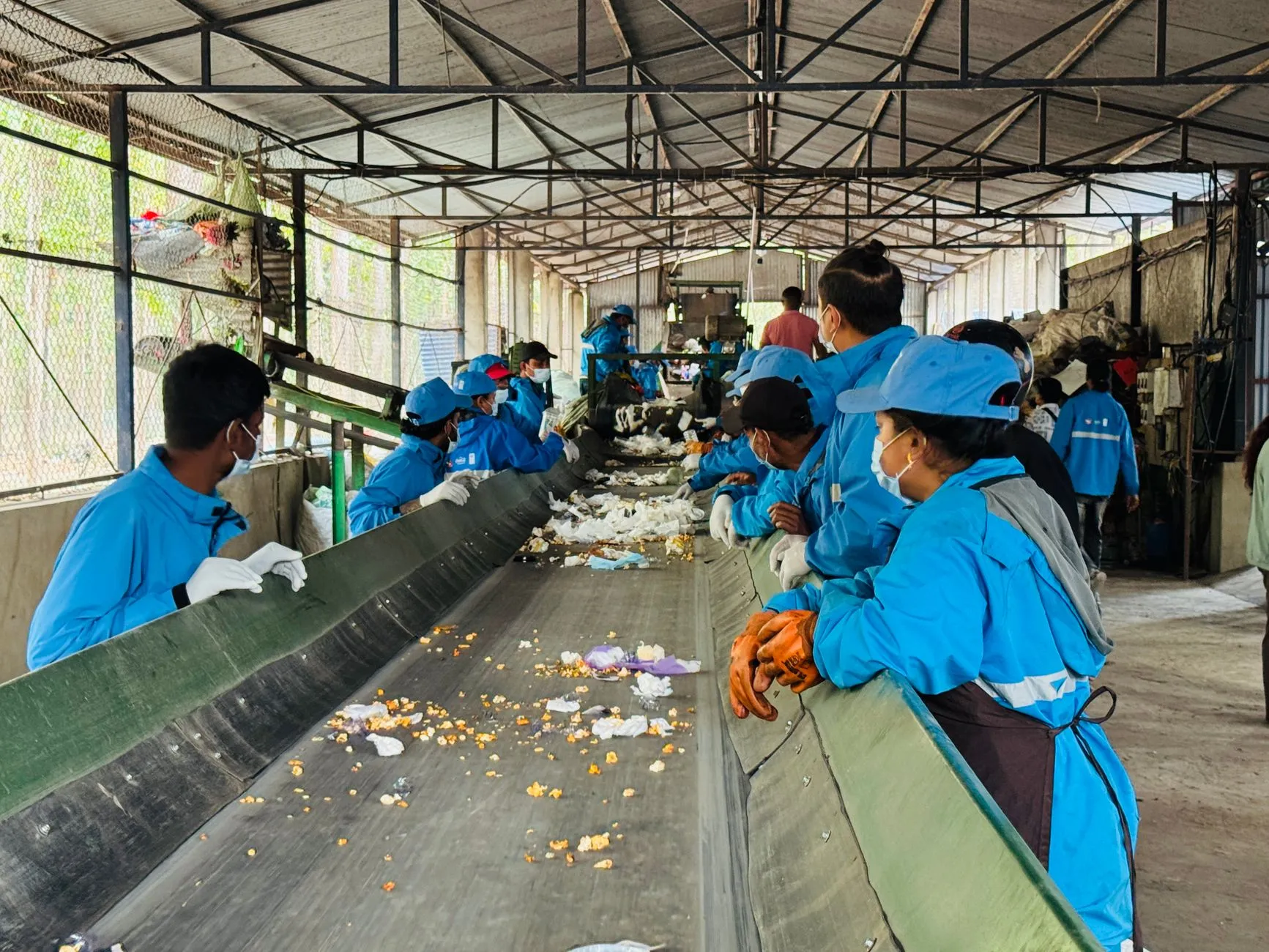
Recycling Alone Will Not Save Europe: Importance of Renewable Energy in Circular Economy
<p>Europe wants a circular economy. Policymakers talk about recycling rates, secondary materials and closed loops. But recent research shows that recycling alone will not solve the continent's resource problem or deliver the emissions reductions needed to meet climate targets.</p><p>The issue is not that recycling fails to work. Rather, its environmental performance depends entirely on the system around it. Recycling powered by coal delivers different results than recycling powered by wind. High recycling rates mean less if overall consumption keeps rising. Clean material recovery matters little if products are still designed to be thrown away after short lifespans.</p><p>For UK businesses, this has practical implications. Supply chains stretch across Europe. Public procurement increasingly demands circular credentials. Customers and investors want evidence of resource efficiency. Understanding what actually drives environmental performance in a circular economy therefore becomes a commercial question, not just a policy debate.</p><h2>Material extraction drives Europe's environmental footprint</h2><p>The European economy still runs on extraction. Fossil fuels, metals, construction minerals and agricultural resources flow into production systems across the continent. Consequently, the environmental costs accumulate before products ever reach consumers.</p><p>Extraction and processing of selected non-energy, non-agricultural raw materials used in the EU account for approximately 18% of the bloc's consumption-based greenhouse gas emissions, according to the European Environment Agency. The EU's material footprint reached around 6.1 billion tonnes in 2020. Per capita raw material extraction stood at 14.8 tonnes in 2022.</p><p>Housing and food together represent about 72% of the EU's material footprint. These sectors therefore become critical targets for any circular economy policy that aims for measurable environmental results rather than symbolic gestures.</p><p>Despite policy commitments, progress remains slow. Recycled materials represented approximately 11.7% of material use in 2021. The EU's circularity rate was around 11.5% in 2022. The gap between ambition and reality remains wide.</p><h2>Energy intensity undermines recycling's climate benefits</h2><p>Recycling requires energy. Materials must be collected, transported, sorted and reprocessed. Industrial infrastructure runs on electricity and heat. If that energy comes from fossil fuels, the climate benefits shrink or, in some cases, temporarily reverse.</p><p>A recent study of selected Central and Eastern European countries found that broader circular economy practices and renewable energy use were associated with lower carbon emissions. However, recycling activity was associated with a short-term increase in emissions in the countries and period examined.</p><p>The study attributed this result to the energy intensity of recycling, particularly where non-renewable energy remains important in the grid mix. Statistical estimates reported that a 1% improvement in circular economy practices was associated with an approximately 0.048% reduction in carbon emissions. Meanwhile, a 1% increase in renewable energy consumption was associated with an approximately 0.151% reduction in carbon emissions.</p><p>Notably, a 1% increase in recycling activity was associated with an approximately 0.034% short-term increase in emissions in the countries and period the researchers examined. These findings do not mean recycling is ineffective. They show that outcomes depend on the energy system, the material being processed, the technology used and whether recycled materials genuinely displace virgin production.</p><p>Other research reaches more positive conclusions when recycling is implemented efficiently within a wider circular framework. A 2023 study found that a one percentage point increase in the municipal waste recycling rate was associated with an estimated 0.02% to 0.04% reduction in emissions, depending on the model specification. The differing results illustrate why recycling cannot be assessed in isolation.</p><h2>Renewable energy emerges as the consistent driver</h2><p>Renewable energy appeared as one of the most consistent drivers of emissions reduction in the research reviewed. This relationship makes sense. Circular activities such as remanufacturing, metals recovery, plastics reprocessing and industrial reuse can be electricity and heat intensive.</p><p>Cleaner energy improves the climate performance of these activities in two ways. First, it reduces emissions from recycling and reprocessing operations. Second, it makes recycled or recovered materials more competitive with carbon intensive virgin production.</p><p>The relationship is particularly important for materials such as steel, aluminium, cement-related products, plastics and critical minerals. Producing these materials from primary resources generally requires mining, refining or high temperature processing. Circular strategies can reduce those requirements, but only if the secondary material system is powered by relatively low carbon energy.</p><p>The European Environment Agency has emphasized that circularity benefits are closely connected to energy demand. Material production, especially for energy intensive materials such as steel, requires substantial amounts of energy. Therefore, decarbonising that energy supply determines whether circular activities reduce emissions or simply shift them to different parts of the value chain.</p><h2>Design, durability and demand reduction matter more than bins</h2><p>Effective circular economy policy must address both supply and demand. Recycling sits at the end of a product's life. By that point, the environmental costs of extraction, manufacturing and transport have already occurred.</p><p>Designing products to last longer and be repaired more easily prevents those costs from accumulating in the first place. Increasing reuse, refurbishment and remanufacturing keeps materials in circulation without the energy penalty of breaking them down and reprocessing them. Reducing unnecessary material use in buildings and infrastructure cuts demand at the source.</p><p>This approach is consistent with European Commission modelling that examined a combination of consumption and production oriented policies. The assessment found that a package of circular economy measures could reduce Europe-wide material extraction by approximately 15% relative to business as usual by 2030, compared with a 2021 baseline.</p><p>The model estimated that the combined policy package would cost approximately 1% of GDP in 2030. Many individual policy scenarios had estimated costs of roughly 0.3% to 0.4% of GDP. The findings suggest that substantial reductions in resource use may be possible without treating economic growth and environmental protection as inherently incompatible.</p><p>For businesses, this means circular economy strategies need to extend beyond waste contracts and recycling targets. Product design decisions, procurement specifications, asset management policies and supply chain structures all determine material throughput. Companies that address these areas early will find compliance easier and costs lower as regulations tighten.</p><h2>Climate mitigation potential extends beyond waste management</h2><p>An EEA assessment of circular economy interventions estimated that, under the scenarios examined, circular measures could reduce the EU's climate impact by approximately 22%. This is equivalent to nearly 944 million tonnes of carbon dioxide equivalent.</p><p>The assessment also found that about 71% of the estimated emissions reduction would occur within the EU. Approximately 29% would occur outside the EU through lower demand for imported materials and reduced emissions in international supply chains. Additionally, circular measures could reduce Europe's reliance on imported ores, including aluminium, nickel, platinum group metals and copper.</p><p>A separate EEA review of existing research estimated an average global emissions reduction potential of around 33% for the circular economy. However, individual estimates ranged widely from 2% to 99%, depending on the sector, intervention and methodology.</p><p>The largest opportunities were identified in waste management, with an average estimated mitigation potential of about 52%. Construction showed an average estimated potential of about 48%. Industry had an average estimated potential of about 26%.</p><p>These figures are scenario-based estimates rather than guaranteed outcomes. They show the scale of the opportunity but also reflect substantial uncertainty about technology, consumer behaviour, infrastructure, rebound effects and policy implementation. Nevertheless, the scale of potential reductions suggests that circular economy measures deserve serious attention in corporate climate strategies.</p><h2>Critical facts for UK businesses operating in European markets</h2><ul><li>Extraction and processing of selected raw materials account for approximately 18% of EU consumption-based greenhouse gas emissions, making upstream activities a major climate concern.</li><li>Recycled materials represented only about 11.7% of EU material use in 2021, showing that virgin extraction still dominates the economy despite policy commitments to circularity.</li><li>A 1% increase in renewable energy consumption was associated with approximately 0.151% reduction in carbon emissions, significantly outperforming recycling alone in the research reviewed.</li><li>Housing and food together account for about 72% of the EU's material footprint, making these sectors priority areas for circular economy interventions.</li><li>Circular economy measures could reduce the EU's climate impact by approximately 22% under scenarios examined, with about 29% of reductions occurring outside the EU through reduced demand for imported materials.</li><li>A combined circular economy policy package could reduce Europe-wide material extraction by approximately 15% by 2030 compared with business as usual, at an estimated cost of around 1% of GDP.</li></ul><h2>Three strategic conclusions for business planning</h2><p>The research points to conclusions that affect procurement decisions, supplier requirements and climate reporting.</p><p>First, recycling is necessary but not sufficient. Recycling can reduce pressure on mines, forests and fossil resource extraction. However, it cannot fully address Europe's material footprint if overall consumption keeps rising. Recycling also has physical limits. Materials degrade, losses occur during collection and processing, and some products are difficult or uneconomic to recycle.</p><p>For businesses, this means recycling targets alone will not satisfy increasingly sophisticated supply chain audits or meet the expectations of <a href="https://sbs.eco/net-zero-program/">carbon reporting frameworks</a> that look at full lifecycle emissions.</p><p>Second, prevention and reuse may deliver larger gains than recycling. The most effective strategy is often to avoid producing a new item in the first place. Longer product lifetimes, repair, reuse and shared use models can prevent emissions associated with extraction, manufacturing and transport before recycling becomes necessary.</p><p>This is especially relevant in buildings, mobility, food and consumer goods. These are sectors where material demand is large and products often have long or complex life cycles. Businesses that design for durability, offer repair services or build take-back schemes into their models will be better positioned as regulations and customer expectations shift.</p><p>Third, clean energy determines circularity's climate performance. A circular economy powered by fossil fuels will deliver smaller climate benefits than one powered by renewable electricity and other low carbon energy sources. The energy transition and the materials transition therefore need to advance together.</p><p>If Europe expands recycling and remanufacturing without decarbonising industrial energy, some of the expected emissions reductions may be weakened. If it decarbonises energy without reducing material demand, resource extraction and associated environmental impacts may remain high. Businesses with operations or suppliers in Europe should therefore assess both the material intensity and the energy source of their circular economy activities.</p><h2>Implications for supply chains and procurement</h2><p>A successful circular economy could reduce Europe's exposure to volatile commodity prices and supply disruptions. Lower dependence on imported primary materials would also strengthen resilience in sectors that rely on critical minerals and industrial inputs.</p><p>The transition could create opportunities in repair, refurbishment, recycling technology, product redesign, resource efficient construction and secondary material markets. However, it may also create adjustment costs for industries built around high volumes of virgin material production.</p><p>Policy design will therefore matter. Standards, public procurement requirements, extended producer responsibility, infrastructure investment and reliable markets for recycled materials can help ensure that circularity becomes economically viable rather than remaining a collection of isolated projects.</p><p>The most effective policies are likely to combine binding product design and durability requirements with stronger repair and reuse markets. High quality recycling infrastructure, renewable energy deployment and measures that reduce excessive material consumption will also be needed. Better data on material footprints and supply chains, along with financial support for industrial innovation and clean technologies, will help businesses navigate the transition.</p><p>For UK businesses supplying into European markets or European companies, these policy directions signal future commercial requirements. Early engagement with <a href="https://sbs.eco/procurement/">sustainable procurement</a> standards and circular design principles will reduce future compliance costs and protect market access.</p><h2>How businesses can prepare for stricter requirements</h2><p>Companies should start by understanding their material footprint across the full value chain. This means looking beyond direct operations to supplier practices, product design decisions and end-of-life management. Material flow analysis can identify where the largest volumes and highest environmental impacts occur.</p><p>Next, assess the energy sources powering material processing, manufacturing and transport. A product made from recycled content may still carry a high carbon footprint if the recycling process runs on coal-fired electricity. Similarly, switching to renewable energy can improve the climate performance of existing circular activities without requiring changes to material flows.</p><p>Product design reviews should consider durability, repairability and ease of disassembly. Components that can be replaced or upgraded extend product lifespans and reduce overall material throughput. Design decisions made today will determine compliance costs and market position for years to come.</p><p>Supply chain engagement is essential. Many businesses lack visibility into the material and energy practices of second and third tier suppliers. Building relationships that include environmental performance data, jointly developing improvement plans and supporting suppliers through capability building can reduce risk and improve resilience.</p><p>Finally, align internal incentives and reporting systems with circular economy goals. If procurement teams are measured only on cost per unit, they will struggle to prioritise durability or recycled content. If sales teams are rewarded for volume, they will resist business models based on product longevity or sharing. Organisational structures and performance metrics need to reflect the outcomes the business wants to achieve.</p><h2>Where to find authoritative guidance and data</h2><p>The <a href="https://www.eea.europa.eu/en/topics/in-depth/circular-economy">European Environment Agency's circular economy resource hub</a> provides detailed assessments, data and scenario analysis for policymakers and businesses. The <a href="https://environment.ec.europa.eu/strategy/circular-economy-action-plan_en">European Commission's Circular Economy Action Plan</a> sets out the policy framework and legislative proposals that will shape requirements across member states.</p><p>For businesses operating in the UK but supplying European markets, the <a href="https://www.gov.uk/government/organisations/department-for-energy-security-net-zero">Department for Energy Security and Net Zero</a> publishes guidance on net zero, industrial decarbonisation and resource efficiency. The <a href="https://www.gov.uk/government/publications/resources-and-waste-strategy-for-england">Resources and Waste Strategy for England</a> outlines the UK's approach to waste reduction, recycling and circular economy development.</p><p>Businesses looking for practical support on reducing material footprints, improving energy efficiency in circular processes or meeting emerging <a href="https://sbs.eco/compliance/">ESG compliance requirements</a> can access tools and advisory services designed specifically for small and medium enterprises. The transition to a genuinely circular economy will require both systemic policy change and practical action at company level. The evidence shows that recycling alone will not deliver the results Europe needs. Businesses that understand this early will be better prepared for the regulations, market shifts and supply chain expectations ahead.</p>