
Samsung Semiconductor's Water Stewardship Strategy
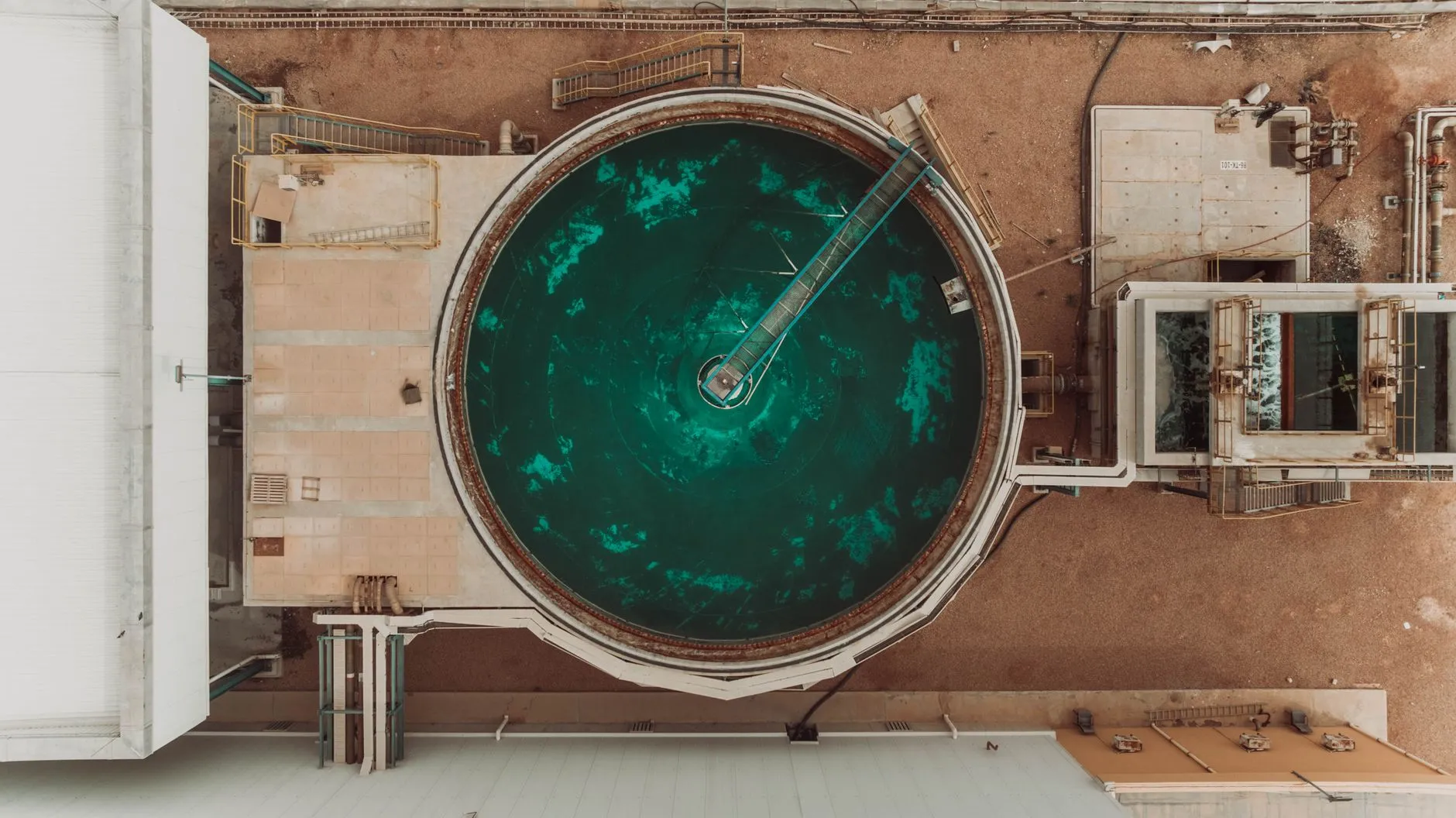
Semiconductor manufacturers face a difficult equation. They need huge volumes of ultra-pure water to make chips, yet freshwater is under pressure almost everywhere production takes place. Samsung Semiconductor has published details of how it plans to square that circle as output grows over the rest of the decade. The strategy involves freezing absolute water withdrawal at 2021 levels, reusing treated wastewater on an industrial scale, and working with regional authorities to build reclaimed-water infrastructure that serves both factories and communities.
For UK businesses watching their own supply chains, the approach matters. Semiconductors sit inside nearly every manufactured product, from vehicles to medical devices. Water stress in chip-making regions can therefore ripple outward into component availability, costs, and the sustainability credentials of finished goods. Understanding how major manufacturers manage water risk is becoming a commercial necessity, not an environmental footnote.
Samsung's program is built around what it calls a "3R" model: reduce, reuse, recycle. The company has set two headline commitments. First, it aims to hold total water withdrawal across its Device Solutions division at 2021 levels through to 2030, despite rising production volumes. Second, it plans to replenish 100 per cent of water consumed by its Device Experience division by the same date. Both targets are backed by AWS certification, which stands for the Alliance for Water Stewardship, an independent standard that assesses water management, quality controls, conservation measures, and biodiversity impact.
The scale of the challenge is clear from Samsung's own forecasts. Daily water withdrawal needs are expected to more than double between 2022 and 2030 as new production lines come online. Consequently, holding absolute consumption flat while output climbs requires a step change in how water moves through manufacturing sites. Samsung says it is investing in closed-loop systems, advanced wastewater treatment, and partnerships with local utilities to make that shift possible.
AWS certification and site-level water management
By 2024, several of Samsung's Korean semiconductor sites, alongside its facility in Xi'an, China, had achieved AWS Platinum certification. This is the highest level under the Alliance for Water Stewardship standard. AWS Platinum status requires companies to demonstrate stable water governance, measurable improvements in water quality and availability, evidence of reduced ecological harm, and engagement with catchment-level water planning.
Samsung's Hwaseong campus in South Korea became the first semiconductor site globally to earn the Carbon Trust Standard for Water back in 2020. That certification recognised improvements in water recycling infrastructure and measurable reductions in freshwater dependency. The company reported reusing around 70 million tonnes of water that year, while cutting total usage by more than 10 million tonnes compared with earlier periods.
AWS certification is not a static award. It requires ongoing monitoring, third-party verification, and active participation in regional water stewardship. For Samsung, that means tracking water quality in nearby rivers, assessing impacts on local biodiversity, and coordinating with other water users in the same basin. The framework pushes manufacturers to think beyond the factory fence and treat water as a shared resource with ecological and social dimensions.
This shift is particularly important in water-scarce regions. Semiconductor plants often sit in areas where agriculture, urban populations, and industry compete for limited supplies. Meanwhile, droughts linked to climate change are increasing the frequency and severity of shortages. Companies that fail to demonstrate responsible water use face regulatory pressure, community opposition, and physical risk to operations when supplies run short.
Reclaimed water infrastructure and regional collaboration
In December 2024, Samsung signed a memorandum of understanding with South Korean government bodies and local partners to develop a major reclaimed-water project in Gyeonggi Province. The scheme is designed to supply 120,000 tonnes of treated wastewater per day to Samsung's Giheung and Hwaseong semiconductor sites. Delivery is scheduled to begin in 2029.
Reclaimed water is municipal wastewater that has been treated to a standard suitable for industrial use. It is not potable, but it can be used in cooling systems, cleaning processes, and other applications where ultra-pure water is not required. Using reclaimed water reduces demand for freshwater abstraction and gives wastewater utilities a commercial outlet for treated effluent that might otherwise be discharged into rivers.
The Gyeonggi project represents a significant expansion of Samsung's reclaimed-water use. Once operational, it will provide a reliable, year-round supply that is largely insulated from drought and seasonal variation. The infrastructure is expensive and requires long-term commitments from both the manufacturer and the public sector. However, it also reduces vulnerability to water shortages and aligns Samsung's operations with regional water management goals.
Samsung has indicated that these partnerships could eventually support up to 400,000 tonnes of daily water supply across its operations. That figure, published in a technical blog in 2026, includes both on-site reuse and external reclaimed-water schemes. If realised, it would represent approximately 1.5 billion tonnes of water annually sourced from circular systems rather than fresh abstraction.
This model is spreading beyond South Korea. Other semiconductor manufacturers in Taiwan, the United States, and Europe are exploring similar arrangements as water stress intensifies. For regions hosting chip fabs, reclaimed-water infrastructure is becoming a prerequisite for attracting and retaining investment. Manufacturers, in turn, are embedding water resilience into site selection and capital planning.
Progress toward 2030 targets and water replenishment rates
Samsung reported that its Device Solutions division achieved a 67.2 per cent water replenishment rate in 2025. This metric measures the volume of water returned to the local environment, either through treated discharge or ecosystem restoration projects, as a proportion of total consumption. The company has committed to reaching 100 per cent replenishment across global operations by 2030.
Water replenishment goes beyond recycling within the factory. It includes investment in wetland restoration, river habitat improvement, and community water projects that increase the availability of clean water in the catchment. Samsung says it has already restored approximately 240,000 tonnes of water resources through these activities, contributing to what it describes as a "Water Positive" approach.
Water Positive is a sustainability concept borrowed from carbon accounting. It means an organisation aims to return more water to the environment than it consumes. However, the analogy has limits. Unlike carbon, water is a local resource. A replenishment project in South Korea does not address water stress in Arizona or Germany. Therefore, water accounting must be place-based and verified at catchment level to have real environmental value.
Nevertheless, the 67.2 per cent replenishment rate indicates measurable progress. Samsung has disclosed the figure publicly and tied it to a time-bound target. That creates accountability and allows stakeholders to track performance year on year. For companies in Samsung's supply chain, these disclosures provide useful data for Scope 3 emissions reporting and broader ESG due diligence.
Water-related data is also becoming relevant to procurement decisions. Public sector buyers in the UK, for example, are increasingly required to assess the environmental impact of goods and services under frameworks such as PPN 06/21. A supplier's water stewardship performance, particularly in water-stressed regions, can influence tender evaluations and contract awards. Consequently, transparency around water use is no longer optional for businesses competing in regulated markets.
Essential facts about Samsung's water strategy
- Samsung Semiconductor has committed to holding water withdrawal across its Device Solutions division at 2021 levels through to 2030, despite forecast production growth.
- The company achieved a 67.2 per cent water replenishment rate in 2025 and aims to reach 100 per cent replenishment of consumed water by 2030.
- Several Samsung sites in South Korea and China have earned AWS Platinum certification, the highest standard under the Alliance for Water Stewardship framework.
- A reclaimed-water project in Gyeonggi Province, due to begin operation in 2029, will supply 120,000 tonnes of treated wastewater per day to Samsung's Giheung and Hwaseong facilities.
- Daily water withdrawal needs across Samsung's semiconductor operations are expected to more than double between 2022 and 2030 as new production lines are added.
- Samsung has reported reusing around 70 million tonnes of water in 2020 and reducing total usage by more than 10 million tonnes compared with prior periods.
- The company says it has restored approximately 240,000 tonnes of water resources through biodiversity and community water projects.
Water stress and the semiconductor supply chain
Semiconductor manufacturing is water-intensive by design. Chips are made in ultra-clean environments where even microscopic contamination can ruin entire batches. Cleaning and rinsing steps consume vast quantities of ultra-pure water, while cooling systems require additional volumes to remove heat from precision equipment. As chips become more complex and production processes more sensitive, water demand per unit of output tends to rise.
This creates a structural problem. Global demand for semiconductors is growing, driven by electric vehicles, data centres, renewable energy infrastructure, and consumer electronics. At the same time, many of the regions that host semiconductor production are experiencing worsening water stress. Taiwan, South Korea, and parts of the United States have all faced droughts in recent years that threatened or disrupted chip manufacturing.
For businesses that rely on semiconductors, this translates into supply-chain risk. A drought that forces a fabrication plant to cut production can ripple through global markets, delaying product launches, increasing component prices, and forcing manufacturers to redesign products around available parts. The COVID-19 pandemic illustrated how quickly chip shortages can propagate across industries. Water scarcity represents a slower-moving but potentially more persistent version of the same vulnerability.
Samsung's water strategy is therefore not just an environmental initiative. It is a business continuity measure designed to reduce exposure to physical water risk. By investing in reclaimed-water infrastructure and closing the loop on internal water use, the company is building resilience against drought, regulatory restrictions, and competition for freshwater. Other manufacturers are pursuing similar strategies, but Samsung's scale and public commitments make its progress a useful bellwether for the sector.
UK businesses should consider what this means for their own supply chains. If you source components or finished goods that contain semiconductors, the water resilience of your upstream suppliers is now a material risk factor. It is worth asking suppliers where their semiconductors are manufactured, how those sites manage water, and what contingency plans exist for water shortages. This is particularly relevant for sectors subject to ESG reporting requirements or public procurement standards that assess environmental impact across the supply chain.
Biodiversity monitoring and ecosystem impact
Samsung has embedded biodiversity monitoring into its water stewardship program. The company says it tracks water quality and ecological health in rivers and wetlands near its manufacturing sites, and undertakes habitat restoration projects aimed at offsetting industrial impact. This approach reflects a broader shift in corporate sustainability, where water and biodiversity are increasingly treated as interconnected issues rather than separate environmental categories.
Biodiversity monitoring typically involves regular surveys of aquatic species, water chemistry testing, and assessments of habitat condition. Data is used to identify trends, detect early signs of degradation, and measure the effectiveness of mitigation efforts. For companies with AWS certification, biodiversity impact is a mandatory component of the standard, and third-party auditors verify that monitoring is rigorous and transparent.
Why does biodiversity matter to a semiconductor manufacturer? First, healthy ecosystems provide natural water filtration, flood regulation, and climate resilience. Degraded catchments are more vulnerable to pollution, erosion, and extreme weather, all of which can disrupt water supply. Second, biodiversity loss is attracting regulatory attention. Governments and financial institutions are beginning to treat nature-related risk as seriously as climate risk, and disclosure frameworks such as the Taskforce on Nature-related Financial Disclosures are gaining traction.
For UK businesses, nature-related reporting is no longer a distant prospect. The government has signalled its intention to introduce mandatory nature disclosures for large companies, and investors are increasingly asking for data on biodiversity impact and dependencies. If your supply chain includes water-intensive industries, understanding how upstream partners manage ecosystem risk is becoming a disclosure requirement, not a voluntary exercise.
What UK businesses should consider
Water stewardship in semiconductor manufacturing is a specialist subject, but its implications reach far beyond the chip sector. Most UK businesses rely on products that contain semiconductors, from vehicles to industrial machinery. Water stress in production regions can therefore affect component availability, costs, and the sustainability profile of finished goods. As a result, tracking how major manufacturers manage water risk is becoming a practical necessity for procurement teams, sustainability managers, and finance directors assessing supply-chain resilience.
If you are responsible for ESG reporting or supply-chain due diligence, consider asking your suppliers where their semiconductors are sourced and how those sites manage water. Request evidence of third-party certification, such as AWS, or disclosure of water withdrawal, recycling rates, and replenishment commitments. This information is increasingly relevant for Scope 3 emissions calculations and for demonstrating due diligence under public procurement frameworks.
For companies preparing carbon reduction plans under PPN 06/21 or similar standards, water-related data can strengthen your submission. It demonstrates that you understand the environmental impact of your supply chain and have taken steps to assess and mitigate risk. It also signals to buyers that you are engaging with sustainability issues in a granular, evidence-based way, rather than relying on high-level commitments or generic statements.
Water risk is also a physical business risk. If your operations or supply chain depend on water-intensive industries, consider scenario planning for drought, regulatory restrictions, or community opposition to water use. This is particularly important if you source from regions experiencing long-term water stress, such as parts of East Asia, the southwestern United States, or southern Europe. Building contingency into supplier relationships, inventory management, and product design can reduce vulnerability when water shortages occur.
Finally, businesses with an interest in nature-based solutions or biodiversity credits may find opportunities in water stewardship programs. Manufacturers like Samsung are investing in ecosystem restoration and community water projects as part of their replenishment commitments. These initiatives can generate co-benefits, including habitat creation, carbon sequestration, and improved water quality for local communities. UK businesses looking to invest in nature-based projects may find alignment with corporate water stewardship programs, particularly in regions where both parties have operational interests.
We work with businesses on carbon reporting and compliance that often involves understanding supply-chain impacts and material risks. Water is increasingly part of that conversation. If you need support assessing your supply chain's environmental footprint or preparing for mandatory disclosures, that is where we can help.
Where to find more information
The Alliance for Water Stewardship publishes the AWS International Water Stewardship Standard, which sets out the framework Samsung and other manufacturers use for certification. It provides detailed guidance on water governance, catchment-level planning, and biodiversity assessment. The standard is freely available and includes case studies from certified sites around the world.
The UK government's Procurement Policy Note 06/21 explains how carbon reduction plans are assessed in public sector tenders. Although the policy focuses on carbon, the principles of supply-chain due diligence and evidence-based reporting apply equally to water and other environmental impacts. Businesses preparing for public sector contracts should review the guidance and consider how water data fits into their overall sustainability disclosure.
For broader context on water risk and corporate disclosure, the CDP Water Security questionnaire is widely used by investors and large companies to assess water management performance. The questionnaire covers governance, risk assessment, water accounting, and stakeholder engagement. It is a useful reference for understanding what best practice looks like and what data stakeholders expect to see.
Finally, the UK Environment Agency provides guidance on water abstraction, discharge consents, and environmental permits. While this is UK-specific, the regulatory principles are similar in other jurisdictions and the guidance is a practical resource for businesses seeking to understand their own water obligations.