
Tackling Contrails to Reduce Aviation's Climate Impact
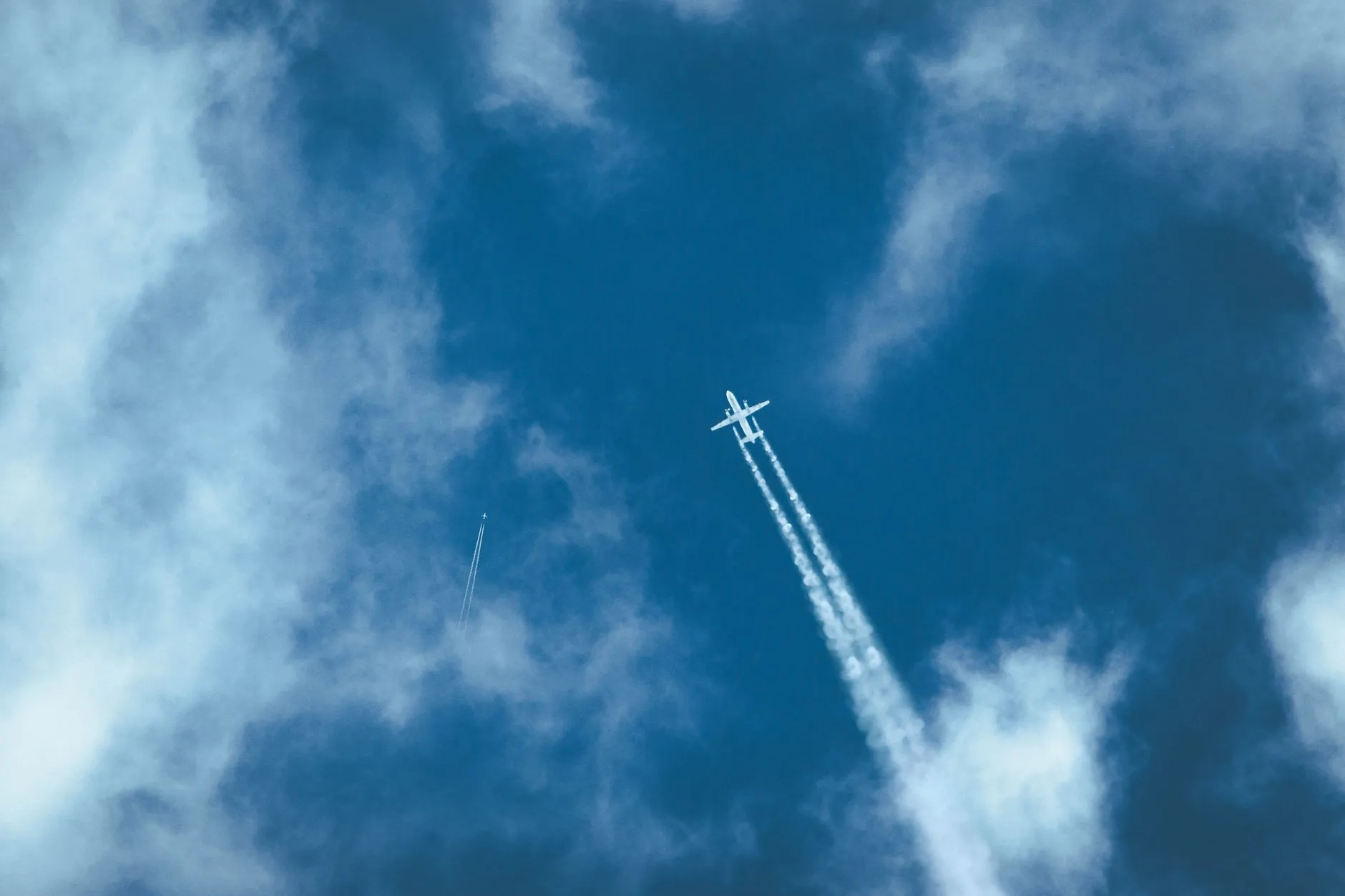
<p>Aviation produces two distinct climate problems. The first is carbon dioxide, which stays in the atmosphere for centuries. The second is contrails, the thin ice-cloud trails left by aircraft at high altitude. Unlike CO2, contrails have a short life. However, recent analysis suggests their warming effect may be just as significant.</p>

<p>New research indicates that tackling contrails could deliver faster results than waiting for zero-carbon aircraft. The findings suggest a small number of flights create most of the problem. Avoiding those flights or adjusting their altitude could cut contrail warming by half and delay aviation's overall warming contribution by roughly a decade.</p>

<p>For UK businesses that rely on air freight, business travel, or aviation supply chains, this matters commercially. Contrail avoidance is emerging as a near-term compliance and reporting consideration. It also represents a faster climate lever than fleet replacement or infrastructure overhaul. Consequently, airlines and regulators are beginning to treat contrails as a distinct policy issue, not just a footnote to carbon reduction.</p>

<p>Understanding the contrail question is becoming relevant for SMEs in several sectors. Manufacturers supplying aerospace, logistics firms managing air cargo, and businesses tracking Scope 3 transport emissions all need to know how aviation's non-CO2 effects are being regulated and reported. The policy landscape is shifting, and contrail mitigation is moving from theory to operational trials.</p>

<h2>How contrails trap heat in the atmosphere</h2>

<p>Contrails form when hot, humid aircraft exhaust meets cold air at cruising altitude. Water vapor freezes into ice crystals almost immediately. These crystals can linger for hours or even spread into larger cirrus clouds.</p>

<p>The climate effect depends on timing and location. Daytime contrails can reflect some sunlight back into space. Night-time contrails, however, trap outgoing heat without any offsetting reflection. Winter flights and routes over the North Atlantic tend to produce more persistent contrails because the air at altitude is colder and more humid.</p>

<p>According to Transport & Environment, contrails have a net warming effect at least as large as aviation's CO2 emissions. A 2026 study published in Nature Communications found that current warming from contrails is similar to the warming from all accumulated aviation CO2 since the jet age began. Nevertheless, NASA's 2025 review notes that contrail forcing estimates still carry meaningful uncertainty because contrail behavior is complex and varies widely.</p>

<p>This uncertainty has practical consequences. Airlines and regulators need reliable forecasting to identify which flights will create warming contrails. Without that precision, avoidance measures risk becoming disruptive or ineffective. Recent trials are designed to close that gap.</p>

<h2>Most warming comes from a small share of flights</h2>

<p>The new analysis, conducted by Klima Consulting and supported by Transport & Environment, examined global flight patterns and contrail formation in 2019. The study's central finding is that fewer than 3% of flights generated 80% of contrail warming.</p>

<p>This concentration creates an opportunity. If airlines can identify and reroute or adjust the altitude of that small subset of flights, they could achieve large climate gains without overhauling schedules or fleets. The modeling suggests that cutting contrail warming by 50% could prevent approximately 0.025°C of warming by 2050 and 0.049°C by 2070.</p>

<p>In one scenario, aviation would not reach 0.08°C of warming until 2050, roughly ten years later than it would without contrail avoidance. The same analysis indicates that effective contrail mitigation could delay aviation-induced warming by about a decade, giving zero-carbon technologies more time to mature.</p>

<p>Geography and timing play a large role. BBC reporting on the research found that over half of global contrail warming in 2019 came from flights over North America, Europe, and the North Atlantic. Evening, night-time, and winter flights contributed disproportionately. A separate 2026 study of European contrail patterns found that 75% of warming in the region occurred between January and March and between October and December.</p>

<p>These findings suggest that targeted action on specific routes, times, and seasons could produce outsized results. For example, adjusting altitude on North Atlantic red-eyes during winter months might reduce warming more than broad changes across all daytime summer flights.</p>

<h2>Cost and feasibility of rerouting flights</h2>

<p>Avoiding warming contrails typically requires minor route adjustments or altitude changes. Transport & Environment estimates that contrail avoidance could cost less than €4 per flight in some cases. The group also claims that the climate benefit of avoiding the worst contrails could outweigh the added CO2 from rerouting by at least 15 times, based on conservative assumptions.</p>

<p>Those figures assume that forecasting is accurate and that air traffic control systems can accommodate small adjustments without cascading delays. In practice, implementation depends on three things: reliable prediction models, coordination between airlines and air navigation service providers, and clear regulatory frameworks.</p>

<p>Prediction models are improving. Google and other organizations have developed machine-learning systems that combine satellite data, weather forecasts, and flight plans to identify contrail-prone conditions. Early test flights have shown that these models can predict warming contrails with useful accuracy.</p>

<p>Air traffic coordination is more complex. Altitude changes on busy routes require approval from air traffic control. Rerouting can affect fuel load, slot times, and downstream connections. Airlines need systems that integrate contrail forecasts into flight planning without creating operational friction.</p>

<p>Regulatory clarity is the third piece. Currently, no international or UK regulation requires airlines to avoid contrails. Voluntary programs exist, but they lack standardized metrics and reporting. If contrail avoidance becomes mandatory or linked to emissions trading schemes, businesses will need consistent rules and compliance pathways.</p>

<h2>The UK's oceanic airspace trial</h2>

<p>In August 2026, the UK government backed a large-scale trial called Operation Blue Skies. The initiative involves Google, the Met Office, NATS (the UK's air navigation service provider), Imperial College London, and the University of Cambridge. The trial is testing AI-driven contrail avoidance in oceanic airspace, where air traffic density is lower and routing flexibility is greater.</p>

<p>This trial is significant because it moves contrail mitigation from modeling to operational testing. Oceanic airspace is a good starting point. Flights crossing the North Atlantic often produce warming contrails because of the cold, humid conditions at cruising altitude. These routes also have fewer congestion constraints than European or North American continental airspace.</p>

<p>If the trial demonstrates that airlines can reliably identify and avoid warming contrails without major delays or fuel penalties, the approach could be scaled to busier airspace. That would require tighter coordination with air traffic control and more sophisticated flight planning systems, but the basic principle would remain the same.</p>

<p>For UK businesses, Operation Blue Skies signals that contrail avoidance is likely to become a standard consideration in aviation operations. Companies with exposure to air freight, business travel, or aerospace supply chains should expect contrail metrics to appear in emissions reporting and tender criteria over the next few years.</p>

<h2>Implications for UK businesses and supply chains</h2>

<p>Contrail avoidance affects several commercial areas. First, emissions reporting is expanding beyond CO2. Large businesses already report Scope 3 emissions, which include business travel and freight. As contrail metrics become standardized, reporting frameworks may require companies to account for non-CO2 aviation effects.</p>

<p>Second, public procurement is tightening. PPN 06/21 requires suppliers bidding for central government contracts above £5 million to publish a carbon reduction plan. If contrail avoidance becomes part of aviation's climate strategy, suppliers may need to show how they address non-CO2 transport emissions. Our <a href="https://sbs.eco/net-zero-program/">net-zero program for carbon reporting compliance</a> helps businesses navigate these requirements.</p>

<p>Third, airline purchasing decisions may shift. If regulators impose contrail-avoidance mandates or carbon pricing on non-CO2 effects, airlines will pass some costs to customers. Businesses that rely on time-sensitive air freight or frequent business travel should monitor how carriers build contrail mitigation into their pricing and service terms.</p>

<p>Fourth, aerospace suppliers may see new demand for contrail-reducing technologies. Engine manufacturers are exploring designs that reduce ice crystal formation. Fuel suppliers are testing whether sustainable aviation fuels produce fewer contrails. Airlines are investing in forecasting and flight planning systems. Each of these represents a potential business opportunity or competitive shift.</p>

<p>Finally, reputational and ESG considerations are growing. Investors, customers, and employees increasingly scrutinize companies' climate actions. Businesses that proactively address non-CO2 transport emissions may gain an edge in ESG ratings and stakeholder trust. Conversely, those that ignore contrails risk being seen as incomplete in their climate commitments.</p>

<h2>What UK SMEs should know about contrails</h2>

<ul>
<li>Fewer than 3% of global flights generated 80% of contrail warming in 2019, meaning targeted avoidance can produce large climate benefits without overhauling schedules.</li>
<li>Avoiding the worst contrails could cut contrail warming by 50% and delay aviation's overall warming contribution by roughly a decade.</li>
<li>Night-time, winter, and North Atlantic flights contribute disproportionately to contrail warming because of colder, more humid conditions at altitude.</li>
<li>Transport & Environment estimates contrail avoidance could cost less than €4 per flight in some cases, with climate benefits outweighing added CO2 from rerouting by at least 15 times.</li>
<li>The UK-backed Operation Blue Skies trial is testing AI-driven contrail avoidance in oceanic airspace, involving Google, the Met Office, NATS, and leading universities.</li>
<li>No UK or international regulation currently mandates contrail avoidance, but the policy landscape is shifting as non-CO2 effects gain attention in climate frameworks.</li>
<li>Contrail metrics may soon appear in Scope 3 emissions reporting and public procurement criteria, affecting suppliers and logistics providers.</li>
</ul>

<h2>Policy and regulatory outlook for aviation non-CO2 effects</h2>

<p>Aviation policy has historically focused on CO2 because it is easier to measure and regulate. Contrails and other non-CO2 effects have been acknowledged but rarely addressed in binding rules. That is beginning to change.</p>

<p>The International Civil Aviation Organization has discussed non-CO2 effects in its climate work, but it has not yet adopted mandatory contrail-avoidance measures. The European Union is considering how to incorporate non-CO2 warming into its emissions trading system. If that happens, airlines operating in EU airspace could face charges based on contrail formation, not just CO2.</p>

<p>In the UK, the Department for Energy Security and Net Zero has supported contrail research through funding for trials like Operation Blue Skies. The government's Jet Zero strategy commits to net-zero aviation by 2050, but it does not yet include specific contrail-avoidance targets. Nevertheless, the strategy acknowledges non-CO2 effects and calls for further research.</p>

<p>For businesses, the key question is when contrail avoidance will move from voluntary programs to regulatory requirements. If the current trials succeed, mandates could follow within a few years. Companies should prepare for contrail metrics to become part of standard emissions accounting and reporting.</p>

<p>Procurement teams should also watch for changes to tender criteria. Central government contracts already require carbon reduction plans under PPN 06/21. If contrail avoidance becomes an expected part of aviation climate action, businesses with transport-heavy supply chains may need to show how they address it. <a href="https://sbs.eco/compliance/">ESG compliance and carbon reporting services</a> can help businesses build the necessary documentation.</p>

<h2>What businesses should consider now</h2>

<p>We recommend that UK SMEs with exposure to aviation take three steps. First, review how your business accounts for Scope 3 transport emissions. If you rely on air freight or regular business travel, ask your carriers how they track and report non-CO2 effects. Most airlines do not yet provide contrail data, but asking the question signals that customers care.</p>

<p>Second, monitor the regulatory landscape. Contrail avoidance is moving from research to operational trials. If those trials prove successful, regulators are likely to introduce reporting requirements or pricing mechanisms. Staying informed will help you anticipate compliance costs and adjust procurement strategies early.</p>

<p>Third, consider how contrail mitigation fits into your broader climate strategy. If you have set net-zero targets or published a carbon reduction plan, think about whether non-CO2 transport emissions belong in your disclosures. Early adopters who address contrails transparently may gain an advantage in ESG ratings and tender evaluations.</p>

<p>For businesses in aerospace supply chains, contrail avoidance represents both a risk and an opportunity. Airlines that adopt contrail mitigation may demand new technologies or services. Engine manufacturers, fuel suppliers, and software providers are all exploring solutions. Understanding where your products or services fit into that shift can help you position for future demand.</p>

<p>We also recommend scenario planning for cost impacts. If contrail avoidance becomes standard practice, airlines may pass incremental costs to customers through ticket prices or freight charges. Small route adjustments add fuel or time, and forecasting systems require investment. Businesses should model how those costs might affect travel budgets or logistics contracts.</p>

<p>Finally, think about reputational positioning. Customers, investors, and employees increasingly expect businesses to address climate impacts comprehensively. Demonstrating that you understand and act on non-CO2 transport emissions can strengthen your climate credentials. It also prepares you for the likelihood that contrail reporting will become routine within the next few years.</p>

<h2>Where to find authoritative guidance</h2>

<p>The UK government's <a href="https://www.gov.uk/government/organisations/department-for-energy-security-and-net-zero">Department for Energy Security and Net Zero</a> publishes updates on aviation climate policy and funding for contrail research. The department's Jet Zero strategy outlines the government's approach to aviation decarbonization and includes discussion of non-CO2 effects.</p>

<p>Transport & Environment provides regular briefings on aviation climate science and policy. Their <a href="https://www.transportenvironment.org/">website</a> includes technical reports on contrail formation, avoidance costs, and regulatory options. The organization has been influential in shaping European policy on non-CO2 aviation emissions.</p>

<p>NASA's <a href="https://www.nasa.gov/">research portal</a> offers detailed scientific reviews of contrail climate forcing and uncertainty ranges. These resources are useful for understanding the underlying science and the limits of current knowledge.</p>

<p>For UK businesses seeking practical support, the <a href="https://sbs.eco/sbs-academy/">SBS Academy</a> offers training on Scope 3 emissions and emerging climate reporting requirements. We also provide <a href="https://sbs.eco/compliance/">compliance support</a> for businesses navigating carbon reduction plans and procurement criteria.</p>